

Dumbbell Decline Triceps Extension vs Dumbbell Kickback: Complete Comparison Guide
Dumbbell Decline Triceps Extension vs Dumbbell Kickback — two isolation moves that train the same target muscle from different angles. If you want clearer triceps development, reduced joint strain, or exercises that fit your skill level and equipment, this comparison has your back. You'll get a breakdown of primary and secondary muscle activation, exact equipment and setup cues, relative difficulty and injury risk, plus actionable rep ranges and progression tips. Read on to find which movement fits your training block and how to execute each with sound biomechanics for better muscle growth and safer practice.
Exercise Comparison
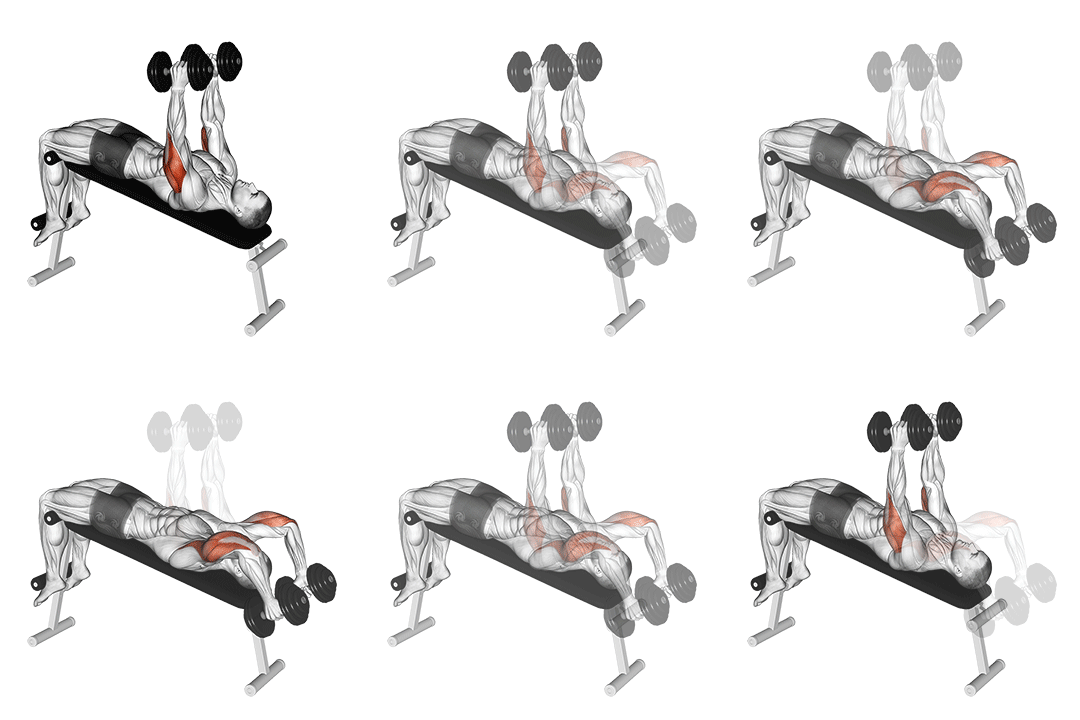
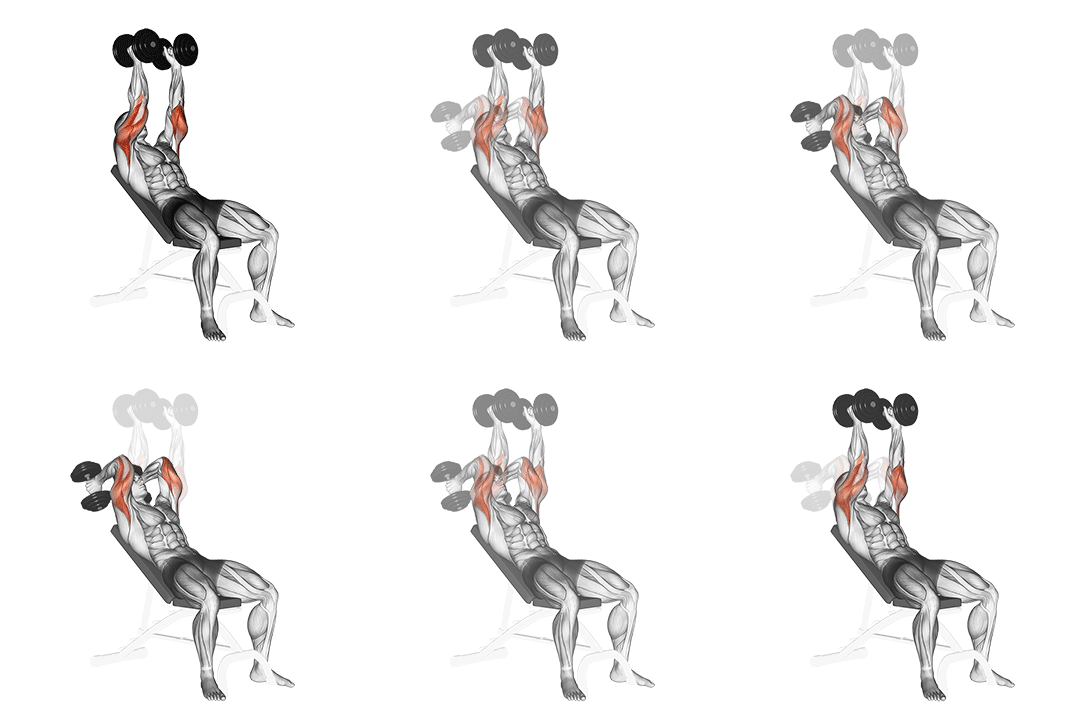
Dumbbell Decline Triceps Extension
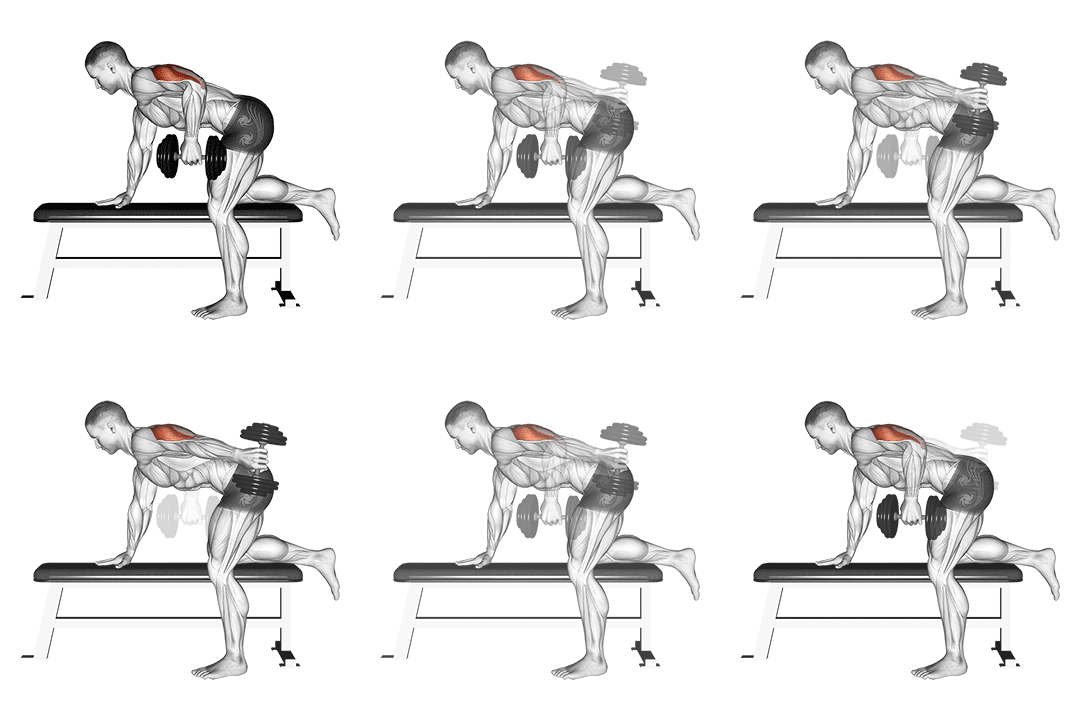
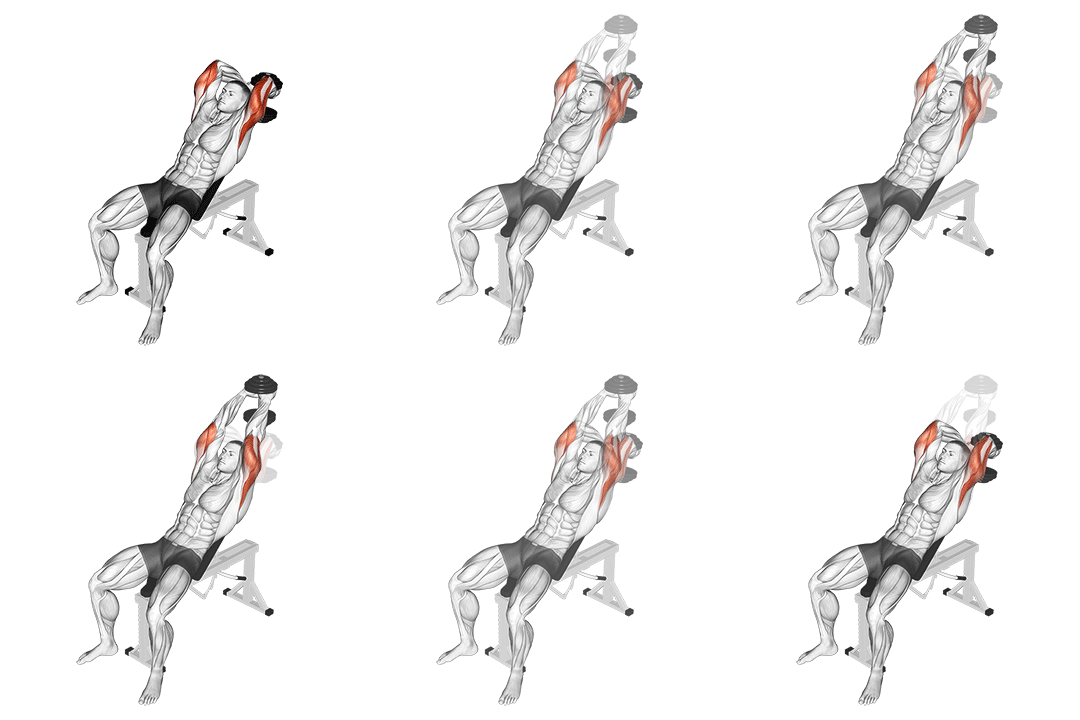
Dumbbell Kickback
Head-to-Head Comparison
| Attribute | Dumbbell Decline Triceps Extension | Dumbbell Kickback |
|---|---|---|
| Target Muscle |
Triceps
|
Triceps
|
| Body Part |
Upper-arms
|
Upper-arms
|
| Equipment |
Dumbbell
|
Dumbbell
|
| Difficulty |
Intermediate
|
Beginner
|
| Movement Type |
Isolation
|
Isolation
|
| Secondary Muscles |
1
|
1
|
Secondary Muscles Activated
Dumbbell Decline Triceps Extension
Dumbbell Kickback
Visual Comparison
Overview
Dumbbell Decline Triceps Extension vs Dumbbell Kickback — two isolation moves that train the same target muscle from different angles. If you want clearer triceps development, reduced joint strain, or exercises that fit your skill level and equipment, this comparison has your back. You'll get a breakdown of primary and secondary muscle activation, exact equipment and setup cues, relative difficulty and injury risk, plus actionable rep ranges and progression tips. Read on to find which movement fits your training block and how to execute each with sound biomechanics for better muscle growth and safer practice.
Key Differences
- Difficulty levels differ: Dumbbell Decline Triceps Extension is intermediate, while Dumbbell Kickback is beginner.
- Both exercises target the Triceps using Dumbbell. The main differences are in their movement patterns and muscle activation angles.
Pros & Cons
Dumbbell Decline Triceps Extension
+ Pros
- Places the long head on stretch for longer time under tension
- Stable lying position lets you control heavier loads safely
- Good for progressive overload via weight, tempo, or pauses
- Strong eccentric loading potential (3–4 sec negatives)
− Cons
- Requires a decline bench or stable decline setup
- Intermediate technique—needs scapular and shoulder control
- Higher stress on shoulder/elbow if done with too much weight
Dumbbell Kickback
+ Pros
- Minimal equipment—works in most home gyms
- Simple movement pattern that’s easy to learn
- Excellent for targeting terminal elbow extension and peak contraction
- Low overall systemic load; good for high-rep pump work
− Cons
- Harder to progressively overload with heavy weight
- Upper arm must remain stationary—form breakdown is common
- Can cause low-back strain if performed unsupported and with poor hip hinge
When Each Exercise Wins
Decline extensions put the long head under greater stretch and allow heavier loading and slower eccentrics, increasing time under tension across a larger ROM—ideal for muscle growth in the triceps.
Because you can load decline extensions more progressively and control heavier dumbbells in a stable position, they translate better to increased elbow-extension strength under load.
Kickbacks have a simpler motor pattern, lower setup demands, and smaller load requirements, letting beginners learn elbow extension mechanics and build control before moving to decline variations.
Kickbacks need only a single dumbbell and minimal space. They let you target the triceps effectively without a decline bench, making them the obvious home-friendly choice.
Frequently Asked Questions
Can I do both Dumbbell Decline Triceps Extension and Dumbbell Kickback in the same workout?
Yes. Pair them by using the decline extension as a heavy primary movement (3–4 sets of 6–12) and kickbacks as a higher-rep finisher (2–3 sets of 10–15) to target long-head length tension and terminal contraction in one session.
Which exercise is better for beginners?
Dumbbell Kickback is better for beginners because it has a simpler elbow-extension pattern, lower equipment needs, and allows you to focus on keeping the upper arm stationary and the scapula stable before progressing to decline work.
How do the muscle activation patterns differ?
Decline extensions increase long-head stretch via greater shoulder flexion, shifting more work to the long head during the eccentric portion, while kickbacks emphasize peak concentric tension at full elbow extension with the triceps starting at a shorter length.
Can Dumbbell Kickback replace Dumbbell Decline Triceps Extension?
Kickbacks can substitute when equipment is limited or as a low-risk finisher, but they don't fully replace decline extensions for progressive overload and long-head stretch; if your goal is maximal hypertrophy, include decline extensions periodically.
Expert Verdict
Use Dumbbell Decline Triceps Extension when your goal is targeted triceps hypertrophy and measurable progression. The decline angle increases long-head stretch and allows heavier, tempo-driven overload—aim for 6–12 heavy reps or 8–15 with controlled 3–4 second eccentrics. Choose Dumbbell Kickback when you need a beginner-friendly, equipment-light option that emphasizes peak contraction and isolation; use 10–15 reps with strict upper-arm position and 2–3 second eccentrics. If you train for size, prioritize decline extensions in your triceps rotation; if you travel or are a novice, keep kickbacks in your routine. Both have places—use decline for loading and kickbacks for finishing work and higher rep density.
Also Compare
More comparisons with Dumbbell Decline Triceps Extension
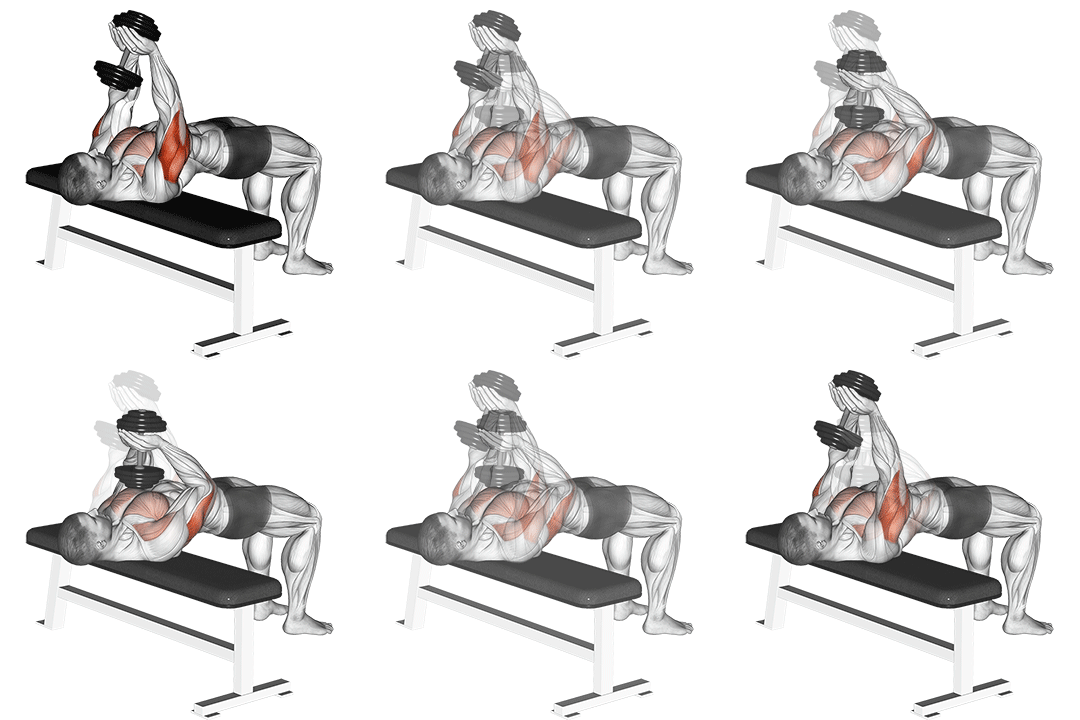
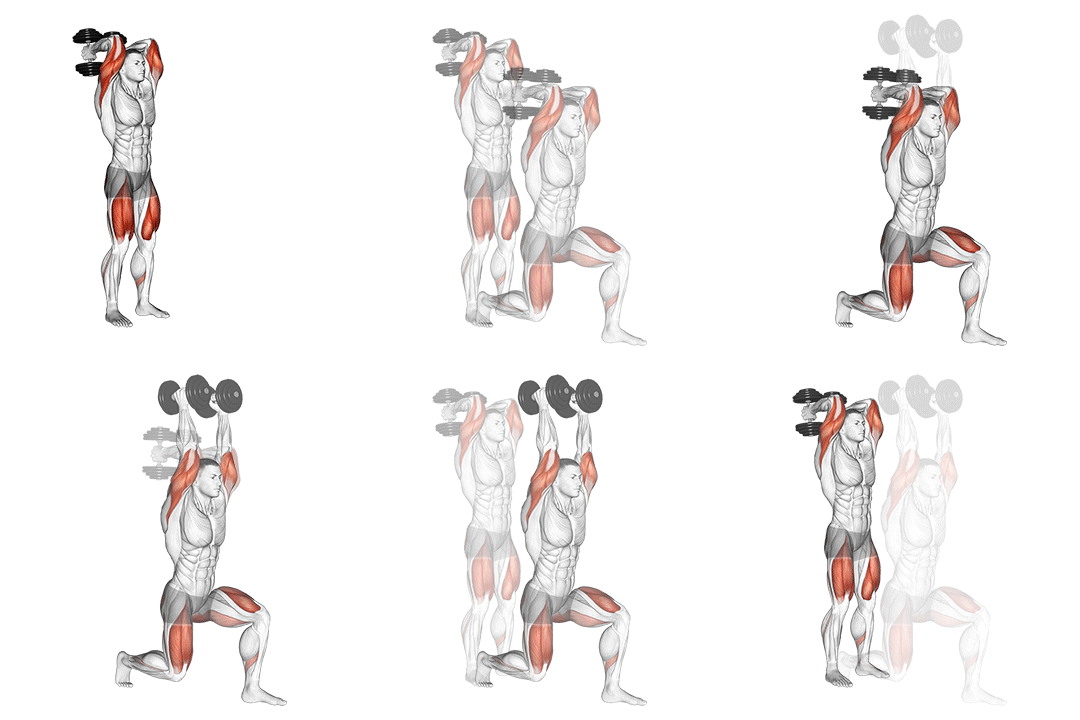
More comparisons with Dumbbell Kickback
Compare More Exercises
Use our free comparison tool to analyze any two exercises head-to-head.
Compare Exercises