

Dumbbell Decline Triceps Extension vs Dumbbell Lying Extension (across Face): Complete Comparison Gu
Dumbbell Decline Triceps Extension vs Dumbbell Lying Extension (across Face) — you’re choosing between two solid isolation moves for the triceps. I’ll walk you through muscle activation, technique cues, equipment needs, and when to pick each exercise for hypertrophy, strength, or convenience. Expect clear, actionable tips: setup angles, elbow and shoulder positions, rep ranges (6–12 for growth, 3–6 for strength), and simple progressions so you can pick the move that matches your goals and training setup.
Exercise Comparison
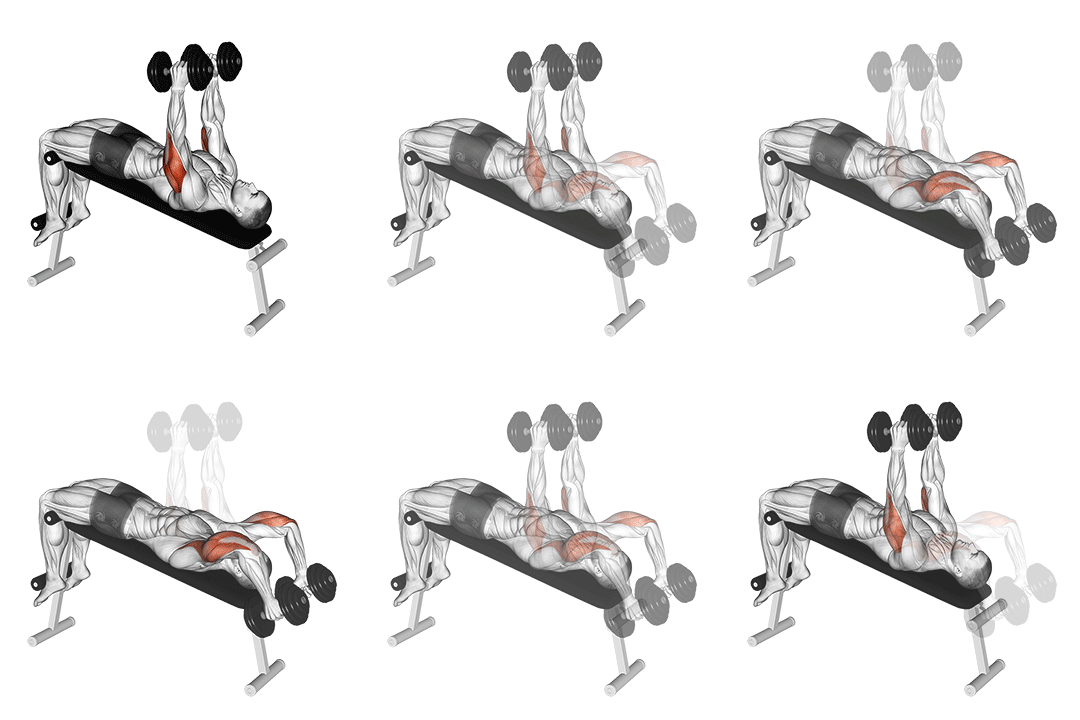
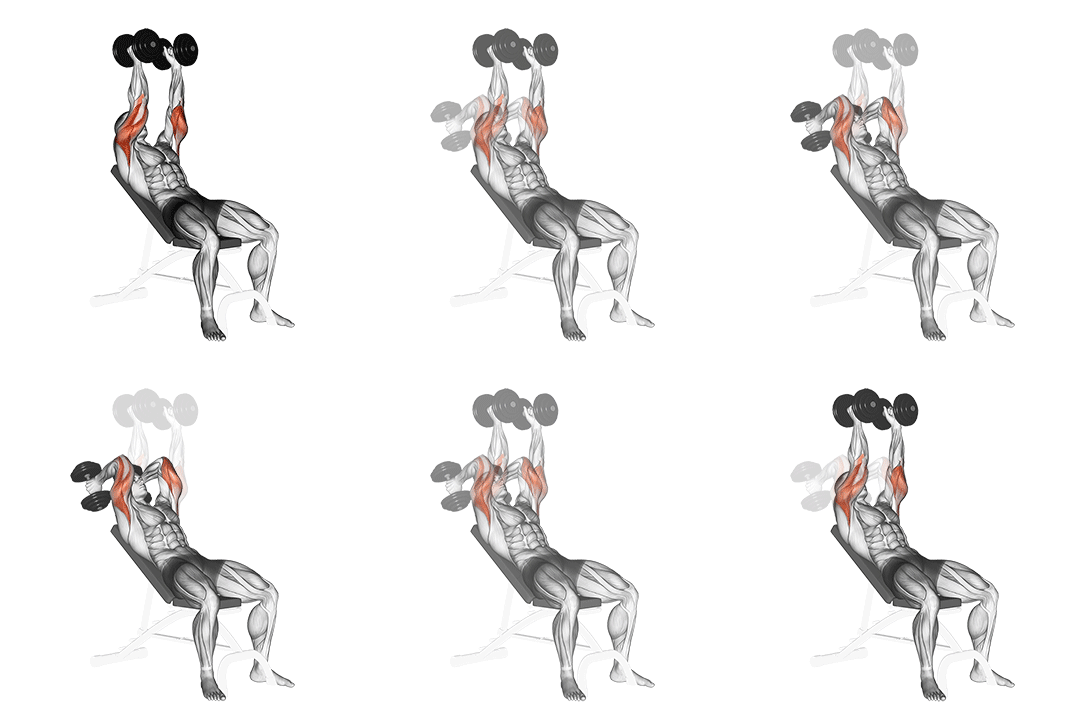
Dumbbell Decline Triceps Extension
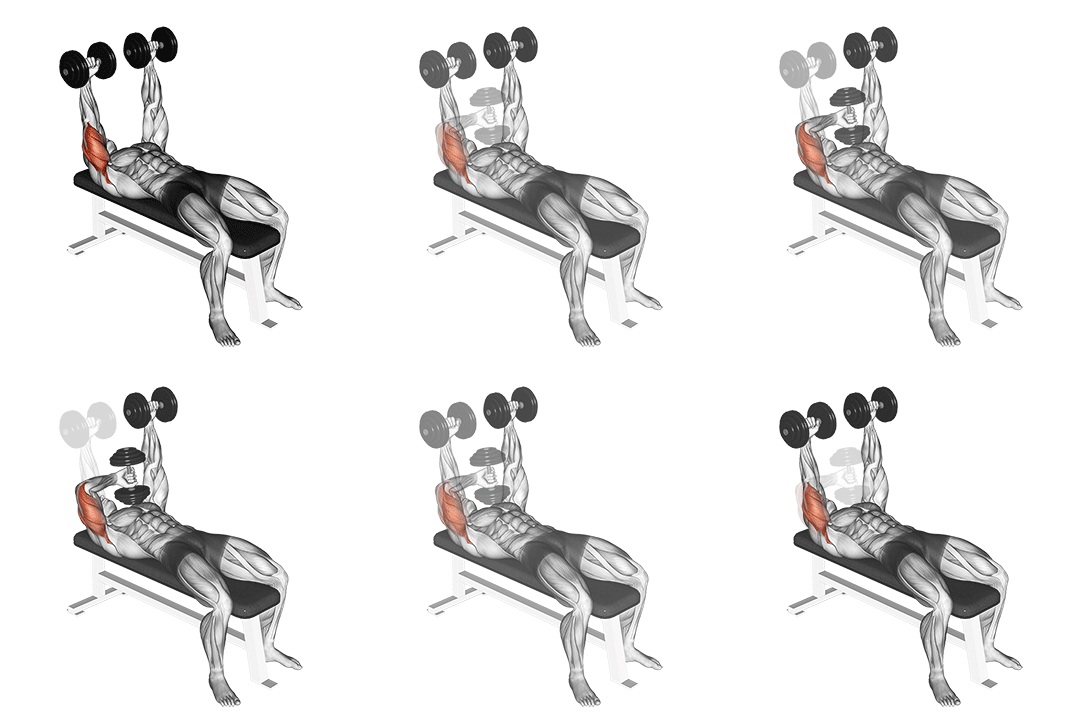
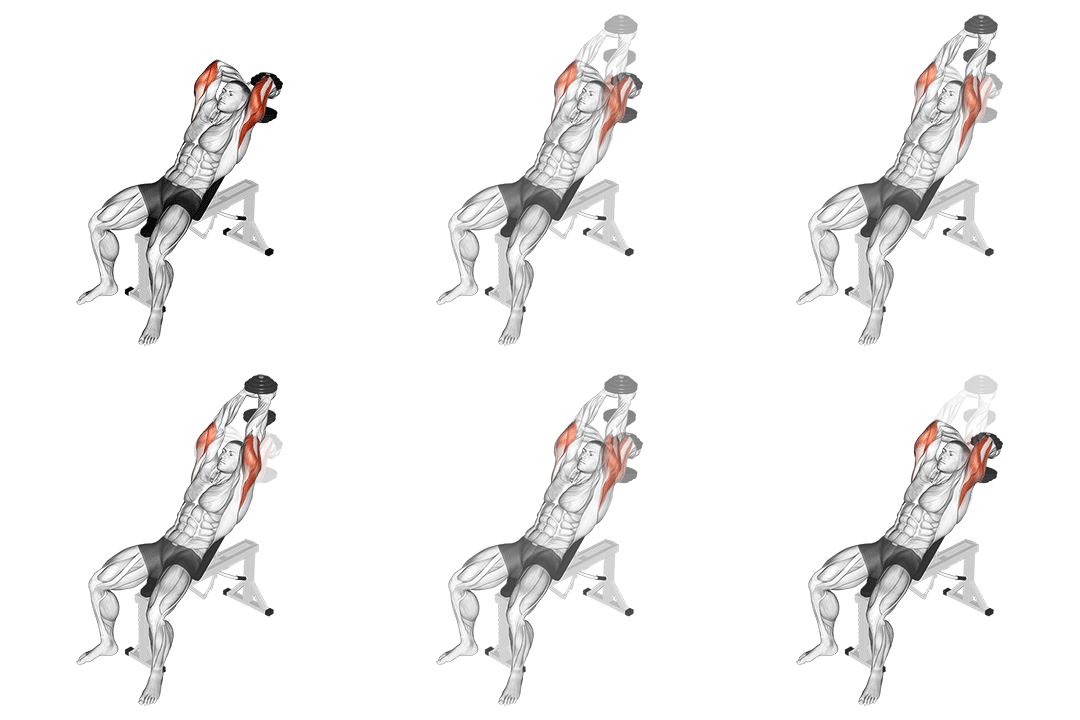
Dumbbell Lying Extension (across Face)
Head-to-Head Comparison
| Attribute | Dumbbell Decline Triceps Extension | Dumbbell Lying Extension (across Face) |
|---|---|---|
| Target Muscle |
Triceps
|
Triceps
|
| Body Part |
Upper-arms
|
Upper-arms
|
| Equipment |
Dumbbell
|
Dumbbell
|
| Difficulty |
Intermediate
|
Intermediate
|
| Movement Type |
Isolation
|
Isolation
|
| Secondary Muscles |
1
|
1
|
Secondary Muscles Activated
Dumbbell Decline Triceps Extension
Dumbbell Lying Extension (across Face)
Visual Comparison
Overview
Dumbbell Decline Triceps Extension vs Dumbbell Lying Extension (across Face) — you’re choosing between two solid isolation moves for the triceps. I’ll walk you through muscle activation, technique cues, equipment needs, and when to pick each exercise for hypertrophy, strength, or convenience. Expect clear, actionable tips: setup angles, elbow and shoulder positions, rep ranges (6–12 for growth, 3–6 for strength), and simple progressions so you can pick the move that matches your goals and training setup.
Key Differences
- Both exercises target the Triceps using Dumbbell. The main differences are in their movement patterns and muscle activation angles.
Pros & Cons
Dumbbell Decline Triceps Extension
+ Pros
- Greater long-head stretch thanks to shoulder extension at -15° to -30°, useful for hypertrophy.
- Larger ROM increases time under tension and eccentric loading potential.
- Strong isolation of triceps with limited chest assistance when upper arms are fixed.
- Good for implementing slow eccentrics and partials to boost mechanical tension.
− Cons
- Requires a decline bench or adjustable setup.
- Slightly higher shoulder strain if elbows flare or angle is too steep.
- More setup time and less practical for home-only training without equipment.
Dumbbell Lying Extension (across Face)
+ Pros
- Very accessible — needs only a flat bench or floor and a dumbbell.
- More stable starting position, making it easier to lift heavier loads safely.
- Simpler setup reduces technique errors for beginners.
- Less shoulder strain when performed with elbows tucked and upper arms fixed.
− Cons
- Slightly shorter ROM limits long‑head stretch compared with decline.
- Can encourage momentum or forehead contact if tempo is uncontrolled.
- Less potential to exploit eccentric overload unless you use tempo or pauses.
When Each Exercise Wins
The decline position increases long‑head stretch and overall ROM, raising passive tension and eccentric stress—use 6–12 reps with 2–3s eccentrics to maximize mechanical tension for growth.
The flat setup is more stable, letting you handle heavier loads with a strict elbow hinge. Use lower reps (3–6) and progressive overload to build triceps strength with minimal balance demands.
Simpler setup and a stable flat position make it easier to learn elbow-hinge mechanics and maintain safe form. Start with light weight and 8–12 controlled reps.
Requires only a flat surface and a dumbbell, making it practical for limited-equipment settings. The decline option usually needs an adjustable bench found in gyms.
Frequently Asked Questions
Can I do both Dumbbell Decline Triceps Extension and Dumbbell Lying Extension (across Face) in the same workout?
Yes. Pair them as a superset or sequential exercises—start with the heavier, more taxing variation (usually decline for hypertrophy or flat for strength), then use the other for 2–3 drop sets of 8–12 reps to increase total volume.
Which exercise is better for beginners?
Dumbbell Lying Extension (across Face) is better for beginners due to its stable flat position and simpler setup. Focus on form—keep upper arms fixed and hinge at the elbows—before adding load.
How do the muscle activation patterns differ?
Activation differs mainly by shoulder angle: the decline version lengthens the long head before contraction, increasing passive tension and eccentric load, while the flat across-face keeps the triceps at a shorter starting length and favors heavier concentric force.
Can Dumbbell Lying Extension (across Face) replace Dumbbell Decline Triceps Extension?
Yes, it can replace it if you lack a decline bench or want more stability, but you may sacrifice long‑head stretch and eccentric overload. If hypertrophy is the priority, rotate decline variations back into your program when possible.
Expert Verdict
Use Dumbbell Decline Triceps Extension when your goal is targeted hypertrophy and you have an adjustable decline bench: the shoulder extension (about -15° to -30°) increases long-head stretch and eccentric tension, so program 6–12 reps with controlled 2–3s eccentrics. Choose Dumbbell Lying Extension (across Face) when you want stability, easier loading, or are training at home; it’s better for beginners and for raw strength work with 3–6 reps. Both require strict elbow hinge and tucked elbows; rotate them across training blocks to exploit different length‑tension advantages and reduce overuse.
Also Compare
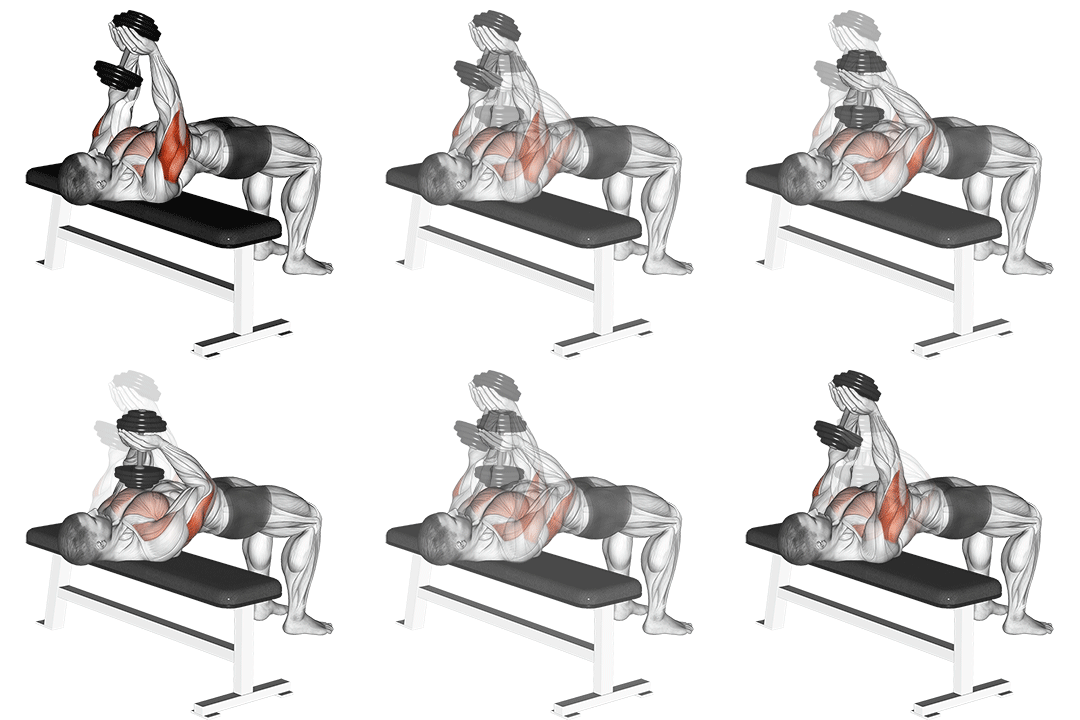
More comparisons with Dumbbell Decline Triceps Extension
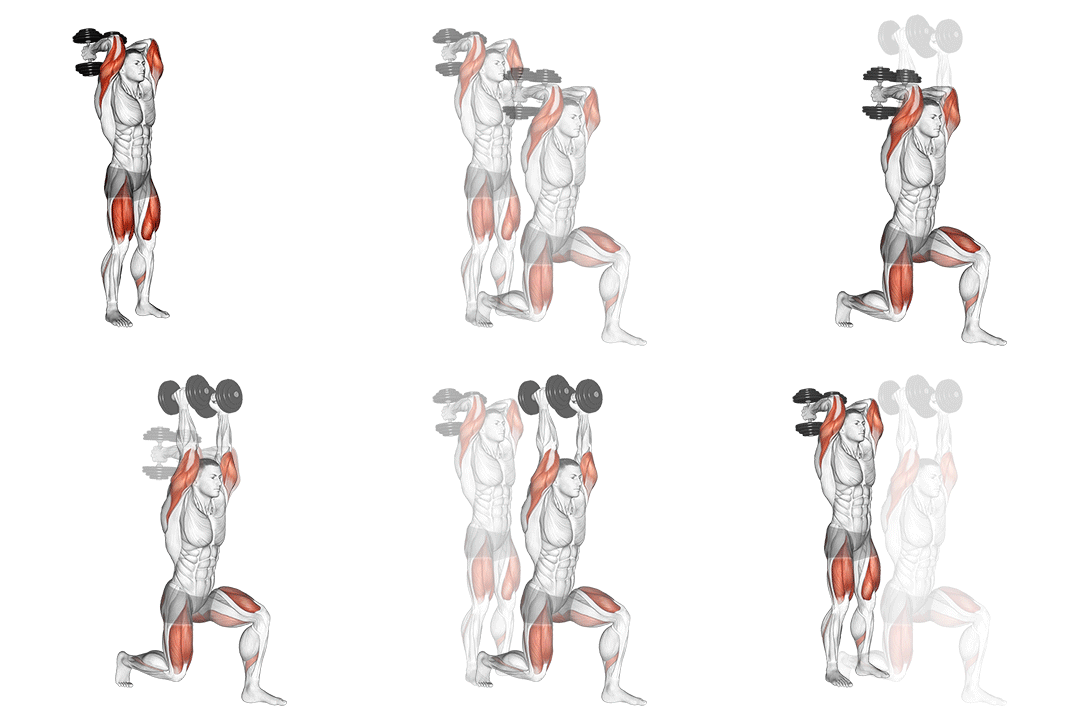
More comparisons with Dumbbell Lying Extension (across Face)
Compare More Exercises
Use our free comparison tool to analyze any two exercises head-to-head.
Compare Exercises