

Dumbbell Incline Triceps Extension vs Dumbbell Kickback: Complete Comparison Guide
Dumbbell Incline Triceps Extension vs Dumbbell Kickback — you’ve picked two solid isolation moves for the triceps. This guide walks you through how each hits the triceps heads, which secondary muscles assist, equipment and setup differences, technique cues (bench angle, hip hinge, elbow path), rep ranges, and when to choose one over the other based on hypertrophy, strength, or convenience.
Exercise Comparison
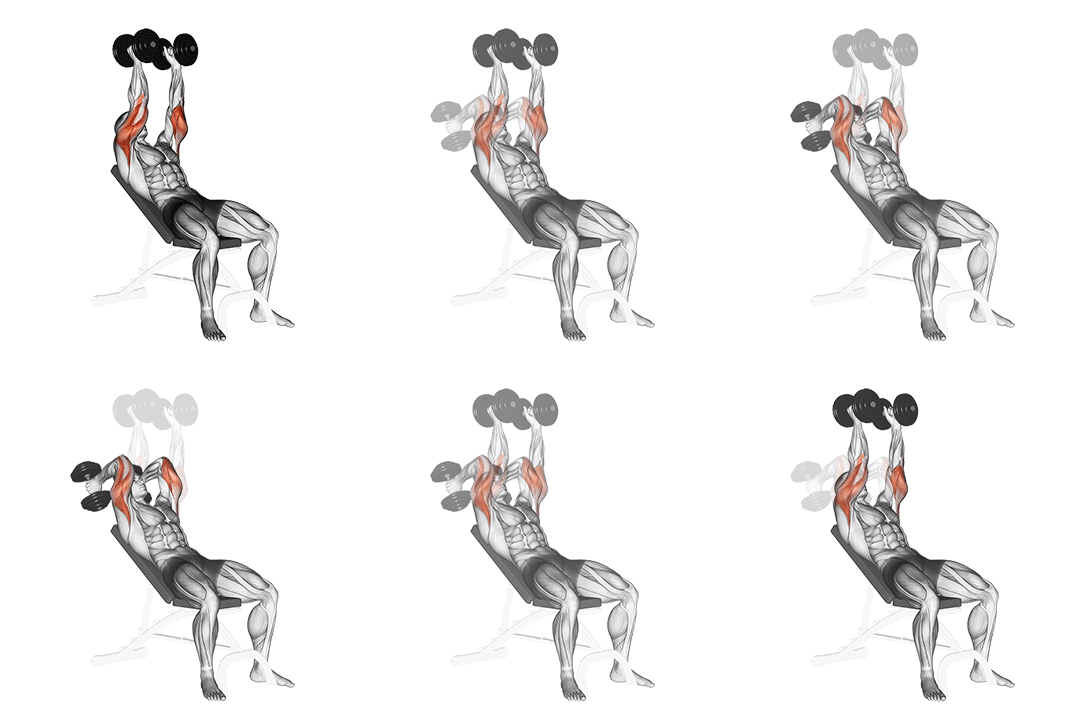
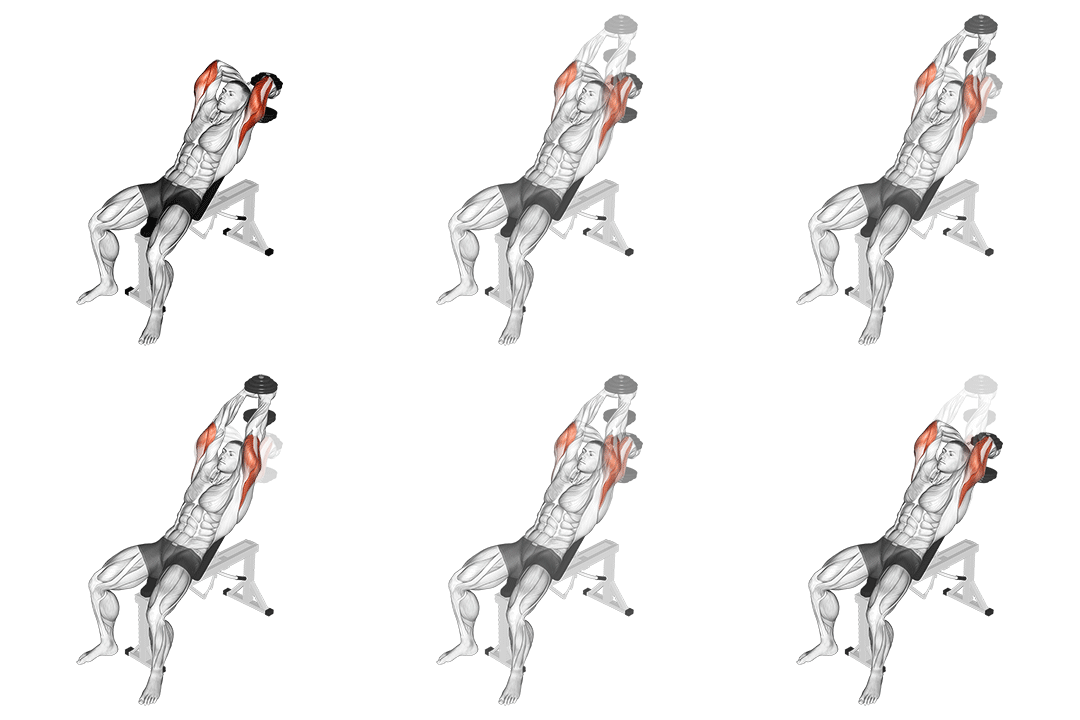
Dumbbell Incline Triceps Extension
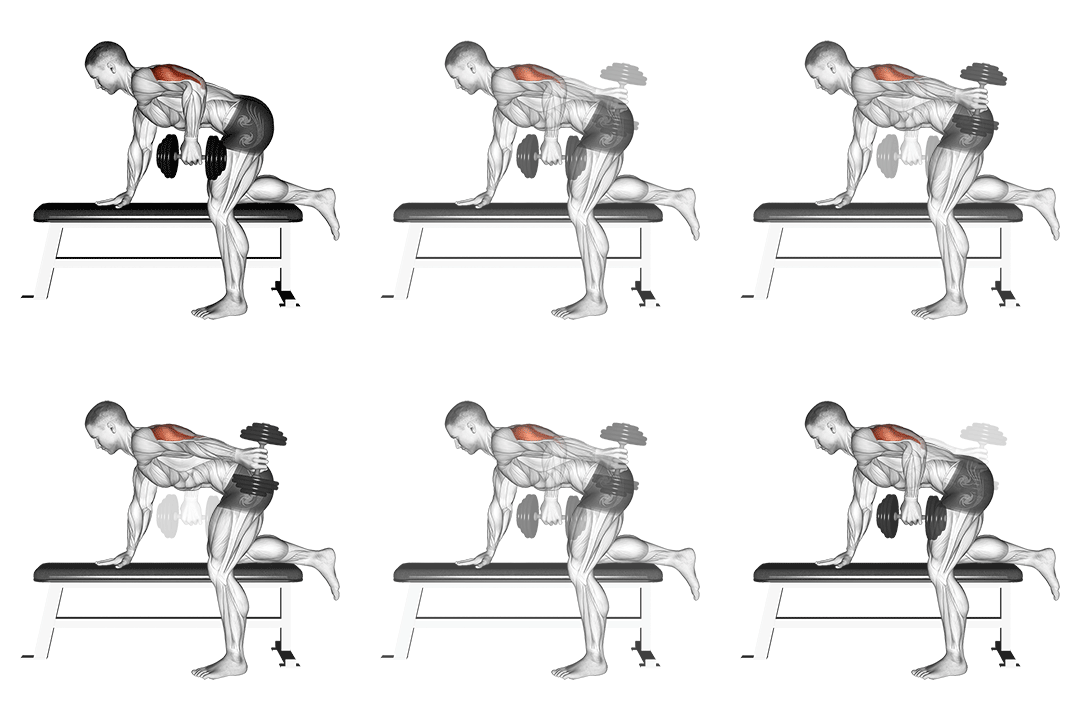
Dumbbell Kickback
Head-to-Head Comparison
| Attribute | Dumbbell Incline Triceps Extension | Dumbbell Kickback |
|---|---|---|
| Target Muscle |
Triceps
|
Triceps
|
| Body Part |
Upper-arms
|
Upper-arms
|
| Equipment |
Dumbbell
|
Dumbbell
|
| Difficulty |
Intermediate
|
Beginner
|
| Movement Type |
Isolation
|
Isolation
|
| Secondary Muscles |
1
|
1
|
Secondary Muscles Activated
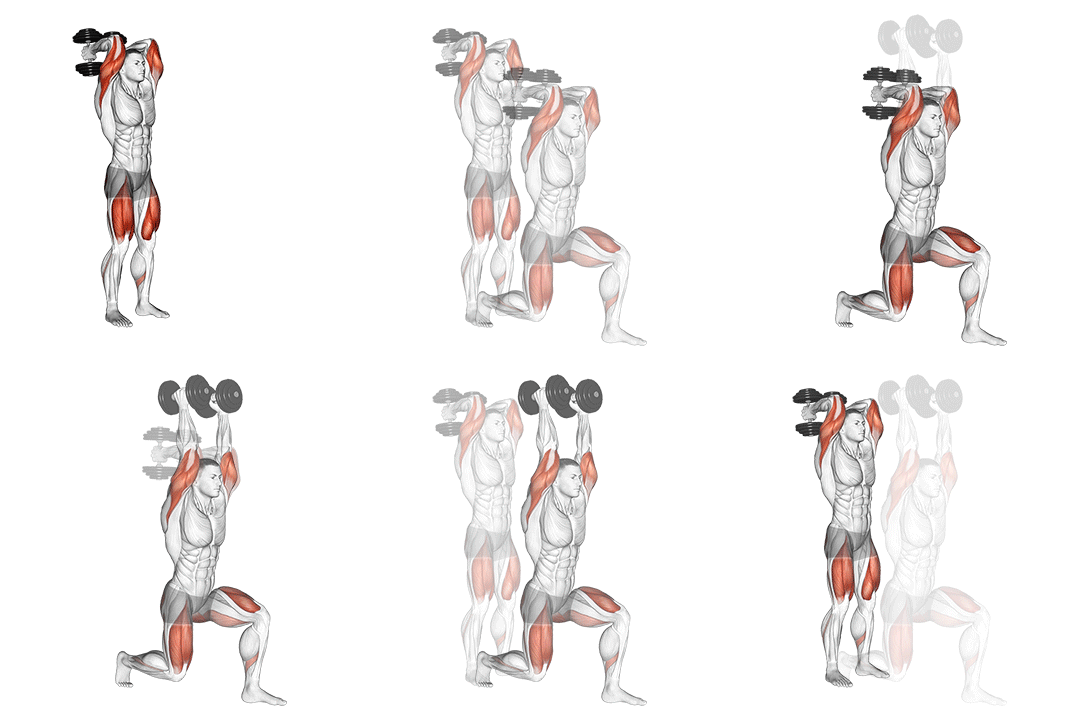
Dumbbell Incline Triceps Extension
Dumbbell Kickback
Visual Comparison
Overview
Dumbbell Incline Triceps Extension vs Dumbbell Kickback — you’ve picked two solid isolation moves for the triceps. This guide walks you through how each hits the triceps heads, which secondary muscles assist, equipment and setup differences, technique cues (bench angle, hip hinge, elbow path), rep ranges, and when to choose one over the other based on hypertrophy, strength, or convenience.
Key Differences
- Difficulty levels differ: Dumbbell Incline Triceps Extension is intermediate, while Dumbbell Kickback is beginner.
- Both exercises target the Triceps using Dumbbell. The main differences are in their movement patterns and muscle activation angles.
Pros & Cons
Dumbbell Incline Triceps Extension
+ Pros
- Stronger long‑head activation due to pre‑stretch on a 30–45° bench
- Longer range of motion increases time under tension for hypertrophy
- Easier to overload with heavier dumbbells for strength work
- Good for 6–12 rep ranges and controlled eccentrics
− Cons
- Requires an adjustable bench and setup time
- Higher shoulder stabilization demand; can aggravate rotator cuff if form slips
- Harder to maintain strict elbow position under heavy load
Dumbbell Kickback
+ Pros
- Very accessible—minimal setup, works well as a finisher
- Lower shoulder stress; easier on the rotator cuff
- Great for high‑rep work and metabolic sets (10–20+ reps)
- Simple technique once you nail the hinge and elbow path
− Cons
- Limited loading potential due to short lever and ROM
- Easy to cheat with momentum, reducing triceps tension
- Can strain lower back if you don’t brace the torso properly
When Each Exercise Wins
Incline extensions place the long head under a greater pre‑stretch and increase time under tension via a longer ROM. Use 3–4 sets of 6–12 reps with a controlled 2–3s eccentric to maximize mechanical tension.
Allows heavier loading and progressive overload strategies (heavier sets, slow eccentrics, partials). Its vertical component increases elbow torque capacity compared with the horizontal kickback.
Simpler movement pattern and less setup make kickbacks easier to learn. Start with 2–3 sets of 10–15 reps focusing on keeping the upper arm still and squeezing at full extension.
Requires only a dumbbell and a small support; no adjustable bench needed. It’s compact, quick to program as a finisher, and effective in higher rep ranges when heavier dumbbells aren’t available.
Frequently Asked Questions
Can I do both Dumbbell Incline Triceps Extension and Dumbbell Kickback in the same workout?
Yes. Pair incline extensions early in the session for heavier sets (3–4 sets of 6–12) and use kickbacks later as a higher‑rep finisher (2–4 sets of 12–20). Prioritize heavy compound pressing first, then incline for mechanical tension and kickbacks for metabolic work.
Which exercise is better for beginners?
Dumbbell Kickback is better for beginners because it’s easier to learn and requires minimal setup. Focus on tempo and keeping the upper arm stable before adding weight or switching to incline extensions.
How do the muscle activation patterns differ?
Incline extensions bias the long head through shoulder flexion and a longer stretch, producing higher tension earlier in the concentric. Kickbacks concentrate activation near full extension with a horizontal force vector that emphasizes the lateral and medial heads.
Can Dumbbell Kickback replace Dumbbell Incline Triceps Extension?
Kickbacks can replace incline extensions if your priority is convenience or high‑rep volume, but they’re not a perfect substitute for long‑head stretch and heavy overload. For maximal hypertrophy and strength, keep incline extensions in the program when possible.
Expert Verdict
Use the incline triceps extension as your primary isolation move when your goal is hypertrophy or increasing triceps strength: set the bench to 30–45°, control the eccentric for 2–3 seconds, and target 6–12 reps across 3–4 sets. Use dumbbell kickbacks as an accessory, finisher, or beginner option—hinge at the hips about 30–45°, keep the upper arm locked to the side, and aim for 10–20 reps to pump the lateral and medial heads. Rotate both into your program: incline for heavy, tension‑based sessions; kickbacks for volume, technique practice, or when equipment is limited.
Also Compare
More comparisons with Dumbbell Incline Triceps Extension
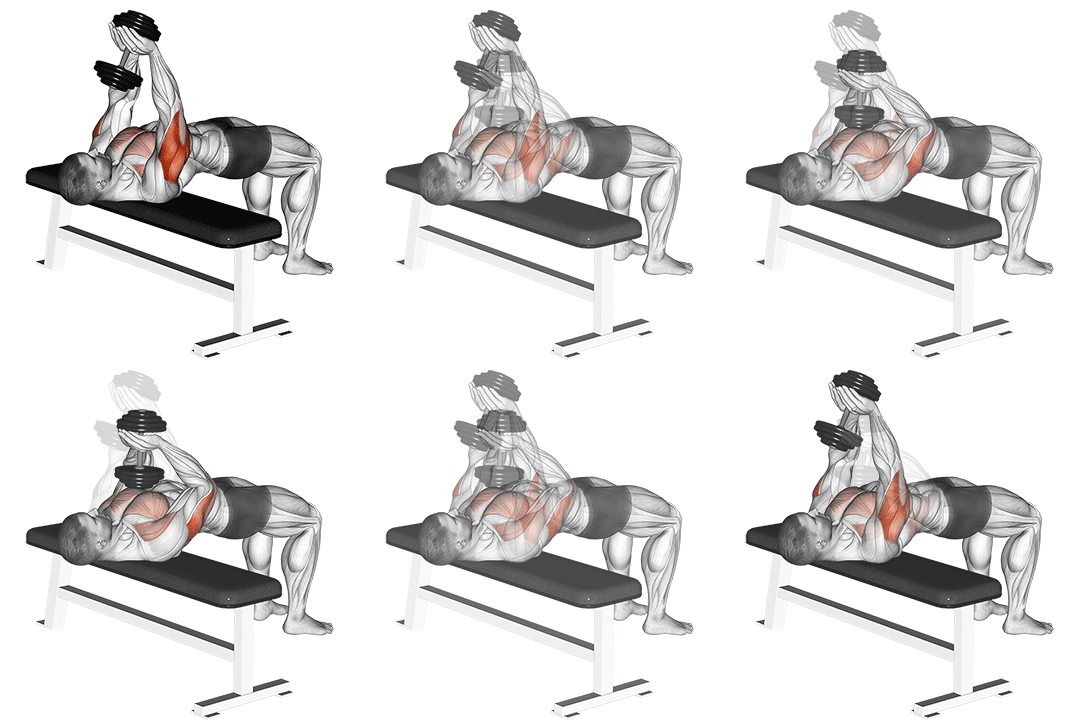
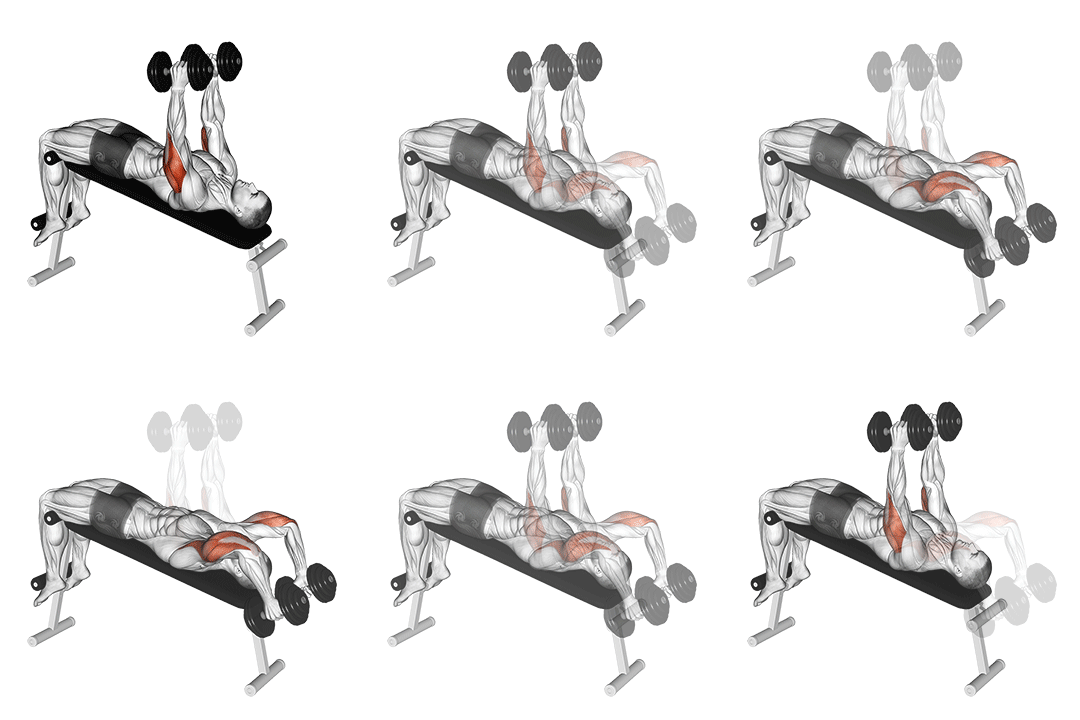
More comparisons with Dumbbell Kickback
Compare More Exercises
Use our free comparison tool to analyze any two exercises head-to-head.
Compare Exercises