

Dumbbell Incline Triceps Extension vs Dumbbell Lying Extension (across Face): Complete Comparison Gu
Dumbbell Incline Triceps Extension vs Dumbbell Lying Extension (across Face) — if you want stronger, thicker upper-arms, you should pick the right skull-crusher variation. I’ll walk you through how each exercise stresses the triceps (long head vs lateral), required equipment, technique cues (bench angle, elbow path, tempo), injury risk, and rep ranges for muscle growth and strength. Read on so you can choose the movement that matches your biomechanics and programming, or pair them intelligently in the same workout.
Exercise Comparison
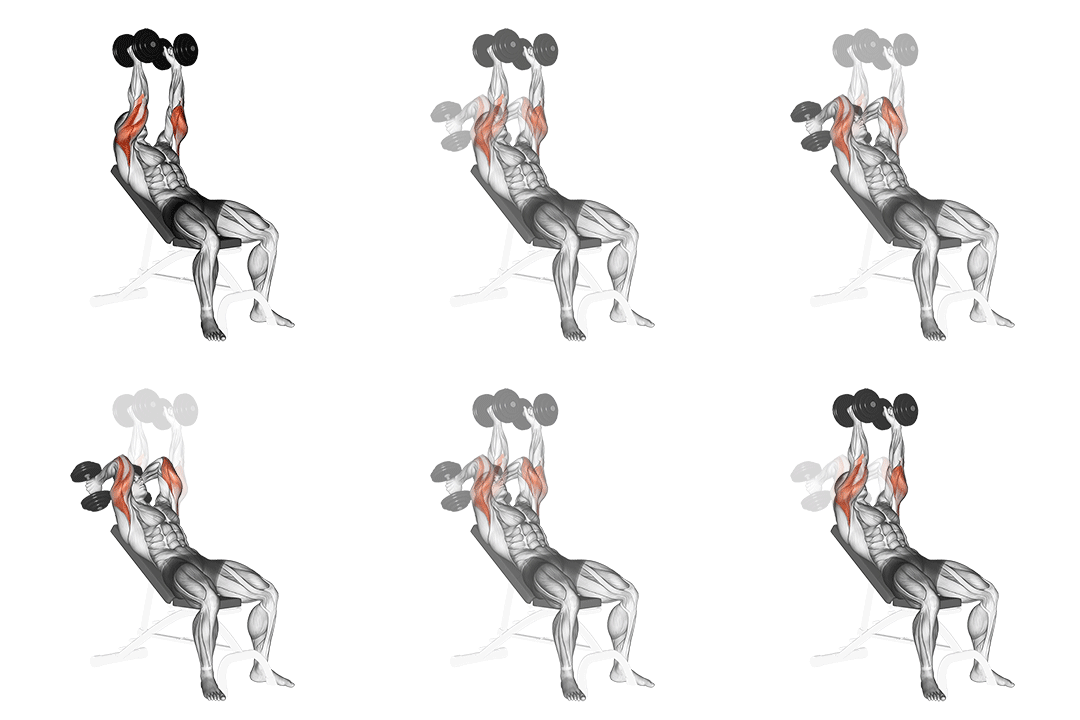
Dumbbell Incline Triceps Extension
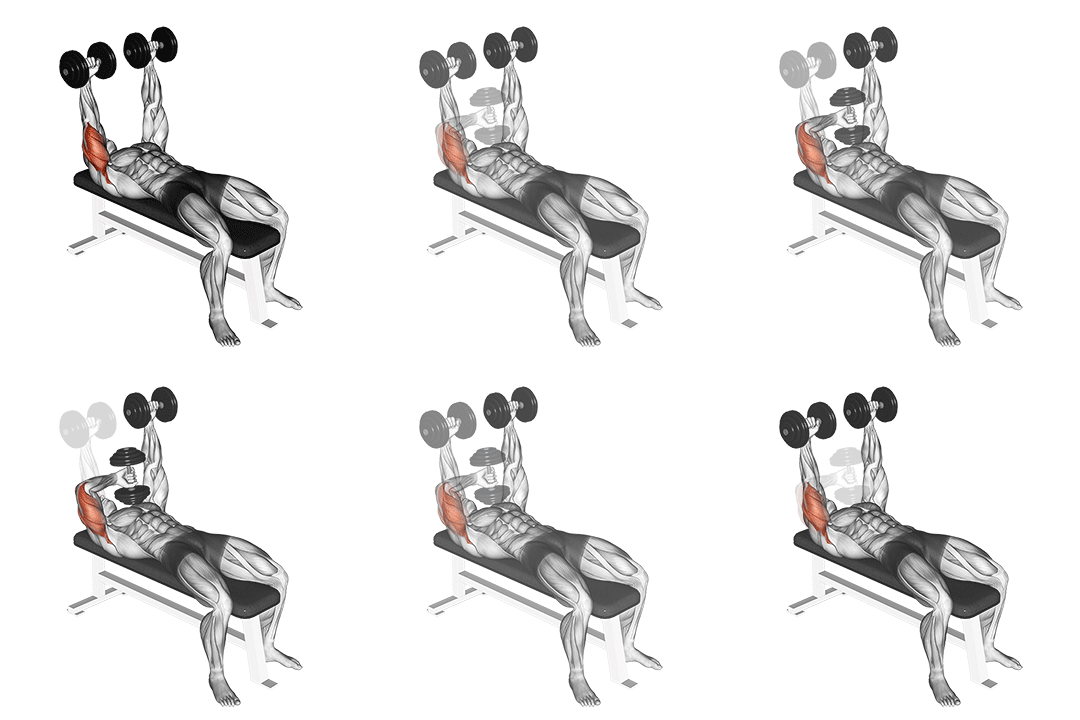
Dumbbell Lying Extension (across Face)
Head-to-Head Comparison
| Attribute | Dumbbell Incline Triceps Extension | Dumbbell Lying Extension (across Face) |
|---|---|---|
| Target Muscle |
Triceps
|
Triceps
|
| Body Part |
Upper-arms
|
Upper-arms
|
| Equipment |
Dumbbell
|
Dumbbell
|
| Difficulty |
Intermediate
|
Intermediate
|
| Movement Type |
Isolation
|
Isolation
|
| Secondary Muscles |
1
|
1
|
Secondary Muscles Activated
Dumbbell Incline Triceps Extension
Dumbbell Lying Extension (across Face)
Visual Comparison
Overview
Dumbbell Incline Triceps Extension vs Dumbbell Lying Extension (across Face) — if you want stronger, thicker upper-arms, you should pick the right skull-crusher variation. I’ll walk you through how each exercise stresses the triceps (long head vs lateral), required equipment, technique cues (bench angle, elbow path, tempo), injury risk, and rep ranges for muscle growth and strength. Read on so you can choose the movement that matches your biomechanics and programming, or pair them intelligently in the same workout.
Key Differences
- Both exercises target the Triceps using Dumbbell. The main differences are in their movement patterns and muscle activation angles.
Pros & Cons
Dumbbell Incline Triceps Extension
+ Pros
- Greater long-head stretch (better for long-head emphasis and full-range tension)
- Angle manipulation (30°–45°) allows targeted loading of triceps length-tension
- Good for higher-rep tempo work (3–4 second eccentrics) to increase time under tension
- Reduced peak compressive load on the elbow at lockout compared with some flat variations
− Cons
- Requires adjustable bench and more setup
- Greater shoulder demand increases risk if form breaks down
- Harder to control balance with heavier dumbbells because of longer arc
Dumbbell Lying Extension (across Face)
+ Pros
- Simple setup with flat bench — more accessible for most lifters
- Easier to overload with heavier dumbbells for strength (4–8 rep ranges)
- Shorter arm arc improves control and technique learning
- Feels more isolated at mid-range, helpful for strict elbow-extension strength
− Cons
- Less long-head stretch, so slightly less emphasis on full-length tension
- Can place high compressive/eccentric stress on the elbow if tempo is too fast
- Limited angle variation compared with incline for targeting specific heads
When Each Exercise Wins
Incline lengthens the long head and allows more time under tension at stretched positions—use 8–15 reps with 2–4 second eccentrics to maximize mechanical tension and metabolic stress for growth.
The flat lying position offers a shorter, more controlled arc and easier overload with heavier loads (4–8 reps), making it better for building raw elbow-extension strength.
It has a simpler setup and more stable shoulder position, so beginners learn strict elbow extension mechanics faster with less shoulder coordination required.
Needs only a flat bench and a dumbbell, so it’s easier to perform at home without an adjustable incline bench or complex setup.
Frequently Asked Questions
Can I do both Dumbbell Incline Triceps Extension and Dumbbell Lying Extension (across Face) in the same workout?
Yes. A practical approach is to start with the incline for 2–3 sets of 8–12 reps to pre-stretch and fatigue the long head, then finish with 2–3 heavier lying-across-face sets for 6–8 reps to tax strength and mid-range torque.
Which exercise is better for beginners?
Dumbbell Lying Extension (across Face) is better for beginners because the shoulder is more stable and the arm path is shorter, making it easier to learn strict elbow extension and control the eccentric phase.
How do the muscle activation patterns differ?
Incline increases long-head activation by placing the shoulder into greater flexion, lengthening the muscle and raising passive tension early in the ROM. Lying-across-face shifts peak torque toward mid-ROM, favoring lateral/medial head contribution and allowing heavier loads.
Can Dumbbell Lying Extension (across Face) replace Dumbbell Incline Triceps Extension?
It can replace it for strength-focused work and simple programming, but it won’t replicate the same long-head stretch. If long-head hypertrophy is a priority, keep the incline variant in your rotation or alternate weekly.
Expert Verdict
Choose the Dumbbell Incline Triceps Extension when your priority is long-head development and fuller-range tension—set the bench to 30°–45°, use 8–15 reps, and control a 2–4 second eccentric to exploit length-tension advantages. Pick the Dumbbell Lying Extension (across Face) when you want straightforward overload and strength (4–8 reps) or when equipment is limited. You can also pair them: start with incline sets for long-head pre-exhaust (3 sets of 10–12) and finish with 2–3 heavy lying-across-face sets for strength and mechanical overload. Be strict with elbow positioning, control the eccentric, and avoid excessive weight that breaks form.
Also Compare
More comparisons with Dumbbell Incline Triceps Extension
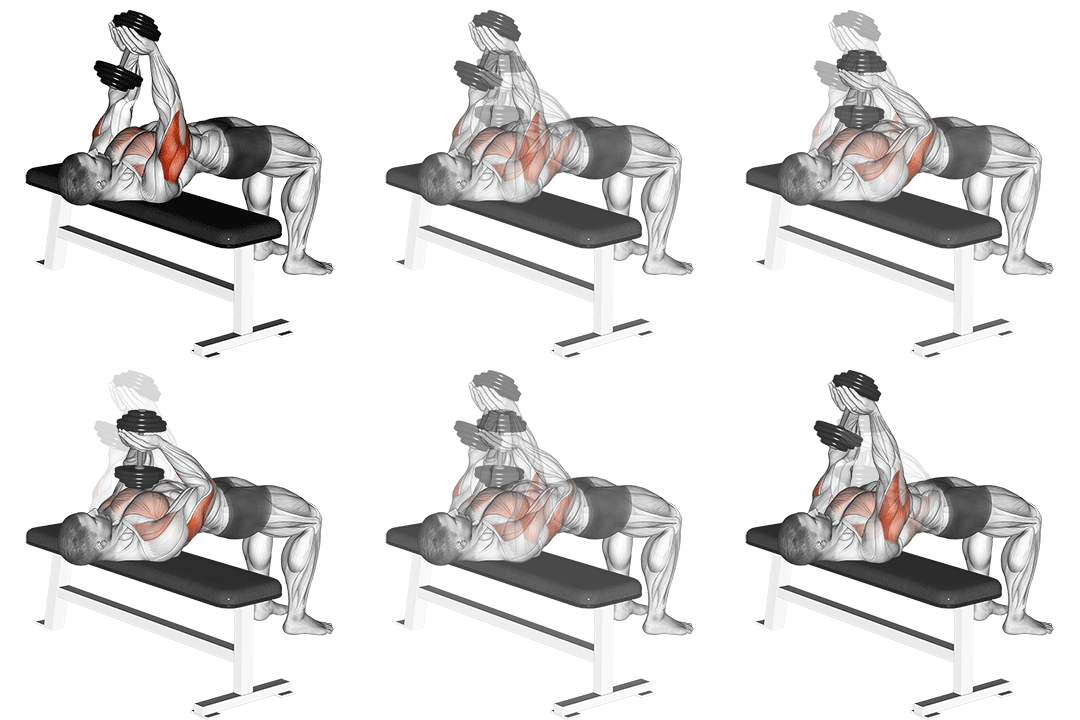
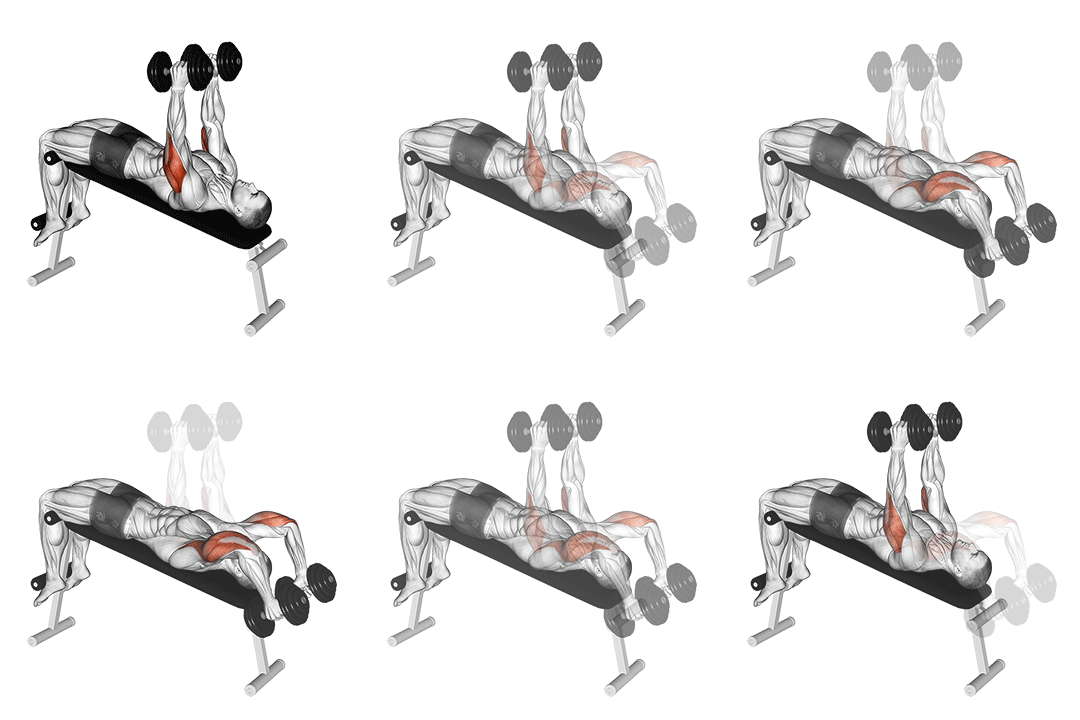
More comparisons with Dumbbell Lying Extension (across Face)
Compare More Exercises
Use our free comparison tool to analyze any two exercises head-to-head.
Compare Exercises