

Dumbbell Incline Two Arm Extension vs Dumbbell Kickback: Complete Comparison Guide
Dumbbell Incline Two Arm Extension vs Dumbbell Kickback — you’re comparing two isolation moves that both target the triceps but load the muscle differently. In this guide you’ll get a clear breakdown of which heads of the triceps each exercise emphasizes, the equipment and bench angles you need, learning curves and injury risk, and rep ranges that maximize muscle growth. I’ll give practical technique cues (bench angle, elbow position, tempo) and decisive recommendations so you can pick the right move for hypertrophy, strength, beginners, or home training.
Exercise Comparison
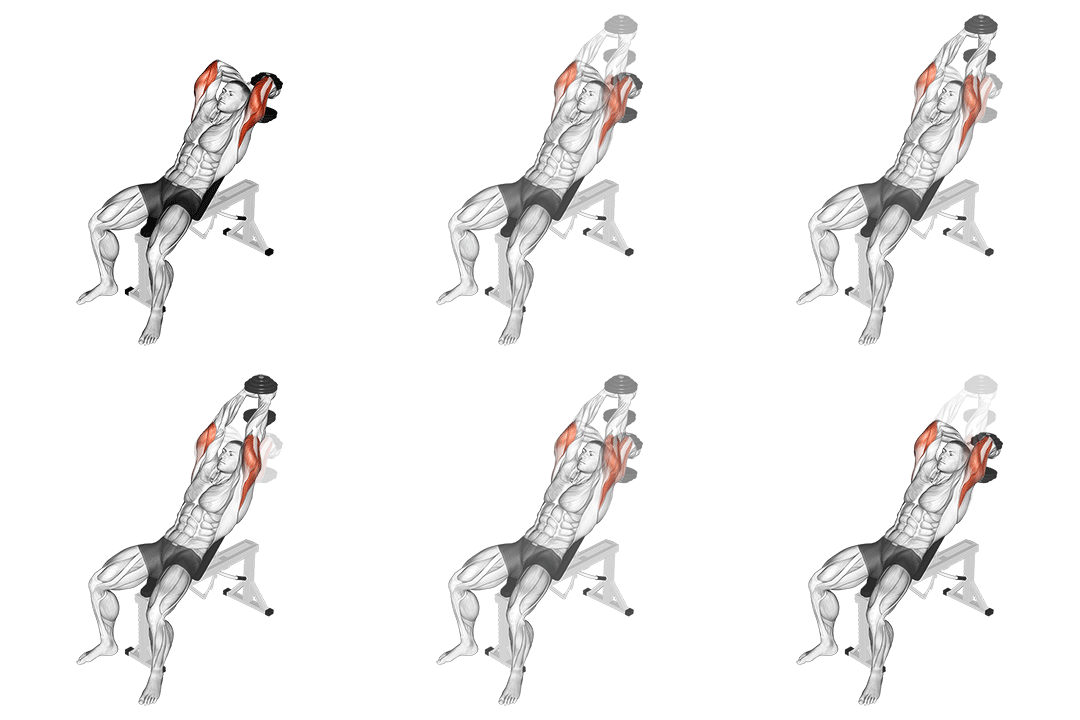
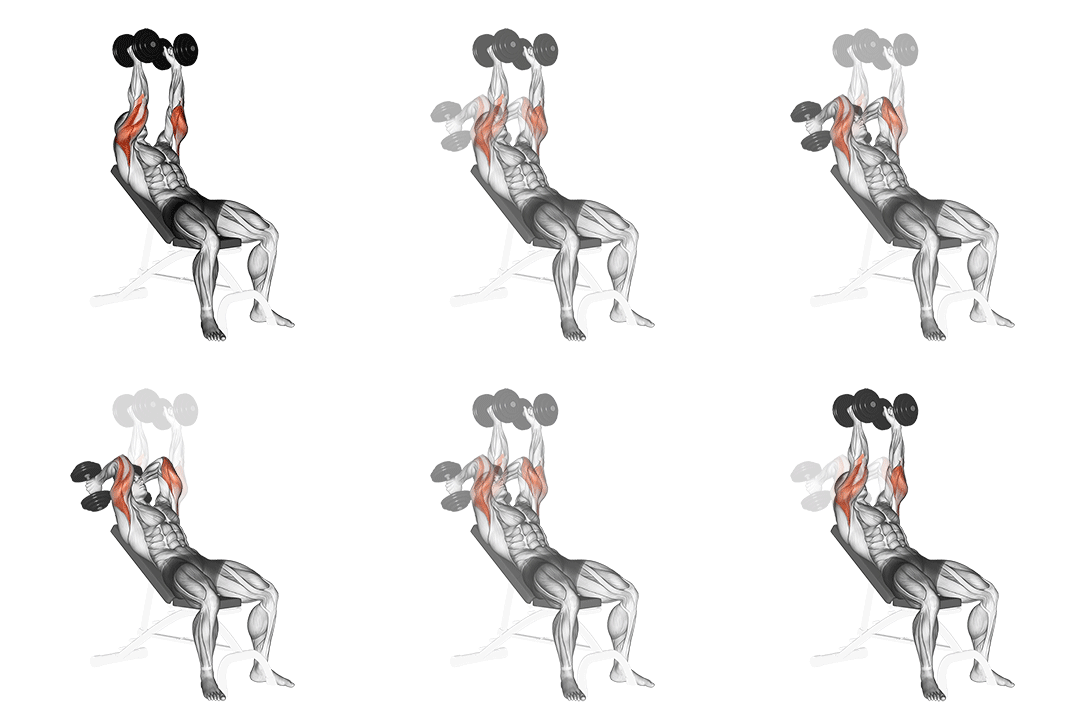
Dumbbell Incline Two Arm Extension
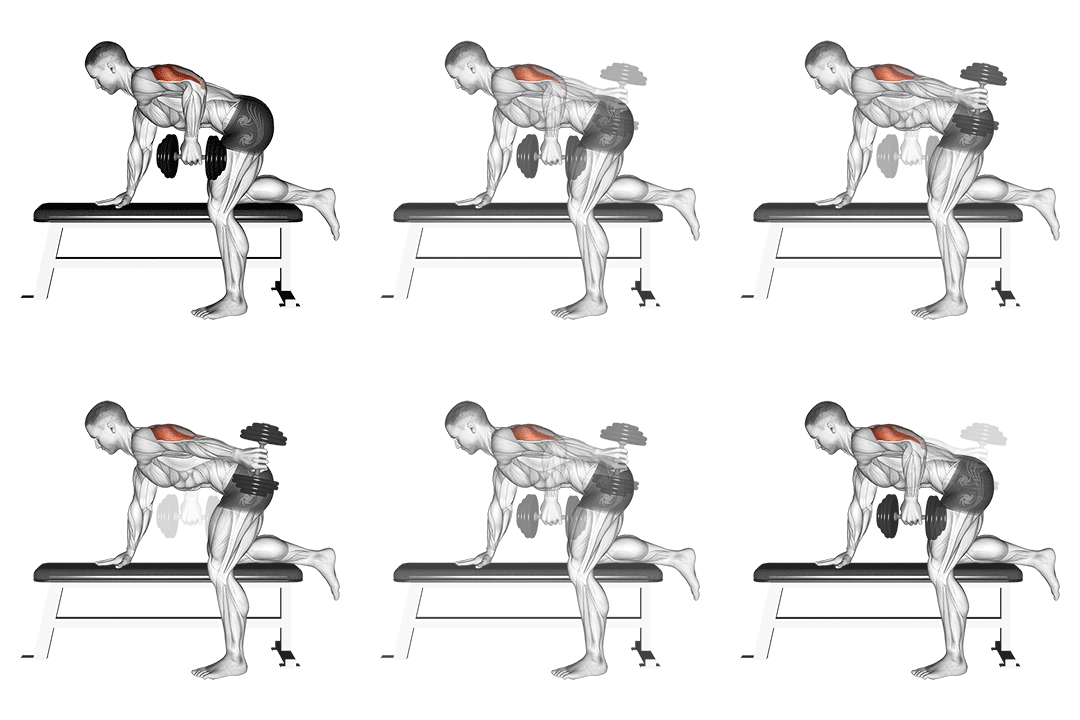
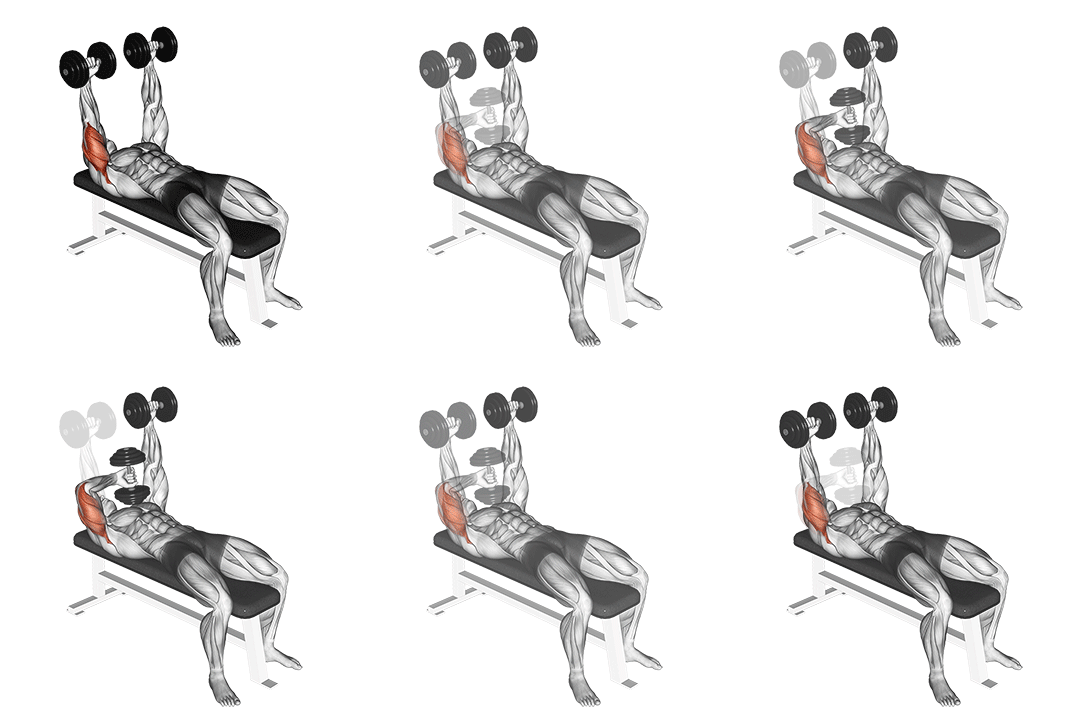
Dumbbell Kickback
Head-to-Head Comparison
| Attribute | Dumbbell Incline Two Arm Extension | Dumbbell Kickback |
|---|---|---|
| Target Muscle |
Triceps
|
Triceps
|
| Body Part |
Upper-arms
|
Upper-arms
|
| Equipment |
Dumbbell
|
Dumbbell
|
| Difficulty |
Intermediate
|
Beginner
|
| Movement Type |
Isolation
|
Isolation
|
| Secondary Muscles |
1
|
1
|
Secondary Muscles Activated
Dumbbell Incline Two Arm Extension
Dumbbell Kickback
Visual Comparison
Overview
Dumbbell Incline Two Arm Extension vs Dumbbell Kickback — you’re comparing two isolation moves that both target the triceps but load the muscle differently. In this guide you’ll get a clear breakdown of which heads of the triceps each exercise emphasizes, the equipment and bench angles you need, learning curves and injury risk, and rep ranges that maximize muscle growth. I’ll give practical technique cues (bench angle, elbow position, tempo) and decisive recommendations so you can pick the right move for hypertrophy, strength, beginners, or home training.
Key Differences
- Difficulty levels differ: Dumbbell Incline Two Arm Extension is intermediate, while Dumbbell Kickback is beginner.
- Both exercises target the Triceps using Dumbbell. The main differences are in their movement patterns and muscle activation angles.
Pros & Cons
Dumbbell Incline Two Arm Extension
+ Pros
- Greater long-head stretch for hypertrophy through a 30–45° bench angle
- Allows heavier loading and progressive overload
- Longer eccentric ROM increases time under tension
- Easy to manipulate tempo (slow eccentrics, paused bottom)
− Cons
- Requires an incline bench and more space
- Higher shoulder/elbow torque increases injury risk if form breaks down
- Harder to keep strict form with very heavy weight
Dumbbell Kickback
+ Pros
- Highly accessible — needs only a dumbbell and minimal space
- Lower shoulder torque; easier on the rotator cuff
- Clear peak contraction at lockout for neuromuscular control
- Quick to learn and correct with simple cues
− Cons
- Limited loading potential due to short ROM and small dumbbells
- Less stretch stimulus on the long head compared with incline variants
- Easy to cheat by swinging the torso or moving the shoulder
When Each Exercise Wins
The incline position stretches the long head under load and provides a longer eccentric phase—both potent hypertrophy stimuli. Use 3–5 sets of 6–12 reps with a 30–45° bench angle and controlled 2–4 second eccentrics to maximize fiber recruitment.
Incline extensions allow heavier absolute loads and longer moment arms, which transfer better to increasing triceps force production. Focus on 4–6 rep ranges with progressive loading and strict elbows to build maximal strength.
Kickbacks have a simple movement pattern and lower joint torque, so you can learn elbow isolation and peak contraction quickly. Start with 2–4 sets of 10–15 reps and concentrate on keeping the upper arm fixed and the wrist neutral.
Kickbacks need only a single dumbbell and no bench, making them ideal for limited-equipment sessions. They let you maintain triceps volume using time under tension and high reps when heavier weights aren’t available.
Frequently Asked Questions
Can I do both Dumbbell Incline Two Arm Extension and Dumbbell Kickback in the same workout?
Yes. Start with the incline two-arm extension as your main heavy or strength-focused movement (3–5 sets of 6–12 reps), then finish with kickbacks for 2–4 sets of 10–15 reps to target peak contraction and metabolic stress.
Which exercise is better for beginners?
Dumbbell Kickback is better for beginners because it isolates the elbow extension pattern with lower shoulder torque and a simpler cue set. Master strict upper-arm position and controlled lockout before progressing to incline extensions.
How do the muscle activation patterns differ?
Incline two-arm extension places the long head at a longer muscle length during the eccentric phase, increasing its activation via length–tension mechanics. Kickbacks produce greater peak contraction of the lateral/medial heads near full extension because of the short lever and terminal lockout position.
Can Dumbbell Kickback replace Dumbbell Incline Two Arm Extension?
Not entirely. Kickbacks can substitute for volume or as a finisher, but they don’t provide the same long-head stretch or heavy-loading potential as the incline extension. If your goal is maximal triceps hypertrophy or strength, keep incline extensions as a core exercise and use kickbacks supplementary.
Expert Verdict
Choose Dumbbell Incline Two Arm Extension when your priority is triceps growth or increasing triceps strength: the 30–45° bench places the long head on stretch, allows heavier loading, and offers more progression options (3–5 sets of 6–12 reps for hypertrophy). Choose Dumbbell Kickback if you’re new, training at home, rehabbing the shoulder, or using limited equipment; it provides a reliable peak contraction with minimal equipment (2–4 sets of 10–15 reps). For balanced development, use the incline extension as your heavy triceps movement and add kickbacks as a high-rep finisher to emphasize control and lockout.
Also Compare
More comparisons with Dumbbell Incline Two Arm Extension
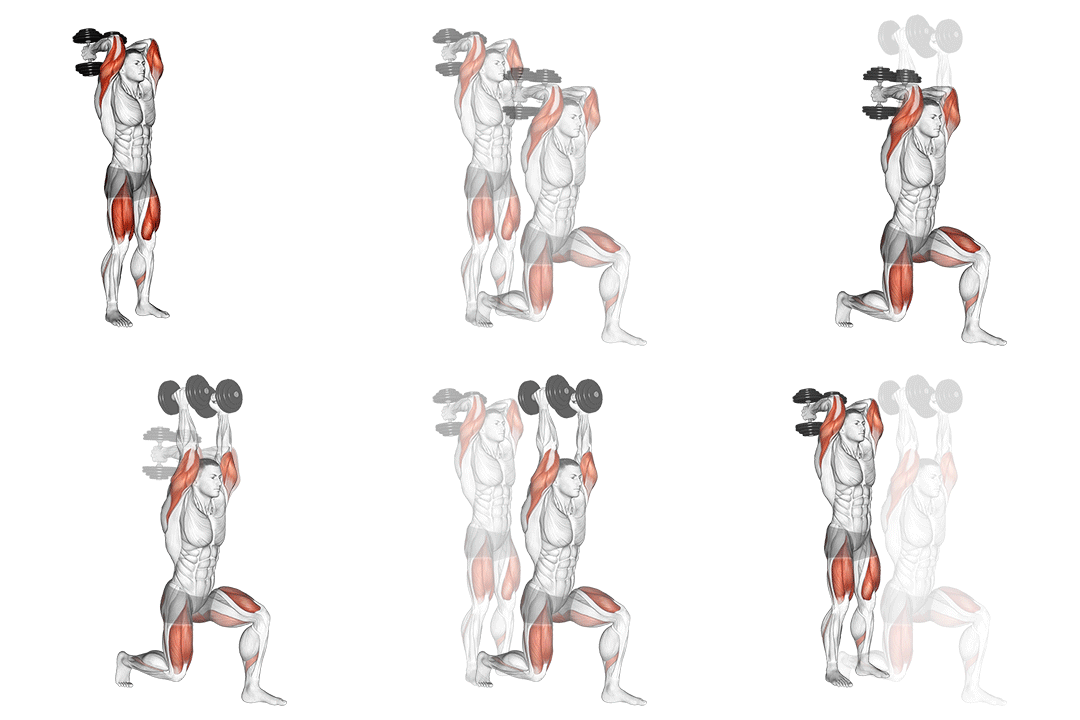
More comparisons with Dumbbell Kickback
Compare More Exercises
Use our free comparison tool to analyze any two exercises head-to-head.
Compare Exercises