

Dumbbell Incline Two Arm Extension vs Dumbbell Lying Extension (across Face): Complete Comparison Gu
Dumbbell Incline Two Arm Extension vs Dumbbell Lying Extension (across Face) — both isolate the triceps but place your shoulder and elbow in different positions. If you want efficient upper-arm development, you need to pick the right version for your goal. I’ll compare muscle emphasis, joint mechanics, equipment needs, progression options, and injury risk so you can choose or program both effectively. You’ll get clear cues (bench angle, elbow position, tempo), rep-range recommendations (8–12 for hypertrophy, 4–6 for strength), and practical tips you can apply in your next workout.
Exercise Comparison
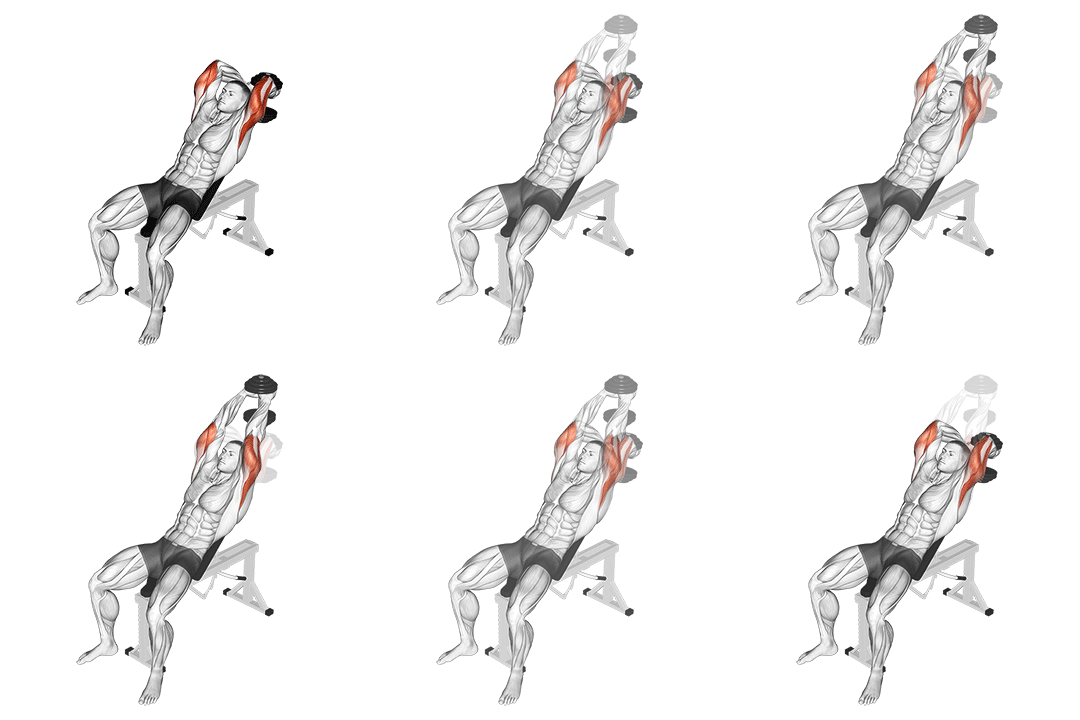
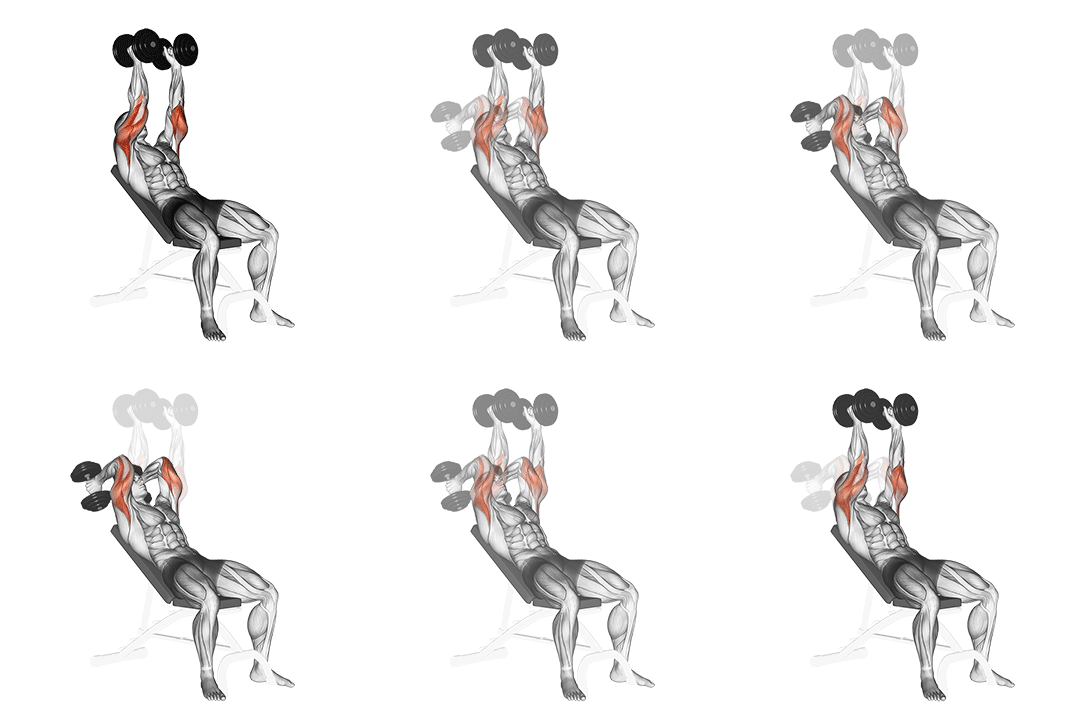
Dumbbell Incline Two Arm Extension
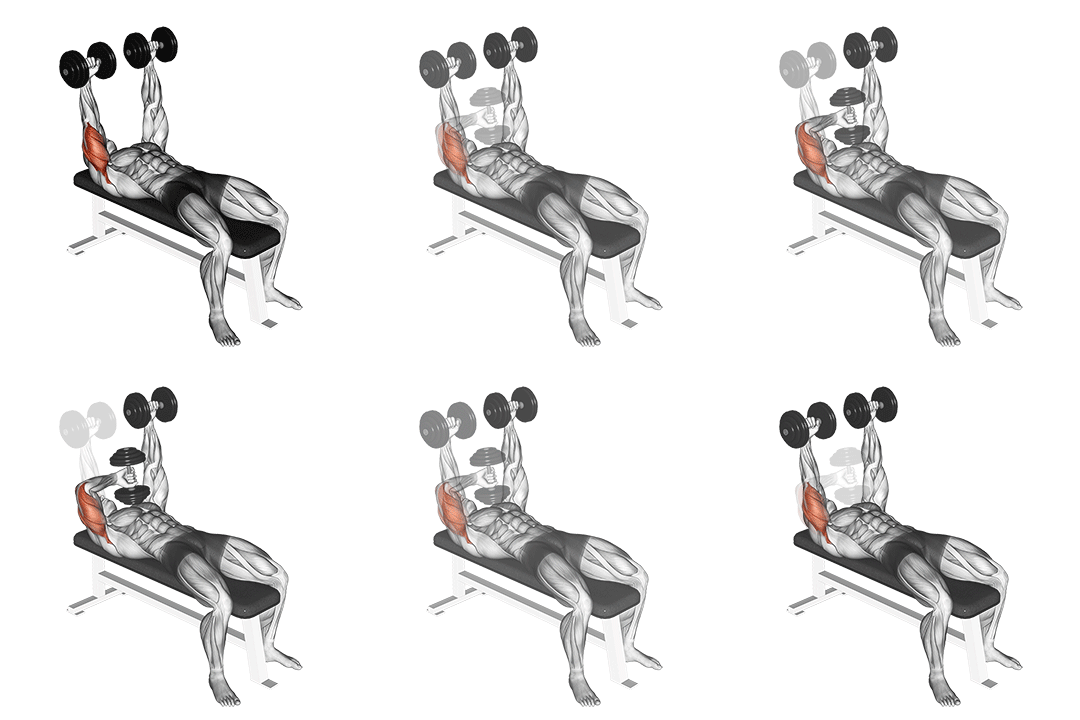
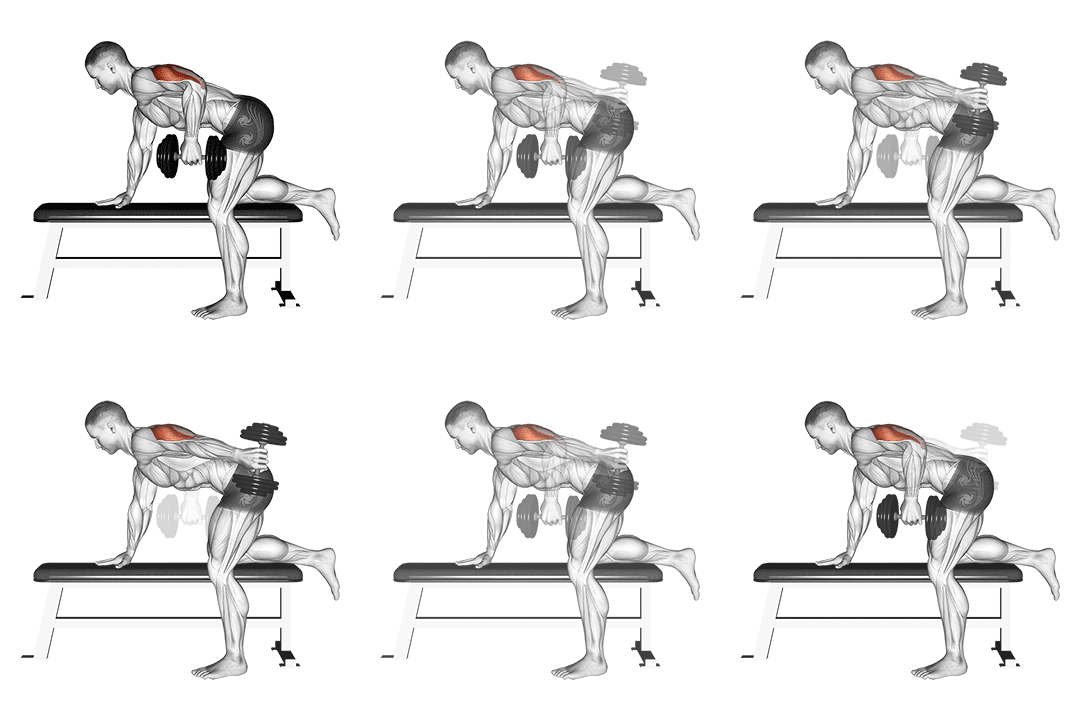
Dumbbell Lying Extension (across Face)
Head-to-Head Comparison
| Attribute | Dumbbell Incline Two Arm Extension | Dumbbell Lying Extension (across Face) |
|---|---|---|
| Target Muscle |
Triceps
|
Triceps
|
| Body Part |
Upper-arms
|
Upper-arms
|
| Equipment |
Dumbbell
|
Dumbbell
|
| Difficulty |
Intermediate
|
Intermediate
|
| Movement Type |
Isolation
|
Isolation
|
| Secondary Muscles |
1
|
1
|
Secondary Muscles Activated
Dumbbell Incline Two Arm Extension
Dumbbell Lying Extension (across Face)
Visual Comparison
Overview
Dumbbell Incline Two Arm Extension vs Dumbbell Lying Extension (across Face) — both isolate the triceps but place your shoulder and elbow in different positions. If you want efficient upper-arm development, you need to pick the right version for your goal. I’ll compare muscle emphasis, joint mechanics, equipment needs, progression options, and injury risk so you can choose or program both effectively. You’ll get clear cues (bench angle, elbow position, tempo), rep-range recommendations (8–12 for hypertrophy, 4–6 for strength), and practical tips you can apply in your next workout.
Key Differences
- Both exercises target the Triceps using Dumbbell. The main differences are in their movement patterns and muscle activation angles.
Pros & Cons
Dumbbell Incline Two Arm Extension
+ Pros
- Better long-head stretch due to shoulder flexion (bench 30–45°)
- Greater time-under-tension potential for hypertrophy
- Easier to bias posterior deltoid and upper-arm stability cues
- Simple angle adjustments let you dial long-head emphasis
− Cons
- Requires adjustable bench to hit optimal angle
- Higher shoulder demand can aggravate impingement
- Harder to move very heavy loads safely
Dumbbell Lying Extension (across Face)
+ Pros
- More accessible—can be done on floor or flat bench
- Simpler motor pattern with shorter learning curve
- Allows relatively heavier loads and overloaded sets
- Lower shoulder range-of-motion reduces shoulder stress
− Cons
- Less long-head stretch, slightly reduced ROM
- Can place high stress on elbow joint if uncontrolled
- Smaller window to correct form without a bench
When Each Exercise Wins
The incline position puts the long head on a greater stretch and increases time under tension when you use a 30–45° bench and a 2–3 second eccentric. Aim for 8–12 reps and controlled tempo to maximize muscle growth.
The lying version gives a more stable base and simpler force vector, allowing you to load heavier and train 4–6 rep ranges while maintaining control. That supports neural adaptations and heavier single-joint loading.
It has an easier motor pattern and can be performed on the floor, so beginners can learn elbow-hinge mechanics and wrist alignment with lower shoulder demand before progressing to incline variations.
You can perform it on the floor with a single dumbbell—no adjustable bench needed—making it the most practical choice for limited-equipment settings.
Frequently Asked Questions
Can I do both Dumbbell Incline Two Arm Extension and Dumbbell Lying Extension (across Face) in the same workout?
Yes. Prioritize one as the primary set (heavier or higher volume) and use the other as a secondary, lighter set for 2–3 back-off sets. For example, do incline for hypertrophy (3–4 sets of 8–12) then a single lighter lying across-face drop set to finish.
Which exercise is better for beginners?
Dumbbell Lying Extension (across Face) is better for beginners because it’s more stable and easier to learn on the floor or a flat bench. Start with light weight to master elbow hinge, wrist alignment, and tempo before adding incline variations.
How do the muscle activation patterns differ?
Incline two-arm extensions lengthen the triceps long head via shoulder flexion, shifting activation toward the long head on the eccentric. Lying across-face keeps the shoulder neutral so activation becomes more evenly distributed across lateral and medial heads with higher mid-range torque.
Can Dumbbell Lying Extension (across Face) replace Dumbbell Incline Two Arm Extension?
It can replace it for access and simplicity, but not entirely for long-head emphasis. If hypertrophy of the long head is a priority, include the incline variation periodically; otherwise, the lying across-face is a solid staple for strength and maintenance.
Expert Verdict
Use the Dumbbell Incline Two Arm Extension when your primary aim is targeted hypertrophy of the triceps long head: set the bench to 30–45°, keep elbows slightly tucked, and use 8–12 reps with a controlled 2–3 second eccentric. Choose the Dumbbell Lying Extension (across Face) when you want a simpler pattern for heavier loading, strength work in the 4–6 rep range, or a home-friendly option you can perform on the floor. Both belong in a balanced program: rotate them across training phases—incline for mass-building blocks, lying across-face for strength and volume tolerance—while keeping strict form and progressive overload.
Also Compare
More comparisons with Dumbbell Incline Two Arm Extension
More comparisons with Dumbbell Lying Extension (across Face)
Compare More Exercises
Use our free comparison tool to analyze any two exercises head-to-head.
Compare Exercises