

Dumbbell Kickback vs Dumbbell Lying Extension (across Face): Complete Comparison Guide
Dumbbell Kickback vs Dumbbell Lying Extension (across Face) — both isolate the triceps but load the muscle differently. You’ll get clear guidance on muscle activation, equipment needs, technique cues, and programming so you can pick the right move for your goals. I’ll show you how each exercise stresses the long, lateral, and medial heads, when to use higher reps (8–15) or heavier loading (4–6), and give specific setup and form tips to maximize muscle growth while minimizing joint stress.
Exercise Comparison
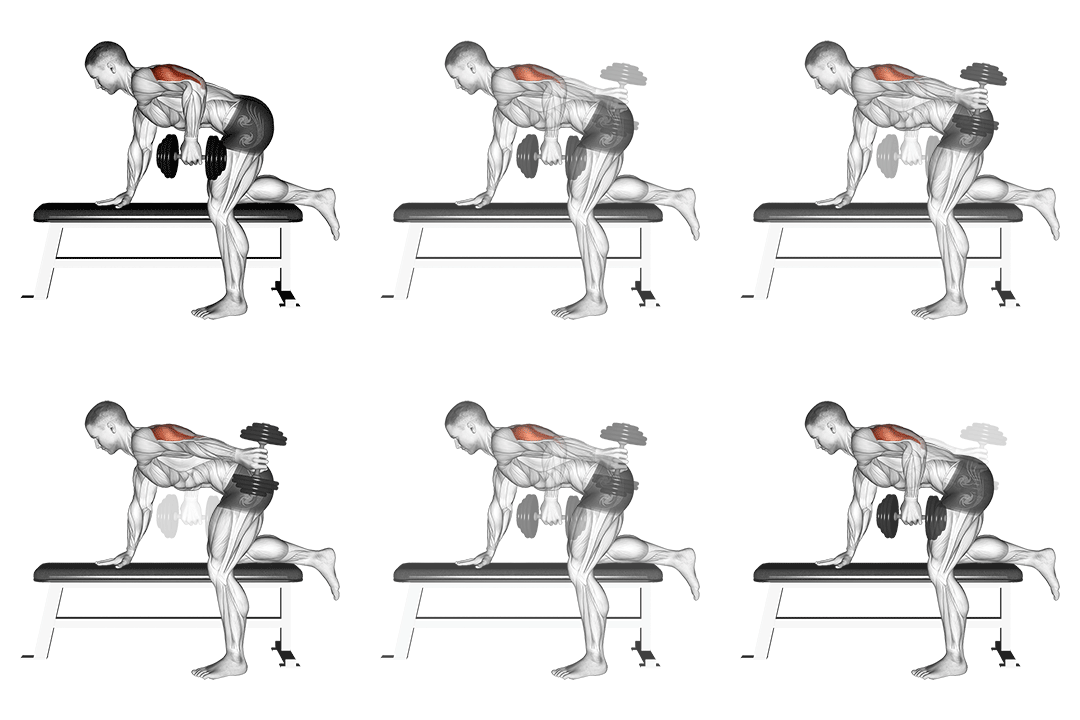
Dumbbell Kickback
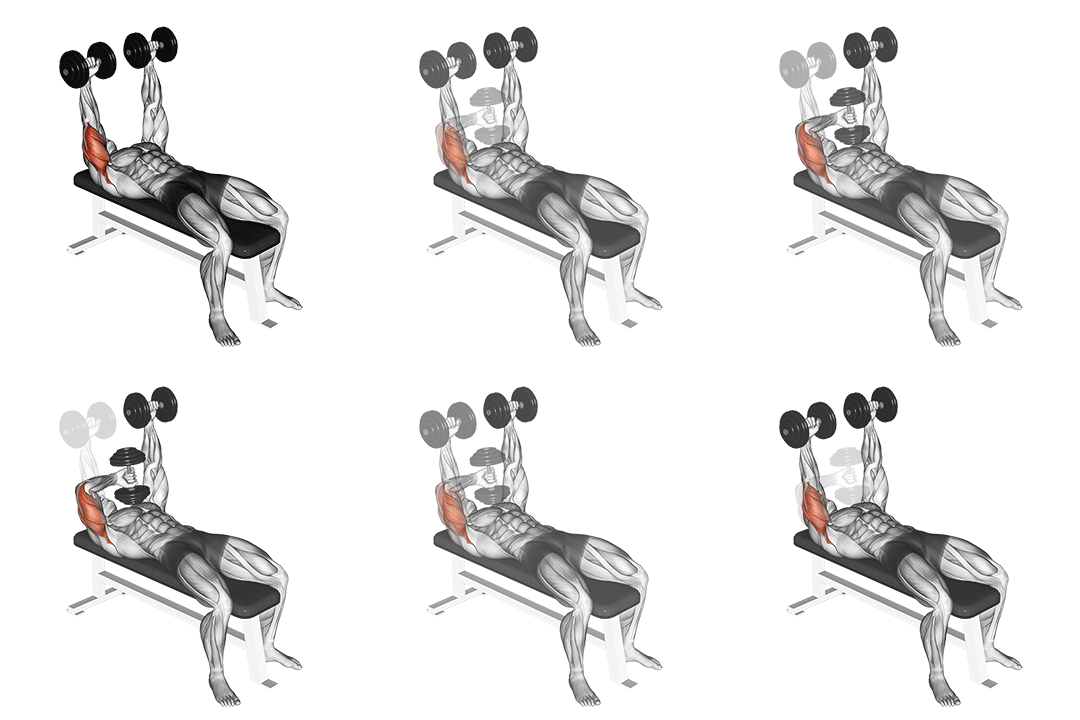
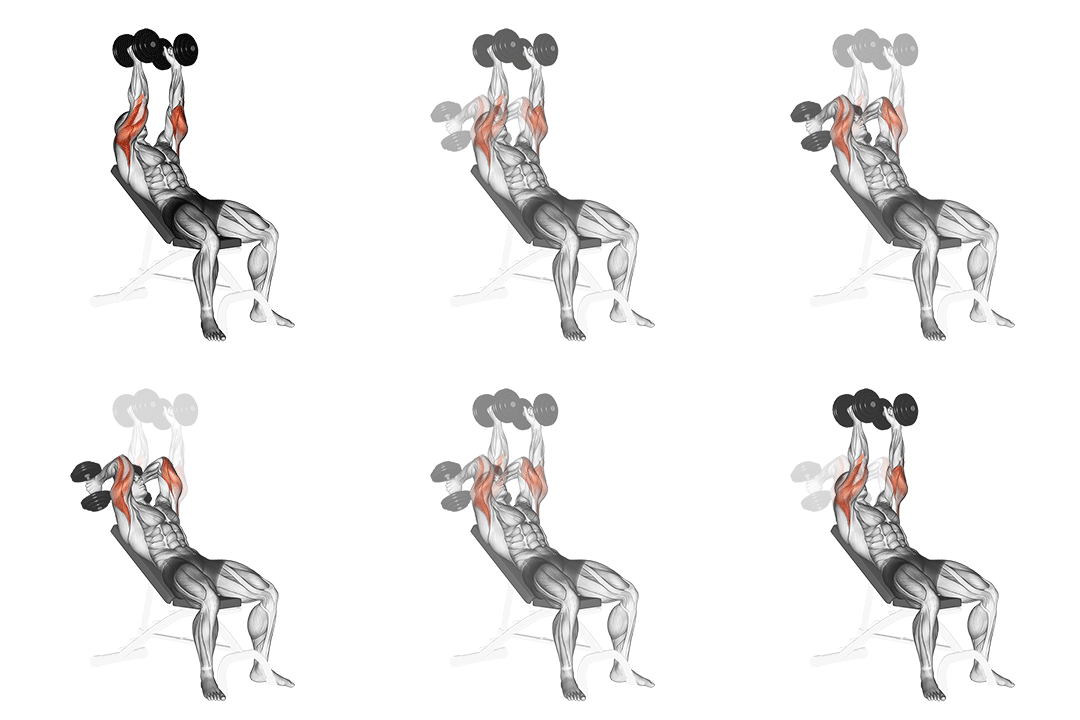
Dumbbell Lying Extension (across Face)
Head-to-Head Comparison
| Attribute | Dumbbell Kickback | Dumbbell Lying Extension (across Face) |
|---|---|---|
| Target Muscle |
Triceps
|
Triceps
|
| Body Part |
Upper-arms
|
Upper-arms
|
| Equipment |
Dumbbell
|
Dumbbell
|
| Difficulty |
Beginner
|
Intermediate
|
| Movement Type |
Isolation
|
Isolation
|
| Secondary Muscles |
1
|
1
|
Secondary Muscles Activated
Dumbbell Kickback
Dumbbell Lying Extension (across Face)
Visual Comparison
Overview
Dumbbell Kickback vs Dumbbell Lying Extension (across Face) — both isolate the triceps but load the muscle differently. You’ll get clear guidance on muscle activation, equipment needs, technique cues, and programming so you can pick the right move for your goals. I’ll show you how each exercise stresses the long, lateral, and medial heads, when to use higher reps (8–15) or heavier loading (4–6), and give specific setup and form tips to maximize muscle growth while minimizing joint stress.
Key Differences
- Difficulty levels differ: Dumbbell Kickback is beginner, while Dumbbell Lying Extension (across Face) is intermediate.
- Both exercises target the Triceps using Dumbbell. The main differences are in their movement patterns and muscle activation angles.
Pros & Cons
Dumbbell Kickback
+ Pros
- Highly accessible — needs only a dumbbell and small space
- Low peak joint stress when performed with light-to-moderate load
- Excellent peak contraction at terminal elbow extension
- Easy to cue and teach to beginners (keep elbow fixed, hinge at hip)
− Cons
- Limited progressive loading because leverage is short
- Momentum or shoulder movement reduces triceps tension if form breaks
- Less long-head stretch compared to lying extensions
Dumbbell Lying Extension (across Face)
+ Pros
- Greater overall triceps stretch and eccentric demand for hypertrophy
- Easier to progressively overload with heavier dumbbells
- Better long-head stimulation due to shoulder position and length-tension
- Controlled ROM across the elbow yields measurable strength improvements
− Cons
- Requires a bench and more setup space
- Higher stress on the elbow and triceps tendon with heavy loads
- Harder to learn proper path and elbow tracking (risk of flaring)
When Each Exercise Wins
The lying extension puts the triceps under a longer stretch and gives a larger eccentric load across the muscle, which drives more mechanical tension—aim 8–12 reps with 2–3 second eccentrics.
You can progressively load lying extensions with heavier dumbbells and maintain tension through a full ROM, allowing lower rep ranges (4–6) or heavy triples to build triceps strength.
Kickbacks are simpler to teach and control; keep the upper arm stationary and elbow moving 0–120° to build technique before adding complex supine patterns.
Kickbacks need minimal equipment and space and let you target the triceps effectively with single-arm work and higher reps (12–20) without a bench.
Frequently Asked Questions
Can I do both Dumbbell Kickback and Dumbbell Lying Extension (across Face) in the same workout?
Yes. Pair them as a compound isolation superset: perform 3 sets of heavy lying extensions (8–10 reps) for mechanical tension, then follow with 2–3 sets of kickbacks for 12–15 reps to emphasize peak contraction and metabolic fatigue.
Which exercise is better for beginners?
Dumbbell Kickback is better for beginners because it’s simpler to stabilize and allows you to learn elbow-only movement. Start with light weight and focus on keeping the upper arm stationary and the elbow moving through a controlled ROM.
How do the muscle activation patterns differ?
Kickbacks concentrate peak activation near terminal extension (last 10–20°) with a short lever arm, while lying extensions load the triceps across a longer ROM and increase eccentric tension on the long head because the shoulder is flexed and the muscle starts in a more lengthened position.
Can Dumbbell Lying Extension (across Face) replace Dumbbell Kickback?
Yes for hypertrophy and load progression—lying extensions can replace kickbacks if you have a bench and solid elbow control. Keep kickbacks in the program when you need an accessible finisher or to train peak contraction without heavy loading.
Expert Verdict
Use dumbbell lying extensions across the face when you want more mechanical tension, a longer stretch on the long head, and straightforward progressive overload—ideal for hypertrophy and targeted strength work. Choose dumbbell kickbacks when you need an accessible, low-setup isolation move to reinforce elbow-extension mechanics, build initial muscle control, or finish a workout with high-rep metabolic sets. Program both intelligently: start beginners with kickbacks to groove form (12–15 reps), then add lying extensions (8–12 reps, controlled eccentrics) as strength and shoulder stability improve.
Also Compare
More comparisons with Dumbbell Kickback
More comparisons with Dumbbell Lying Extension (across Face)
Compare More Exercises
Use our free comparison tool to analyze any two exercises head-to-head.
Compare Exercises