

Dumbbell Plyo Squat vs Dumbbell Rear Lunge: Complete Comparison Guide
Dumbbell Plyo Squat vs Dumbbell Rear Lunge — two compound moves that both target the glutes and upper legs but deliver very different training effects. You’ll get clear comparisons of muscle activation, equipment needs, difficulty, and injury risk, plus specific technique cues and rep ranges to use in your workouts. Read on to learn which exercise to pick for power, hypertrophy, strength, or safe beginner progressions and how to program each for measurable results.
Exercise Comparison
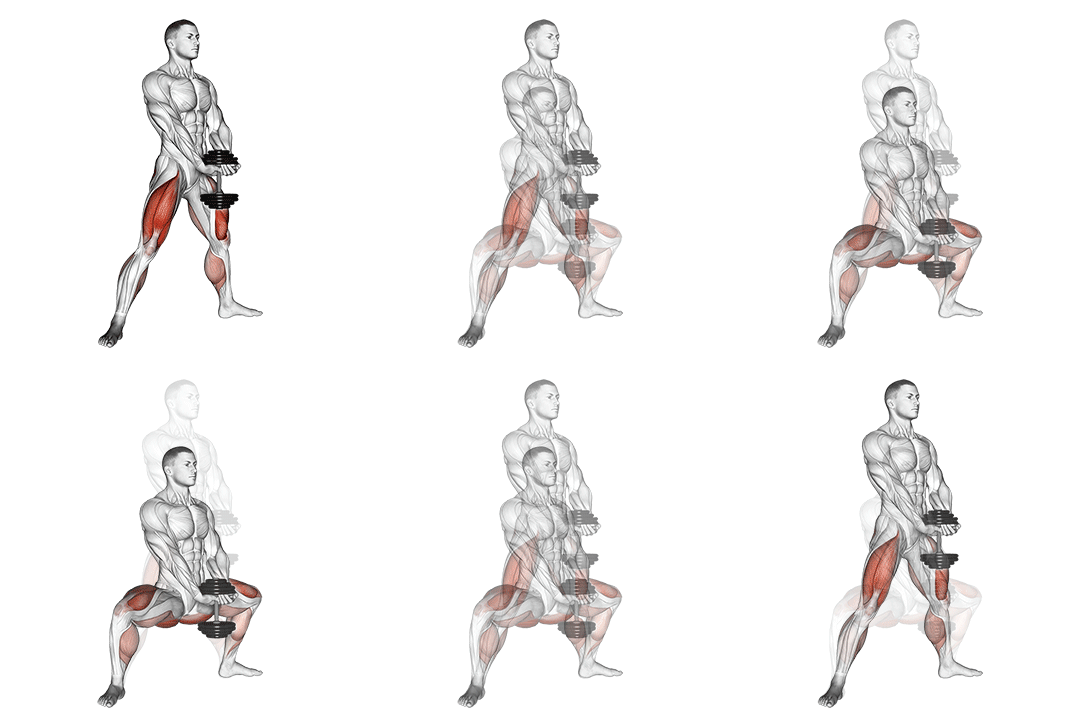
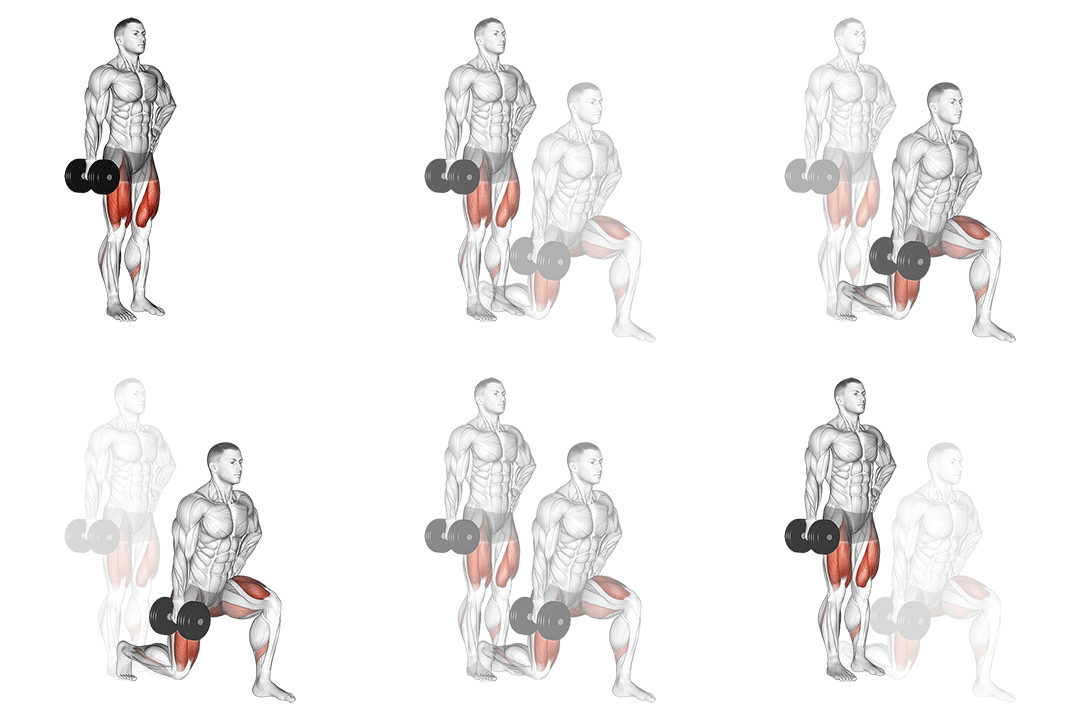
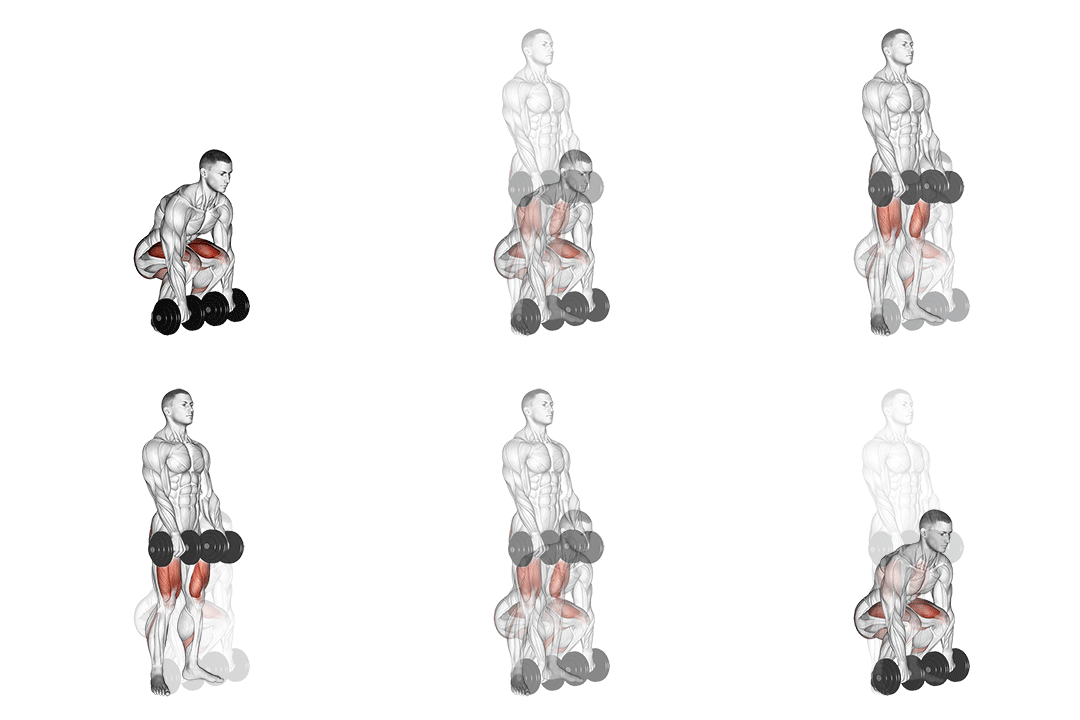
Dumbbell Plyo Squat
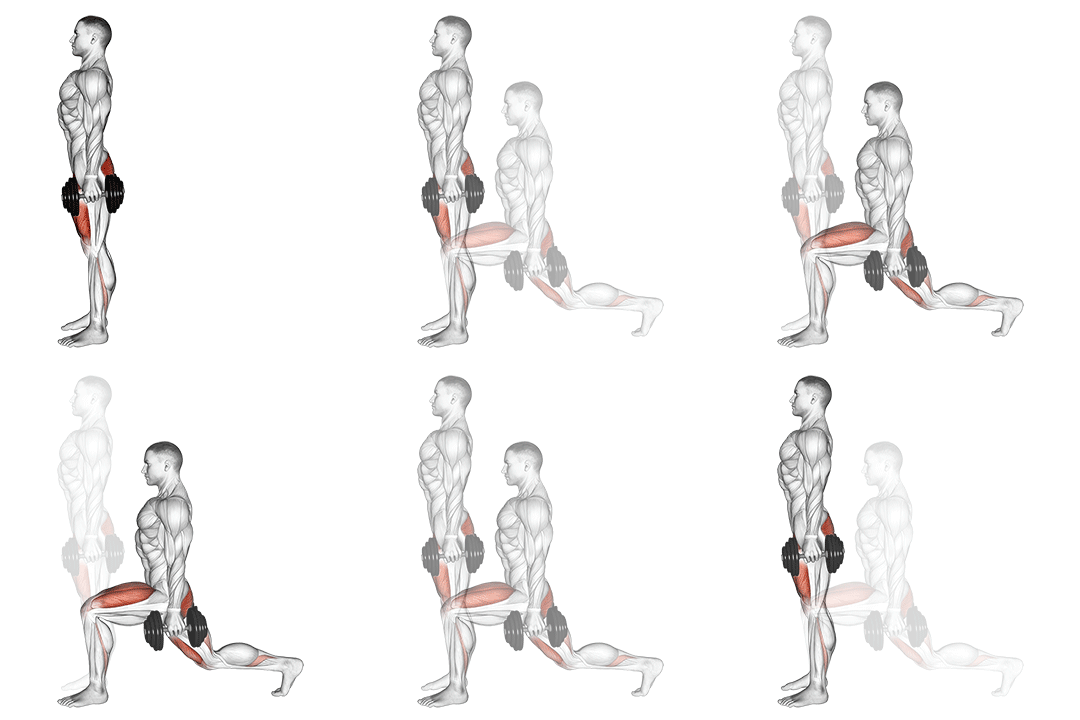
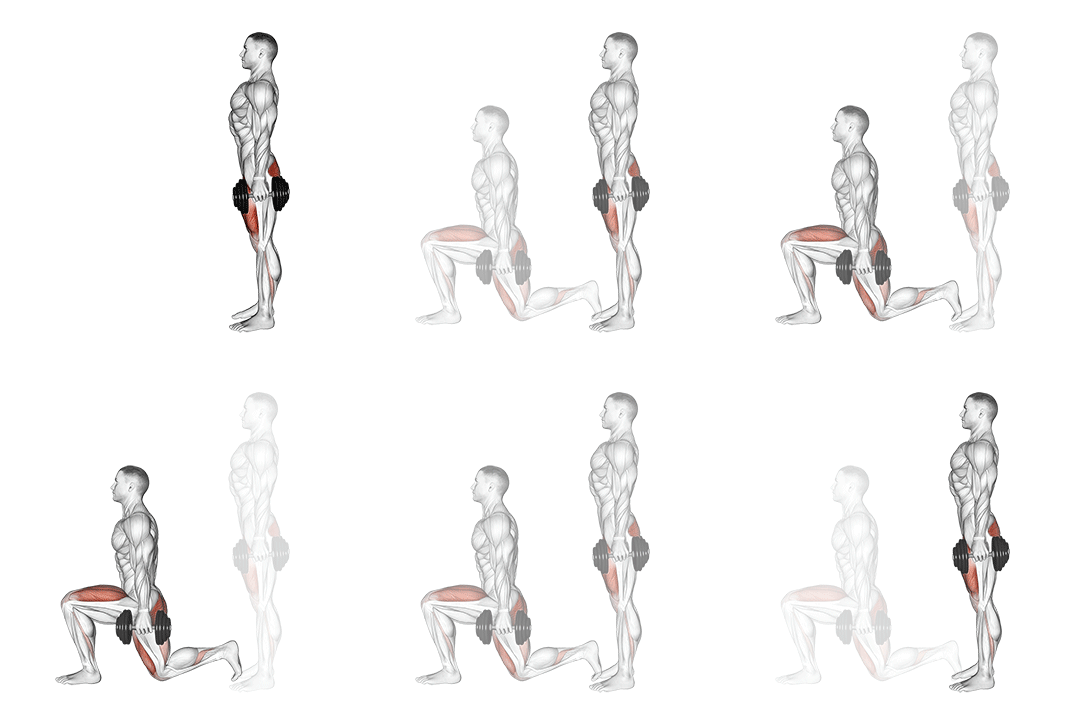
Dumbbell Rear Lunge
Head-to-Head Comparison
| Attribute | Dumbbell Plyo Squat | Dumbbell Rear Lunge |
|---|---|---|
| Target Muscle |
Glutes
|
Glutes
|
| Body Part |
Upper-legs
|
Upper-legs
|
| Equipment |
Dumbbell
|
Dumbbell
|
| Difficulty |
Advanced
|
Intermediate
|
| Movement Type |
Compound
|
Compound
|
| Secondary Muscles |
3
|
3
|
Secondary Muscles Activated
Dumbbell Plyo Squat
Dumbbell Rear Lunge
Visual Comparison
Overview
Dumbbell Plyo Squat vs Dumbbell Rear Lunge — two compound moves that both target the glutes and upper legs but deliver very different training effects. You’ll get clear comparisons of muscle activation, equipment needs, difficulty, and injury risk, plus specific technique cues and rep ranges to use in your workouts. Read on to learn which exercise to pick for power, hypertrophy, strength, or safe beginner progressions and how to program each for measurable results.
Key Differences
- Difficulty levels differ: Dumbbell Plyo Squat is advanced, while Dumbbell Rear Lunge is intermediate.
- Both exercises target the Glutes using Dumbbell. The main differences are in their movement patterns and muscle activation angles.
Pros & Cons
Dumbbell Plyo Squat
+ Pros
- Great for developing explosive hip extension and power (improves rate of force development)
- High metabolic demand — useful for conditioning and plyometric training
- Boosts calf and posterior chain activation through ballistic push-off
- Shorter sets needed — effective with 3–6 sets of 3–8 explosive reps
− Cons
- Higher impact — larger ground reaction forces increase joint stress
- Harder to load heavily without sacrificing speed and landing control
- Requires solid landing mechanics and a safe surface
Dumbbell Rear Lunge
+ Pros
- Excellent for unilateral hypertrophy and correcting imbalances
- Easily loaded heavy for strength and muscle growth (8–15 reps/leg)
- Lower impact and easier to teach technique cues (knee tracking, chest up)
- Versatile progressions: added load, tempo, pause reps, or Bulgarian variant
− Cons
- Less carryover to high-velocity power compared with plyos
- Requires balance and hip stability — can expose weaknesses
- Longer time under tension may limit metabolic conditioning compared with plyos
When Each Exercise Wins
The rear lunge creates sustained eccentric loading and longer time under tension across the glute and quad, which boosts hypertrophy. You can load it progressively (8–15 reps/leg) and use tempo to increase mechanical tension and muscle fiber recruitment.
Rear lunges allow heavier, controlled loading and consistent force production through the full range of motion, making them better for building relative leg strength. You can add weight, reduce reps, and focus on slow eccentrics to overload tissues safely.
Rear lunges are lower impact and easier to cue (step back, chest up, knee tracks toes), which makes them safer for novices. Start with bodyweight or light dumbbells and progress as stability and strength improve.
Rear lunges require minimal equipment and less safe landing space than plyo squats, so they fit indoor home setups better. They also scale from bodyweight to heavy dumbbells without needing special flooring.
Frequently Asked Questions
Can I do both Dumbbell Plyo Squat and Dumbbell Rear Lunge in the same workout?
Yes — pair them to train both power and hypertrophy. Do plyo squats early when fresh (3–6 sets of 3–6 explosive reps) and follow with rear lunges for volume (3–4 sets of 8–12/leg) to capitalize on neuromuscular fatigue and metabolic stress.
Which exercise is better for beginners?
Dumbbell Rear Lunge is better for beginners because it’s lower impact and easier to scale. Start with bodyweight or light dumbbells, emphasize balance and knee tracking, then add load and tempo as technique improves.
How do the muscle activation patterns differ?
Plyo squats produce brief, high-amplitude activation via the stretch–shortening cycle with faster concentric velocities, stressing fast-twitch fibers. Rear lunges produce longer-duration activation with greater eccentric control and time under tension, recruiting fibers across the whole range of motion for hypertrophy.
Can Dumbbell Rear Lunge replace Dumbbell Plyo Squat?
If your goal is strength or hypertrophy, a rear lunge can replace plyo squats effectively. If you need to train power or rate of force development, keep plyo squats — rear lunges won’t replicate the high-velocity, impact-specific adaptations of plyometrics.
Expert Verdict
Use Dumbbell Plyo Squats when your goal is to train power and high-velocity hip extension — program 3–6 sets of 3–8 explosive reps, use light-to-moderate dumbbells, and prioritize soft, controlled landings (hips back, knees slightly flexed on contact). Choose Dumbbell Rear Lunges for hypertrophy, strength, and beginner-friendly training: 3–4 sets of 8–15 reps per leg, focus on a 2–4 second eccentric, chest up, knee tracking over toes, and progressive overload. Biomechanically, plyo squats exploit the stretch–shortening cycle for rate-of-force development, while rear lunges produce greater time under tension for muscle growth and safer heavy loading.
Also Compare
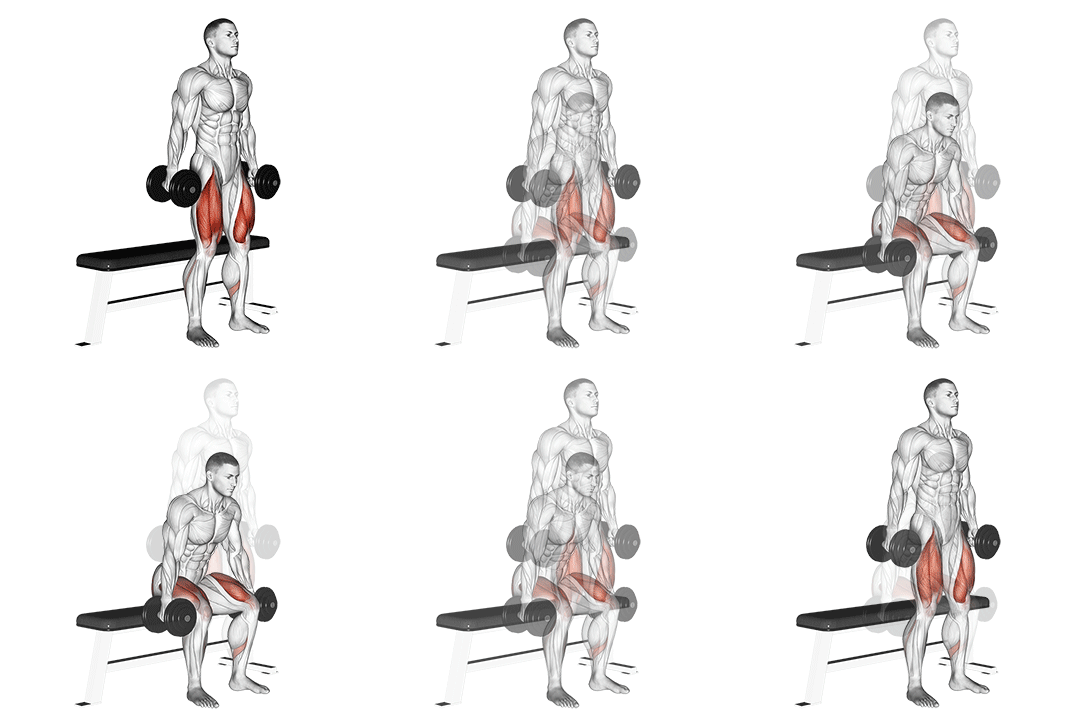
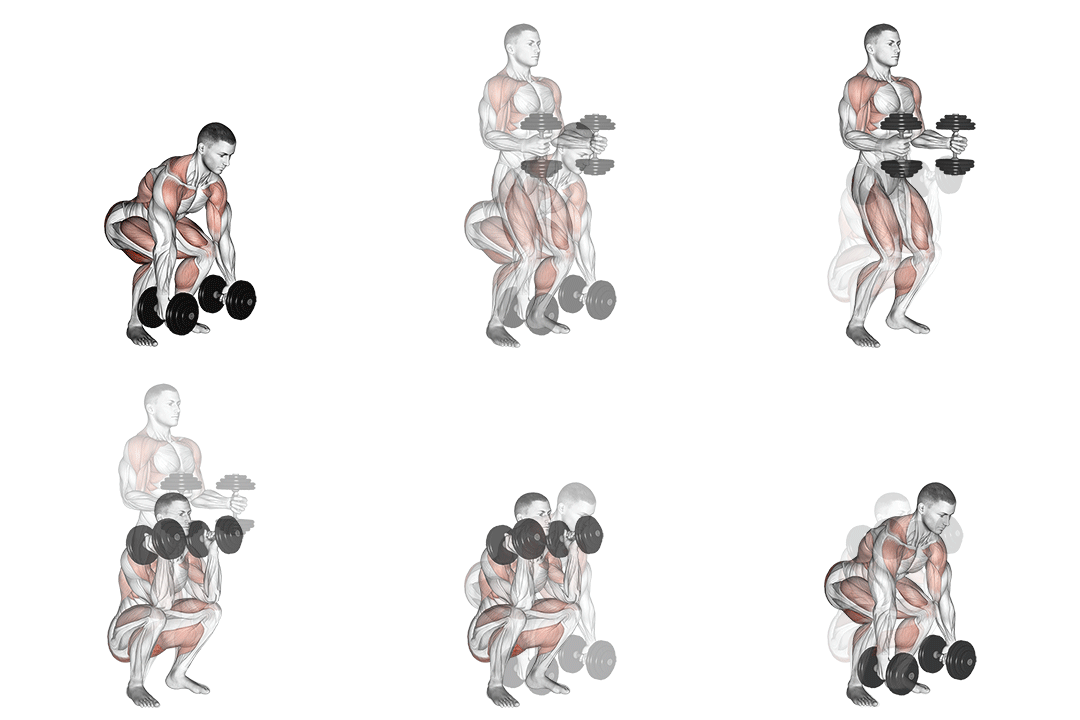
More comparisons with Dumbbell Plyo Squat
Compare More Exercises
Use our free comparison tool to analyze any two exercises head-to-head.
Compare Exercises