

Forward Jump vs Lying (side) Quads Stretch: Complete Comparison Guide
Forward Jump vs Lying (side) Quads Stretch — you’re deciding between a dynamic, compound plyometric and a static, single-joint stretch. If you want clear guidance, I’ll walk you through technique cues, which muscles each hits, how the quads load across ranges and force vectors, practical rep/hold ranges, and injury considerations. You’ll learn when to use the forward jump for power, when the lying side quad stretch supports mobility and recovery, and how to sequence them in a session for performance and safety.
Exercise Comparison
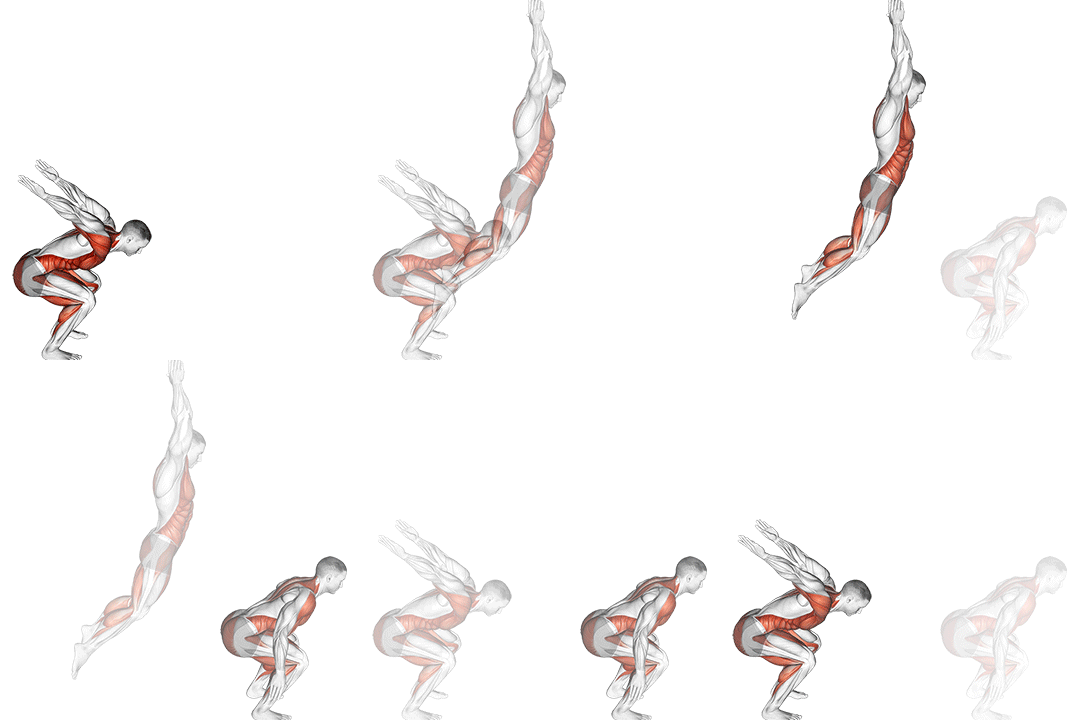
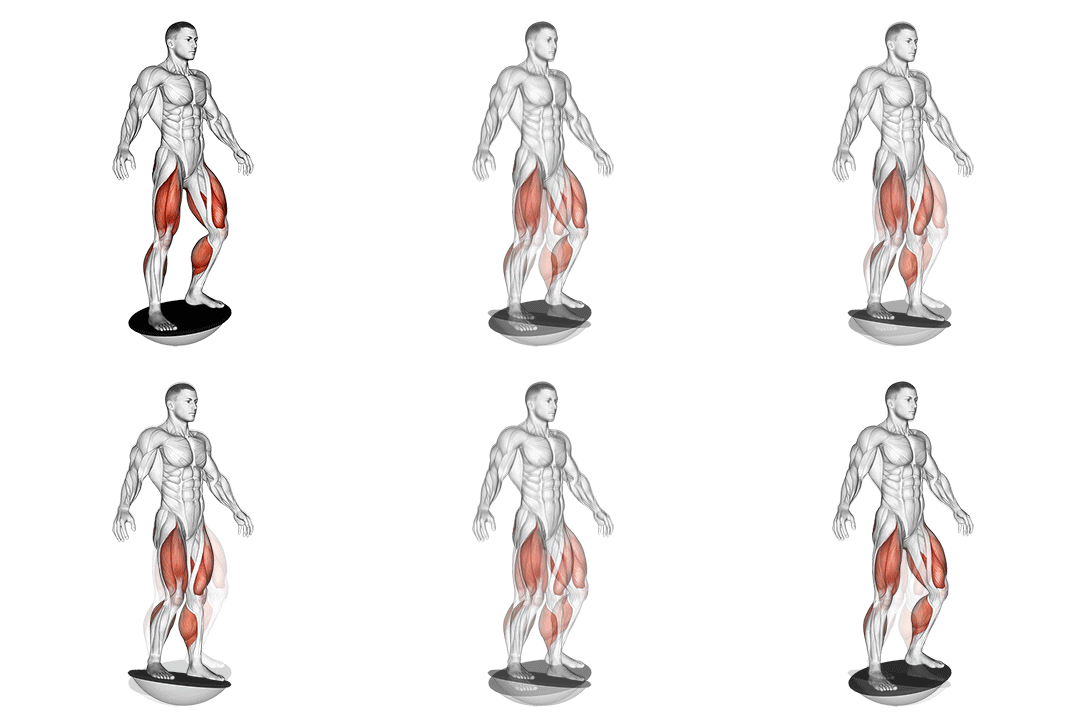
Forward Jump
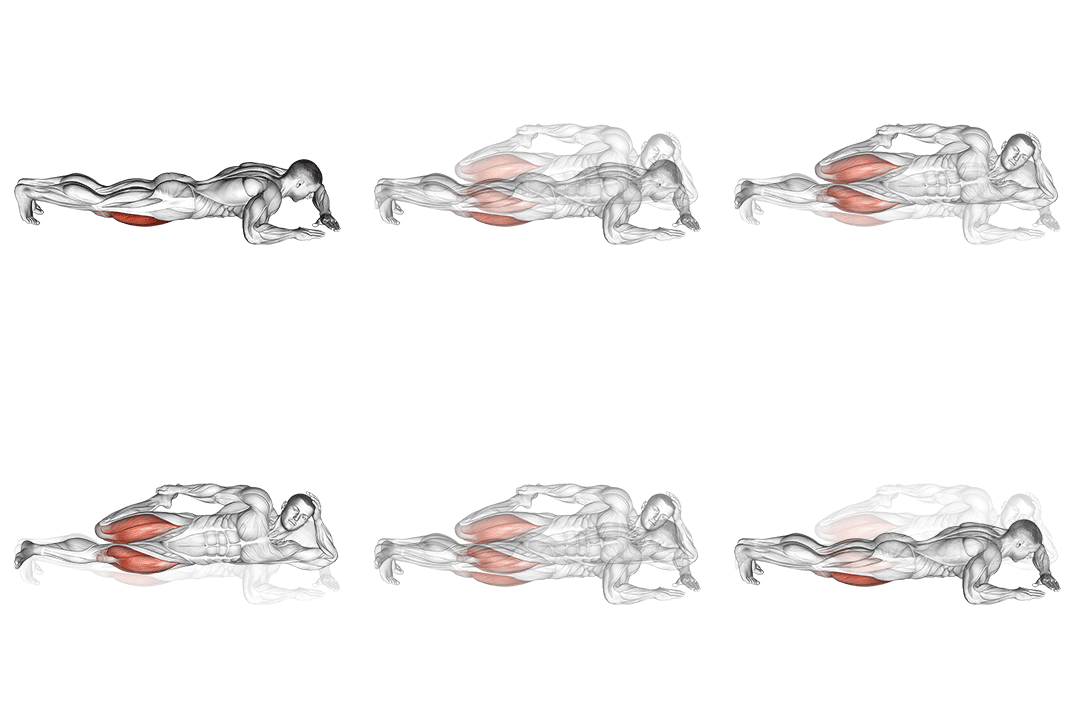
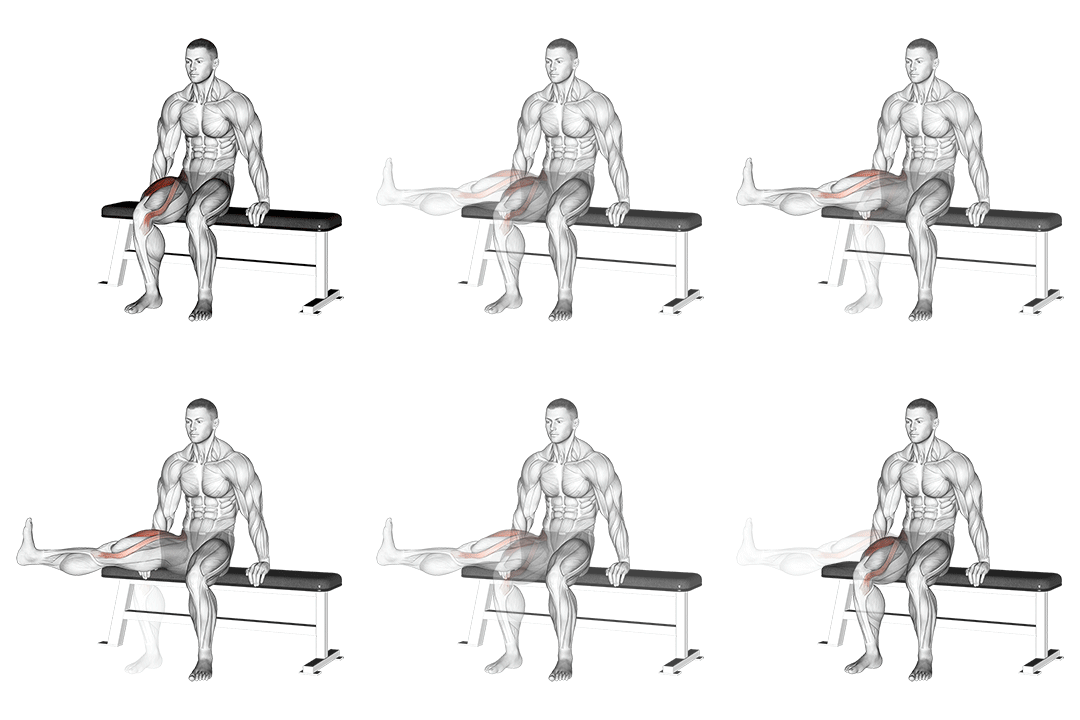
Lying (side) Quads Stretch
Head-to-Head Comparison
| Attribute | Forward Jump | Lying (side) Quads Stretch |
|---|---|---|
| Target Muscle |
Quads
|
Quads
|
| Body Part |
Upper-legs
|
Upper-legs
|
| Equipment |
Body-weight
|
Body-weight
|
| Difficulty |
Intermediate
|
Beginner
|
| Movement Type |
Compound
|
Isolation
|
| Secondary Muscles |
3
|
1
|
Secondary Muscles Activated
Forward Jump
Lying (side) Quads Stretch
Visual Comparison
Overview
Forward Jump vs Lying (side) Quads Stretch — you’re deciding between a dynamic, compound plyometric and a static, single-joint stretch. If you want clear guidance, I’ll walk you through technique cues, which muscles each hits, how the quads load across ranges and force vectors, practical rep/hold ranges, and injury considerations. You’ll learn when to use the forward jump for power, when the lying side quad stretch supports mobility and recovery, and how to sequence them in a session for performance and safety.
Key Differences
- Forward Jump is a compound movement, while Lying (side) Quads Stretch is an isolation exercise.
- Difficulty levels differ: Forward Jump is intermediate, while Lying (side) Quads Stretch is beginner.
- Both exercises target the Quads using Body-weight. The main differences are in their movement patterns and muscle activation angles.
Pros & Cons
Forward Jump
+ Pros
- Develops explosive concentric quad strength and power through triple extension
- Engages calves, hamstrings and glutes for functional movement patterns
- Improves reactive strength and landing mechanics when coached correctly
- Requires no equipment and has many progressions (single-leg, depth jumps)
− Cons
- Higher impact and greater injury risk without proper landing technique
- Less time under tension for hypertrophy compared with loaded lifts
- Requires more space and baseline coordination than static stretches
Lying (side) Quads Stretch
+ Pros
- Directly increases quad length and passive flexibility at end range
- Very low impact and suitable for warm-up, cooldown, or rehab
- Simple to learn and perform anywhere with minimal space
- Can improve knee flexion range (aim for 90–120°) and reduce passive stiffness
− Cons
- Does not build concentric quad strength or power
- Limited progression options for strength or hypertrophy
- If performed aggressively it can stress the knee joint or anterior hip
When Each Exercise Wins
Forward Jump induces higher peak muscle forces and overload via rapid concentric contractions and eccentric control, stimulating muscle remodeling more than a passive stretch. For hypertrophy pair jumps with resistance or higher-volume jump sets (3–5 sets of 6–12 reps) or supplement with loaded squats for optimal time under tension.
Forward Jump improves rate of force development and functional strength through triple extension and high ground reaction forces; use progressive overload (heavier plyometrics, single-leg jumps) to transfer to maximal strength. The lying stretch doesn’t provide the active loading stimulus needed for strength.
Lying (side) Quads Stretch is low-skill, low-impact and teaches you to feel quad end-range without loading joints. Start with 30–45 second holds per side and progress mobility before attempting plyometrics like forward jumps.
Both are bodyweight, but the lying stretch needs less space and no impact-tolerant surface, making it safer and more practical for small indoor spaces. Use forward jumps at home only with a cleared area and a mat.
Frequently Asked Questions
Can I do both Forward Jump and Lying (side) Quads Stretch in the same workout?
Yes. Use the lying side quad stretch as part of your warm-up to increase knee flexion mobility or in cooldown to reduce stiffness. Perform forward jumps later when muscles are warm and after movement prep to minimize injury risk.
Which exercise is better for beginners?
Lying (side) Quads Stretch is better for beginners because it’s low-skill and low-impact, allowing you to build range of motion and tissue tolerance before introducing plyometrics like the Forward Jump.
How do the muscle activation patterns differ?
Forward Jump produces brief, high-amplitude quad activation during concentric takeoff and eccentric landing, with significant involvement from glutes and calves due to force vector transfer. The lying stretch produces minimal active EMG in the quads and instead applies passive tensile stress at long muscle lengths.
Can Lying (side) Quads Stretch replace Forward Jump?
No, if your goal is power or strength the lying stretch cannot replace forward jump because it lacks active overload and the rate-of-force-development stimulus. Use the stretch for mobility and recovery, and the jump for performance adaptations.
Expert Verdict
Use Forward Jump when your goal is power, reactive strength or to add dynamic overload to a quad-focused session. It loads the quads concentrically and eccentrically while engaging calves, hamstrings and glutes—best for athletes and intermediate lifters who can land safely and progress volume (6–12 reps, 3–5 sets depending on intensity). Use Lying (side) Quads Stretch when you need mobility, recovery, or a beginner-friendly option: hold 30–60 seconds per side, 2–3 rounds to improve knee flexion range and reduce passive stiffness. For complete programs, pair targeted mobility (lying stretch) with later-session plyometrics to protect tissue and maximize performance.
Also Compare
More comparisons with Forward Jump
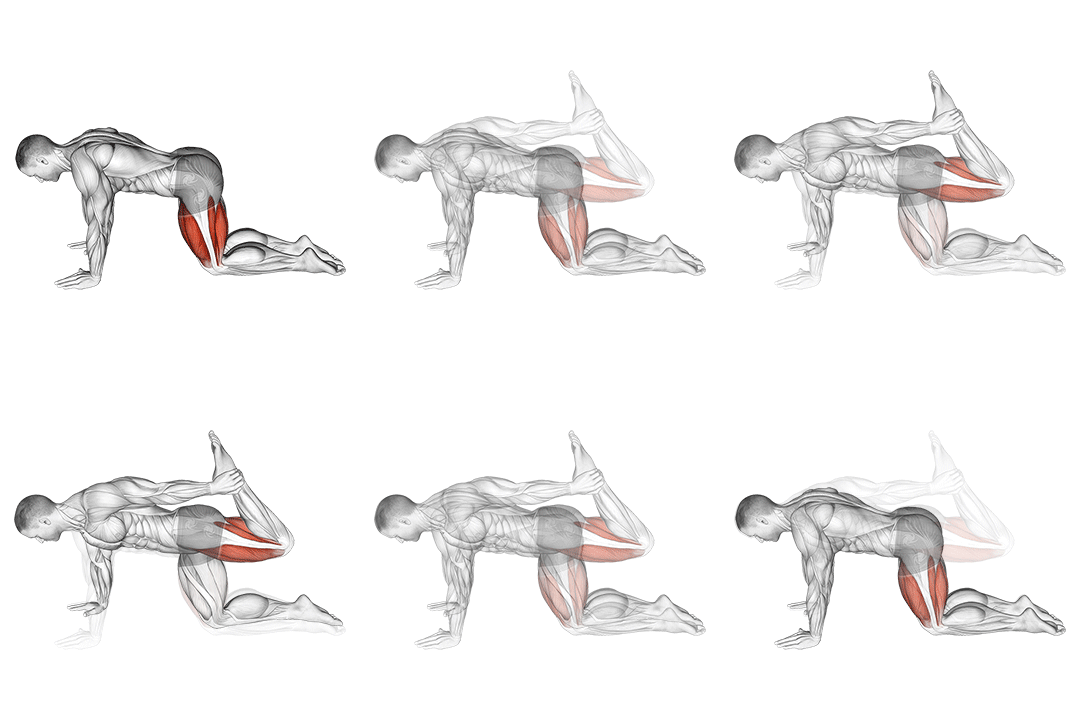
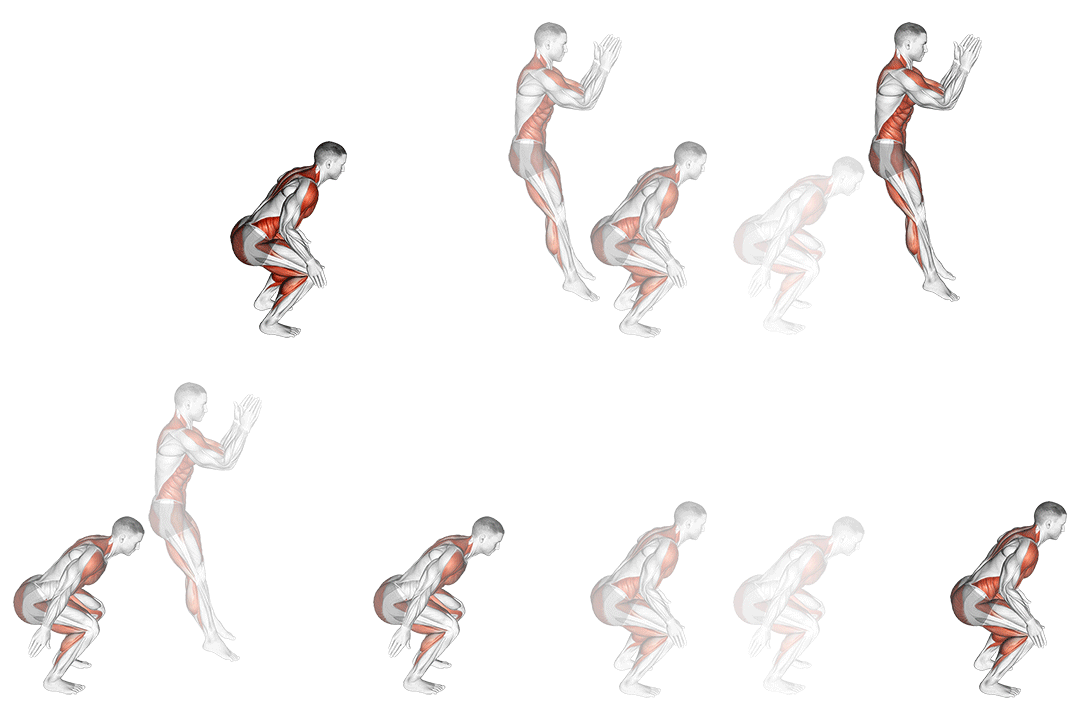
More comparisons with Lying (side) Quads Stretch
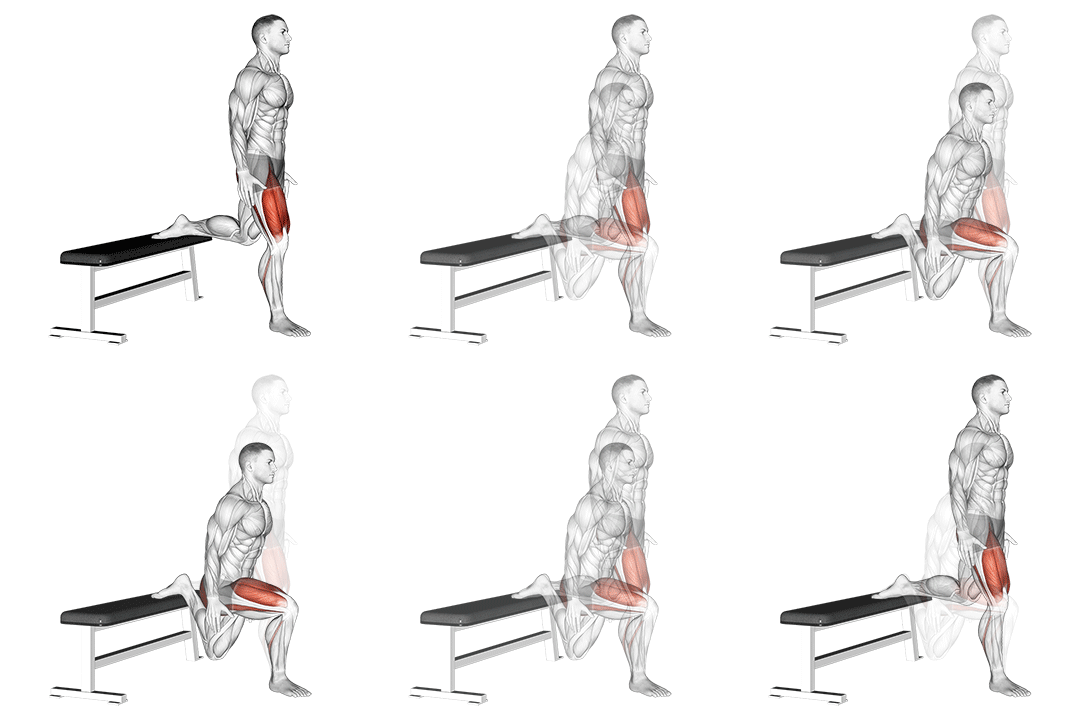
Compare More Exercises
Use our free comparison tool to analyze any two exercises head-to-head.
Compare Exercises