

Forward Jump vs Quads: Complete Comparison Guide
Forward Jump vs Quads — a straight-up look at two bodyweight, quad-focused moves you can use at home or in the gym. I’ll walk you through primary and secondary muscle recruitment, technique cues, biomechanics like knee-extension torque and the stretch-shortening cycle, plus rep ranges and progression choices. By the end you’ll know which exercise suits muscle growth, power, or safe beginner progressions, and how to program each for specific goals.
Exercise Comparison
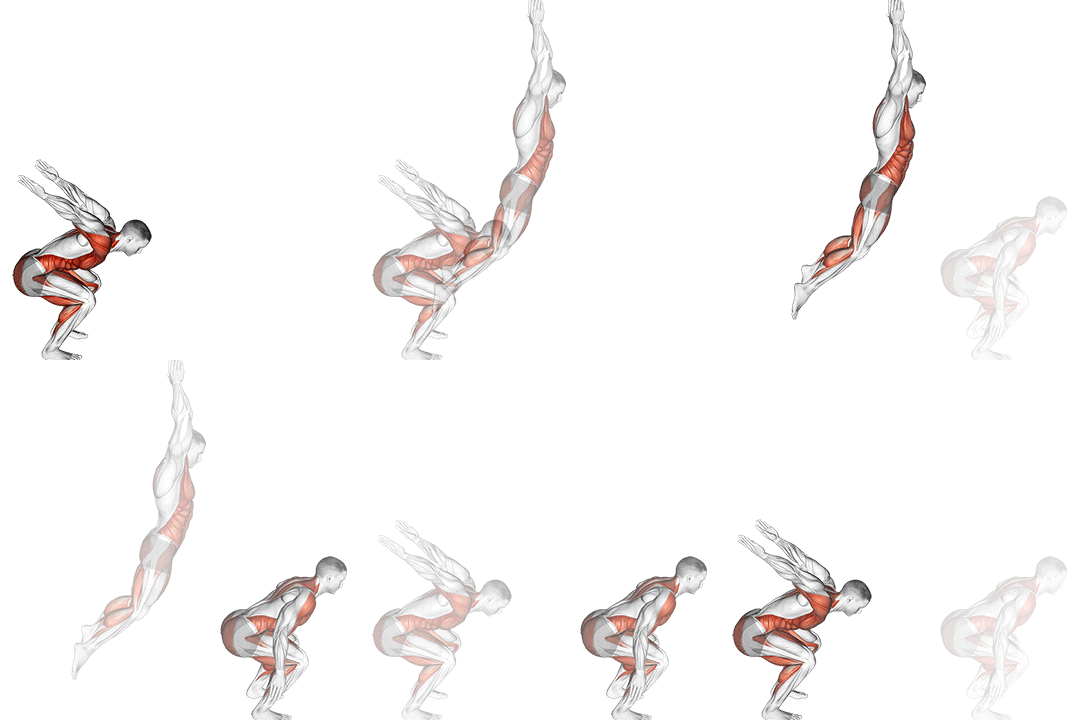
Forward Jump
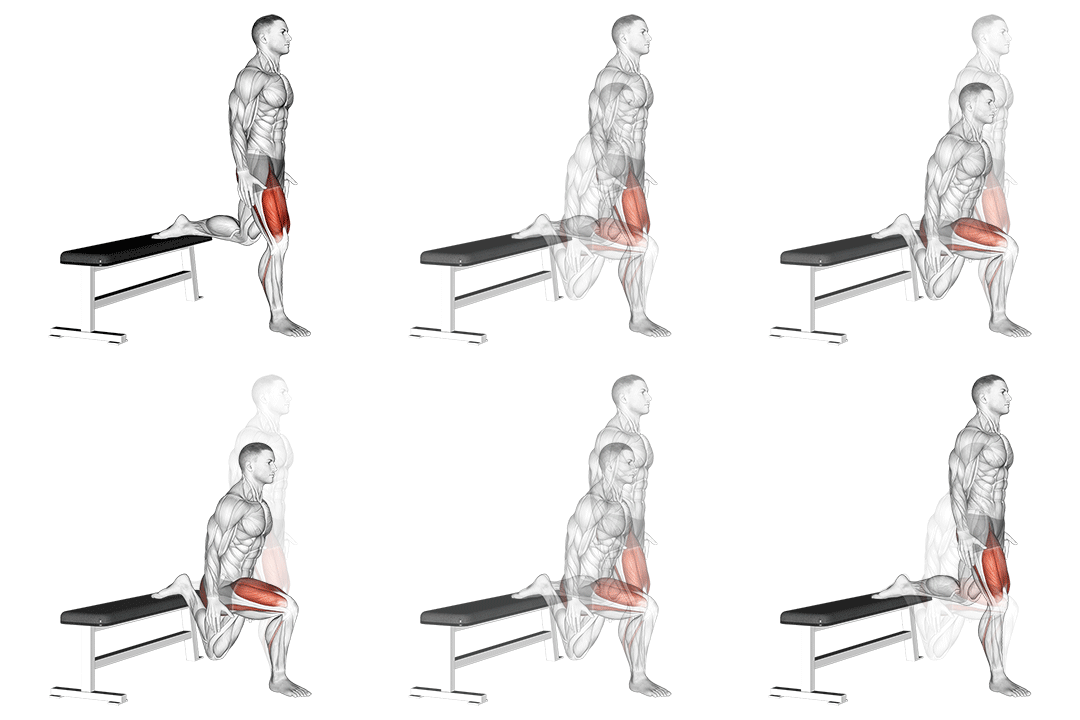
Quads
Head-to-Head Comparison
| Attribute | Forward Jump | Quads |
|---|---|---|
| Target Muscle |
Quads
|
Quads
|
| Body Part |
Upper-legs
|
Upper-legs
|
| Equipment |
Body-weight
|
Body-weight
|
| Difficulty |
Intermediate
|
Beginner
|
| Movement Type |
Compound
|
Compound
|
| Secondary Muscles |
3
|
2
|
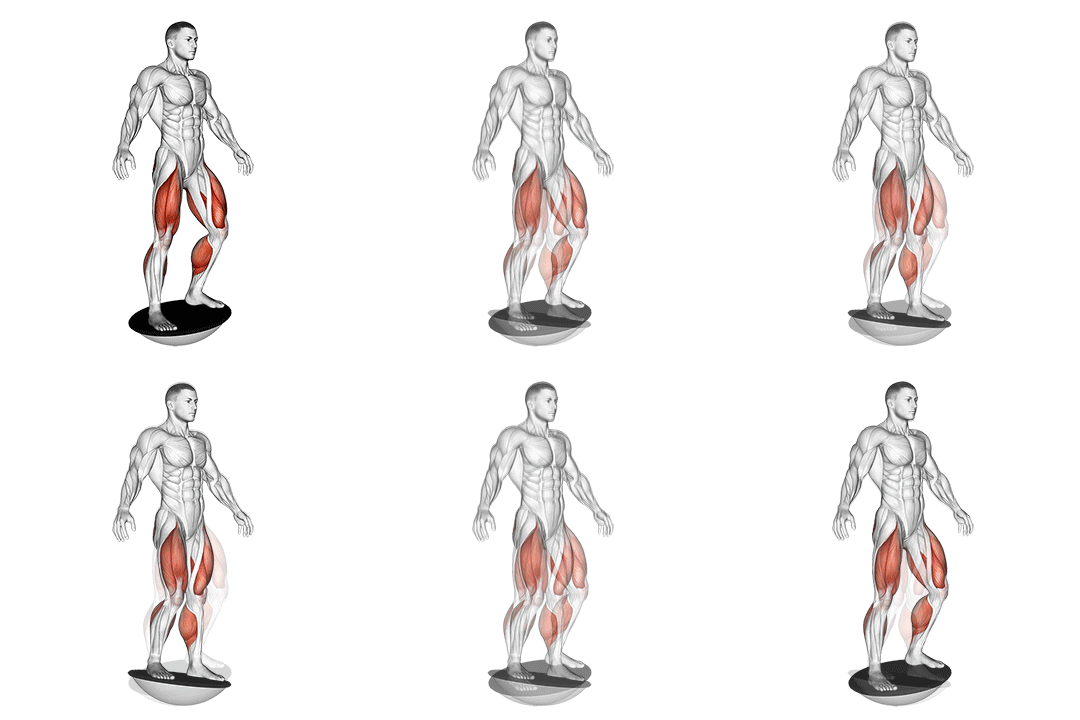
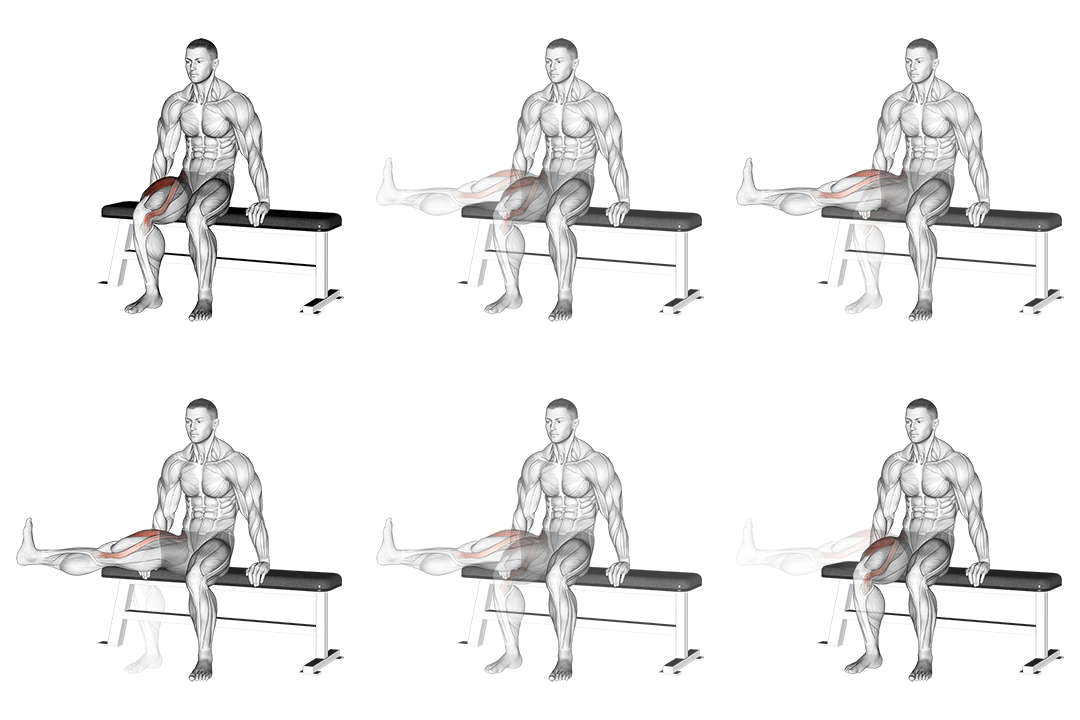
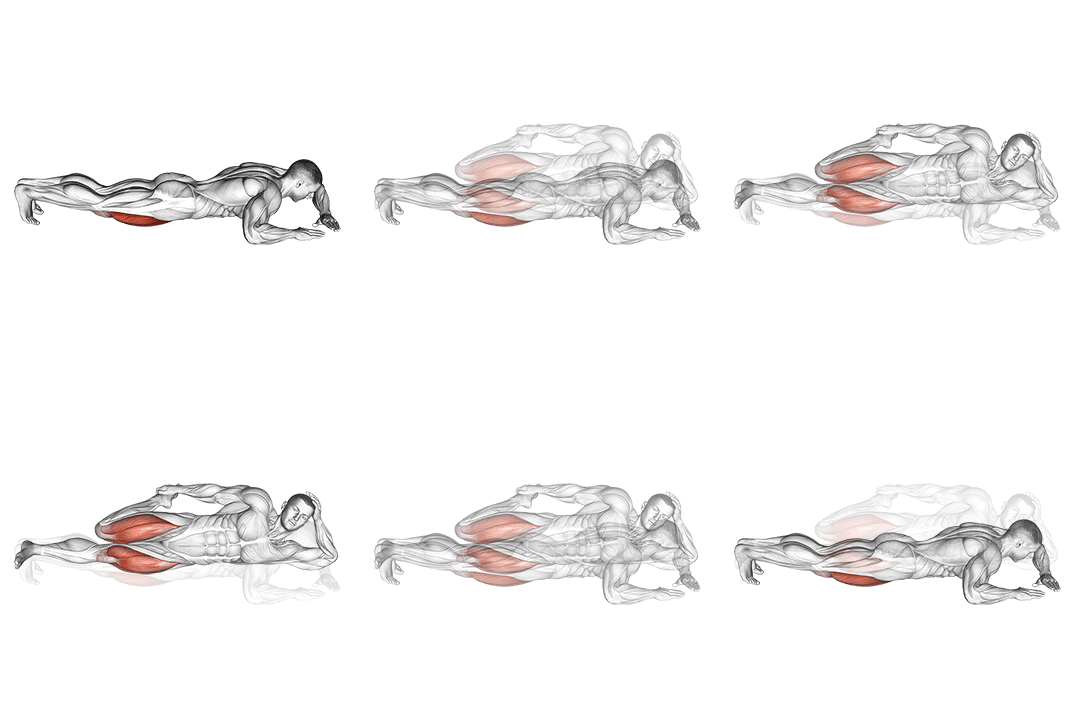
Secondary Muscles Activated
Forward Jump
Quads
Visual Comparison
Overview
Forward Jump vs Quads — a straight-up look at two bodyweight, quad-focused moves you can use at home or in the gym. I’ll walk you through primary and secondary muscle recruitment, technique cues, biomechanics like knee-extension torque and the stretch-shortening cycle, plus rep ranges and progression choices. By the end you’ll know which exercise suits muscle growth, power, or safe beginner progressions, and how to program each for specific goals.
Key Differences
- Difficulty levels differ: Forward Jump is intermediate, while Quads is beginner.
- Both exercises target the Quads using Body-weight. The main differences are in their movement patterns and muscle activation angles.
Pros & Cons
Forward Jump
+ Pros
- Develops power and rate of force development via stretch-shortening cycle
- High peak quadriceps activation during the concentric phase
- Improves coordination, ankle stiffness, and reactive strength
- Easy to scale explosiveness with single-leg or depth variations
− Cons
- Higher impact and joint stress on landing
- Requires better technique and ankle/hip mobility
- Less time under tension for hypertrophy compared with slow reps
Quads
+ Pros
- Low technical barrier—ideal for beginners
- Greater time under tension for hypertrophy (2–4 s eccentrics)
- Low impact—gentler on joints and easy to control
- Simple progression path: reps, tempo, unilateral work, added load
− Cons
- Limited power development compared with plyometrics
- Harder to overload explosiveness without added equipment
- May plateau without progressive external resistance
When Each Exercise Wins
Quads allows controlled 2–4 second eccentrics and higher time under tension across 8–20 rep ranges, producing sustained mechanical tension at knee angles optimal for quad fiber recruitment.
For raw strength without gym equipment, slow, loaded or tempo-controlled Quads progressions increase force capacity through greater cumulative volume and joint-range loading; Forward Jump builds power but not maximal strength.
Quads has a gentler learning curve and lower impact. You can master knee tracking, hip hinge, and quad activation before adding plyometric elements like the Forward Jump.
Both are bodyweight, but Quads is safer in tight spaces and requires no landing room. It scales easily with household load (backpack) for progressive overload.
Frequently Asked Questions
Can I do both Forward Jump and Quads in the same workout?
Yes. Sequence Quads earlier if you want hypertrophy or to teach technique; do Forward Jumps later or on a separate day when you’re fresh to protect landing quality. Alternatively, place Quads as an activation set (light, slow reps) and perform 3–5 sets of 4–8 explosive jumps with 60–120 s rest.
Which exercise is better for beginners?
Quads is better for beginners because it has lower impact and simpler motor patterns. Master knee alignment, squat depth (~90°), and 2–4 s eccentrics before adding Forward Jumps.
How do the muscle activation patterns differ?
Forward Jump uses a quick eccentric-to-concentric transition engaging type II fibers and high instantaneous quad EMG during takeoff; the Quads movement emphasizes sustained activation across the eccentric and concentric phases, shifting recruitment toward endurance and hypertrophy through longer time under tension.
Can Quads replace Forward Jump?
Quads can replace Forward Jump if your goal is hypertrophy or safe strength building, but it won’t replicate the high-rate force development or reactive training benefits of plyometrics. If you need power, add specific jump progressions later.
Expert Verdict
Use Forward Jump when your goal is power, reactive strength, or improving sprint/plyometric performance. It targets the quads with high peak forces and trains the stretch-shortening cycle, but you must nail landing mechanics (aim for ~60–90° knee flexion on landing, soft hips) and allow full recovery between sets (rest 60–120 s). Use Quads for muscle growth, foundational strength, and safe progression. Train Quads with controlled eccentrics (2–4 s), 8–20 reps or 3–6 sets, and progress via tempo, unilateral work, or added load. Pair both in a program by placing Quads earlier for hypertrophy or as a low-impact warm-up before plyometrics.
Also Compare
More comparisons with Forward Jump
Compare More Exercises
Use our free comparison tool to analyze any two exercises head-to-head.
Compare Exercises