

Half Knee Bends (male) vs High Knee Against Wall: Complete Comparison Guide
Half Knee Bends (male) vs High Knee Against Wall are two beginner, bodyweight cardio movements that tax your cardiovascular system while recruiting lower-body muscles. In this guide you’ll get clear comparisons of primary muscle activation, secondary recruitment (quads, hamstrings, glutes, calves), equipment needs, difficulty, and progression options. You’ll also find specific technique cues—joint angles, cadence, and rep ranges—so you can pick the right move for conditioning, muscle growth, or home workouts. Read on for actionable recommendations based on biomechanics and movement patterns.
Exercise Comparison
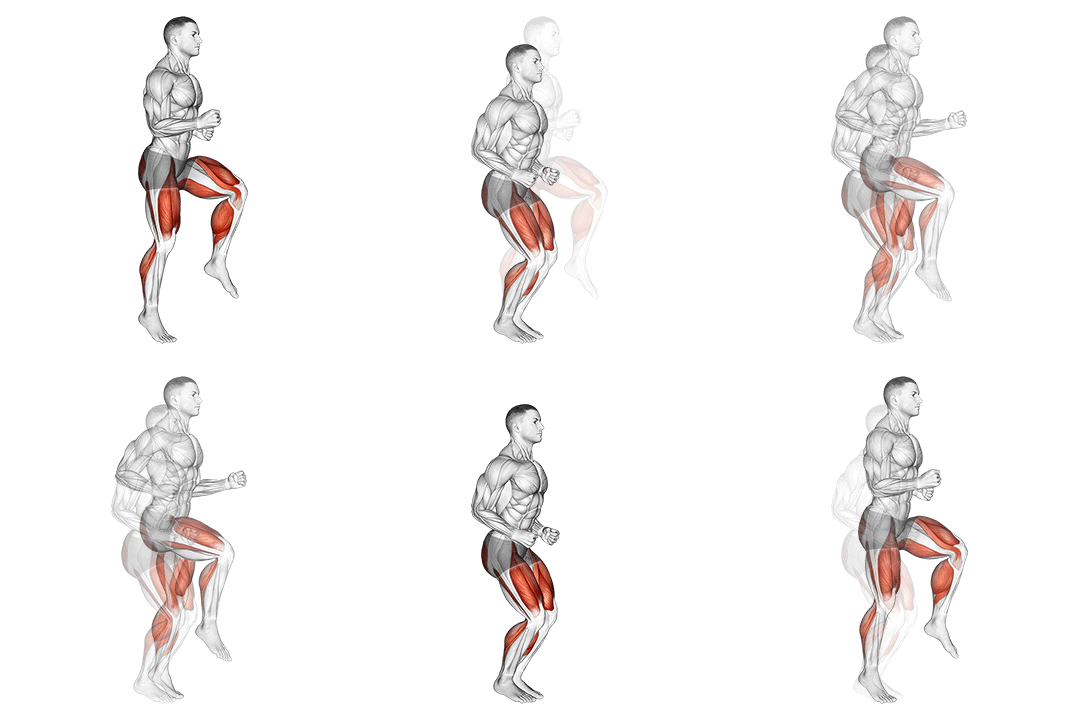
Half Knee Bends (male)
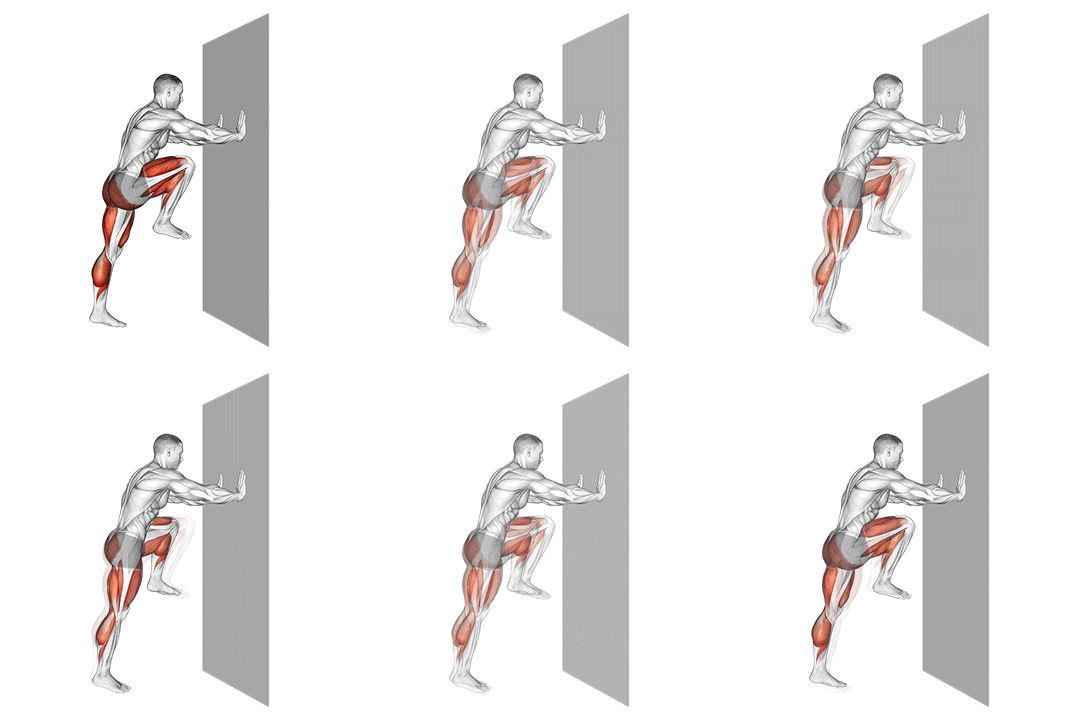
High Knee Against Wall
Head-to-Head Comparison
| Attribute | Half Knee Bends (male) | High Knee Against Wall |
|---|---|---|
| Target Muscle |
Cardiovascular-system
|
Cardiovascular-system
|
| Body Part |
Cardio
|
Cardio
|
| Equipment |
Body-weight
|
Body-weight
|
| Difficulty |
Beginner
|
Beginner
|
| Movement Type |
Compound
|
Compound
|
| Secondary Muscles |
3
|
4
|
Secondary Muscles Activated
Half Knee Bends (male)
High Knee Against Wall
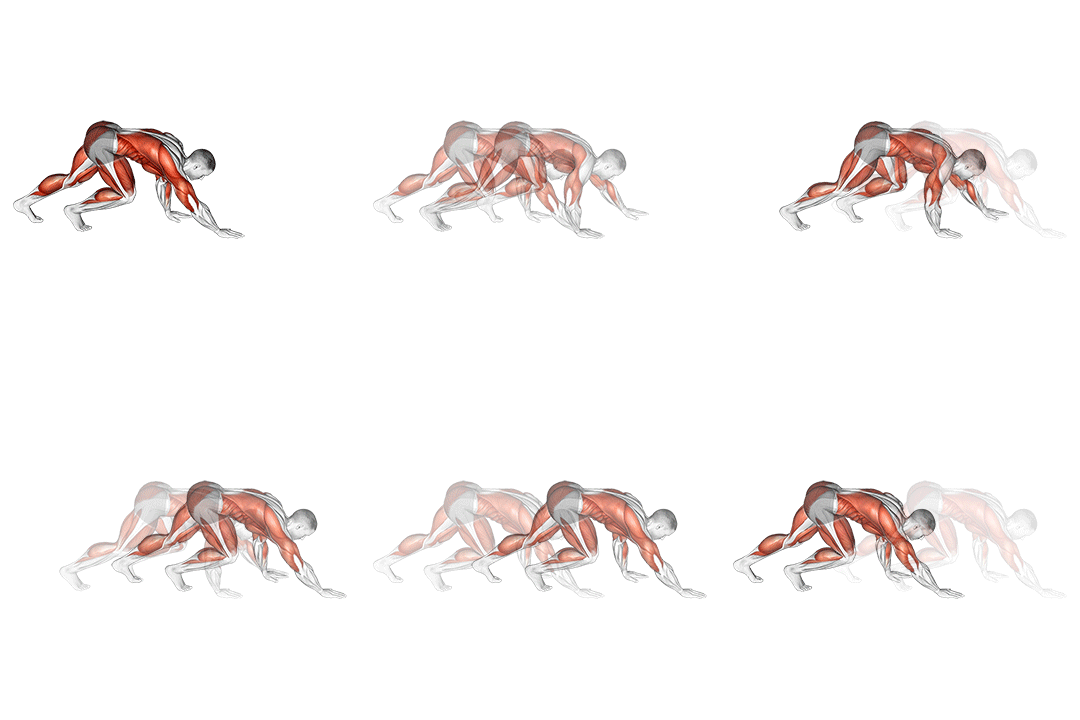
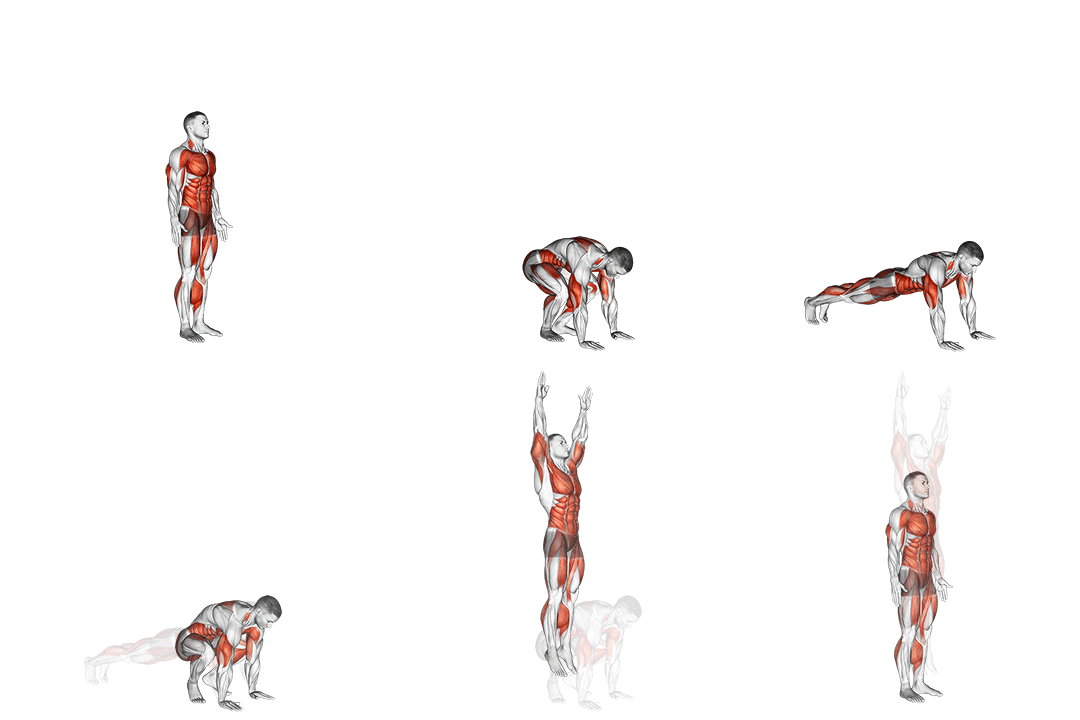
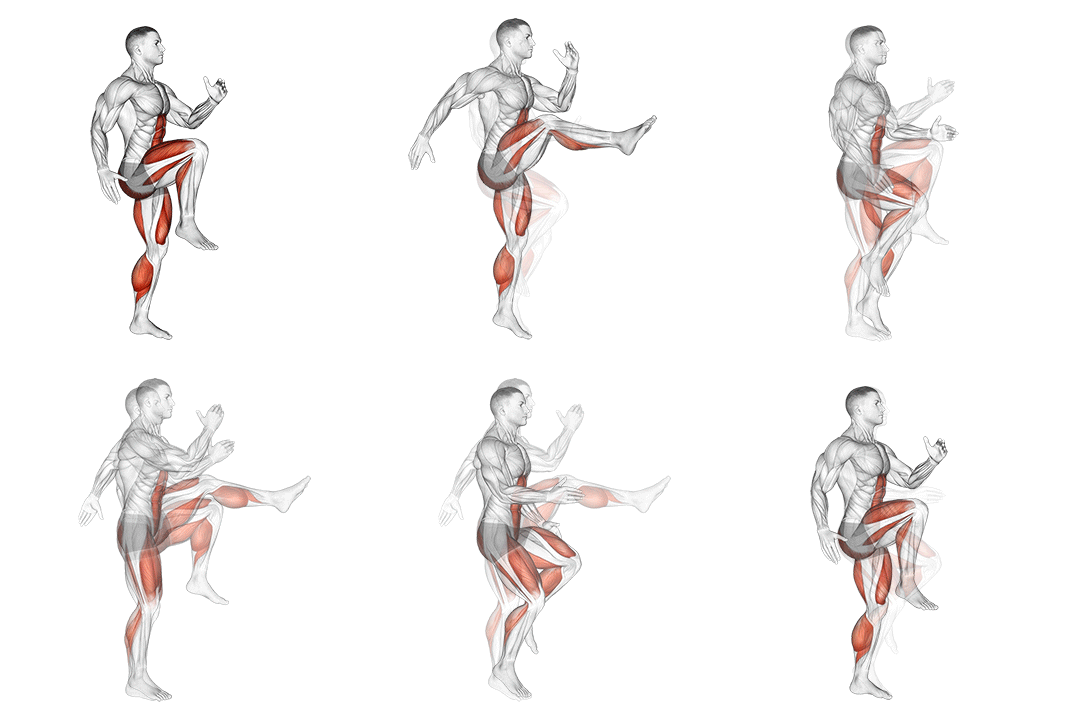
Visual Comparison
Overview
Half Knee Bends (male) vs High Knee Against Wall are two beginner, bodyweight cardio movements that tax your cardiovascular system while recruiting lower-body muscles. In this guide you’ll get clear comparisons of primary muscle activation, secondary recruitment (quads, hamstrings, glutes, calves), equipment needs, difficulty, and progression options. You’ll also find specific technique cues—joint angles, cadence, and rep ranges—so you can pick the right move for conditioning, muscle growth, or home workouts. Read on for actionable recommendations based on biomechanics and movement patterns.
Key Differences
- Both exercises target the Cardiovascular-system using Body-weight. The main differences are in their movement patterns and muscle activation angles.
Pros & Cons
Half Knee Bends (male)
+ Pros
- No equipment and minimal space required
- Sustained quad and glute tension for muscle growth (longer time under tension)
- Easy teaching cues: 45°–90° knee bend, chest up, knees tracking toes
- Scales to strength work by adding load or increasing depth
− Cons
- Lower calf activation compared to high-knee variants
- Less emphasis on hip flexor explosive work
- May be too slow for pure high-intensity cardio intervals
High Knee Against Wall
+ Pros
- Higher cadence options for greater cardiovascular output (120+ steps/min)
- Increased hip flexor and calf recruitment for sprint-specific conditioning
- Wall provides postural feedback to limit excessive forward lean
- Easy to program into HIIT sets (20–60s work intervals)
− Cons
- Requires a wall and some horizontal clearance
- Higher peak contraction rates can aggravate tight hip flexors or calves
- Less time under tension per rep for hypertrophy-focused training
When Each Exercise Wins
Half Knee Bends produce longer eccentric control and sustained quad/glute tension, which increases time under tension—use 3–5 sets of 8–15 slow reps with a 2–3s eccentric to favor muscle growth.
You can easily add external load or increase depth to create progressive overload and improve force production through the squat movement pattern, targeting quadriceps and glutes more effectively for strength.
Half Knee Bends have a gentler learning curve and clearer joint angles (keep knees around 45°–90°), making them safer for novices building baseline strength and cardio conditioning.
Half Knee Bends require no wall space and can be performed in tight quarters; they also scale from light cardio to loaded strength work, making them versatile for home programming.
Frequently Asked Questions
Can I do both Half Knee Bends (male) and High Knee Against Wall in the same workout?
Yes. Pair them in a superset or circuit: use Half Knee Bends for 8–12 slow reps to emphasize muscle tension, then follow with 30–45s of High Knee Against Wall at high cadence to spike heart rate. This combines time under tension with metabolic conditioning without adding equipment.
Which exercise is better for beginners?
Half Knee Bends are better for most beginners due to simpler mechanics and lower peak contraction rates. They teach knee tracking and hip extension with lower acute strain while still elevating heart rate.
How do the muscle activation patterns differ?
Half Knee Bends emphasize sustained quadriceps and glute activation through a vertical force vector and longer eccentric phases, while High Knee Against Wall produces rapid hip flexor bursts and greater calf plantarflexion due to higher knee drive and faster contact cycles.
Can High Knee Against Wall replace Half Knee Bends (male)?
High Knee Against Wall can replace Half Knee Bends for cardio-focused sessions or sprint prep, but it won’t match the sustained quad/glute loading needed for hypertrophy or strength. Use it when you prioritize cadence and hip-flexor/calf conditioning rather than slow, loaded muscle work.
Expert Verdict
Choose Half Knee Bends (male) when you want a safe, scalable blend of conditioning and lower-body muscle stress—especially if your goal is quad and glute development or progressive strength work. Use 3–5 sets of 8–15 reps or 30–60s tempo intervals with controlled 2–3s eccentrics to maximize hypertrophy. Pick High Knee Against Wall when you need high-frequency cardio, sprint-specific hip flexor and calf conditioning, or short HIIT intervals (20–60s) at 120–140 steps per minute. Both are beginner-friendly, but Half Knee Bends give you broader progression options while High Knee Against Wall excels for fast metabolic work.
Also Compare
More comparisons with Half Knee Bends (male)
Compare More Exercises
Use our free comparison tool to analyze any two exercises head-to-head.
Compare Exercises