

Half Knee Bends (male) vs Push To Run: Complete Comparison Guide
Half Knee Bends (male) vs Push To Run — two bodyweight cardio compounds that look similar but load your legs and heart in different ways. You’ll get a clear, practical breakdown of muscle activation, biomechanics, equipment needs, learning curve, and when to pick each exercise for your goals. I’ll show technique cues, recommended rep and interval ranges, and exact scenarios where one beats the other so you can choose the right move and progress efficiently.
Exercise Comparison
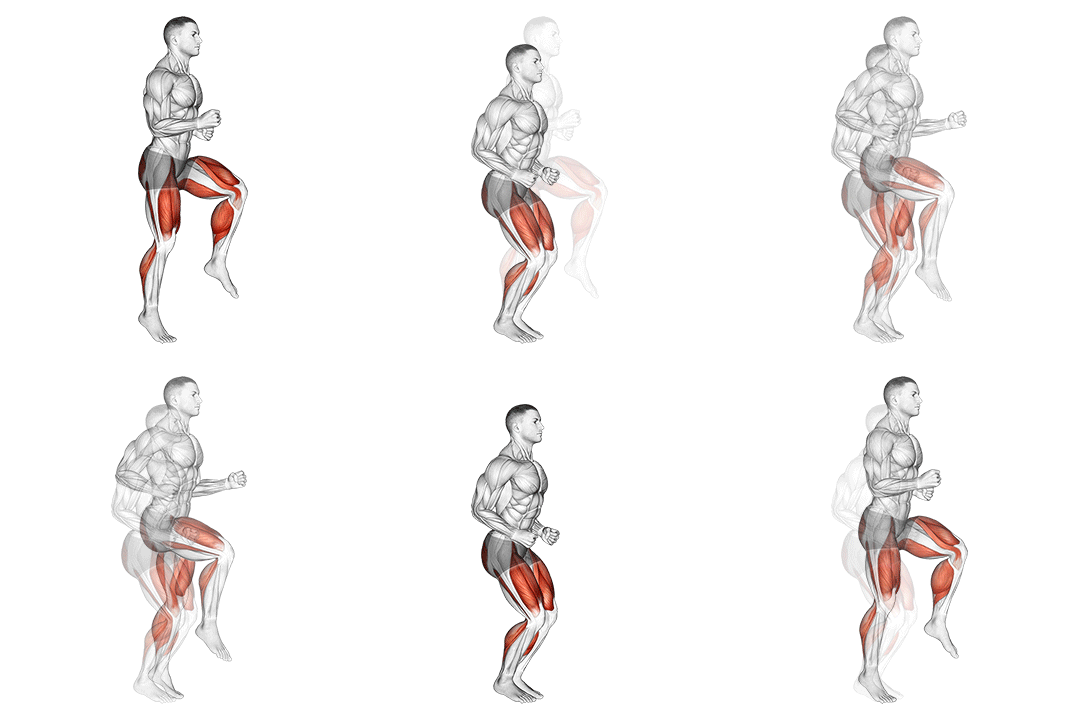
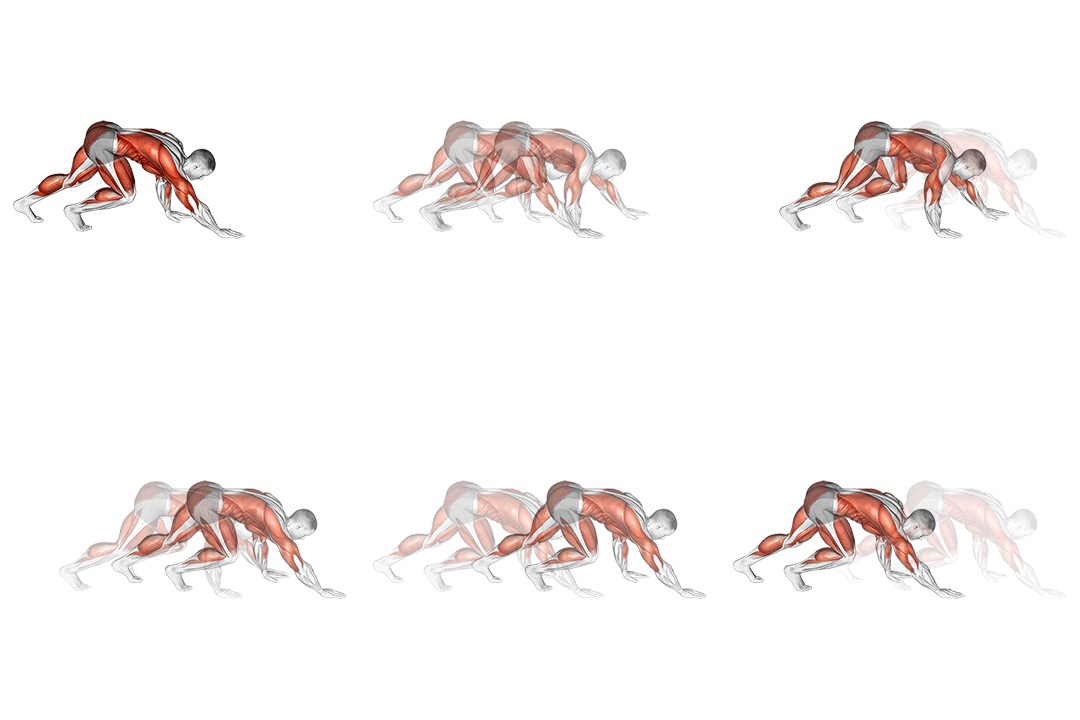
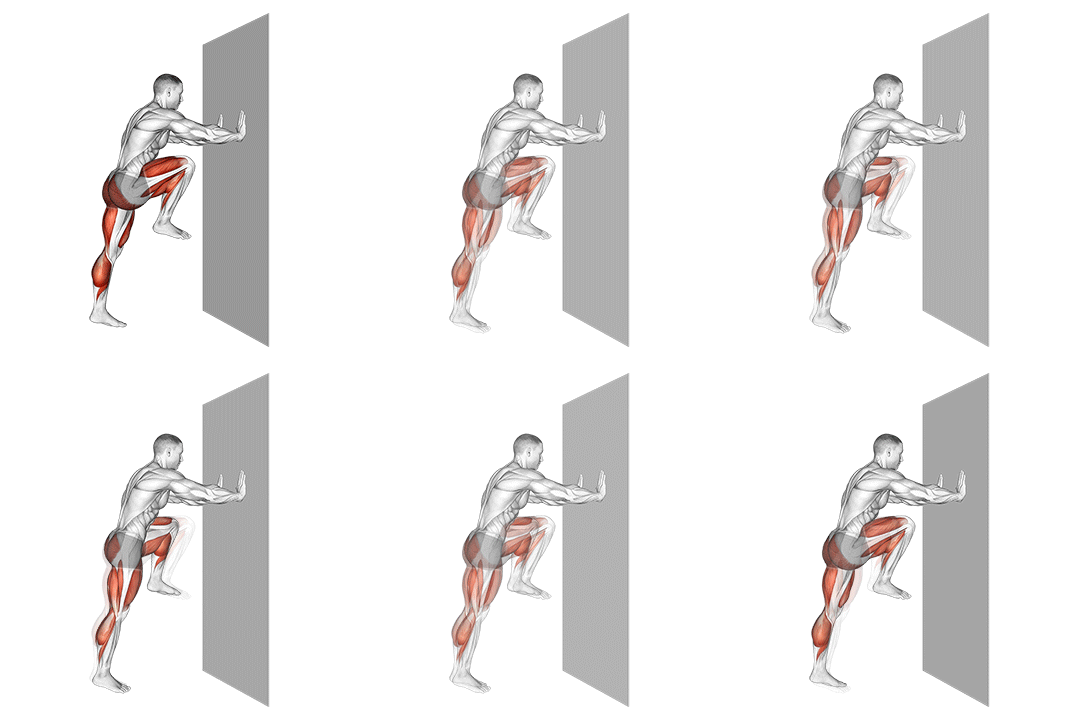
Half Knee Bends (male)
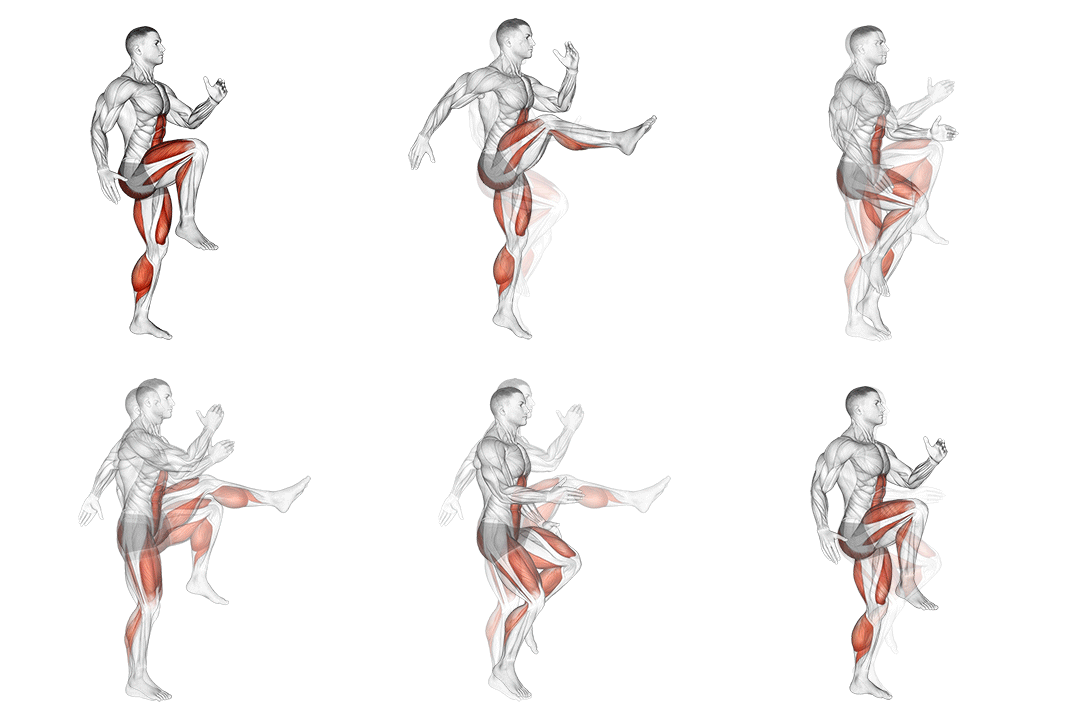
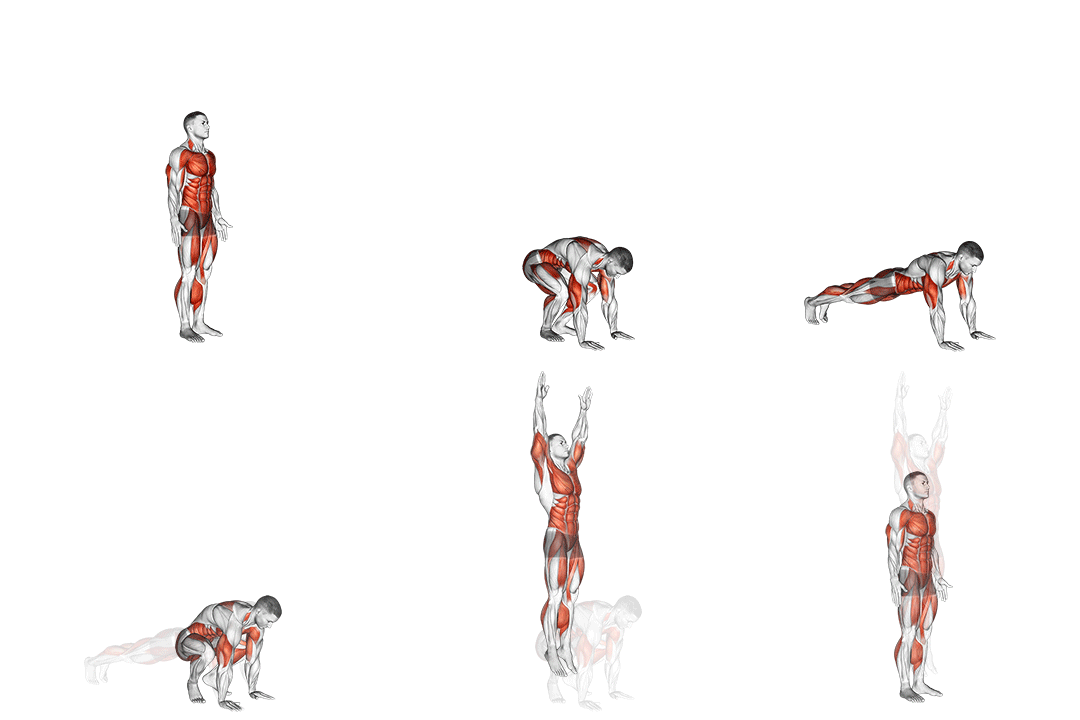
Push To Run
Head-to-Head Comparison
| Attribute | Half Knee Bends (male) | Push To Run |
|---|---|---|
| Target Muscle |
Cardiovascular-system
|
Cardiovascular-system
|
| Body Part |
Cardio
|
Cardio
|
| Equipment |
Body-weight
|
Body-weight
|
| Difficulty |
Beginner
|
Intermediate
|
| Movement Type |
Compound
|
Compound
|
| Secondary Muscles |
3
|
3
|
Secondary Muscles Activated
Half Knee Bends (male)
Push To Run
Visual Comparison
Overview
Half Knee Bends (male) vs Push To Run — two bodyweight cardio compounds that look similar but load your legs and heart in different ways. You’ll get a clear, practical breakdown of muscle activation, biomechanics, equipment needs, learning curve, and when to pick each exercise for your goals. I’ll show technique cues, recommended rep and interval ranges, and exact scenarios where one beats the other so you can choose the right move and progress efficiently.
Key Differences
- Difficulty levels differ: Half Knee Bends (male) is beginner, while Push To Run is intermediate.
- Both exercises target the Cardiovascular-system using Body-weight. The main differences are in their movement patterns and muscle activation angles.
Pros & Cons
Half Knee Bends (male)
+ Pros
- Very low equipment and space needs
- Easy to coach and learn with simple cues
- Good for steady-state cardio and high-rep quad conditioning
- Lower impact and easier on Achilles and calves
− Cons
- Limited carryover to explosive sprint mechanics
- Less calf and reactive power development
- Can underload strong lifters without added resistance
Push To Run
+ Pros
- Develops power, rate of force development, and calf strength
- Better transfer to running and sprint mechanics
- Higher metabolic and anaerobic stimulus per rep
- Scales well into sprint and plyometric progressions
− Cons
- Requires more space and coordination
- Higher impact increases risk to Achilles and hamstrings
- Harder for true beginners or those with poor ankle mobility
When Each Exercise Wins
Half Knee Bends let you control tempo and reach long time under tension with 3–5 sets of 12–20 reps or 30–60 second continuous sets, which favors quadriceps and glute hypertrophy through sustained concentric-eccentric loading.
For raw force production and controlled loading, Half Knee Bends allow slow, heavy-like contractions and progressive overload (weighted vest or added depth) which is better for increasing force capacity than short, reactive Push To Run efforts.
Half Knee Bends have simpler mechanics, lower impact, and clearer alignment cues (knees over toes, torso 10–20 degrees incline) so a beginner can build base strength and cardio without high coordination demands.
Needing minimal space and no forward run zone makes Half Knee Bends the obvious choice for tight home spaces; they also let you scale intensity with tempo or reps without equipment.
Frequently Asked Questions
Can I do both Half Knee Bends (male) and Push To Run in the same workout?
Yes. Use Half Knee Bends as a base-building or warm-up set (2–3 minutes at moderate pace) and follow with short Push To Run intervals for power work. Sequence heavier, high-impact Push To Run later in the session or on fresh days to reduce injury risk.
Which exercise is better for beginners?
Half Knee Bends (male) are better for beginners because they demand less coordination and lower impact while still raising heart rate. Start there to build knee and hip control before introducing Push To Run.
How do the muscle activation patterns differ?
Half Knee Bends produce sustained quadriceps and glute activation with longer concentric/eccentric phases at roughly 45–60 degrees knee flexion, relying on vertical force vectors. Push To Run creates rapid hip extension and ankle plantarflexion, shorter contact time, and higher peak activation in calves and posterior chain due to horizontal propulsion and elastic energy storage.
Can Push To Run replace Half Knee Bends (male)?
Not entirely. Push To Run can replace some metabolic and power demands but offers less controlled hypertrophy stimulus for quads and glutes. If your goal is steady-state conditioning or muscle growth, keep Half Knee Bends; use Push To Run to add power and running specificity.
Expert Verdict
Choose Half Knee Bends (male) when you need safe, high-volume cardio and quad/glute-focused work you can do anywhere, especially if you’re a beginner or training at home. Aim for 3–5 sets of 12–20 reps or 30–60 second continuous intervals, keeping knee bend to about 45–60 degrees and tracking knee alignment over the toes. Pick Push To Run when your priority is power, sprint mechanics, and reactive strength — use 6–10 short intervals of 10–30 seconds at high intensity with full recovery to emphasize rate of force development. Progress Push To Run with distance, resisted sprints, or plyometrics, but build ankle and hamstring resilience first.
Also Compare
More comparisons with Half Knee Bends (male)
Compare More Exercises
Use our free comparison tool to analyze any two exercises head-to-head.
Compare Exercises