

Handstand Push-Ups vs Rear Deltoid Stretch: Complete Comparison Guide
Handstand Push-Ups vs Rear Deltoid Stretch is a useful comparison when you want stronger, broader shoulders or just better shoulder health. You’ll get a direct breakdown of how each move loads the delts, which secondary muscles come into play, what gear and space you need, and which is safer for beginners. I’ll show you specific technique cues, explain the biomechanics—force vectors, length-tension relationships, and scapular control—and give clear programming recommendations so you can pick the right exercise for strength, hypertrophy, mobility, or rehab.
Exercise Comparison
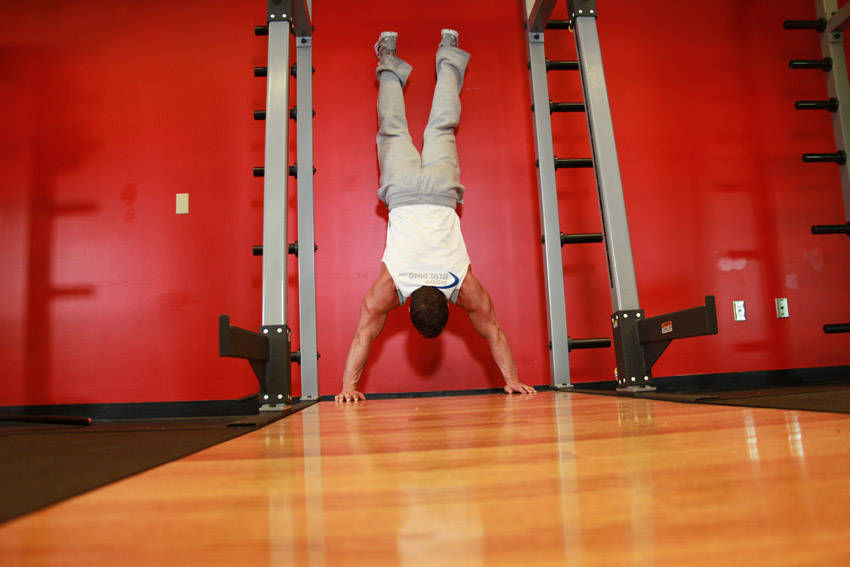
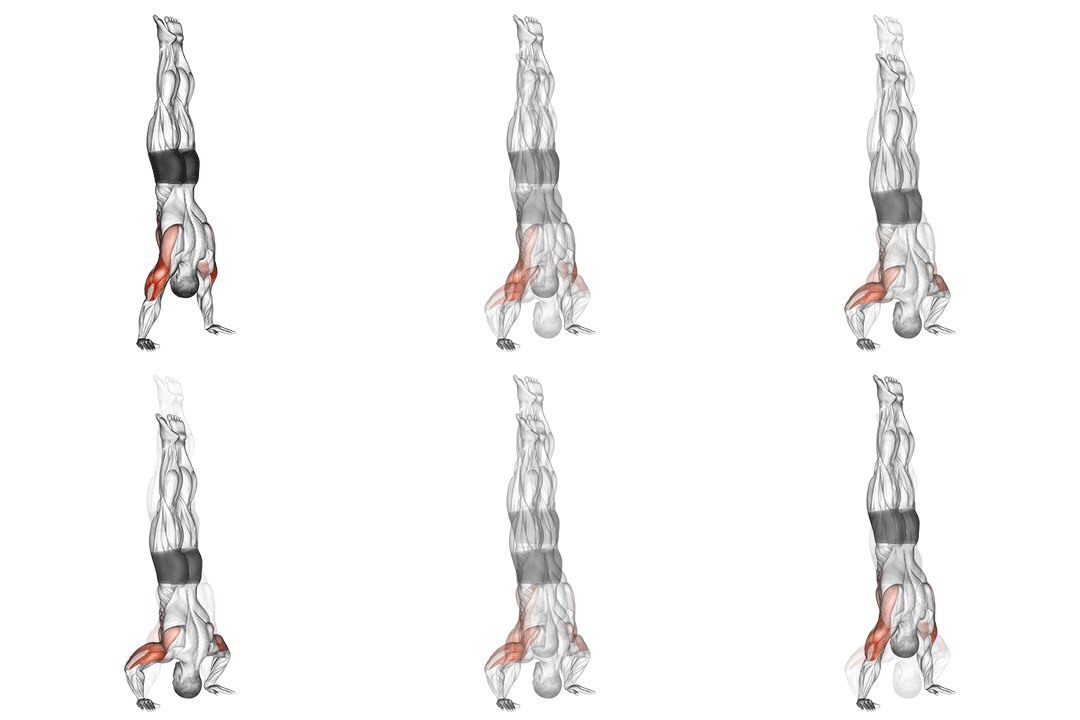
Handstand Push-ups
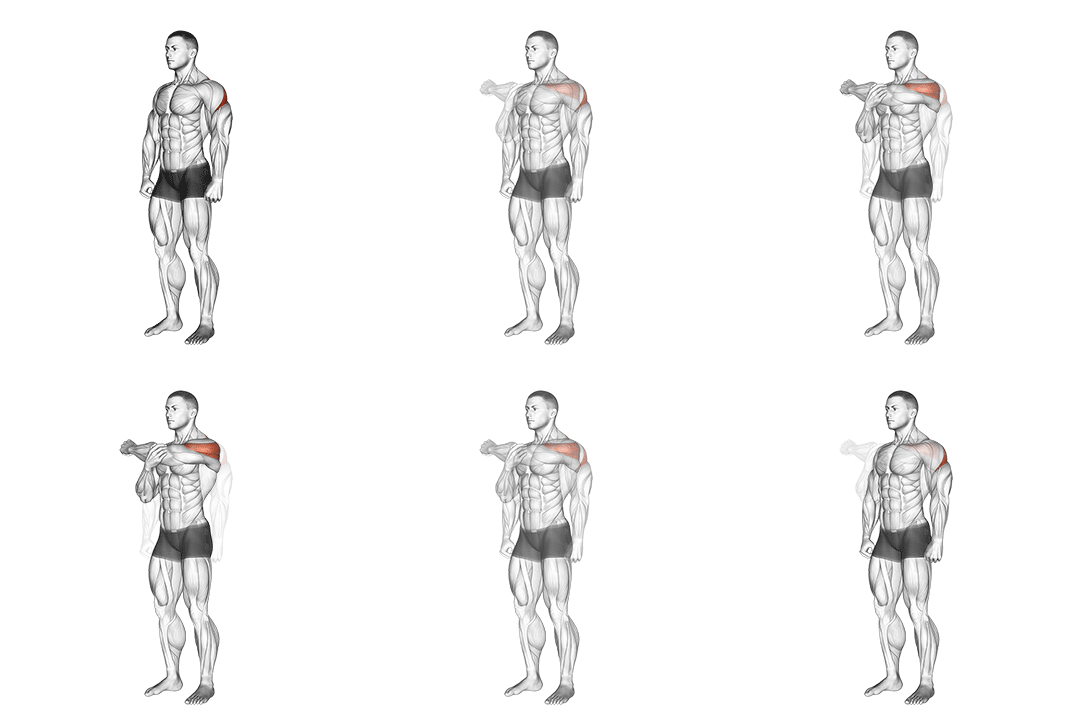
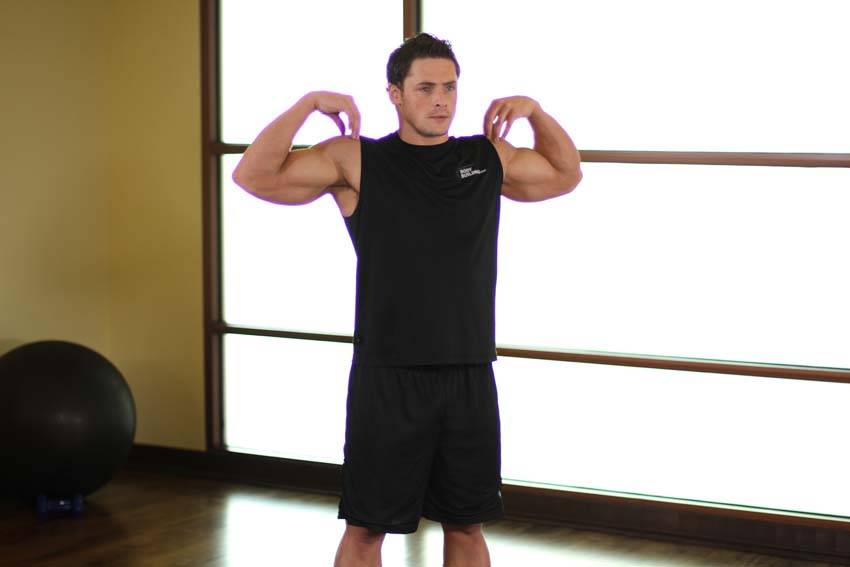
Rear Deltoid Stretch
Head-to-Head Comparison
| Attribute | Handstand Push-ups | Rear Deltoid Stretch |
|---|---|---|
| Target Muscle |
Delts
|
Delts
|
| Body Part |
Shoulders
|
Shoulders
|
| Equipment |
Body-weight
|
Body-weight
|
| Difficulty |
Advanced
|
Beginner
|
| Movement Type |
Compound
|
Isolation
|
| Secondary Muscles |
1
|
2
|
Secondary Muscles Activated
Handstand Push-ups
Rear Deltoid Stretch
Visual Comparison
Overview
Handstand Push-Ups vs Rear Deltoid Stretch is a useful comparison when you want stronger, broader shoulders or just better shoulder health. You’ll get a direct breakdown of how each move loads the delts, which secondary muscles come into play, what gear and space you need, and which is safer for beginners. I’ll show you specific technique cues, explain the biomechanics—force vectors, length-tension relationships, and scapular control—and give clear programming recommendations so you can pick the right exercise for strength, hypertrophy, mobility, or rehab.
Key Differences
- Handstand Push-ups is a compound movement, while Rear Deltoid Stretch is an isolation exercise.
- Difficulty levels differ: Handstand Push-ups is advanced, while Rear Deltoid Stretch is beginner.
- Both exercises target the Delts using Body-weight. The main differences are in their movement patterns and muscle activation angles.
Pros & Cons
Handstand Push-ups
+ Pros
- High mechanical load on delts and triceps for strength and muscle growth
- Develops vertical pressing strength and scapular control under load
- Multiple progression options (pike, wall HS, weighted) to increase intensity
- Engages core and full-body tension for improved stability and proprioception
− Cons
- Advanced skill; long learning curve before safe heavy loading
- Higher risk to wrists, neck, and shoulders without strict technique
- Requires overhead clearance and often a wall or spotter for safety
Rear Deltoid Stretch
+ Pros
- Immediate, low-risk way to improve posterior delt length and shoulder mobility
- Useful for posture correction and reducing rounding of the upper back
- Requires no special space or equipment; beginner-friendly
- Helps prepare the joint for loaded overhead work by improving end-range tolerance
− Cons
- Does not produce significant hypertrophy or strength gains on its own
- Can be misused—forcing the stretch can stress the anterior shoulder and impinge tissue
- Limited progression for load; mainly useful for mobility and recovery
When Each Exercise Wins
Handstand Push-Ups apply high mechanical tension via vertical loading and controlled eccentric phases, which stimulates muscle growth when programmed for 6–12 reps and progressive overload. The Rear Deltoid Stretch lacks sufficient concentric overload to drive hypertrophy.
Handstand Push-Ups train maximal force production in a vertical press position and transfer to overhead strength because they load the deltoids and triceps under full bodyweight. Progressions allow you to systematically increase intensity for 3–6 rep strength sets.
Rear Deltoid Stretch is safe, simple, and improves posterior shoulder length and scapular mobility without balance demands or heavy load, making it ideal for new trainees or those rehabbing shoulder stiffness.
Rear Deltoid Stretch needs minimal space and no vertical clearance, so you can perform it in small areas with no equipment. Handstand Push-Ups are possible at home but often require a wall, room height, and more skill practice.
Frequently Asked Questions
Can I do both Handstand Push-Ups and Rear Deltoid Stretch in the same workout?
Yes. Do the Rear Deltoid Stretch during your warm-up or cool-down to improve scapular mobility and tissue length, then perform Handstand Push-Ups when fresh for strength—place stretches after heavy pressing, not immediately before maximal sets requiring explosive force.
Which exercise is better for beginners?
The Rear Deltoid Stretch is better for beginners because it requires no balance skill and lowers joint tension while improving range of motion. Beginners should build mobility and scapular control before attempting handstand progressions.
How do the muscle activation patterns differ?
Handstand Push-Ups produce high concentric activation of anterior and medial deltoids plus triceps under vertical compression and demand scapular upward rotation; the Rear Deltoid Stretch places the posterior deltoid on passive length with low activation, targeting extensibility and end-range tolerance rather than force production.
Can Rear Deltoid Stretch replace Handstand Push-Ups?
No—if your goal is strength or hypertrophy, the Rear Deltoid Stretch cannot replace the high mechanical loading of Handstand Push-Ups. Use the stretch as a complementary mobility tool alongside progressive handstand or pressing work.
Expert Verdict
Use Handstand Push-Ups when your priority is building vertical pressing strength and deltoid muscle growth. Program them for strength with 3–6 sets of 3–6 reps, or hypertrophy with 4–6 sets of 6–12 reps, and progress through pike and wall variations while keeping scapular upward rotation and a neutral cervical position. Use the Rear Deltoid Stretch as a mobility and prehab tool—hold 30–90 seconds to improve posterior chain length-tension and posture, and add band-assisted end-range control for dynamic improvements. For balanced shoulder health, pair heavy vertical pressing work with regular posterior deltoid mobility and scapular stabilization drills.
Also Compare
More comparisons with Handstand Push-ups

Compare More Exercises
Use our free comparison tool to analyze any two exercises head-to-head.
Compare Exercises