

High Knee Against Wall vs Push To Run: Complete Comparison Guide
High Knee Against Wall vs Push To Run puts two bodyweight cardio drills head-to-head so you can pick the right option for your goals. You’ll get a clear breakdown of primary and secondary muscle activation, equipment needs, learning curve, and injury risk. I’ll give specific technique cues, interval and rep ranges, and biomechanics-based recommendations so you can implement either movement safely. Read on to learn which drill suits beginners, who should use the intermediate option, and how to progress each exercise for better cardiovascular fitness and targeted leg recruitment.
Exercise Comparison
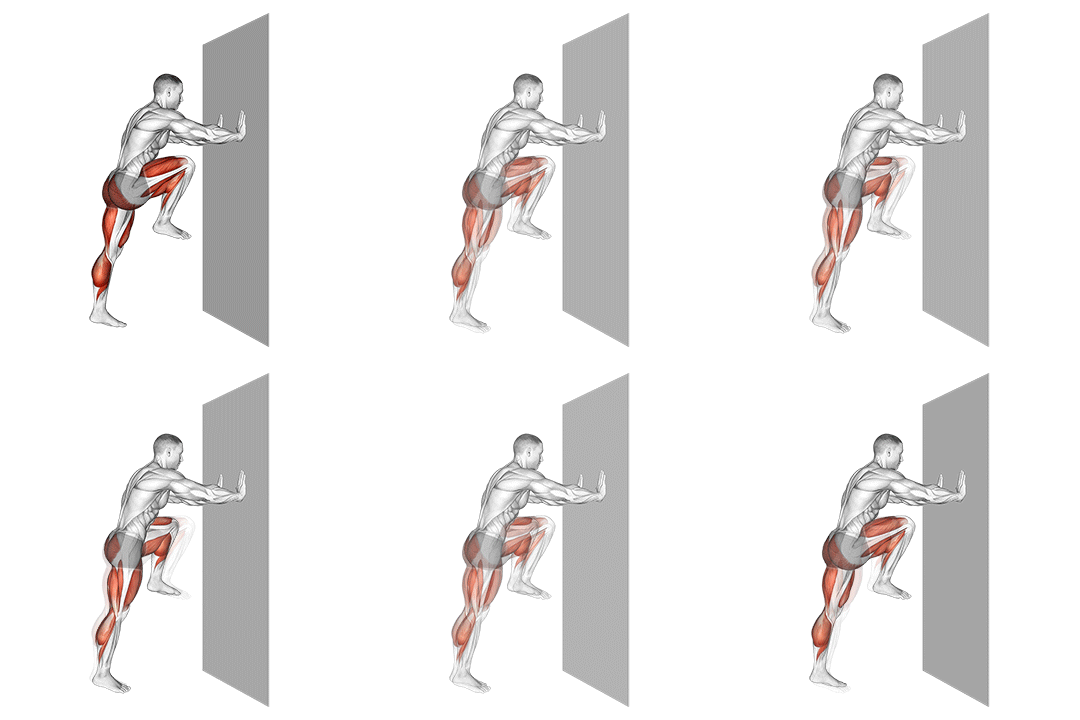
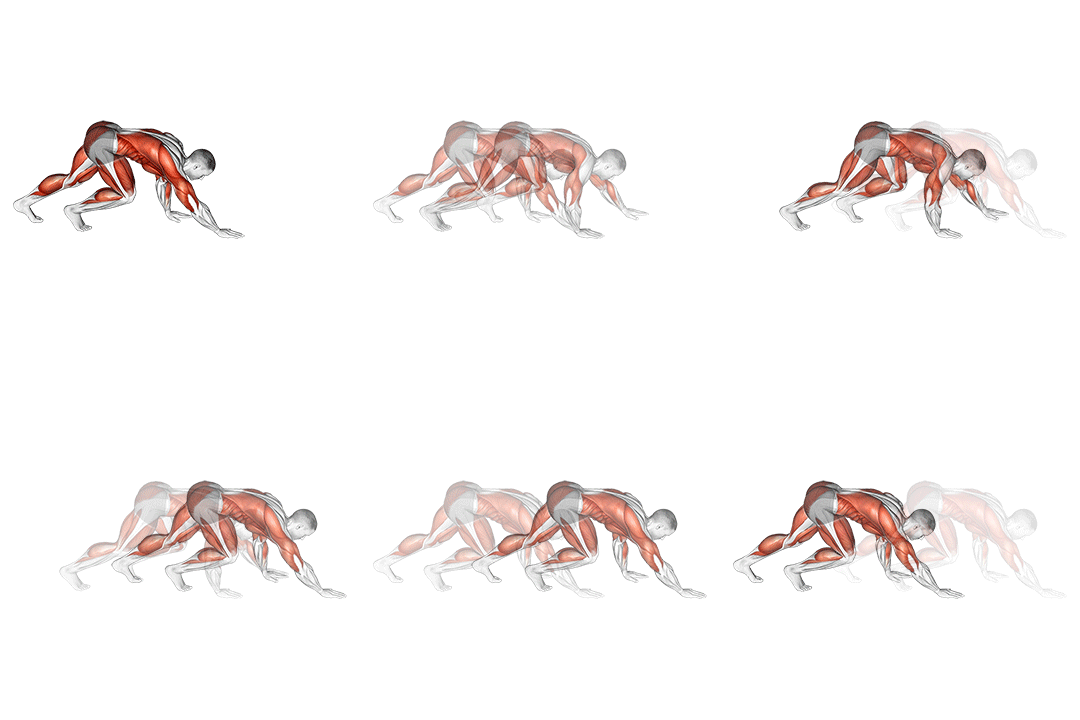
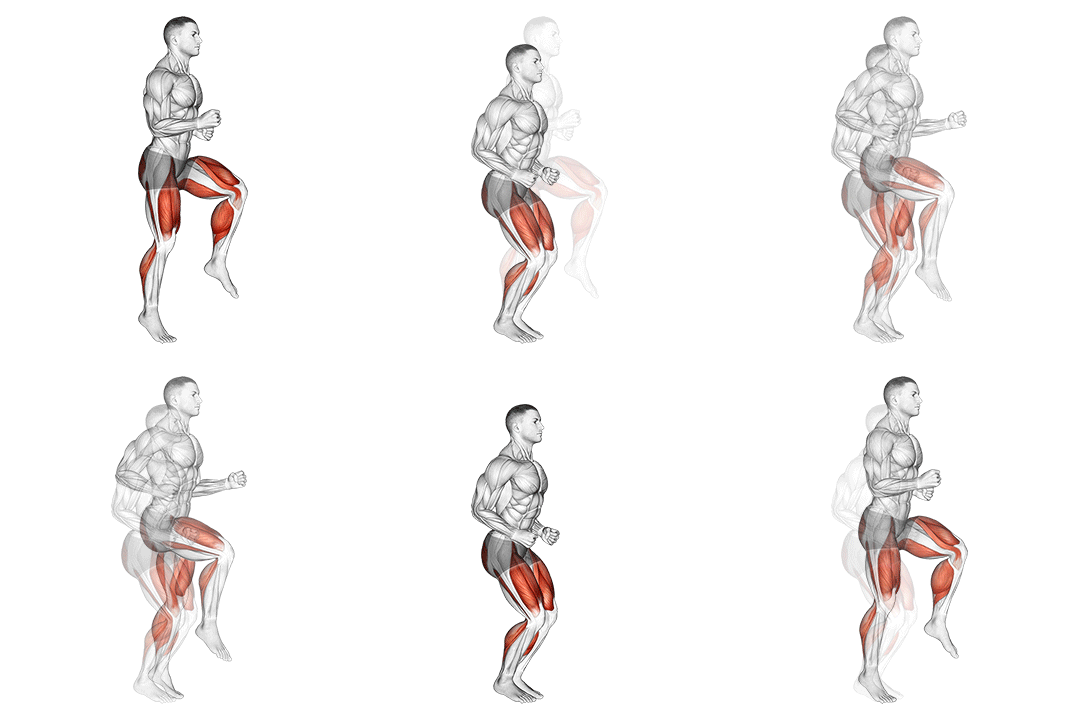
High Knee Against Wall
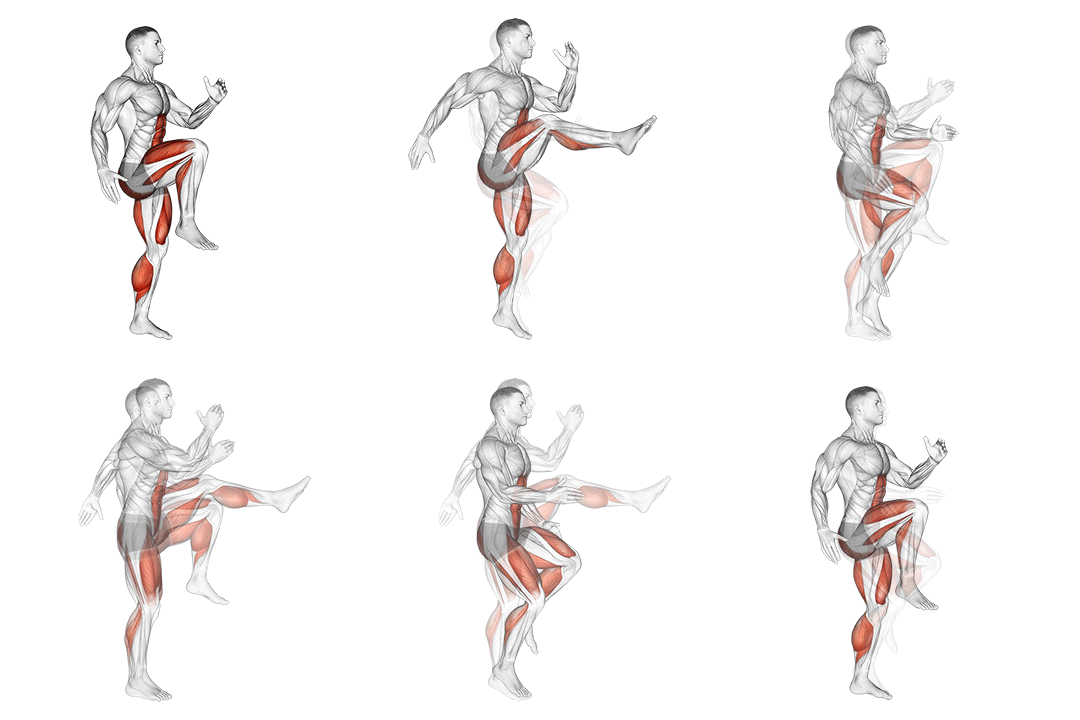
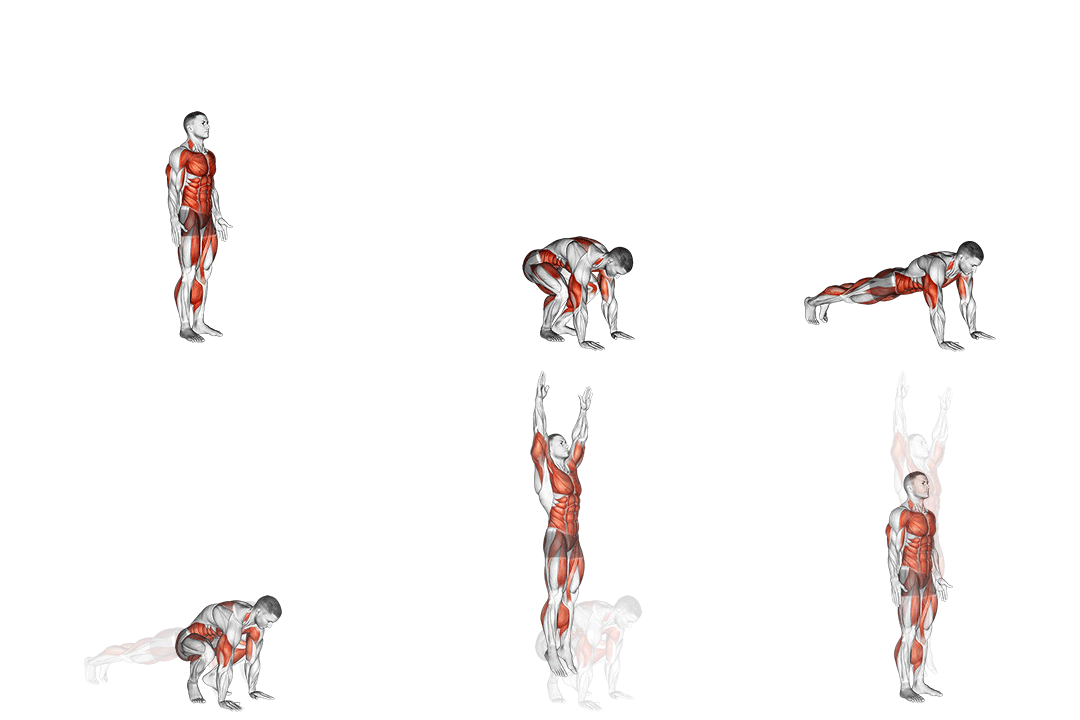
Push To Run
Head-to-Head Comparison
| Attribute | High Knee Against Wall | Push To Run |
|---|---|---|
| Target Muscle |
Cardiovascular-system
|
Cardiovascular-system
|
| Body Part |
Cardio
|
Cardio
|
| Equipment |
Body-weight
|
Body-weight
|
| Difficulty |
Beginner
|
Intermediate
|
| Movement Type |
Compound
|
Compound
|
| Secondary Muscles |
4
|
3
|
Secondary Muscles Activated
High Knee Against Wall
Push To Run
Visual Comparison
Overview
High Knee Against Wall vs Push To Run puts two bodyweight cardio drills head-to-head so you can pick the right option for your goals. You’ll get a clear breakdown of primary and secondary muscle activation, equipment needs, learning curve, and injury risk. I’ll give specific technique cues, interval and rep ranges, and biomechanics-based recommendations so you can implement either movement safely. Read on to learn which drill suits beginners, who should use the intermediate option, and how to progress each exercise for better cardiovascular fitness and targeted leg recruitment.
Key Differences
- Difficulty levels differ: High Knee Against Wall is beginner, while Push To Run is intermediate.
- Both exercises target the Cardiovascular-system using Body-weight. The main differences are in their movement patterns and muscle activation angles.
Pros & Cons
High Knee Against Wall
+ Pros
- Minimal space and no equipment required
- Low-impact relative to plyometrics when performed with controlled landings
- Easy technique: focus on knee height (~90°) and posture
- Great for steady-state and interval cardio; scales by cadence and duration
− Cons
- Less posterior-chain loading for glute/hamstring strength
- May feel less ‘explosive’ for power development
- Can overtax hip flexors if knee drive is excessive or posture breaks down
Push To Run
+ Pros
- Stronger posterior-chain recruitment—better for hip extension power
- Higher peak ground reaction forces suitable for developing sprint transfer
- More progression options for plyometrics and strength-speed work
- Combines upper- and lower-body coordination, boosting whole-body conditioning
− Cons
- Higher impact and greater technical demand than high knees
- Requires more space and better footwear/footing
- Greater injury risk if you lack eccentric control or hip stability
When Each Exercise Wins
Push To Run induces stronger eccentric loading and greater posterior-chain activation, which increases mechanical tension on glutes and hamstrings. Use sets of 6–12 explosive efforts with 30–60 sec rest or pair with resistance work to target muscle growth.
The explosive triple extension and higher peak forces in Push To Run produce better transfer to strength and power. Integrate 3–5 sets of short, intense reps focusing on maximal force and quality landings.
High Knee Against Wall has a gentler learning curve and lower impact, letting you build cadence and cardiovascular base while keeping form simple. Start with 20–30 sec intervals at 60–80% effort and progress duration before adding intensity.
Limited space and no special footwear make High Knee Against Wall ideal for apartments or small rooms. You can run effective HIIT sets (e.g., 10 x 30 sec on/30 sec off) without risk of damaging floors or needing extra clearance.
Frequently Asked Questions
Can I do both High Knee Against Wall and Push To Run in the same workout?
Yes. Start with High Knee Against Wall for 2–4 minutes of steady or tempo work to raise core temperature, then perform 3–6 short Push To Run sets (10–20 seconds max effort) to train power. Maintain quality landings and limit total plyometric volume to avoid overuse.
Which exercise is better for beginners?
High Knee Against Wall is better for beginners because it requires simpler coordination and lower impact while still training cardiovascular fitness. Begin with 20–40 second rounds focusing on upright posture and hip-height knee drive.
How do the muscle activation patterns differ?
High Knee Against Wall emphasizes cyclical hip flexion and quadriceps concentric work at ~80°–100° hip flexion, favoring cadence. Push To Run includes an eccentric loading phase followed by explosive hip extension, increasing glute and hamstring activation and producing higher peak ground reaction forces.
Can Push To Run replace High Knee Against Wall?
Push To Run can replace high knees if your goal is power or posterior-chain development, but it’s higher impact and technically demanding. If you need low-impact conditioning, keep High Knee Against Wall in your program instead of swapping it out entirely.
Expert Verdict
Choose High Knee Against Wall when you want a low-barrier, low-impact cardio drill that still delivers high cadence and quad-dominant conditioning. It’s the right pick for beginners, small spaces, and interval work focused on heart-rate control and metabolic conditioning. Pick Push To Run when you want greater posterior-chain recruitment, higher peak forces, and a bridge to sprinting or plyometrics; it’s the superior choice for strength-speed development and hypertrophy stimulus in the legs. Program both: use high knees for base-building and recovery intervals, and add Push To Run sessions 1–2 times weekly to develop power and posterior-chain strength.
Also Compare
More comparisons with High Knee Against Wall
Compare More Exercises
Use our free comparison tool to analyze any two exercises head-to-head.
Compare Exercises