

Jack Jump (male) vs Mountain Climber: Complete Comparison Guide
Jack Jump (male) vs Mountain Climber — both are bodyweight, compound cardio moves, but they stress your body very differently. You’ll learn how each exercise loads muscles, which movement patterns dominate, what equipment and mobility you need, plus clear recommendations for when to use each. I’ll cover primary and secondary muscle activation, technique cues you can apply on your next set, injury risk, and practical progressions with specific rep ranges and workload suggestions so you can pick the better option for your goals.
Exercise Comparison
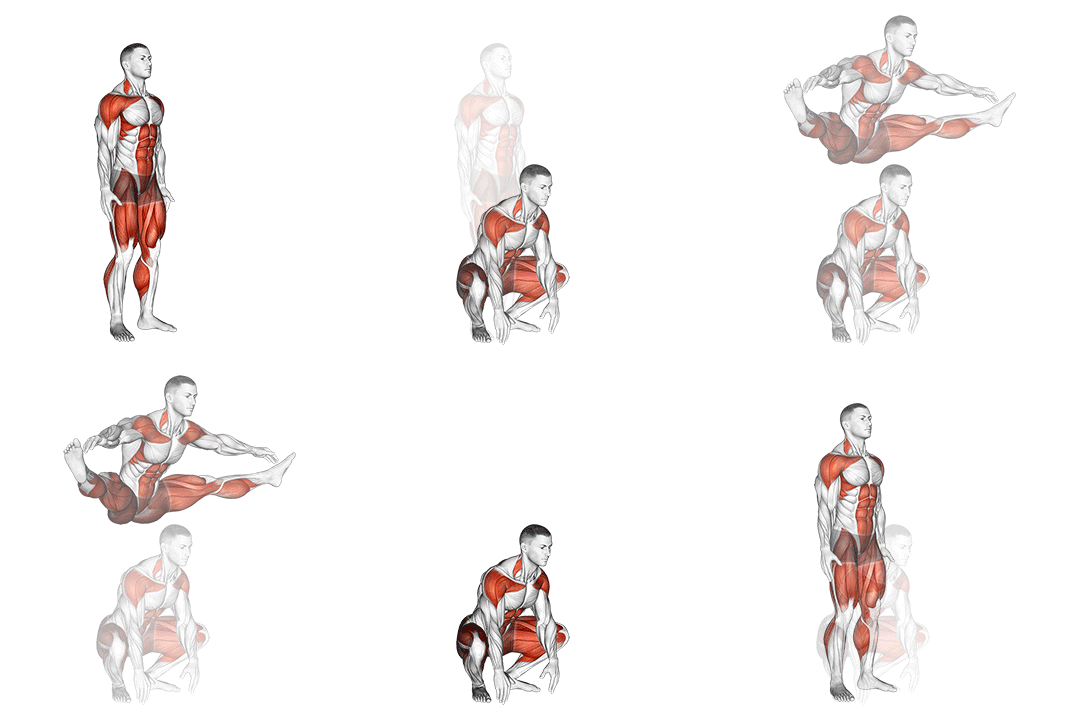
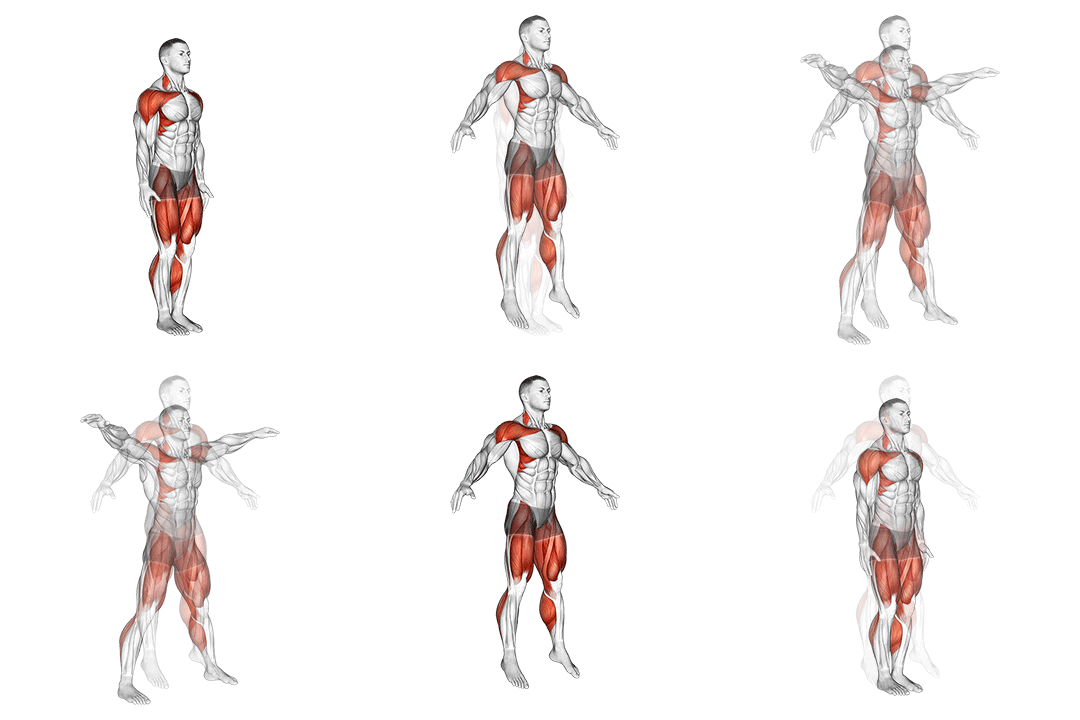
Jack Jump (male)
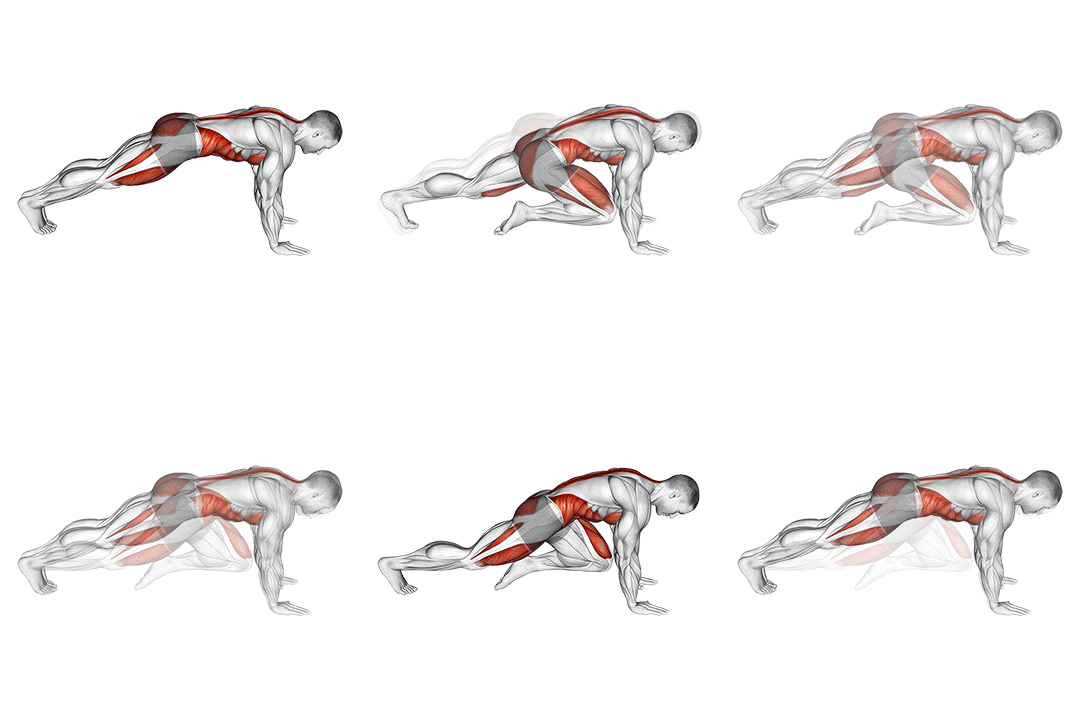
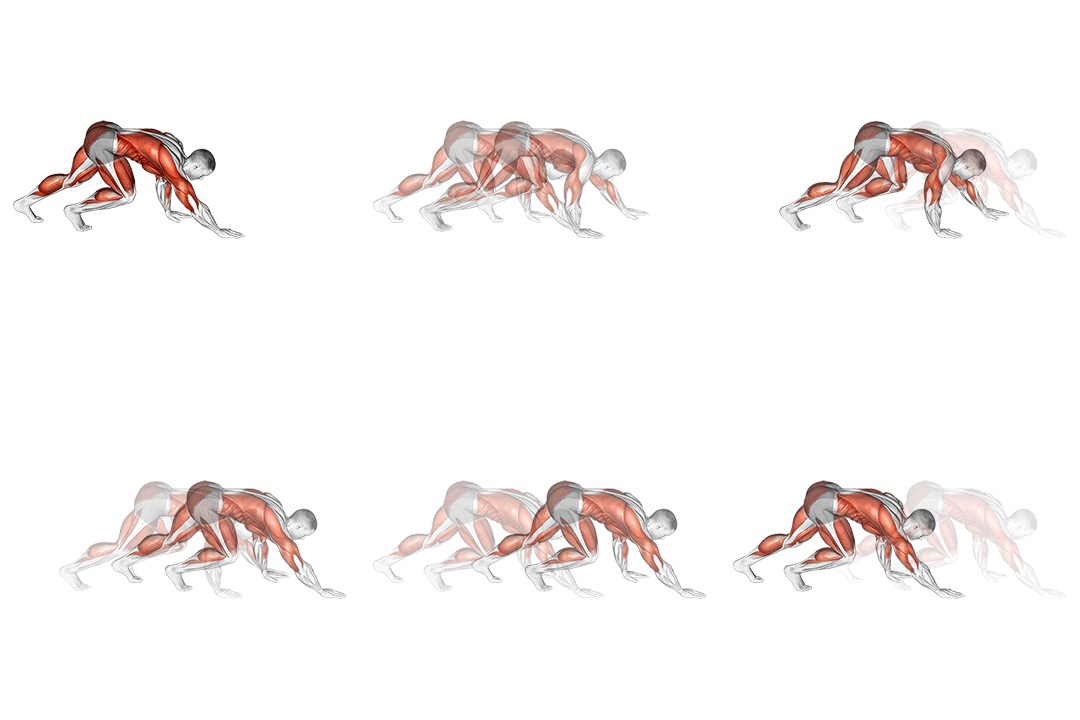
Mountain Climber
Head-to-Head Comparison
| Attribute | Jack Jump (male) | Mountain Climber |
|---|---|---|
| Target Muscle |
Cardiovascular
|
Cardiovascular
|
| Body Part |
Cardio
|
Cardio
|
| Equipment |
Body-weight
|
Body-weight
|
| Difficulty |
Beginner
|
Intermediate
|
| Movement Type |
Compound
|
Compound
|
| Secondary Muscles |
2
|
3
|
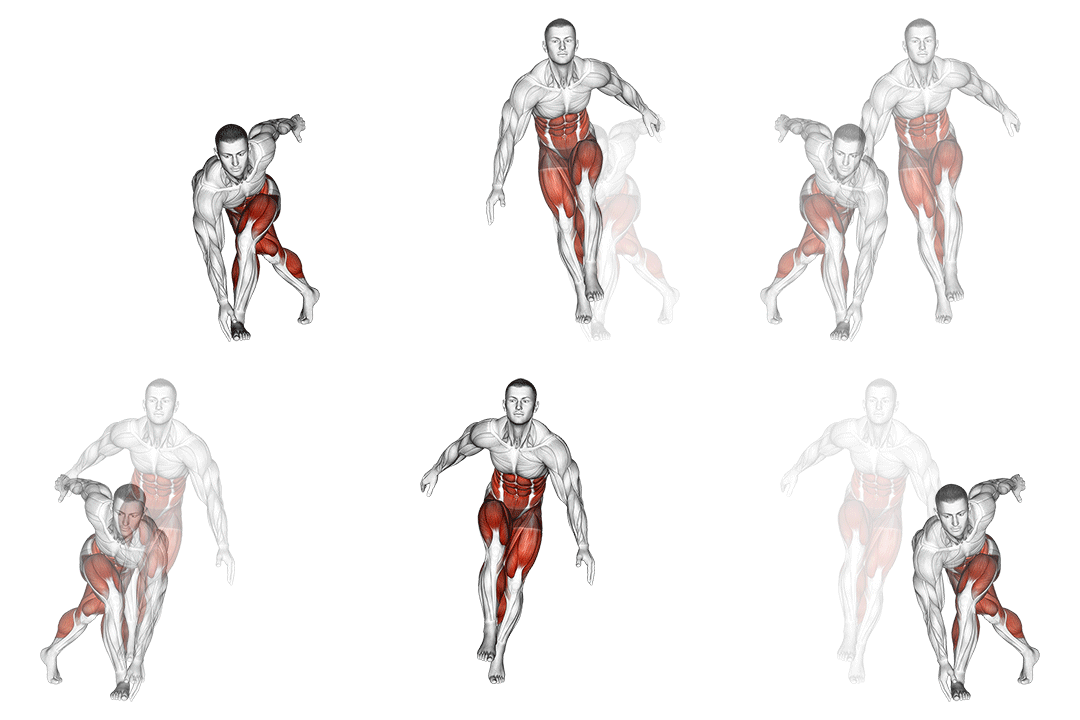
Secondary Muscles Activated
Jack Jump (male)
Mountain Climber
Visual Comparison
Overview
Jack Jump (male) vs Mountain Climber — both are bodyweight, compound cardio moves, but they stress your body very differently. You’ll learn how each exercise loads muscles, which movement patterns dominate, what equipment and mobility you need, plus clear recommendations for when to use each. I’ll cover primary and secondary muscle activation, technique cues you can apply on your next set, injury risk, and practical progressions with specific rep ranges and workload suggestions so you can pick the better option for your goals.
Key Differences
- Difficulty levels differ: Jack Jump (male) is beginner, while Mountain Climber is intermediate.
- Both exercises target the Cardiovascular using Body-weight. The main differences are in their movement patterns and muscle activation angles.
Pros & Cons
Jack Jump (male)
+ Pros
- Excellent for developing lower-body power via the stretch-shortening cycle
- Very accessible — minimal shoulder and wrist demand
- Easy to program in short high-intensity intervals (20–40s rounds)
- Scales with jump height and single-leg variations for power progression
− Cons
- High-impact landing can aggravate knees or ankles without proper technique
- Limited core and upper-body strengthening stimulus
- Less direct progression for sustained strength or hypertrophy compared to loaded exercises
Mountain Climber
+ Pros
- Strong core and shoulder activation with anti-extension demand
- Versatile progressions (tempo, sliders, cross-body) to increase difficulty
- Low vertical impact — kinder to knees than jumping
- Good carryover to stability and endurance in plank-based movements
− Cons
- Requires solid shoulder and wrist tolerance; can cause discomfort for some
- Harder to learn proper bracing and cadence for maximal cardiovascular effect
- Less direct lower-body power stimulus compared to jumping movements
When Each Exercise Wins
Jack Jump (male) produces repeated eccentric–concentric loading of the quads and calves and can stimulate hypertrophy better than Mountain Climber for the lower body when performed in higher-volume sets (e.g., 3–6 sets of 12–20 controlled jumps). That said, neither matches loaded resistance training for maximal muscle growth.
Mountain Climber builds strength endurance in the core and upper-body stabilizers through sustained isometric shoulder loading and anti-extension demands. For developing scapular control and trunk stiffness, 3–5 sets of 30–60 seconds at controlled tempo will transfer better than repeated jumps.
Jack Jump (male) has a simpler movement pattern and lower upper-body demands, so beginners can quickly learn safe landing mechanics and breathing cues. Start with shallow jumps (knee flexion ~30°) and short sets (10–20 reps) to build tolerance.
Both require no equipment, but Jack Jump (male) needs less space for hand positioning and no wrist tolerance, making it easier to do at home. Use interval formats (20–40s work, 10–20s rest) for an effective home cardio session.
Frequently Asked Questions
Can I do both Jack Jump (male) and Mountain Climber in the same workout?
Yes. Pair them within circuits to target different movement patterns — use Jack Jump (male) for short explosive intervals (6–12 reps or 20–30s) and Mountain Climbers for core-stability intervals (30–60s). Alternate sets or use a superset (jump then plank drive) to combine power and anti-extension conditioning.
Which exercise is better for beginners?
Jack Jump (male) is generally better for beginners because it uses a familiar jump-and-land pattern and places less demand on shoulder stability. Start with shallow jumps, focus on soft landings (knees tracking over toes) and short sets to build confidence.
How do the muscle activation patterns differ?
Jack Jump (male) emphasizes rapid concentric hip and knee extension with brief eccentric landing — strong quadriceps and calf activation via the stretch-shortening cycle. Mountain Climber emphasizes repetitive hip flexion plus sustained shoulder and core isometrics, increasing rectus abdominis, oblique and anterior deltoid demand while resisting lumbar extension.
Can Mountain Climber replace Jack Jump (male)?
Only partially. Mountain Climber can replace Jack Jump for low-impact cardio and core conditioning but won’t replicate the vertical power stimulus for the quads and calves. If your goal is lower-body power, keep jack jumps; if you need core strength and shoulder endurance, favor mountain climbers.
Expert Verdict
Use Jack Jump (male) when your priority is lower-body power, simple conditioning, or when shoulder or wrist issues limit plank work. Program 3–6 sets of 8–20 explosive reps or 20–40 second interval rounds to tax the phosphagen and glycolytic systems. Choose Mountain Climber when you need core anti-extension strength, shoulder stability, and lower-impact cardio; perform 3–5 sets of 30–60 seconds or tempo-controlled reps (e.g., 2:1 cadence). Both serve cardio goals, but pick Jack Jump for vertical power and accessibility and Mountain Climber for core-driven conditioning and shoulder endurance.
Also Compare
More comparisons with Jack Jump (male)
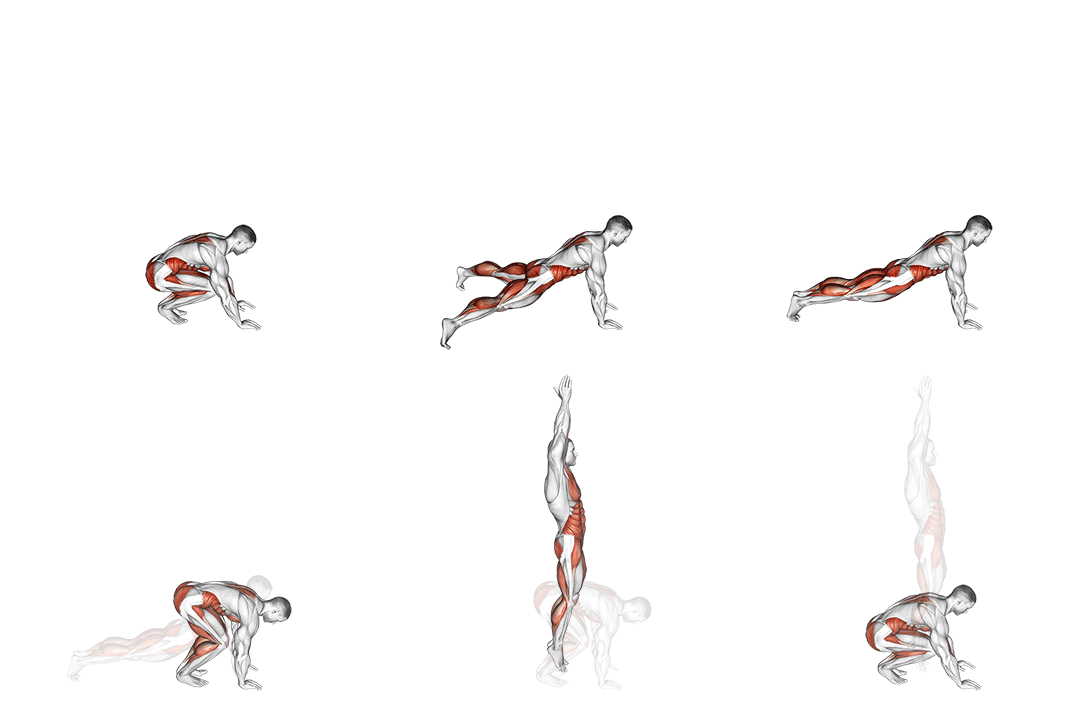
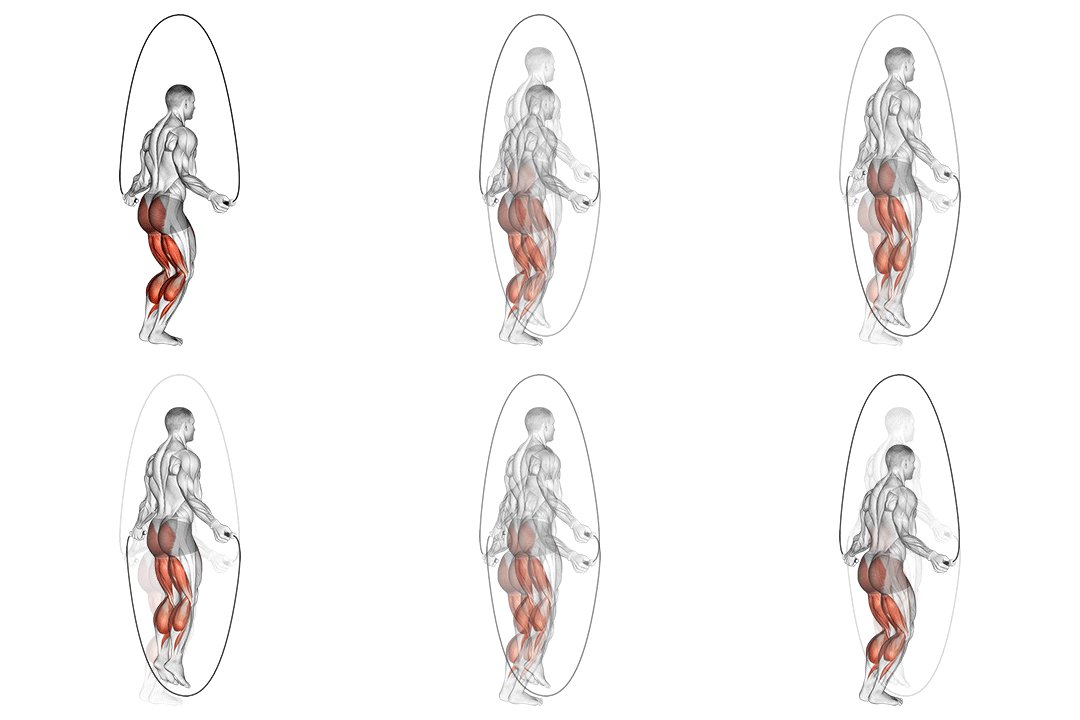
Compare More Exercises
Use our free comparison tool to analyze any two exercises head-to-head.
Compare Exercises