

Jump Rope vs Rope Jumping: Complete Comparison Guide
Jump Rope vs Rope Jumping — you probably hear both terms used interchangeably, but they imply different skill levels and training goals. You’ll get a clear, practical breakdown of how each exercise loads your cardiovascular system, which muscles drive the movement, exact technique cues, and clear progressions. I’ll compare muscle activation, equipment needs, learning curves, injury risk, and give concrete programming suggestions (sets, rep ranges, and interval times) so you can pick the version that matches your goals and current ability.
Exercise Comparison
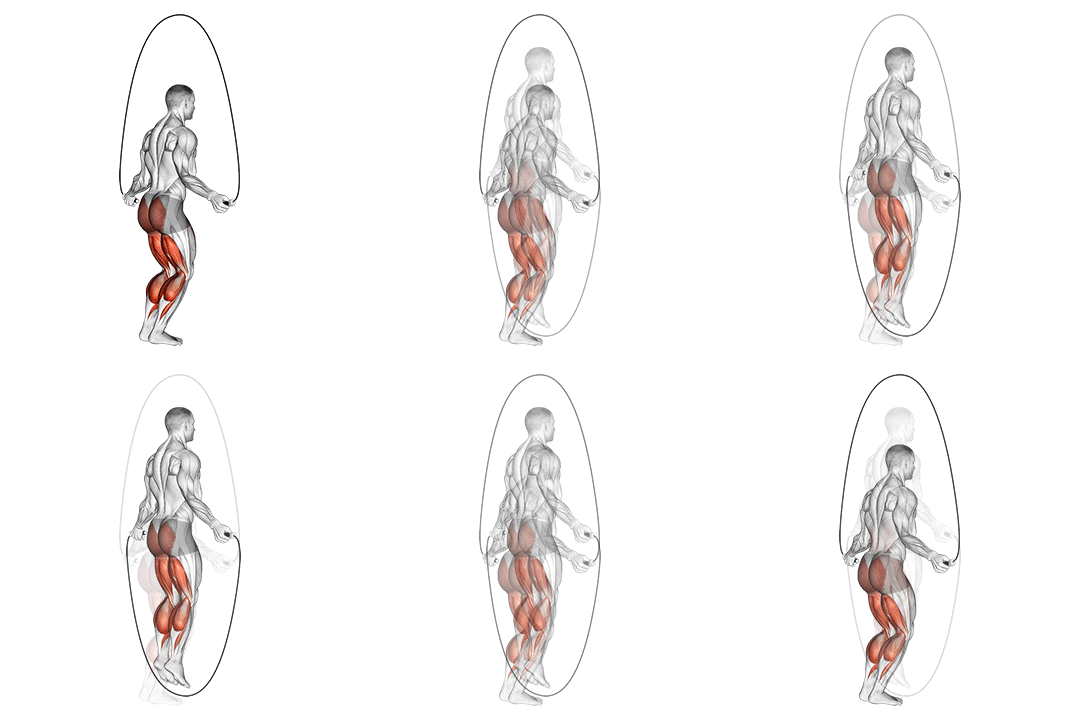
Jump Rope
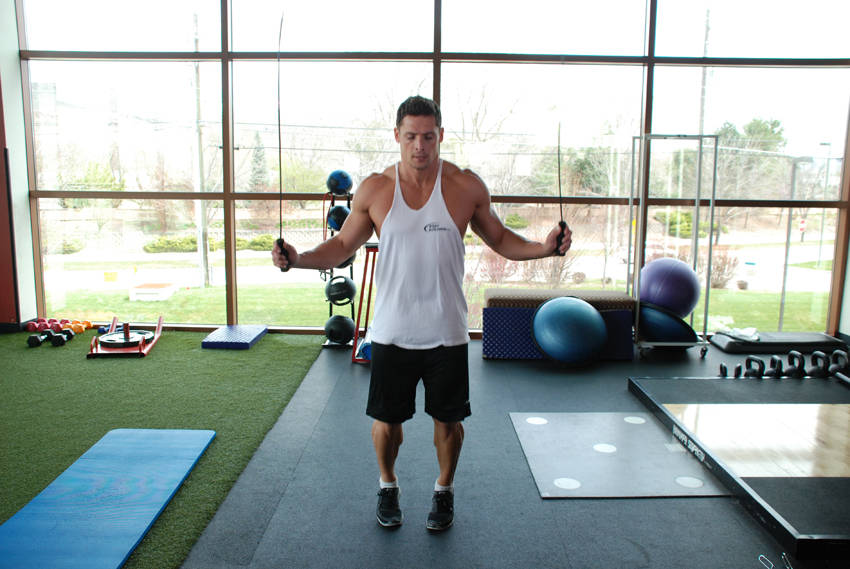
Rope Jumping
Head-to-Head Comparison
| Attribute | Jump Rope | Rope Jumping |
|---|---|---|
| Target Muscle |
Cardiovascular
|
Calves
|
| Body Part |
Cardio
|
Cardio
|
| Equipment |
Rope
|
Rope
|
| Difficulty |
Intermediate
|
Beginner
|
| Movement Type |
Compound
|
Compound
|
| Secondary Muscles |
4
|
2
|
Secondary Muscles Activated
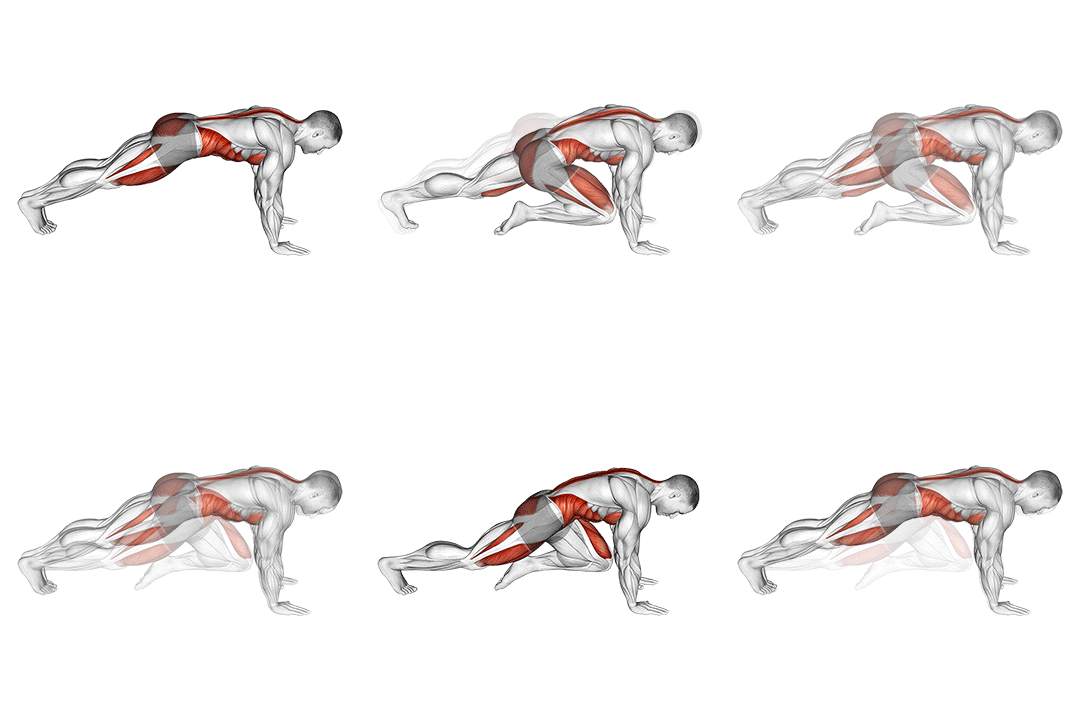
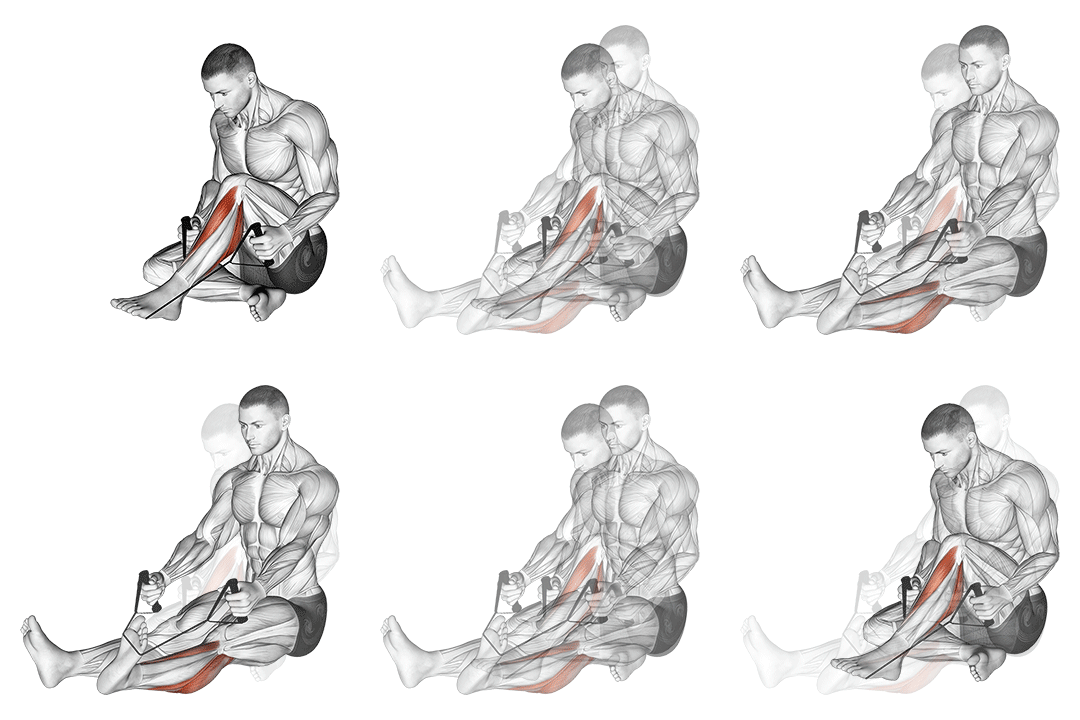
Jump Rope
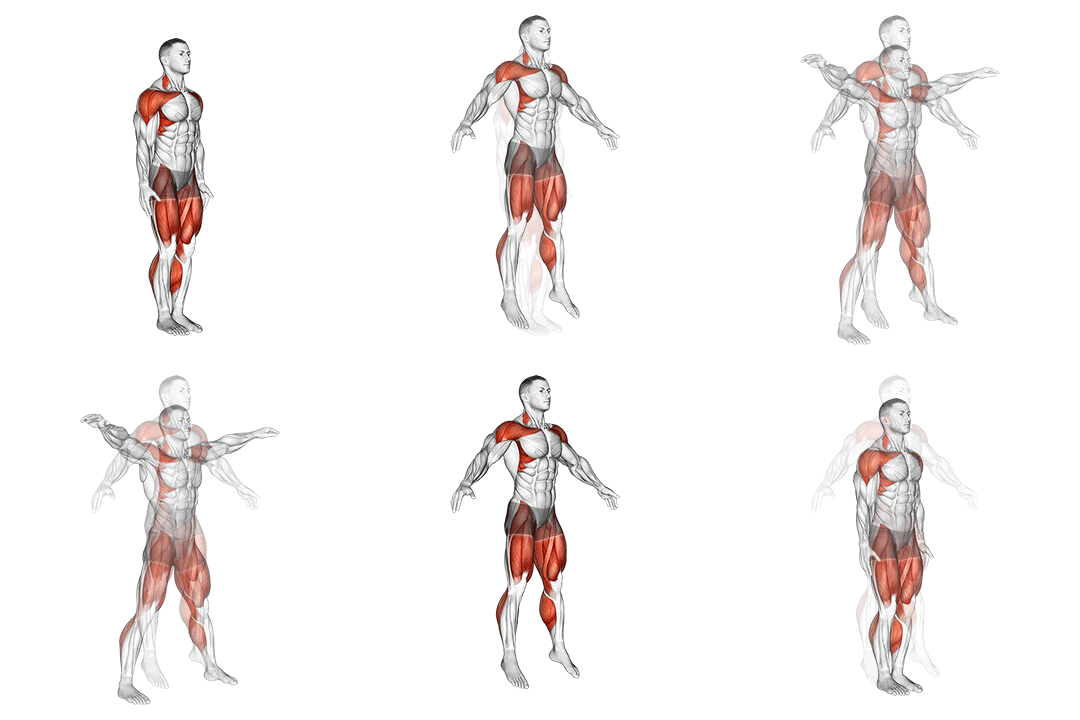
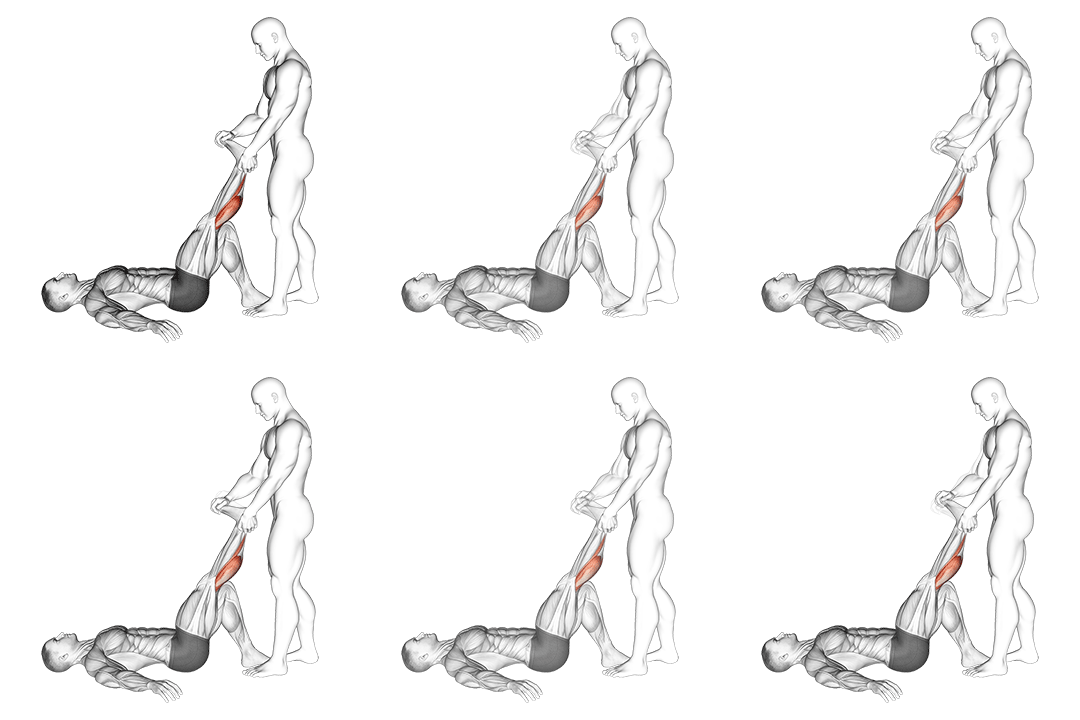
Rope Jumping
Visual Comparison
Overview
Jump Rope vs Rope Jumping — you probably hear both terms used interchangeably, but they imply different skill levels and training goals. You’ll get a clear, practical breakdown of how each exercise loads your cardiovascular system, which muscles drive the movement, exact technique cues, and clear progressions. I’ll compare muscle activation, equipment needs, learning curves, injury risk, and give concrete programming suggestions (sets, rep ranges, and interval times) so you can pick the version that matches your goals and current ability.
Key Differences
- Jump Rope primarily targets the Cardiovascular, while Rope Jumping focuses on the Calves.
- Difficulty levels differ: Jump Rope is intermediate, while Rope Jumping is beginner.
Pros & Cons
Jump Rope
+ Pros
- Higher cardiovascular and metabolic demand with advanced variations
- Greater recruitment of quads, glutes, and hamstrings for power work
- Numerous progression options (double-unders, weighted rope, single-leg)
- Improves coordination, cadence, and short ground-contact plyometric ability
− Cons
- Steeper learning curve for advanced moves
- Higher impact if you use large vertical jumps
- Requires more specialized rope options for progression
Rope Jumping
+ Pros
- Very beginner-friendly with minimal coordination required
- Low equipment barrier — one adjustable rope and flat ground
- Lower immediate impact due to small ankle-driven hops
- Easy to program for steady-state intervals (30–120 seconds)
− Cons
- Limited technical progression compared with advanced jump-rope skills
- Less hip and quad recruitment, so lower potential for power development
- May become monotonous for trained athletes seeking higher intensity
When Each Exercise Wins
Jump Rope wins because advanced variations increase hip and knee extension, recruiting glutes and quads more effectively. Use weighted ropes, single-leg hops, and longer interval sets (4–6 sets of 60–90 seconds) to increase time under tension and metabolic stress for muscle growth.
Jump Rope allows targeted plyometric overload and higher force production through added resistance and single-leg progressions. By emphasizing longer flight times and controlled landings you create larger eccentric loads at the knee and hip, which better stimulate strength adaptations.
Rope Jumping is easier to learn with small ankle hops and basic wrist-driven rotation, allowing you to build rhythm and cardiovascular base with low coordination demand. Start with 30–60 second intervals and progress time before introducing technical skills.
Rope Jumping requires only one adjustable rope and less vertical space, making it ideal for home use. It minimizes noisy, high-impact jumps that can be problematic on floors while still delivering efficient cardio work.
Frequently Asked Questions
Can I do both Jump Rope and Rope Jumping in the same workout?
Yes — combine them strategically: start with Rope Jumping (3–4 minutes) to warm up and establish rhythm, then add 4–6 sets of Jump Rope progressions like double-unders or weighted intervals for higher power and metabolic stress.
Which exercise is better for beginners?
Rope Jumping is better for beginners because it uses small ankle-driven hops and simple wrist control, allowing you to build coordination and aerobic capacity with lower impact and fewer technical demands.
How do the muscle activation patterns differ?
Rope Jumping centers activation in the plantarflexors with short ground contact and minimal knee/hip extension. Jump Rope progressions shift some force vector to hip and knee extensors, increasing glute and quad activation and overall mechanical work.
Can Rope Jumping replace Jump Rope?
Rope Jumping can replace Jump Rope for beginners or steady-state cardio, but it won’t fully substitute if your goal is plyometric power or advanced skill training; use Jump Rope progressions when you need increased hip/knee loading or technical challenge.
Expert Verdict
Choose Rope Jumping if you’re new to jumping or want a low-barrier way to build cardiovascular fitness and calf endurance with minimal coordination. Pick Jump Rope if you aim for greater power, stronger hip/quadriceps recruitment, or want progressive overload via speed, weighted ropes, and advanced footwork. Program-wise, beginners can do 3–5 sets of 30–60 seconds, while intermediate users should target 3–6 sets of 60–90 seconds and add double-unders or weighted intervals to increase force demands. Both are efficient cardio tools — select the one that matches your skill, space, and long-term goals.
Also Compare
More comparisons with Jump Rope

Compare More Exercises
Use our free comparison tool to analyze any two exercises head-to-head.
Compare Exercises