

Kettlebell Alternating Press vs Kettlebell Arnold Press: Complete Comparison Guide
Kettlebell Alternating Press vs Kettlebell Arnold Press — two staple kettlebell shoulder moves that both target the delts but load them differently. If you want clear guidance on technique, which muscles light up, progression options, and real programming advice, you’re in the right place. I’ll walk you through biomechanics (force vectors, length-tension, and stability demands), give precise coaching cues for safer reps, compare secondary muscle recruitment, and recommend which to prioritize for hypertrophy, strength, beginners, and home workouts.
Exercise Comparison
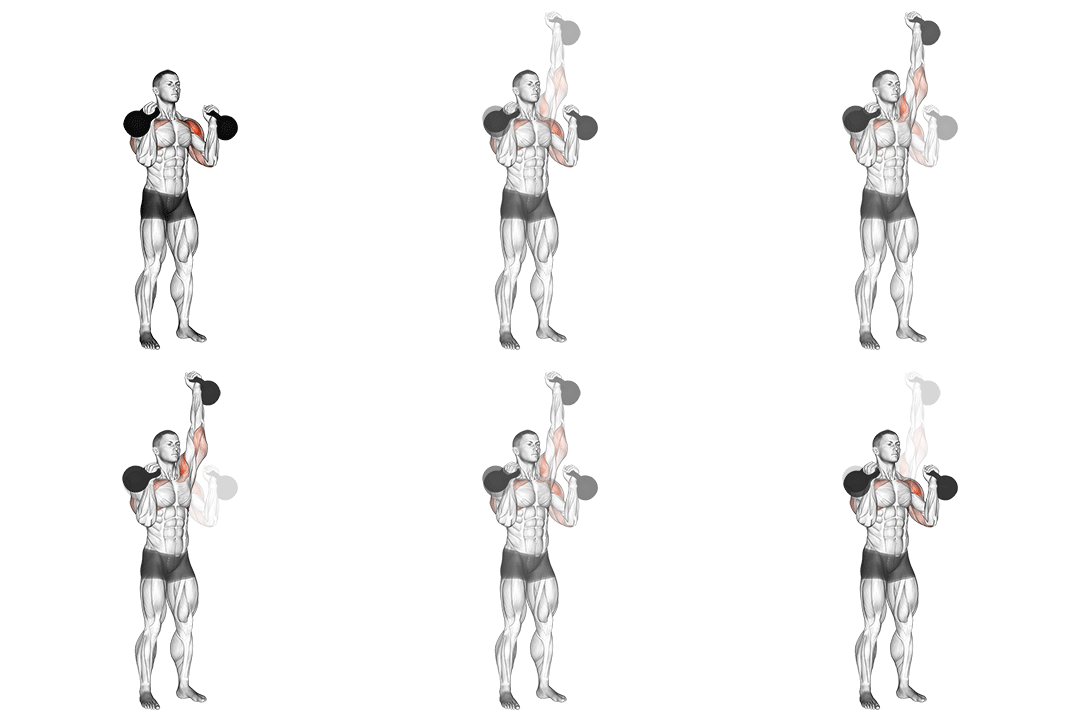
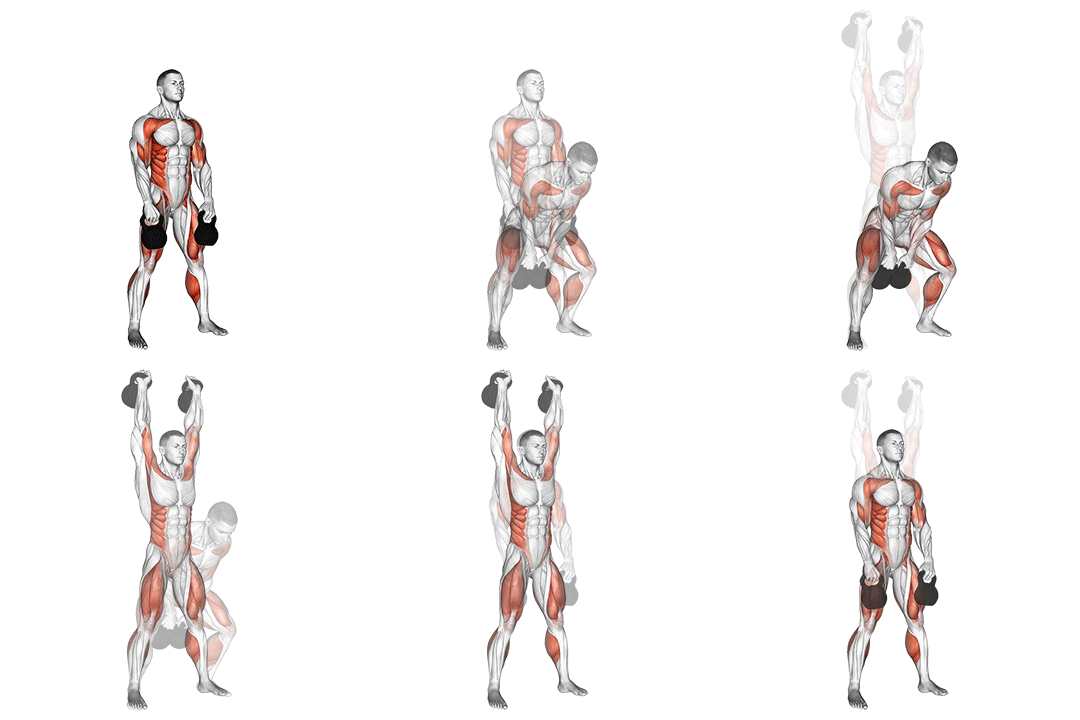
Kettlebell Alternating Press
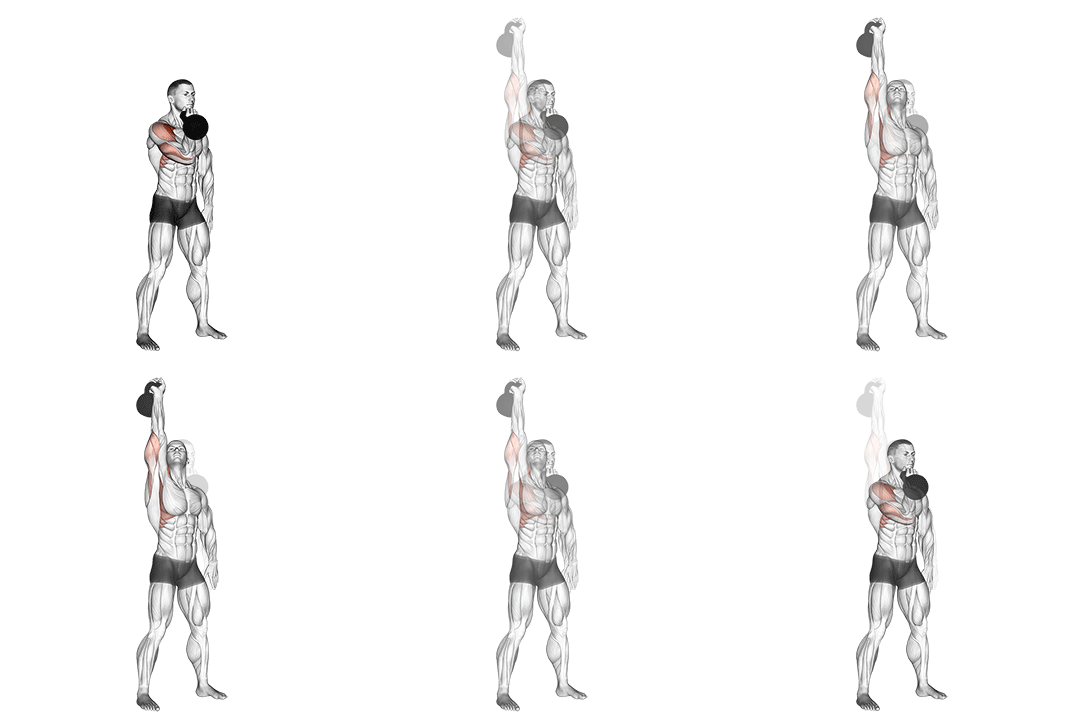
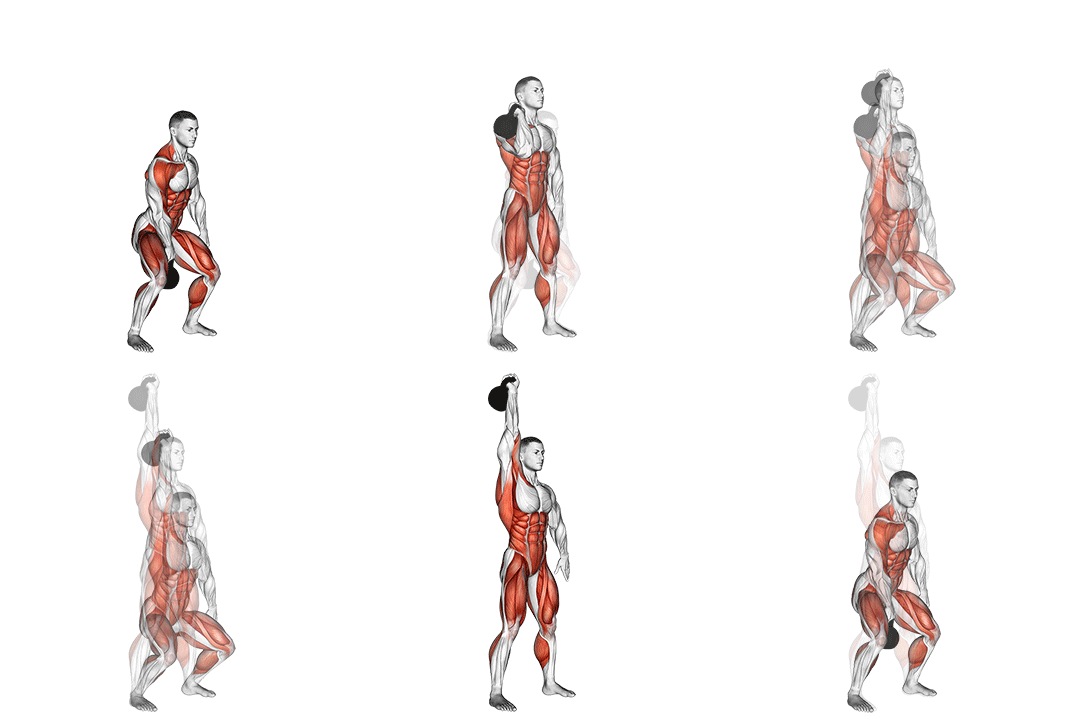
Kettlebell Arnold Press
Head-to-Head Comparison
| Attribute | Kettlebell Alternating Press | Kettlebell Arnold Press |
|---|---|---|
| Target Muscle |
Delts
|
Delts
|
| Body Part |
Shoulders
|
Shoulders
|
| Equipment |
Kettlebell
|
Kettlebell
|
| Difficulty |
Intermediate
|
Intermediate
|
| Movement Type |
Compound
|
Compound
|
| Secondary Muscles |
2
|
2
|
Secondary Muscles Activated
Kettlebell Alternating Press
Kettlebell Arnold Press
Visual Comparison
Overview
Kettlebell Alternating Press vs Kettlebell Arnold Press — two staple kettlebell shoulder moves that both target the delts but load them differently. If you want clear guidance on technique, which muscles light up, progression options, and real programming advice, you’re in the right place. I’ll walk you through biomechanics (force vectors, length-tension, and stability demands), give precise coaching cues for safer reps, compare secondary muscle recruitment, and recommend which to prioritize for hypertrophy, strength, beginners, and home workouts.
Key Differences
- Both exercises target the Delts using Kettlebell. The main differences are in their movement patterns and muscle activation angles.
Pros & Cons
Kettlebell Alternating Press
+ Pros
- Strong anti-rotation core activation improves core-to-shoulder transfer
- Easier learning curve and coaching cues (vertical line of push)
- Flexible progression with heavier unilateral loading and carries
- Works triceps effectively at lockout and helps shoulder symmetry
− Cons
- Can create asymmetric spinal torque if core control is poor
- Less mid-range transverse activation of the delts compared to Arnold
- Less upper-back and scapular rhythm, so posterior chain stimulation is lower
Kettlebell Arnold Press
+ Pros
- Longer range of motion through rotation increases overall deltoid engagement
- Adds upper-back and scapular stabilizer demand for posture
- Good for hypertrophy because of varied force vectors across the ROM
- Engages anterior deltoid strongly early in the press
− Cons
- Higher shoulder mobility and control requirement — riskier with impingement
- Harder to load as heavily safely compared with straight unilateral presses
- More complex motor pattern to learn and coach
When Each Exercise Wins
The rotational path stresses the deltoid across a longer range and introduces a transverse component that hits both anterior and lateral fibers. For 8–12 reps with controlled 2–3 second eccentrics, the Arnold press better stimulates muscle-length tension variation for growth.
Unilateral vertical pressing lets you progressively load heavier per arm and train maximal force production. Work in 4–6 rep ranges, focus on bracing, and progressively add weight for raw pressing strength.
Simpler vertical path and fewer coordination demands make it easier to learn solid technique. Begin with a light kettlebell, 8–12 reps per arm, and emphasize tight core bracing and neutral spine.
Requires minimal space and less shoulder mobility while delivering core and shoulder stimulus with a single kettlebell. Alternating sets let you get volume without multiple pairs of dumbbells.
Frequently Asked Questions
Can I do both Kettlebell Alternating Press and Kettlebell Arnold Press in the same workout?
Yes — pair them strategically: use Alternating Presses early for heavier unilateral sets (4–6 or 6–8 reps) then finish with lighter Arnold Presses for 8–12 rep hypertrophy work and scapular rhythm. Limit total shoulder volume to avoid overuse and watch your rotator cuff fatigue.
Which exercise is better for beginners?
Kettlebell Alternating Press is better for most beginners because the vertical press pattern is simpler and requires less shoulder rotation. Start light, learn core bracing and a straight elbow path, then progress load and reps.
How do the muscle activation patterns differ?
Alternating Press emphasizes anti-rotation core activity and a direct vertical force on anterior/lateral delts, with triceps at lockout. The Arnold Press adds an internal-to-external rotation that loads anterior delts early and increases mid-range lateral and upper-back engagement through scapular motion.
Can Kettlebell Arnold Press replace Kettlebell Alternating Press?
Not entirely. Arnold Presses are great for hypertrophy and scapular rhythm but don’t give the same anti-rotation core and heavy unilateral loading benefits. If your goal is unilateral strength and core integration, keep Alternating Presses in your program.
Expert Verdict
Use the Kettlebell Alternating Press when your priority is unilateral strength, core integration, and easy scaling at home. Its vertical force vector and anti-rotation demand let you load heavier safely (4–6 reps for strength, 6–12 for muscle growth) while training core stability. Choose the Kettlebell Arnold Press when you want broader deltoid stimulation and upper-back activation; its rotational path lengthens the muscle’s time under tension and is excellent for hypertrophy with 8–12 reps and slow eccentrics. If you have shoulder mobility or impingement issues, favor the alternating press; if your shoulders are healthy and you want extra deltoid breadth and scapular rhythm, add Arnolds into rotational or hypertrophy-focused blocks.
Also Compare
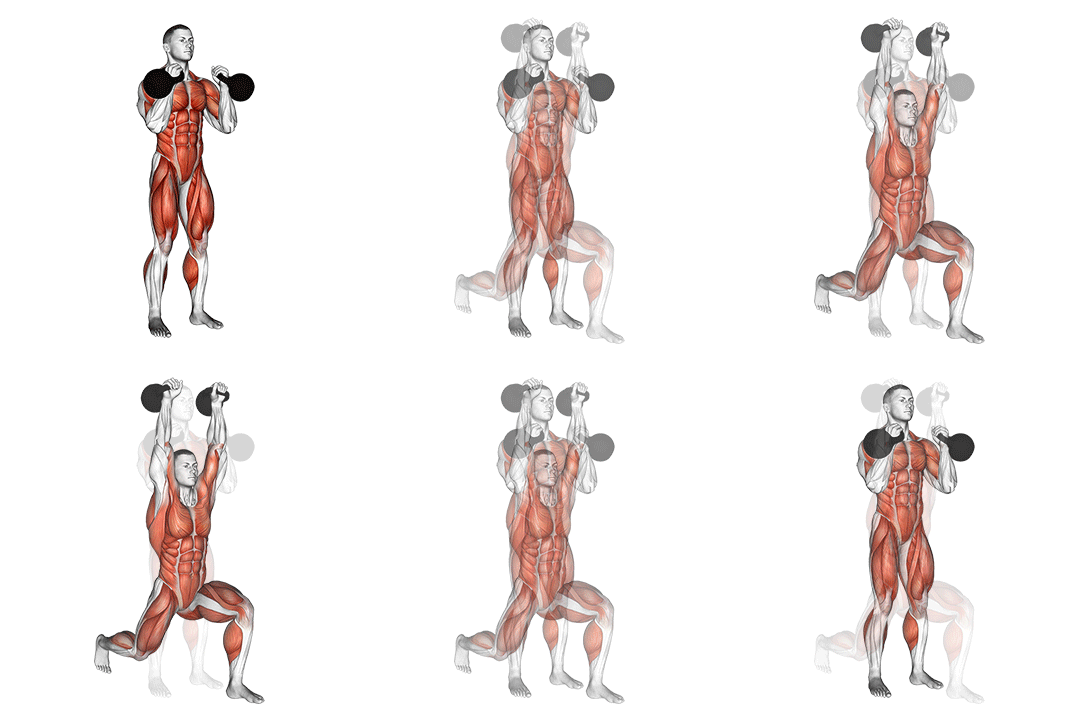
More comparisons with Kettlebell Alternating Press
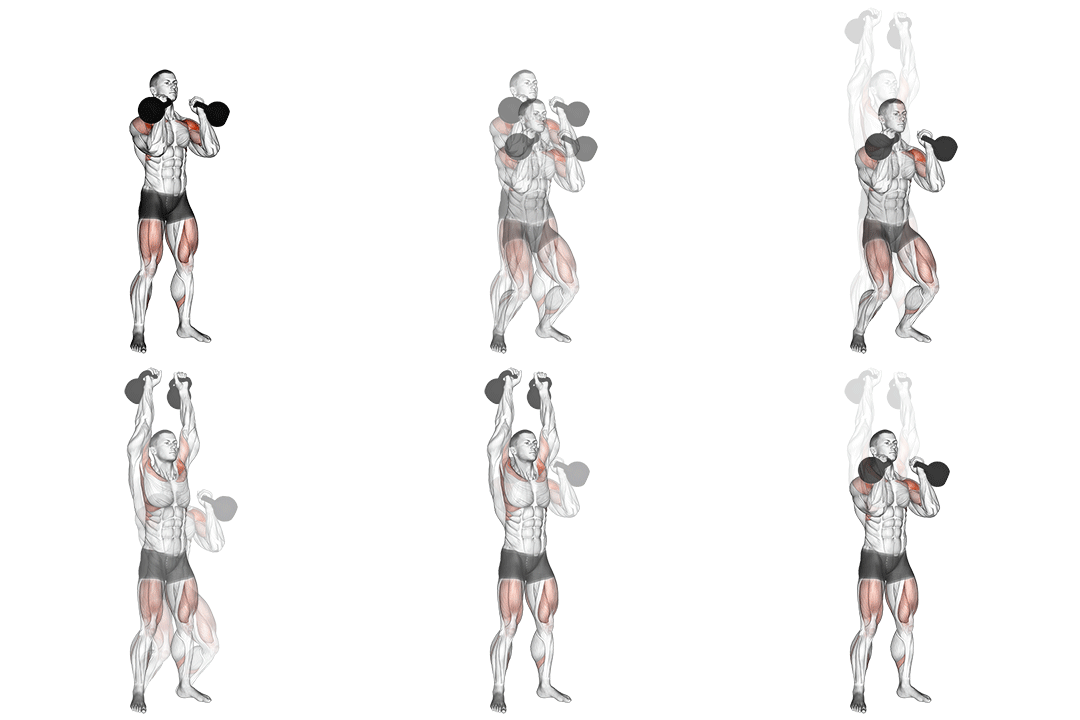
More comparisons with Kettlebell Arnold Press
Compare More Exercises
Use our free comparison tool to analyze any two exercises head-to-head.
Compare Exercises