

Kettlebell Alternating Press vs Kettlebell Double Jerk: Complete Comparison Guide
Kettlebell Alternating Press vs Kettlebell Double Jerk — if you want stronger, more developed shoulders you need to pick the right tool. I’ll walk you through how each movement stresses the delts, which secondary muscles help, the equipment and learning curve, and clear rep and progression tips so you can choose for hypertrophy, strength, or power. Read the muscle activation breakdown, safety trade-offs, and scenarios where one exercise outperforms the other so you can program the one that matches your goals and training time.
Exercise Comparison
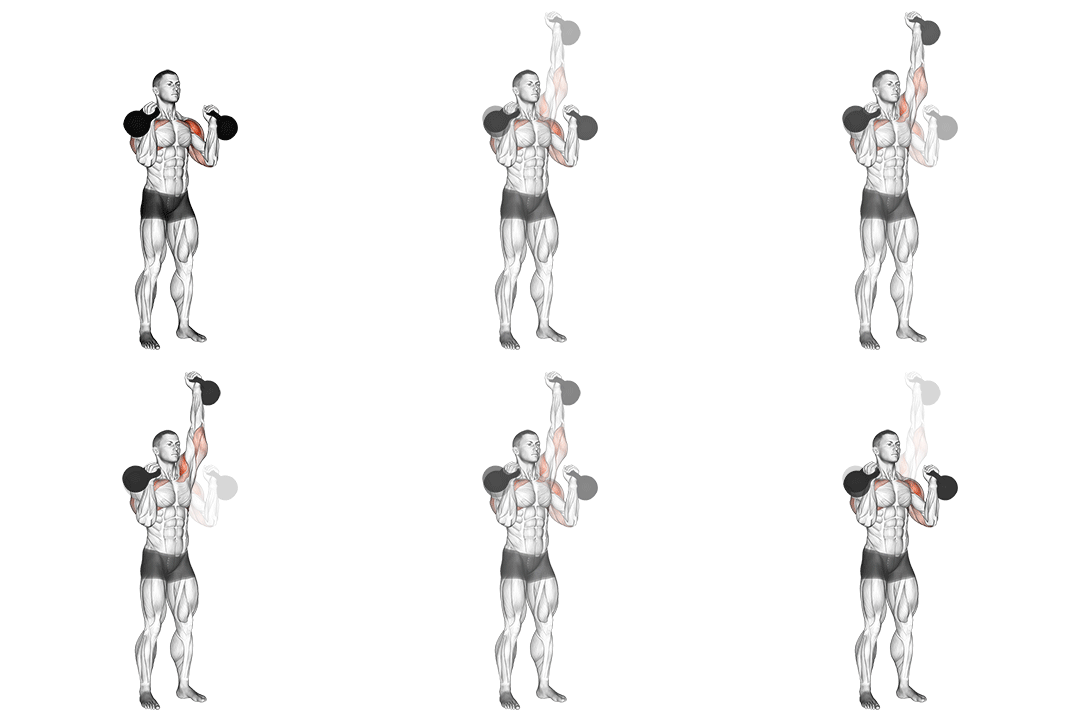
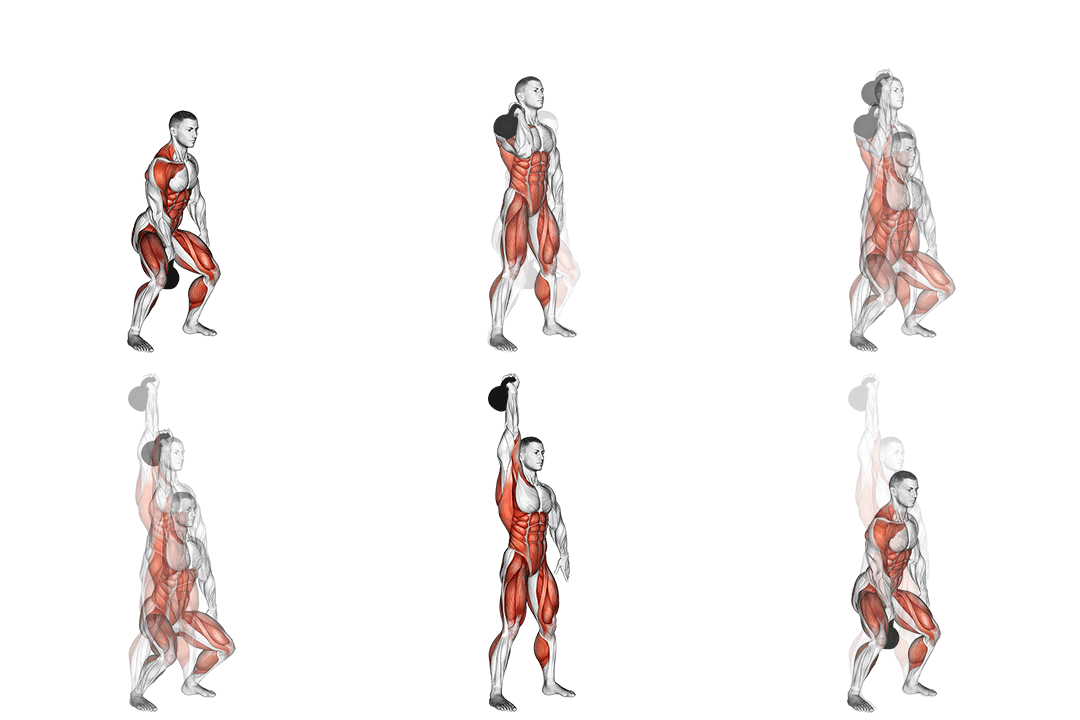
Kettlebell Alternating Press
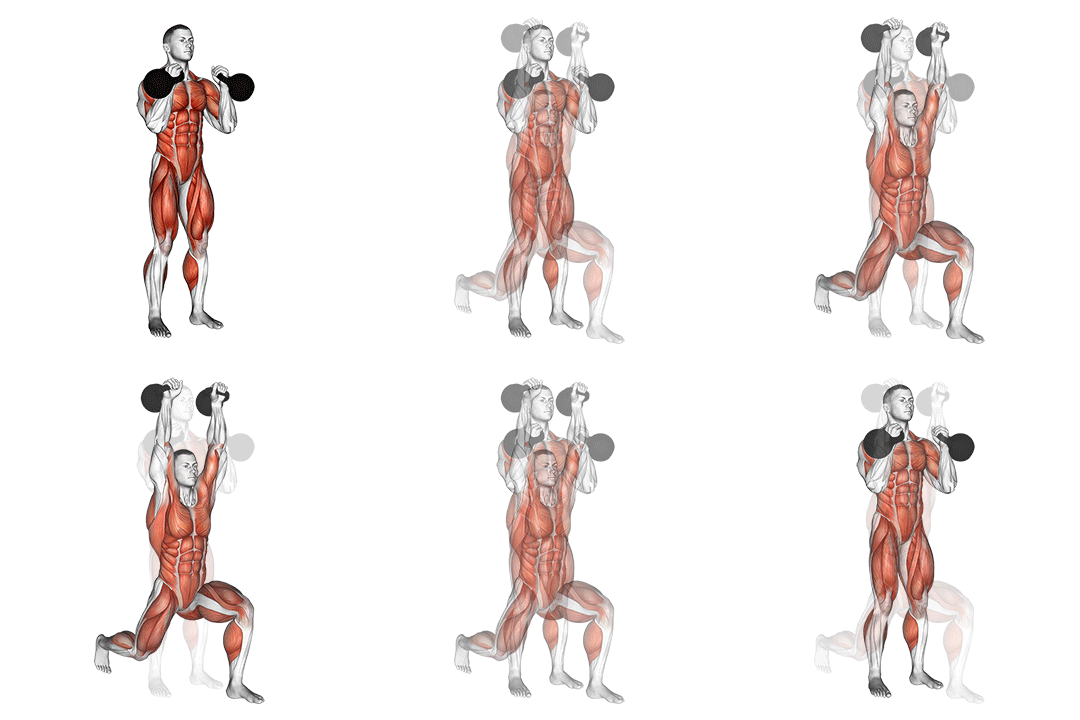
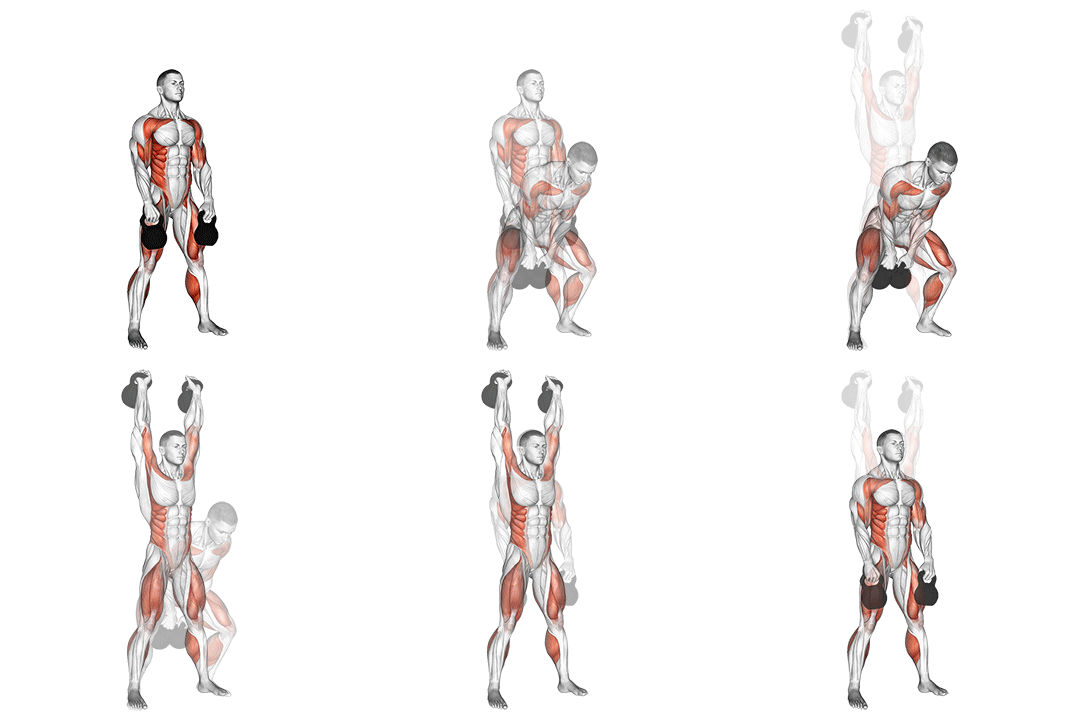
Kettlebell Double Jerk
Head-to-Head Comparison
| Attribute | Kettlebell Alternating Press | Kettlebell Double Jerk |
|---|---|---|
| Target Muscle |
Delts
|
Delts
|
| Body Part |
Shoulders
|
Shoulders
|
| Equipment |
Kettlebell
|
Kettlebell
|
| Difficulty |
Intermediate
|
Advanced
|
| Movement Type |
Compound
|
Compound
|
| Secondary Muscles |
2
|
2
|
Secondary Muscles Activated
Kettlebell Alternating Press
Kettlebell Double Jerk
Visual Comparison
Overview
Kettlebell Alternating Press vs Kettlebell Double Jerk — if you want stronger, more developed shoulders you need to pick the right tool. I’ll walk you through how each movement stresses the delts, which secondary muscles help, the equipment and learning curve, and clear rep and progression tips so you can choose for hypertrophy, strength, or power. Read the muscle activation breakdown, safety trade-offs, and scenarios where one exercise outperforms the other so you can program the one that matches your goals and training time.
Key Differences
- Difficulty levels differ: Kettlebell Alternating Press is intermediate, while Kettlebell Double Jerk is advanced.
- Both exercises target the Delts using Kettlebell. The main differences are in their movement patterns and muscle activation angles.
Pros & Cons
Kettlebell Alternating Press
+ Pros
- Single-kettlebell option — minimal equipment
- High time under tension for medial/anterior delts, good for hypertrophy
- Strong anti-rotation core demand improves unilateral stability
- Easier to learn and scale in 6–12 rep ranges
− Cons
- Limited max load compared to double jerk
- Less power development due to lack of lower-body drive
- Can create unilateral imbalances if not programmed bilaterally
Kettlebell Double Jerk
+ Pros
- Higher peak force and power — excellent for strength and power
- Allows heavier loading via dip–drive and two kettlebells
- Trains full-body coordination and force transfer through the kinetic chain
- Efficient: few reps produce large neural and strength stimulus
− Cons
- Requires two matched kettlebells and more space
- Technically demanding — timing and rack position must be mastered
- Higher acute injury risk with poor mechanics or excessive load
When Each Exercise Wins
The alternating press produces greater time under tension and isolates the deltoids with a vertical force vector. Use 6–12 reps per arm, 3–5 sets, and controlled 2–3 second eccentrics to maximize sarcomere-level tension and muscle growth.
Double jerk permits heavier loads and higher peak force through leg drive, making it superior for developing maximal overhead strength. Program 3–6 rep sets with heavy paired bells to increase neural drive and intermuscular coordination.
The press has a simpler motor pattern and lower coordination demand, letting you build shoulder strength and scapular control first. Start with light weight, focus on vertical bar path and full lockout, and progress as technique solidifies.
Needing only one kettlebell and less ceiling clearance, the alternating press fits limited-space setups. It lets you get effective shoulder stimulus with minimal equipment and safer self-coaching.
Frequently Asked Questions
Can I do both Kettlebell Alternating Press and Kettlebell Double Jerk in the same workout?
Yes — pair them smartly by sequencing. Do alternating presses earlier in a hypertrophy session (3–5 sets of 6–12 reps) and add double jerks later as a strength/power finisher (3–6 sets of 2–4 reps) to avoid technical breakdown when fatigued.
Which exercise is better for beginners?
The alternating press is better for beginners because it isolates the shoulder press pattern and has lower coordination demands. It lets you build scapular control, triceps strength, and balanced shoulder development before progressing to ballistic two-bell work.
How do the muscle activation patterns differ?
Alternating press produces sustained deltoid activation through controlled concentric/eccentric phases, increasing time under tension. Double jerk uses a quick stretch-shortening cycle and large hip extension impulse, generating higher peak deltoid activation but for shorter durations and with more whole-body involvement.
Can Kettlebell Double Jerk replace Kettlebell Alternating Press?
Not entirely — double jerk can replace the press for power and maximal strength work because it allows heavier loads, but it won’t match the continuous deltoid tension and unilateral stability benefits of the alternating press. Use the jerk for intensification phases and keep presses for hypertrophy and balance.
Expert Verdict
Pick the alternating press if your priority is shoulder hypertrophy, unilateral stability, or limited equipment — it gives consistent time under tension, simpler mechanics, and progressive volume work (6–12 reps). Choose the double jerk if you want to maximize overhead strength and power and you have matched kettlebells plus coaching; its dip–drive converts leg force into higher peak shoulder loads and rapid neural adaptation (3–6 reps). Program both smartly: use presses for accumulation phases and add double jerks for intensification or power blocks. Always prioritize clean rack position, full lockout, and gradual load increases to protect the shoulder complex.
Also Compare
More comparisons with Kettlebell Alternating Press
More comparisons with Kettlebell Double Jerk
Compare More Exercises
Use our free comparison tool to analyze any two exercises head-to-head.
Compare Exercises