

Kettlebell Alternating Press vs Kettlebell Double Push Press: Complete Comparison Guide
Kettlebell Alternating Press vs Kettlebell Double Push Press — you’re choosing between a unilateral, controlled shoulder builder and a bilateral, power-driven press. This guide breaks down how each movement loads the delts, which secondary muscles light up, equipment needs, learning curve, and injury risks. I’ll give specific technique cues, rep ranges, and biomechanics so you can pick the right exercise for hypertrophy, strength, or home training. Read the quick comparisons, then use the winner scenarios to match an exercise to your goals.
Exercise Comparison
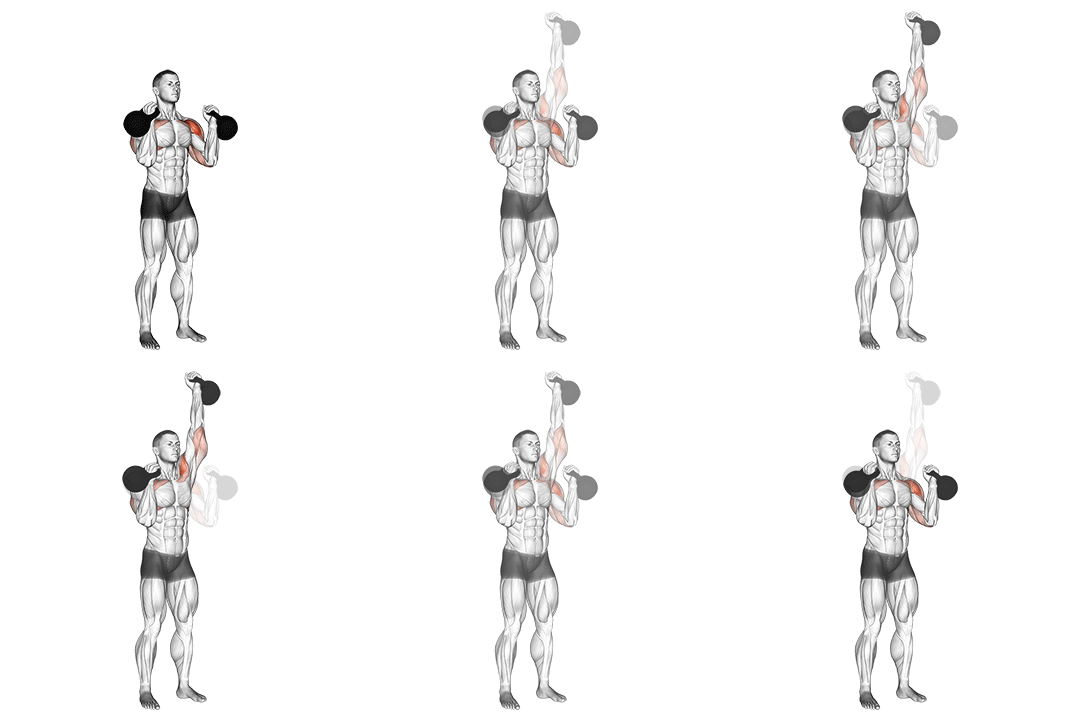
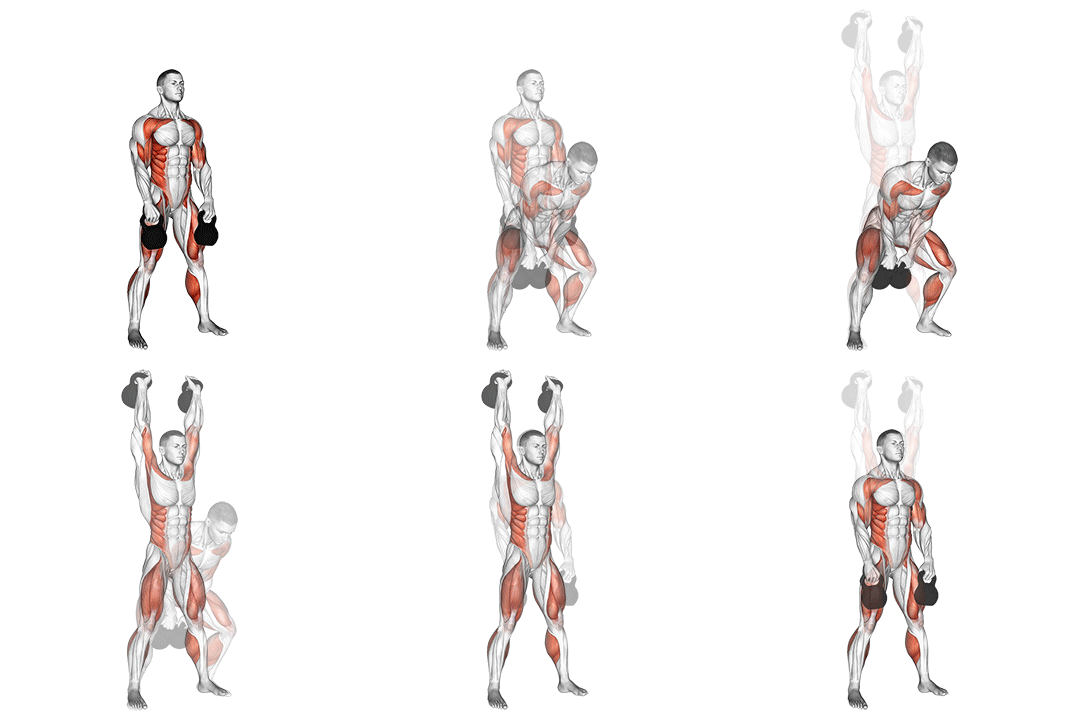
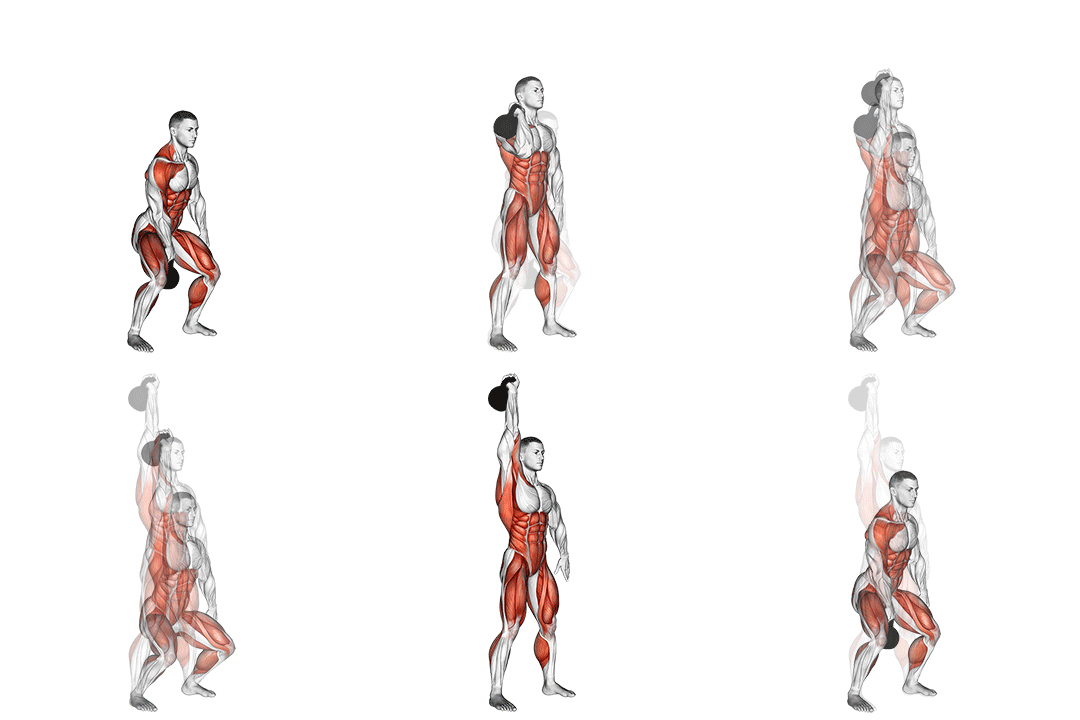
Kettlebell Alternating Press
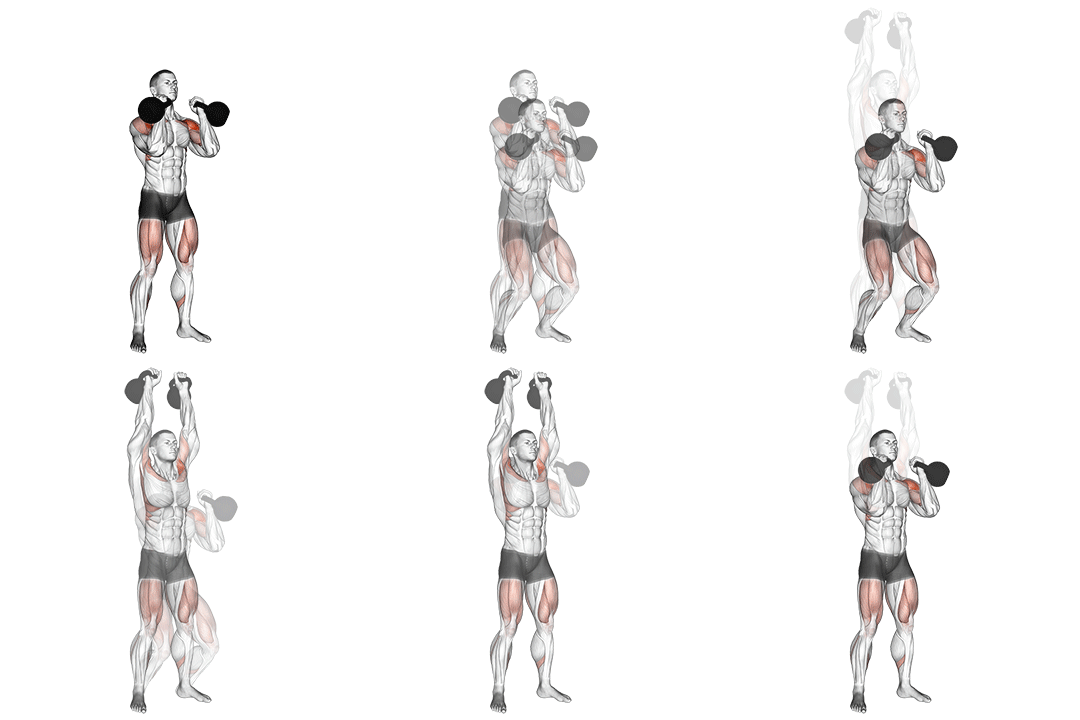
Kettlebell Double Push Press
Head-to-Head Comparison
| Attribute | Kettlebell Alternating Press | Kettlebell Double Push Press |
|---|---|---|
| Target Muscle |
Delts
|
Delts
|
| Body Part |
Shoulders
|
Shoulders
|
| Equipment |
Kettlebell
|
Kettlebell
|
| Difficulty |
Intermediate
|
Intermediate
|
| Movement Type |
Compound
|
Compound
|
| Secondary Muscles |
2
|
2
|
Secondary Muscles Activated
Kettlebell Alternating Press
Kettlebell Double Push Press
Visual Comparison
Overview
Kettlebell Alternating Press vs Kettlebell Double Push Press — you’re choosing between a unilateral, controlled shoulder builder and a bilateral, power-driven press. This guide breaks down how each movement loads the delts, which secondary muscles light up, equipment needs, learning curve, and injury risks. I’ll give specific technique cues, rep ranges, and biomechanics so you can pick the right exercise for hypertrophy, strength, or home training. Read the quick comparisons, then use the winner scenarios to match an exercise to your goals.
Key Differences
- Both exercises target the Delts using Kettlebell. The main differences are in their movement patterns and muscle activation angles.
Pros & Cons
Kettlebell Alternating Press
+ Pros
- Requires only one kettlebell — higher accessibility
- Stronger anti-rotation core activation and unilateral control
- Better for isolating left-right imbalances and shoulder hypertrophy (8–12 reps)
- Lower absolute spinal load compared with heavy bilateral push presses
− Cons
- Harder to overload absolutely — limited by single-arm kettlebell weight
- Slower set tempo increases inter-set time
- Requires good scapular control to avoid impingement
Kettlebell Double Push Press
+ Pros
- Allows heavier total load and power development (3–6 rep ranges)
- Uses hip drive to generate force efficiently via triple extension
- Great for transferring lower-body power into shoulder force for tight timelines
- Balanced bilateral loading simplifies weighted progression
− Cons
- Typically requires two matched kettlebells
- Higher demand on bracing — greater spinal loading risk if done poorly
- Timing dip-to-drive incorrectly increases injury risk and reduces efficiency
When Each Exercise Wins
The Alternating Press provides longer time-under-tension and unilateral focus allowing 6–12 rep ranges, better isolation of each delt, and targeted progressive overload via tempo and volume, which favors muscle growth.
Double Push Press lets you use heavier total load and exploit hip drive to increase absolute force on the delts; sets of 3–6 reps maximize neural adaptation and strength when performed with solid bracing.
Beginners can start with one kettlebell, learn strict elbow path and scapular control, and progress tempo and reps before adding complex dip-and-drive timing required by the push press.
Most home gyms have a single kettlebell — the Alternating Press delivers effective shoulder work with minimal equipment and lower space demands compared with two-bell push presses.
Frequently Asked Questions
Can I do both Kettlebell Alternating Press and Kettlebell Double Push Press in the same workout?
Yes. Pair them by purpose: start with heavy Double Push Press sets (3–6 reps) for strength/power, then finish with Alternating Press for unilateral volume (8–12 reps). Keep total shoulder volume reasonable to avoid overuse—limit to 12–18 heavy sets per week per shoulder.
Which exercise is better for beginners?
Kettlebell Alternating Press is typically better for beginners since it requires only one kettlebell and teaches strict pressing mechanics and core bracing. Progress reps and tempo before introducing the timing demands and added spinal load of the Double Push Press.
How do the muscle activation patterns differ?
The Alternating Press produces unilateral, higher-isolation activation with greater anti-rotation core work and prolonged deltoid time-under-tension. The Double Push Press uses a dip-and-drive to create a stretch-shortening cycle, producing a bilateral spike in deltoid and triceps activation during the powered transition and favoring absolute force over isolation.
Can Kettlebell Double Push Press replace Kettlebell Alternating Press?
Not fully. The Double Push Press can replace the Alternating Press if your priority is strength and power since it allows heavier loads, but it won’t replicate the unilateral core and isolated deltoid stimulus the Alternating Press provides. Use both across training phases for balanced shoulder development.
Expert Verdict
Use the Kettlebell Alternating Press when your goal is targeted shoulder hypertrophy, unilateral balance, and core anti-rotation work; program it in 6–12 rep ranges with slow eccentrics and 1–2 second pause at the bottom to exploit length-tension for muscle growth. Choose the Kettlebell Double Push Press when you want to develop shoulder strength and power, train heavier loads, or practice force transfer from the hips — aim for 3–6 heavy reps or explosive sets of 6–8 with 20–30% leg-drive contribution. Both exercises deserve a place in a balanced program: alternate them across phases based on whether you prioritize isolation and control or raw force and power.
Also Compare
More comparisons with Kettlebell Alternating Press
More comparisons with Kettlebell Double Push Press
Compare More Exercises
Use our free comparison tool to analyze any two exercises head-to-head.
Compare Exercises