

Kettlebell Alternating Press vs Kettlebell Double Snatch: Complete Comparison Guide
Kettlebell Alternating Press vs Kettlebell Double Snatch — two shoulder-focused kettlebell moves with very different demands. If you want clearer choices for muscle growth, strength, or explosive power, this guide walks you through the biomechanics, muscle activation, equipment needs, learning curve, and programming. You’ll get technique cues, rep-range recommendations (e.g., 6–12 for hypertrophy, 3–6 for raw strength, 8–15 for power/endurance), and concrete scenarios showing which exercise wins for specific goals.
Exercise Comparison
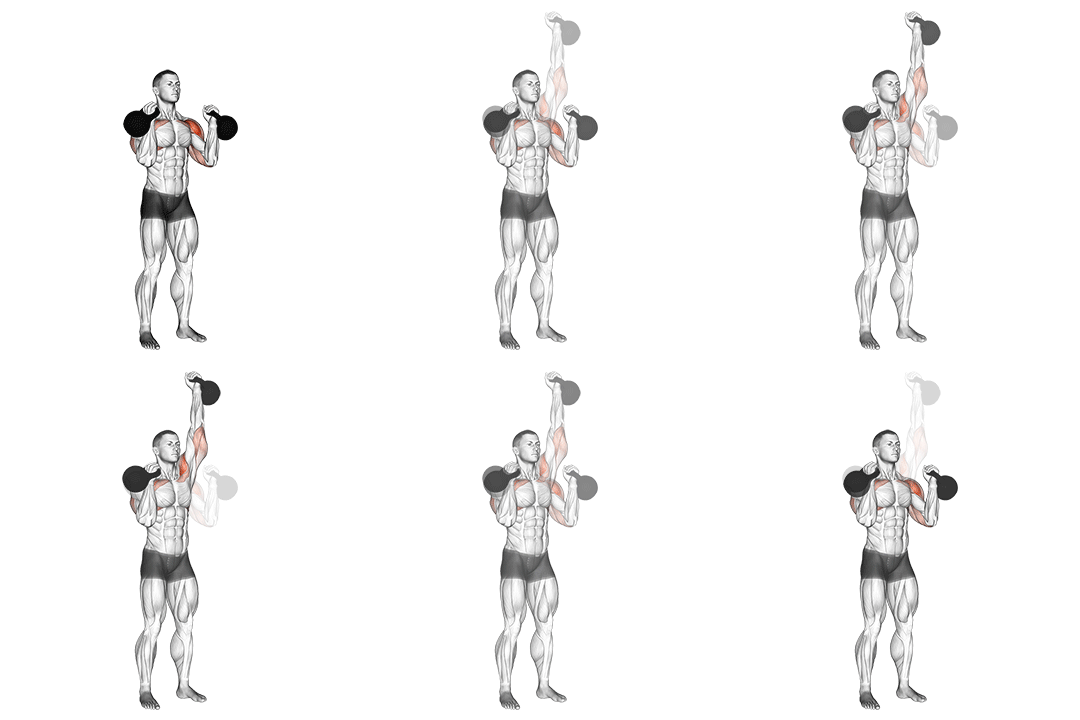
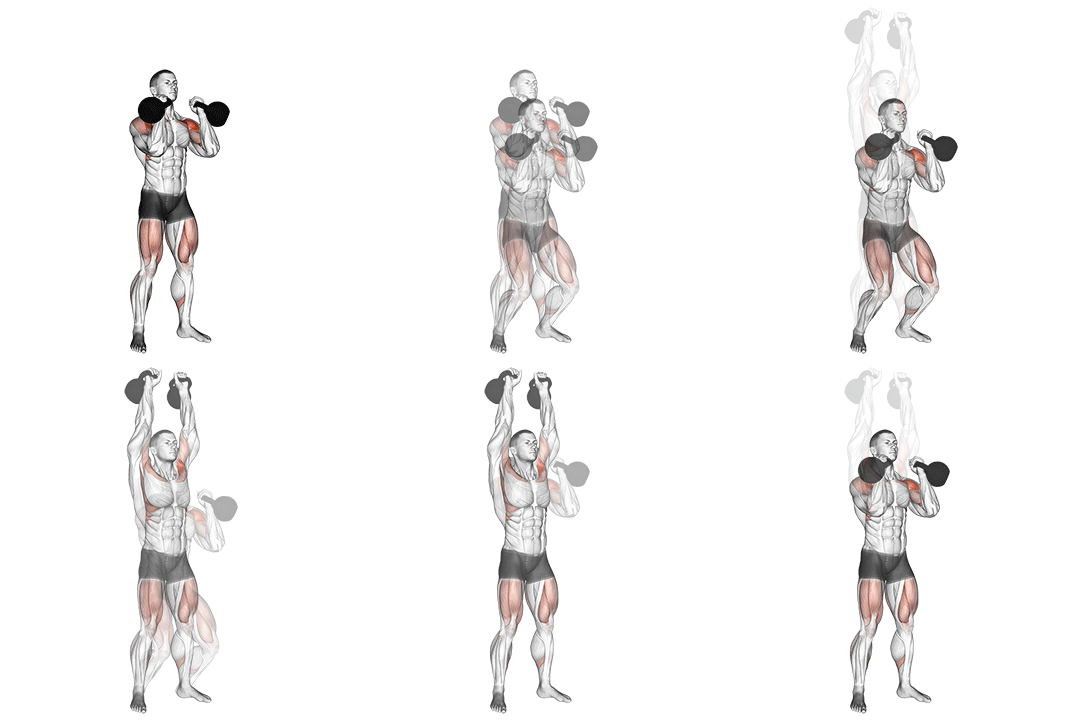
Kettlebell Alternating Press
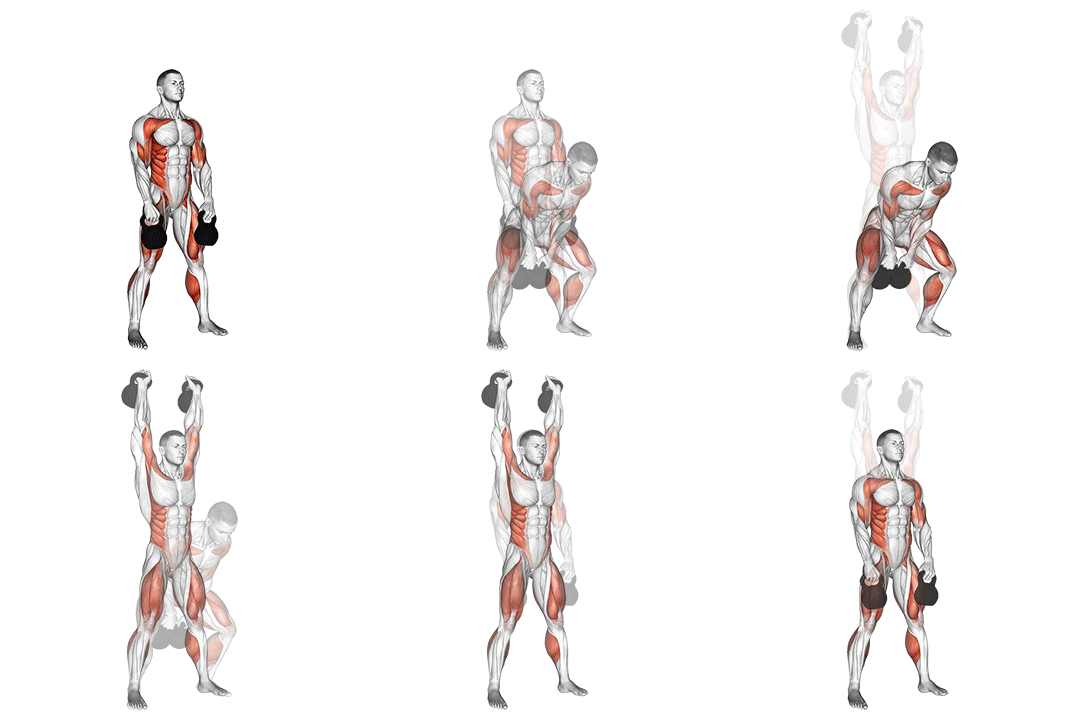
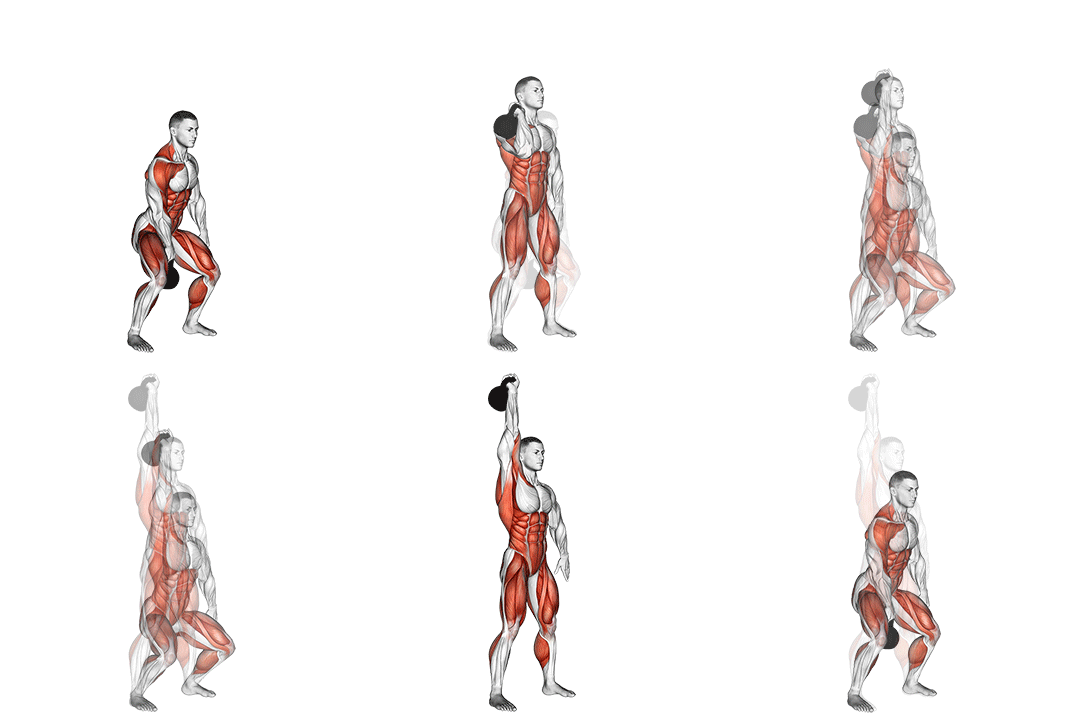
Kettlebell Double Snatch
Head-to-Head Comparison
| Attribute | Kettlebell Alternating Press | Kettlebell Double Snatch |
|---|---|---|
| Target Muscle |
Delts
|
Delts
|
| Body Part |
Shoulders
|
Shoulders
|
| Equipment |
Kettlebell
|
Kettlebell
|
| Difficulty |
Intermediate
|
Advanced
|
| Movement Type |
Compound
|
Compound
|
| Secondary Muscles |
2
|
3
|
Secondary Muscles Activated
Kettlebell Alternating Press
Kettlebell Double Snatch
Visual Comparison
Overview
Kettlebell Alternating Press vs Kettlebell Double Snatch — two shoulder-focused kettlebell moves with very different demands. If you want clearer choices for muscle growth, strength, or explosive power, this guide walks you through the biomechanics, muscle activation, equipment needs, learning curve, and programming. You’ll get technique cues, rep-range recommendations (e.g., 6–12 for hypertrophy, 3–6 for raw strength, 8–15 for power/endurance), and concrete scenarios showing which exercise wins for specific goals.
Key Differences
- Difficulty levels differ: Kettlebell Alternating Press is intermediate, while Kettlebell Double Snatch is advanced.
- Both exercises target the Delts using Kettlebell. The main differences are in their movement patterns and muscle activation angles.
Pros & Cons
Kettlebell Alternating Press
+ Pros
- Direct, sustained deltoid load ideal for hypertrophy
- Lower technical demand; faster to teach and learn
- Easier to progress load precisely (small weight jumps)
- Less space and lower peak forces reduce acute injury risk
− Cons
- Limited power development compared to ballistic lifts
- Unilateral loading can reveal and exaggerate imbalances
- Time under tension may fatigue core and elbow with high volume
Kettlebell Double Snatch
+ Pros
- Excellent for developing explosive shoulder power and conditioning
- High trap and forearm recruitment improves grip and shrug strength
- Efficient full-body pattern using hip drive and scapular rhythm
- Great for metabolic conditioning and fatiguing work capacity
− Cons
- High technical demand; poor technique increases injury risk
- Requires more space and a heavier kettlebell to be effective
- Less continuous deltoid time under tension for hypertrophy
When Each Exercise Wins
The alternating press gives longer time under tension for the deltoids and allows controlled eccentric phases and tempo work (e.g., 3–1–1 tempo). You can target 6–12 reps per side and manipulate load precisely to stimulate muscle growth.
For raw overhead pressing strength the strict unilateral press is superior because it aligns the force vector vertically and isolates deltoid and triceps force production, allowing heavy, low-rep work (3–6 reps) with progressive overload.
It’s easier to teach rack position, scapular control, and bracing than the timing and explosive hip-drive of the double snatch. Beginners build stable shoulder mechanics before progressing to ballistic patterns.
Requires less clearance and lower peak velocity, making it safer in small spaces. You can get meaningful shoulder work with a single kettlebell and simple progressions.
Frequently Asked Questions
Can I do both Kettlebell Alternating Press and Kettlebell Double Snatch in the same workout?
Yes. Start with the skill- or strength-based movement first — typically alternating presses for heavy sets — then finish with double snatch sets for power and conditioning. Limit total volume to avoid shoulder and lower-back fatigue (e.g., 3 heavy press sets then 4–6 snatch sets of 6–10 reps).
Which exercise is better for beginners?
The alternating press is better for beginners because it teaches bracing, scapular control, and a straight vertical force vector with less risk. Begin with light kettlebells and focus on strict form before attempting ballistic snatches.
How do the muscle activation patterns differ?
The press produces sustained concentric and eccentric deltoid activation with triceps stabilizing through the full range of motion, while the snatch produces a rapid, high-peak deltoid activation at lockout driven by hip-generated momentum and a stretch-shortening cycle. The snatch also recruits the traps and forearms more intensely.
Can Kettlebell Double Snatch replace Kettlebell Alternating Press?
Not completely. If your goal is targeted shoulder hypertrophy or maximal pressing strength, the press is superior. The snatch can replace presses when your focus is power, conditioning, or full-body athletic work, but you’ll trade continuous deltoid tension for explosive peak force.
Expert Verdict
Use the Kettlebell Alternating Press when your priority is shoulder hypertrophy, strict pressing strength, or limited space and equipment. Program it for 3–5 sets of 6–12 reps per side with controlled eccentrics and focus on scapular upward rotation and full elbow lockout. Use the Kettlebell Double Snatch when you need explosive shoulder power, conditioning, and trap/forearm development — train it with sets of 6–12 total reps at higher velocity, emphasizing hip triple-extension and a tight core. Master the press first; add snatches after technique and posterior chain capacity are solid.
Also Compare
More comparisons with Kettlebell Alternating Press
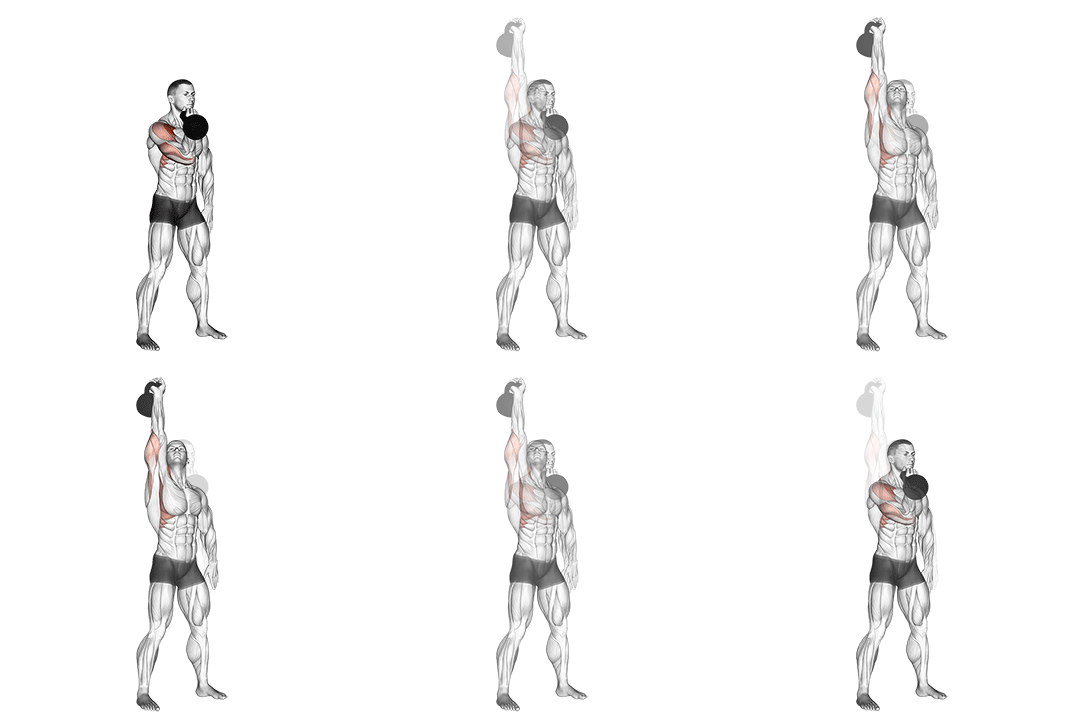
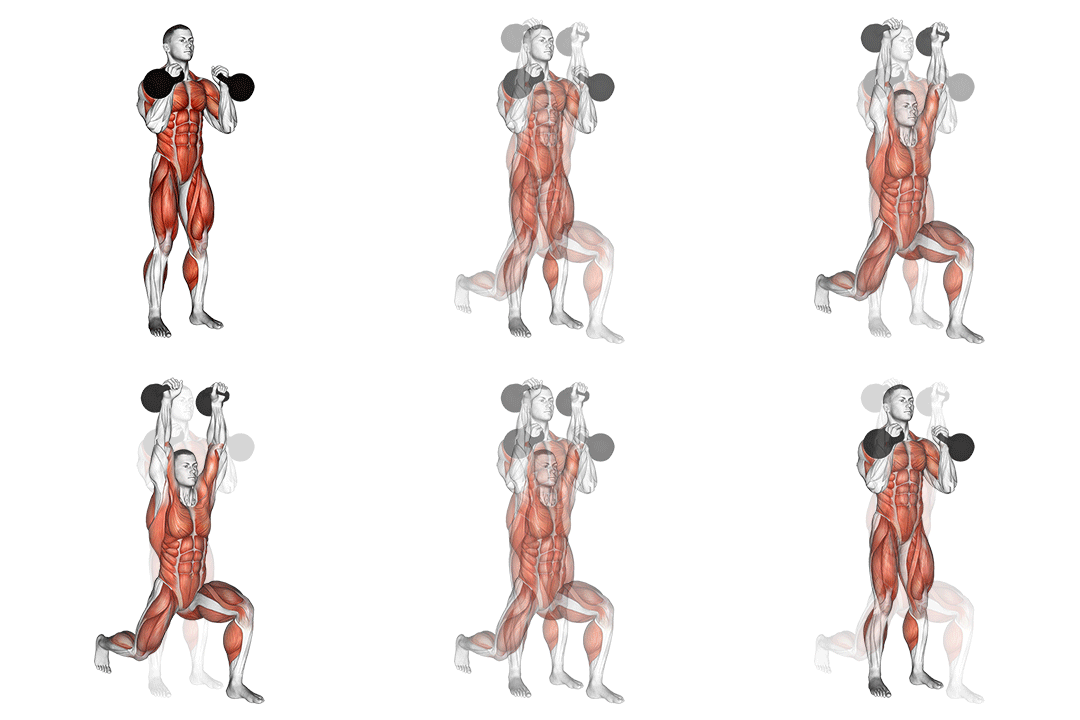
More comparisons with Kettlebell Double Snatch
Compare More Exercises
Use our free comparison tool to analyze any two exercises head-to-head.
Compare Exercises