

Kettlebell Arnold Press vs Kettlebell Double Jerk: Complete Comparison Guide
Kettlebell Arnold Press vs Kettlebell Double Jerk. You want stronger, more developed shoulders, and both lifts hit the delts hard but through different movement patterns. I'll show which exercise emphasizes the anterior, lateral, and posterior deltoid fibers, how each taxes your triceps and core, what equipment and mobility you need, and clear rep ranges and progressions. Expect specific technique cues (wrist path, elbow angle, hip drive), biomechanics notes (force vectors, length‑tension relationships), and scenario-based recommendations so you can pick the right move for hypertrophy, strength, or conditioning.
Exercise Comparison
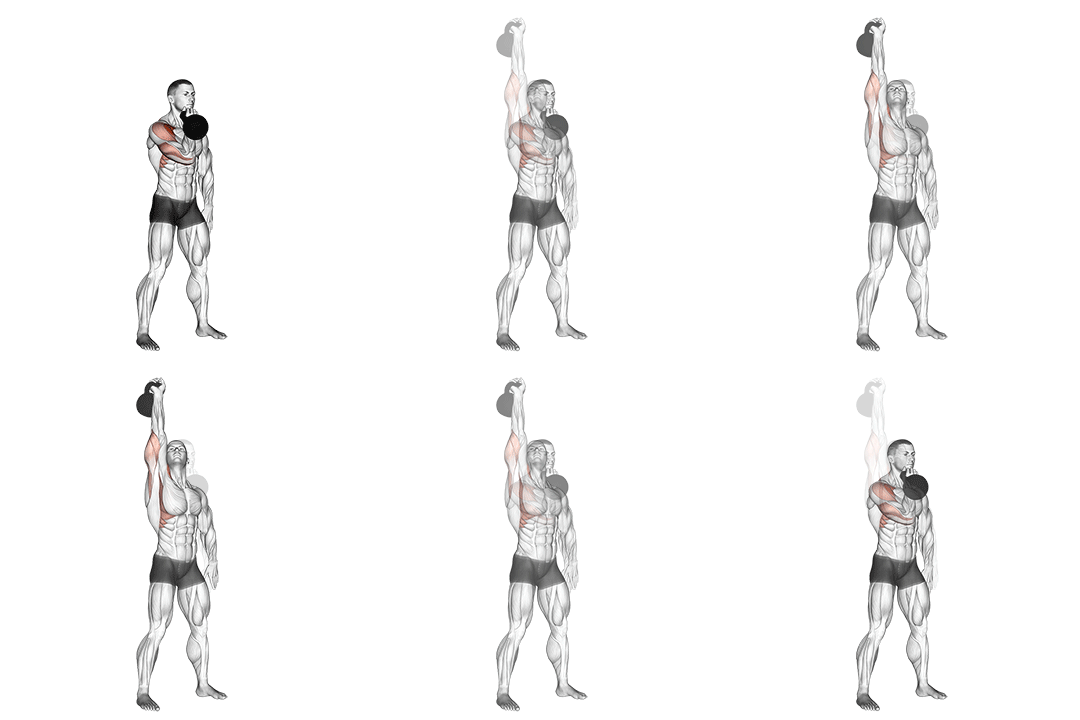
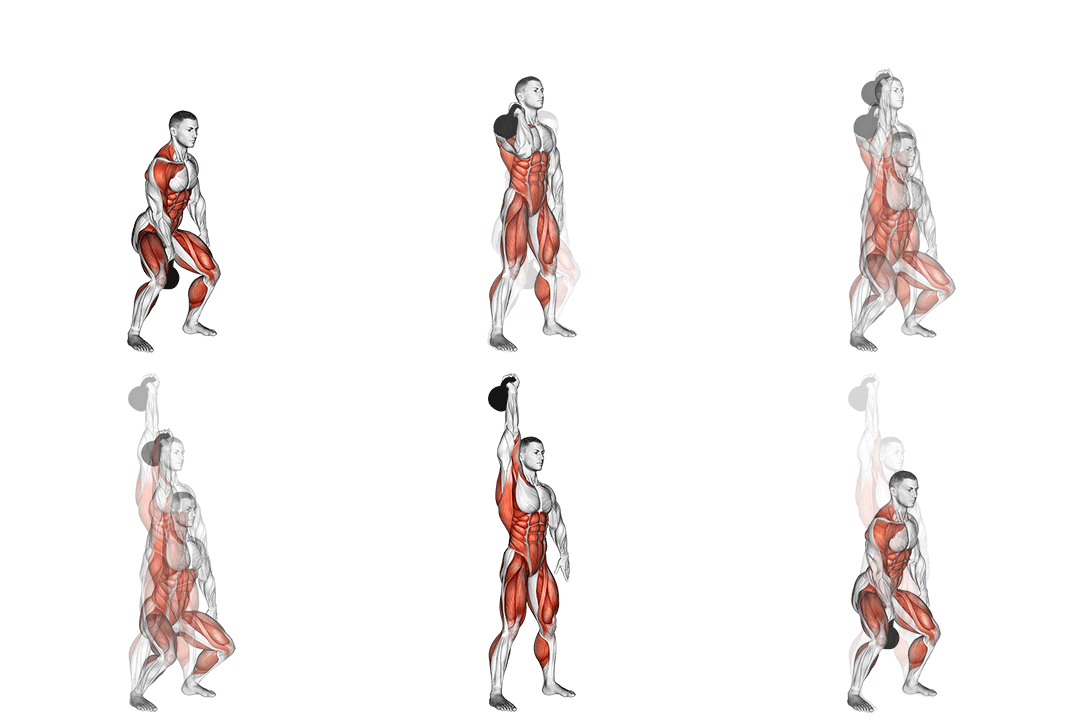
Kettlebell Arnold Press
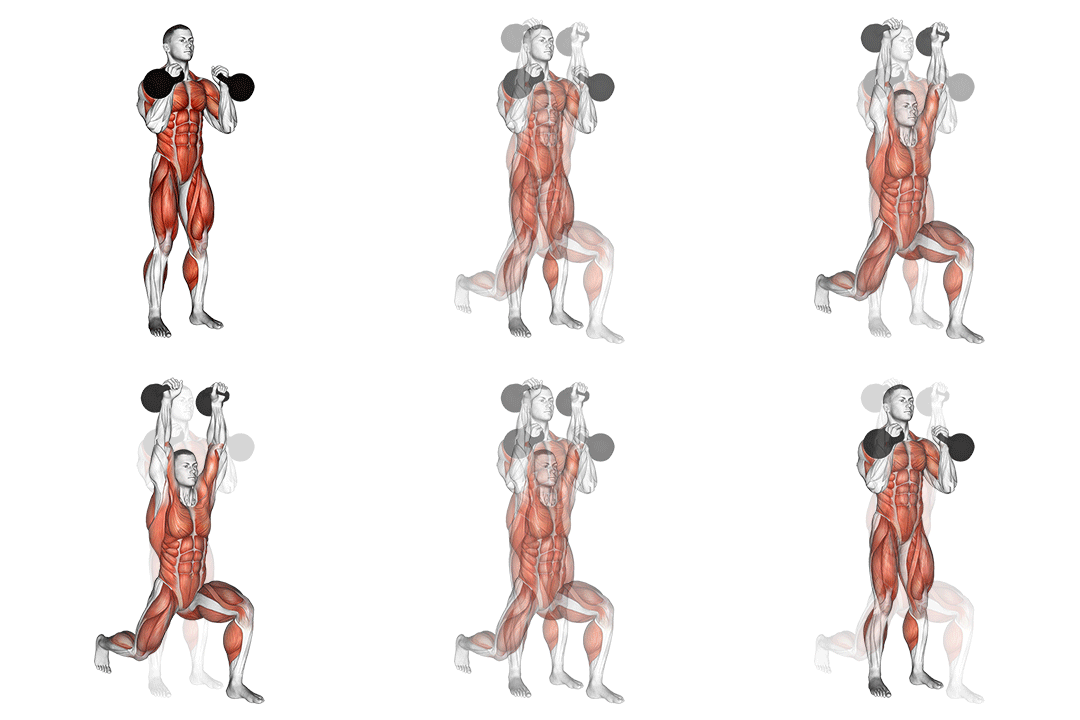
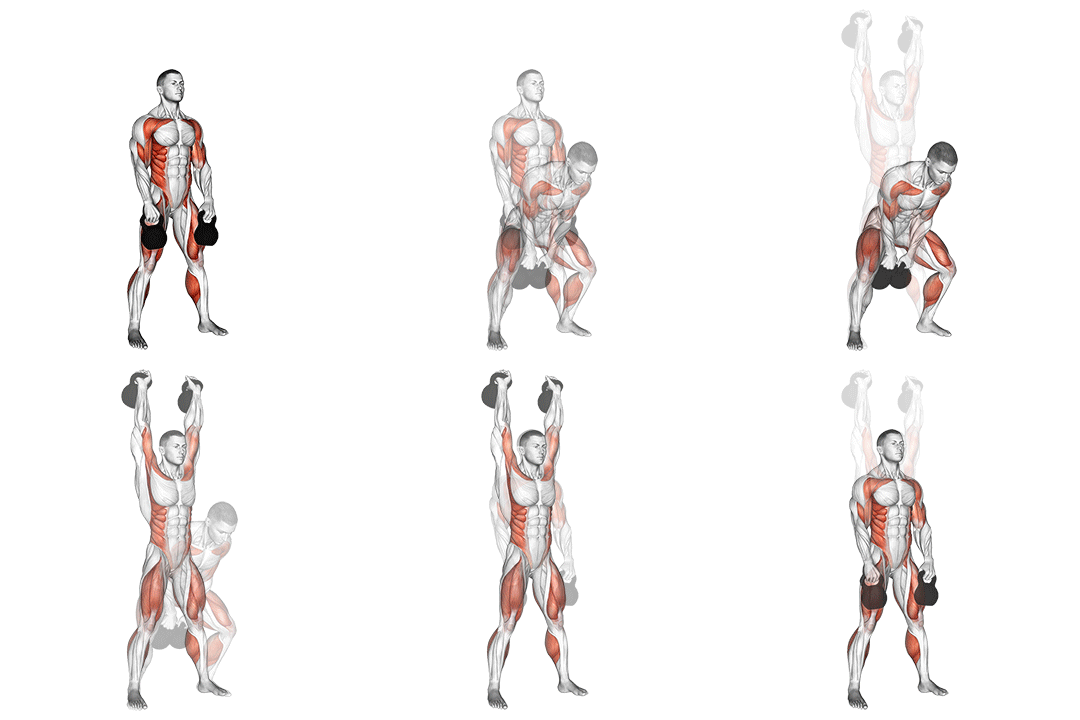
Kettlebell Double Jerk
Head-to-Head Comparison
| Attribute | Kettlebell Arnold Press | Kettlebell Double Jerk |
|---|---|---|
| Target Muscle |
Delts
|
Delts
|
| Body Part |
Shoulders
|
Shoulders
|
| Equipment |
Kettlebell
|
Kettlebell
|
| Difficulty |
Intermediate
|
Advanced
|
| Movement Type |
Compound
|
Compound
|
| Secondary Muscles |
2
|
2
|
Secondary Muscles Activated
Kettlebell Arnold Press
Kettlebell Double Jerk
Visual Comparison
Overview
Kettlebell Arnold Press vs Kettlebell Double Jerk. You want stronger, more developed shoulders, and both lifts hit the delts hard but through different movement patterns. I'll show which exercise emphasizes the anterior, lateral, and posterior deltoid fibers, how each taxes your triceps and core, what equipment and mobility you need, and clear rep ranges and progressions. Expect specific technique cues (wrist path, elbow angle, hip drive), biomechanics notes (force vectors, length‑tension relationships), and scenario-based recommendations so you can pick the right move for hypertrophy, strength, or conditioning.
Key Differences
- Difficulty levels differ: Kettlebell Arnold Press is intermediate, while Kettlebell Double Jerk is advanced.
- Both exercises target the Delts using Kettlebell. The main differences are in their movement patterns and muscle activation angles.
Pros & Cons
Kettlebell Arnold Press
+ Pros
- Solid time-under-tension for deltoid hypertrophy (6–12 rep ranges)
- Develops scapular control and upper-back stability
- Lower technical and equipment requirements
- Good for unilateral work and fixing imbalances
− Cons
- Less overload potential compared with ballistic jerks
- Limited improvement in explosive power
- Can irritate shoulders if rotation is forced under heavy load
Kettlebell Double Jerk
+ Pros
- Allows higher loads via leg drive for maximal strength
- Develops power and rate of force development (<0.3s impulse)
- Great for athletes needing overhead stability under momentum
- Efficient full-body integration — core and hips get significant carryover
− Cons
- High technical demand and steeper learning curve
- Greater stress on shoulder joints and spine when performed poorly
- Requires more space and stable footing for safe execution
When Each Exercise Wins
The Arnold Press keeps constant tension through rotation and a full eccentric phase, making it ideal for 6–12 rep sets. Its controlled force vector maximizes deltoid length‑tension relationships and localized overload for muscle growth.
The Double Jerk uses hip drive to move heavier loads, allowing low-rep work (1–5) and higher peak forces. Its ballistic nature trains rate of force development and functional overhead strength better than strict presses.
Beginners benefit from a slower, more controlled pattern that teaches scapular control and shoulder mechanics. It requires less coordination than the Jerk and lets you build strength safely in common 8–12 rep ranges.
The Arnold Press needs minimal space and lower peak loads, making it safer for home floors and ceilings. You can progress with a single kettlebell and use moderate rep ranges without explosive movement.
Frequently Asked Questions
Can I do both Kettlebell Arnold Press and Kettlebell Double Jerk in the same workout?
Yes — pair them intelligently. Use the Double Jerk early when you're fresh for low-rep power sets (1–5), then finish with Arnold Presses for 6–12 rep hypertrophy work and extra shoulder volume.
Which exercise is better for beginners?
The Arnold Press is better for beginners because it has simpler mechanics and lower peak loads. It teaches scapular control and safe overhead mechanics before you progress to ballistic jerks.
How do the muscle activation patterns differ?
The Arnold Press produces prolonged concentric and eccentric deltoid loading with notable upper‑back engagement during the racked rotation. The Double Jerk generates a high‑velocity concentric impulse from the lower body, then shifts the deltoids into a stabilizing/isometric role at lockout.
Can Kettlebell Double Jerk replace Kettlebell Arnold Press?
Not entirely. The Double Jerk can replace the Arnold for power and maximal strength phases, but it won't provide the same controlled time‑under‑tension for hypertrophy or the same scapular stability training — keep both in your long‑term plan depending on goals.
Expert Verdict
Use the Kettlebell Arnold Press when your primary goal is hypertrophy, improving scapular control, or when you need a low‑tech, space‑efficient shoulder builder. Aim for 6–12 reps, controlled 2–3s eccentrics, and keep the elbow path about 30–45° forward to protect the joint. Choose the Kettlebell Double Jerk when you want to develop maximal overhead strength, power, or sport-specific explosiveness — program 1–5 reps with deliberate dip–drive timing and robust core bracing. If you have limited shoulder mobility or are new to explosive lifts, build a base with the Arnold Press before adding jerks.
Also Compare
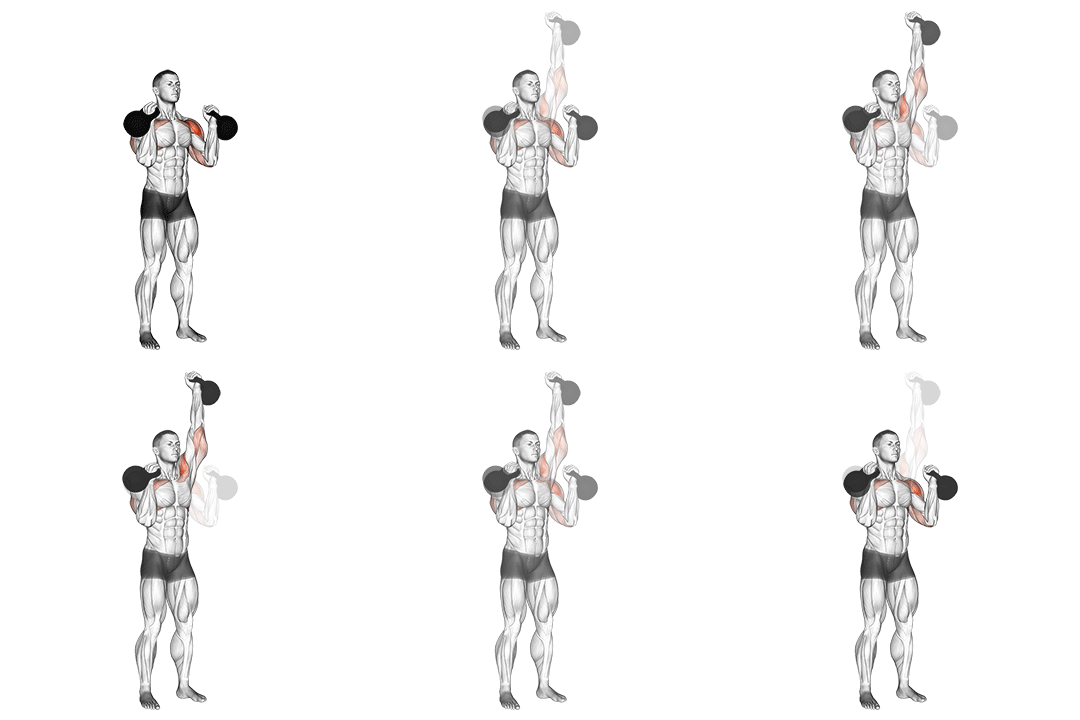
More comparisons with Kettlebell Arnold Press
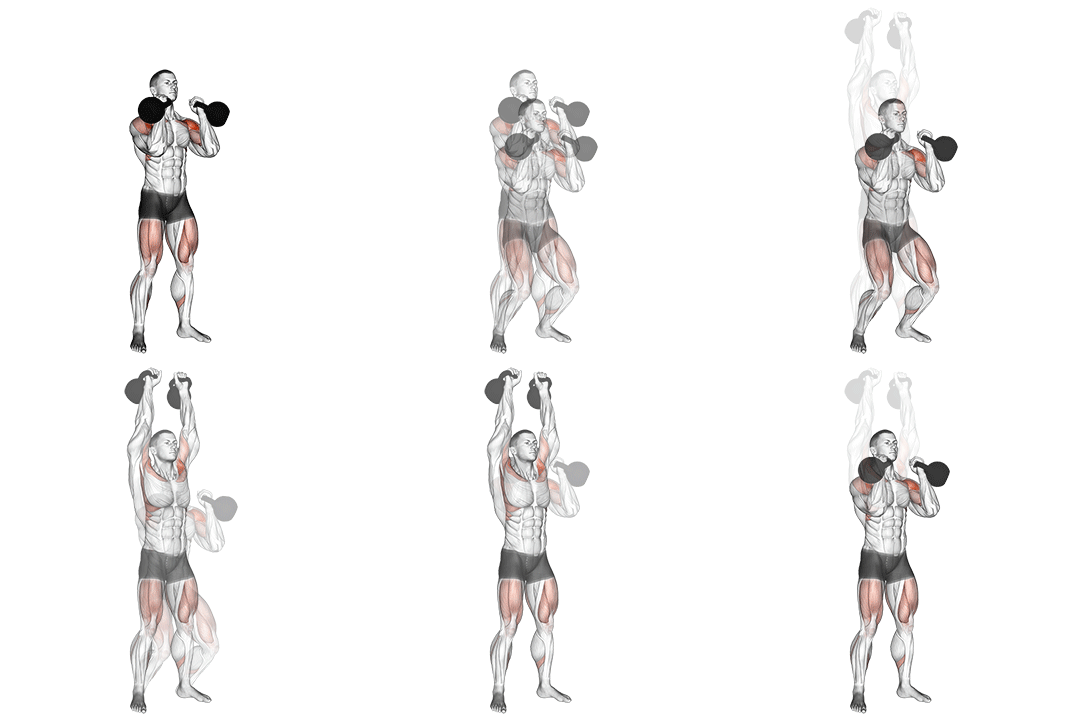
More comparisons with Kettlebell Double Jerk
Compare More Exercises
Use our free comparison tool to analyze any two exercises head-to-head.
Compare Exercises