

Kettlebell Arnold Press vs Kettlebell Double Push Press: Complete Comparison Guide
Kettlebell Arnold Press vs Kettlebell Double Push Press — two compound shoulder moves that look similar but load your delts and nervous system very differently. If you want clear guidance on which to pick, you’re in the right place. I’ll show how each exercise loads the anterior and lateral deltoids, how triceps and core involvement differ, give specific technique cues (rack position, elbow angle, hip drive), practical rep ranges (hypertrophy 8–12, strength 3–6), and who should use each movement based on goals and equipment.
Exercise Comparison
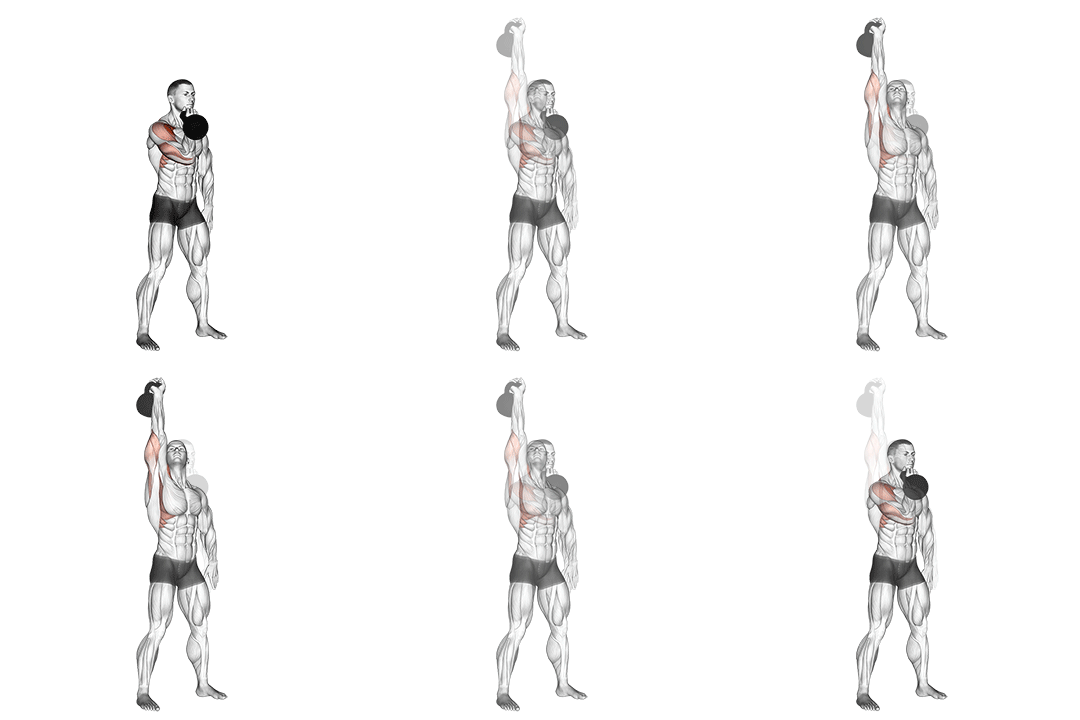
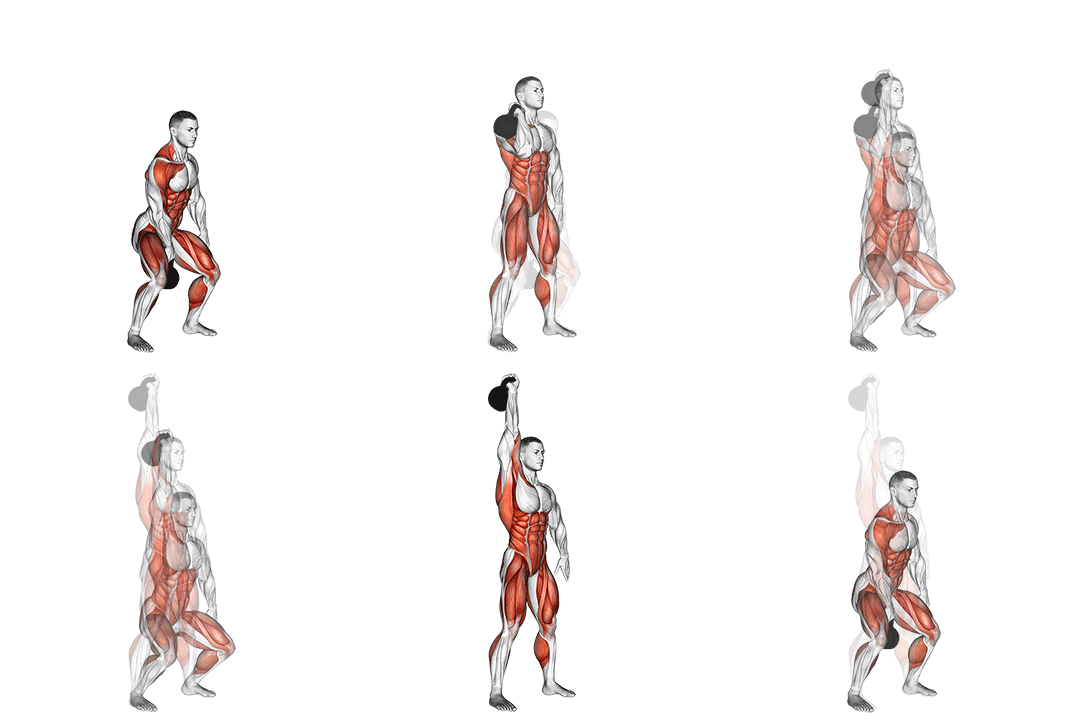
Kettlebell Arnold Press
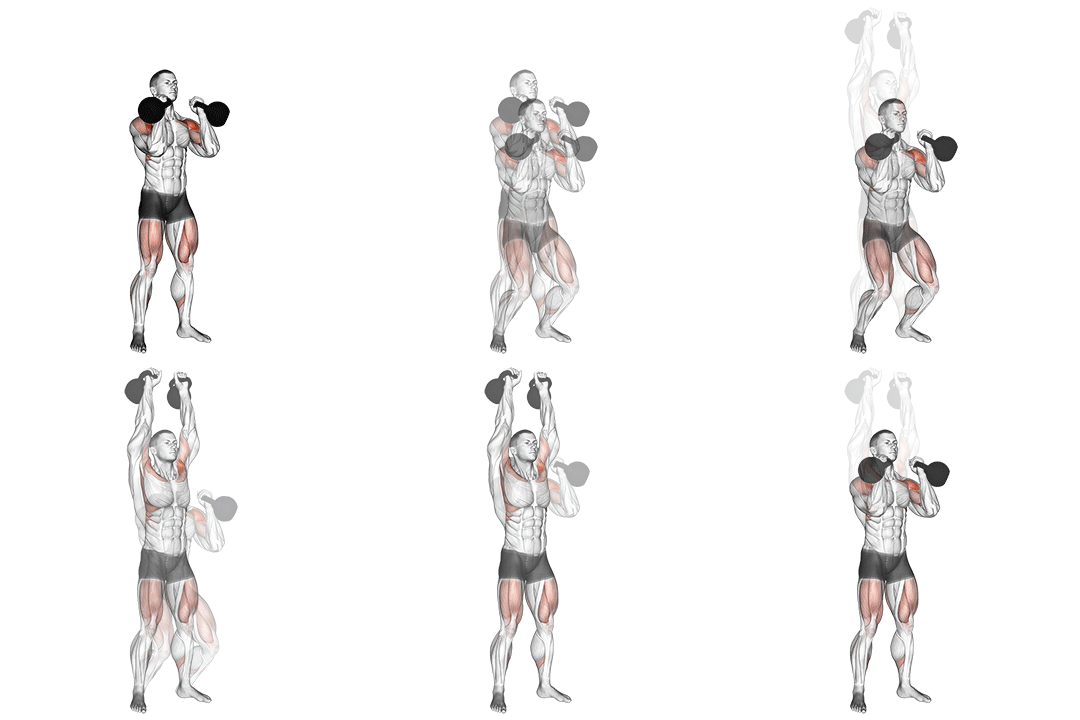
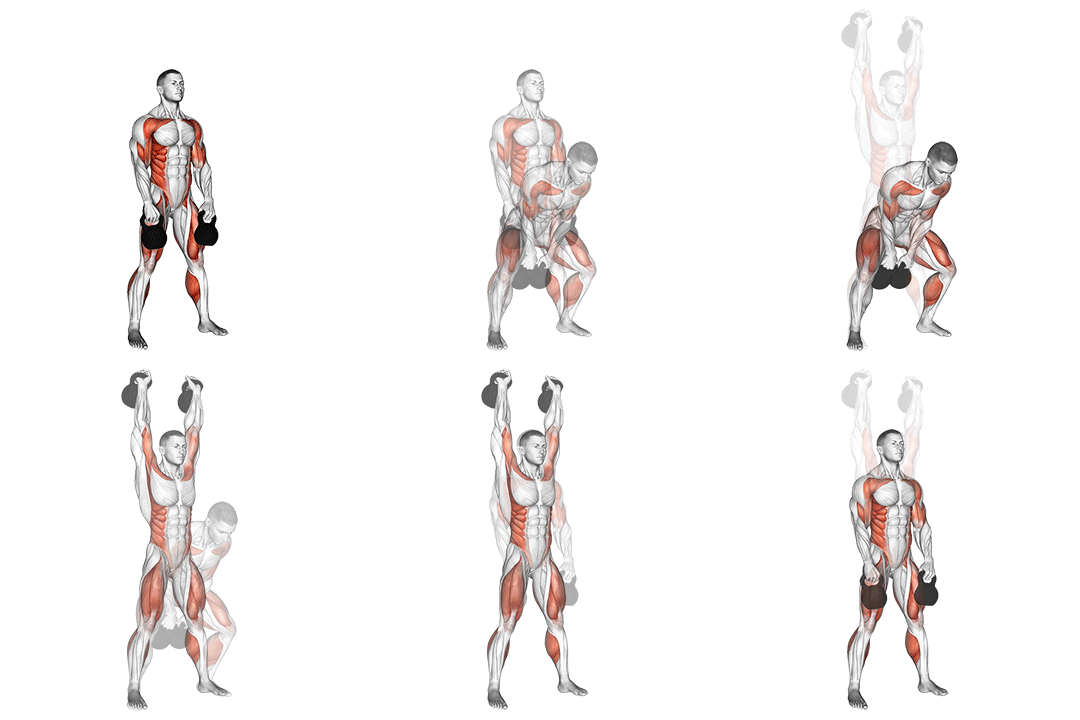
Kettlebell Double Push Press
Head-to-Head Comparison
| Attribute | Kettlebell Arnold Press | Kettlebell Double Push Press |
|---|---|---|
| Target Muscle |
Delts
|
Delts
|
| Body Part |
Shoulders
|
Shoulders
|
| Equipment |
Kettlebell
|
Kettlebell
|
| Difficulty |
Intermediate
|
Intermediate
|
| Movement Type |
Compound
|
Compound
|
| Secondary Muscles |
2
|
2
|
Secondary Muscles Activated
Kettlebell Arnold Press
Kettlebell Double Push Press
Visual Comparison
Overview
Kettlebell Arnold Press vs Kettlebell Double Push Press — two compound shoulder moves that look similar but load your delts and nervous system very differently. If you want clear guidance on which to pick, you’re in the right place. I’ll show how each exercise loads the anterior and lateral deltoids, how triceps and core involvement differ, give specific technique cues (rack position, elbow angle, hip drive), practical rep ranges (hypertrophy 8–12, strength 3–6), and who should use each movement based on goals and equipment.
Key Differences
- Both exercises target the Delts using Kettlebell. The main differences are in their movement patterns and muscle activation angles.
Pros & Cons
Kettlebell Arnold Press
+ Pros
- Builds anterior and lateral deltoid thickness via rotational loading
- Higher time-under-tension for muscle growth (good for 8–12+ rep schemes)
- Safer for limited overhead space and lower peak loads
- Improves scapular stability and rotator cuff control
− Cons
- Less ability to overload with heavy weights
- Requires good shoulder mobility to rotate safely
- Can be uncomfortable for lifters with impingement or poor scapular control
Kettlebell Double Push Press
+ Pros
- Allows heavier loads via hip drive — better for strength and power
- Stronger triceps and core recruitment due to explosive phase
- Efficient multi-joint transfer for full-body athletic training
- Shorter time-under-tension but higher peak force for neural adaptation
− Cons
- Higher technical demand on timing and core bracing
- Greater risk to lower back if hip drive is flawed
- Less continuous shoulder isolation compared with Arnold press
When Each Exercise Wins
The Arnold press creates continuous tension via rotation and longer time-under-tension, making it better for 8–12 rep hypertrophy sets. The rotational component stresses anterior delts and upper-back stabilizers across the range of motion, improving localized muscle growth.
The double push press lets you use 10–25% more load thanks to hip-driven momentum and triple extension, which overloads the nervous system for strength. Its ballistic pattern builds maximal force and triceps lockout strength in lower rep ranges (3–6).
Beginners often find the push press easier to load progressively because leg drive compensates for limited arm strength and it transfers familiar dip–drive mechanics from squats. Start light, focus on core bracing and dip depth (≈10–20°) to learn the timing safely.
The Arnold press requires less vertical clearance and is more controlled, so it’s a safer choice in small home gyms. It also offers strong shoulder stimulus without needing much extra load or complex timing.
Frequently Asked Questions
Can I do both Kettlebell Arnold Press and Kettlebell Double Push Press in the same workout?
Yes—pair them intelligently. Use the push press early as a heavy compound for 3–5 sets of 3–6 to tax strength and CNS, then follow with 2–3 sets of Arnold presses for 8–12 reps to add focused time-under-tension and muscle growth.
Which exercise is better for beginners?
For absolute beginners, the double push press is often easier to scale because leg drive helps you move the weight. Start light to learn dip–drive timing and core bracing, then add weight gradually once technique is consistent.
How do the muscle activation patterns differ?
The Arnold press uses rotation to vary length-tension across anterior and lateral deltoid fibers, producing prolonged tension through concentric and eccentric phases. The push press produces higher peak forces from hip-driven momentum, increasing triceps and core activation while shortening the delts’ time-under-tension.
Can Kettlebell Double Push Press replace Kettlebell Arnold Press?
If your goal is pure strength or power, the double push press can replace the Arnold press periodically. If you need targeted shoulder hypertrophy and scapular control, keep the Arnold press in your program—don’t replace it entirely unless you add other isolation work.
Expert Verdict
Choose the Kettlebell Arnold Press when your priority is targeted shoulder muscle growth and scapular control—use 3–4 sets of 8–12 reps, a controlled 2–1–2 tempo, and focus on a smooth 180° forearm rotation and keeping elbows under the kettlebell. Pick the Kettlebell Double Push Press when you want to train heavier, build whole-body strength, or develop power: use 3–6 sets of 3–6 reps for strength or 6–10 reps for mixed hypertrophy, practice a shallow dip (~10–20°) and explosive hip drive while maintaining a neutral spine. Both belong in a balanced program — rotate them across phases: Arnold-focused blocks for hypertrophy and push-press blocks for strength and neural adaptation.
Also Compare
More comparisons with Kettlebell Arnold Press
More comparisons with Kettlebell Double Push Press
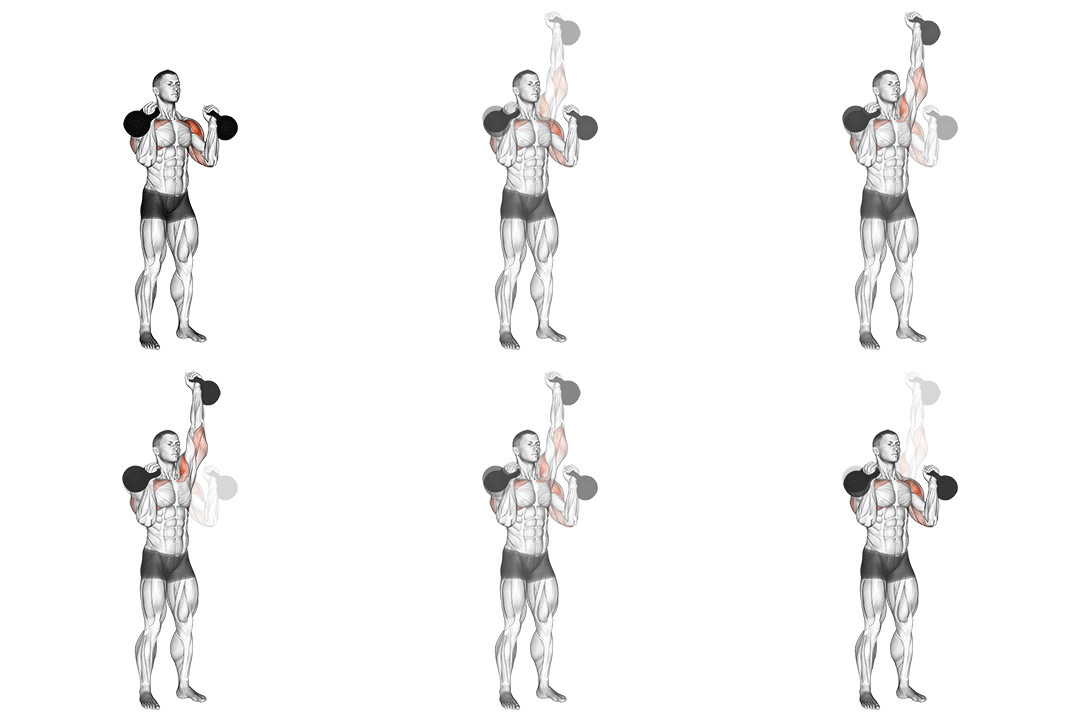
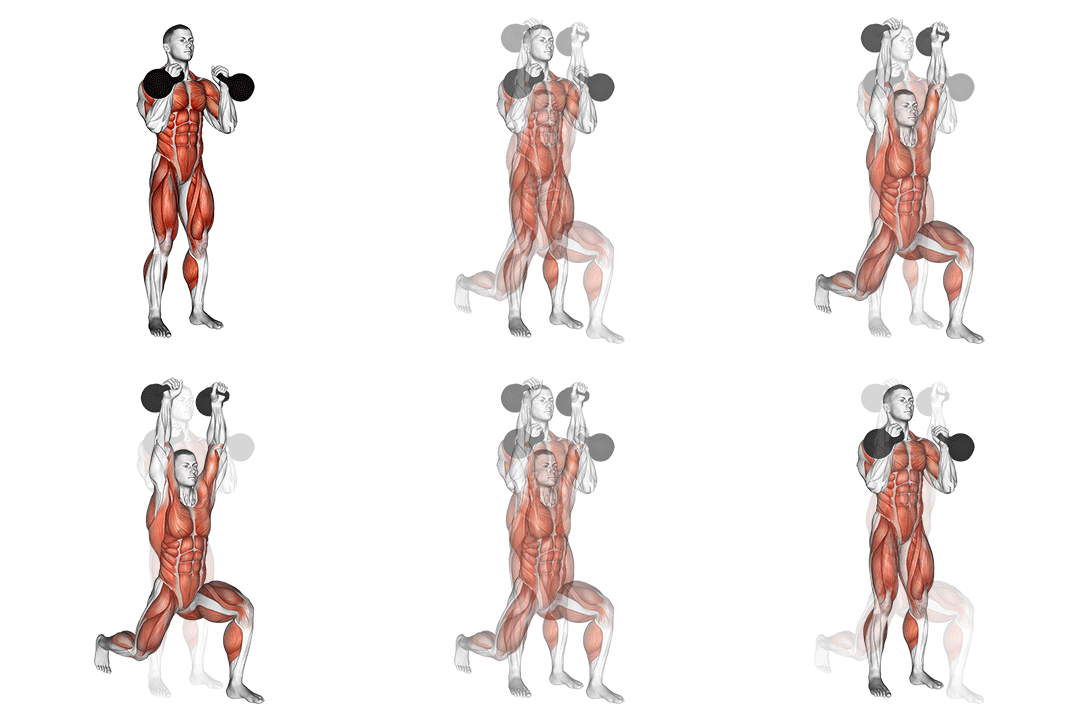
Compare More Exercises
Use our free comparison tool to analyze any two exercises head-to-head.
Compare Exercises