

Kettlebell Arnold Press vs Kettlebell Thruster: Complete Comparison Guide
Kettlebell Arnold Press vs Kettlebell Thruster — you’re choosing between two compound kettlebell moves that both target the delts but load the body differently. I’ll walk you through muscle activation, movement mechanics, equipment needs, difficulty, and clear use cases so you can pick the right exercise for hypertrophy, strength, or conditioning. You’ll also see specific technique cues, rep ranges (6–12 for size, 3–6 for strength, 8–20 for conditioning), and the literal comparison tag {Exercise1} vs {Exercise2} to keep things clear.
Exercise Comparison
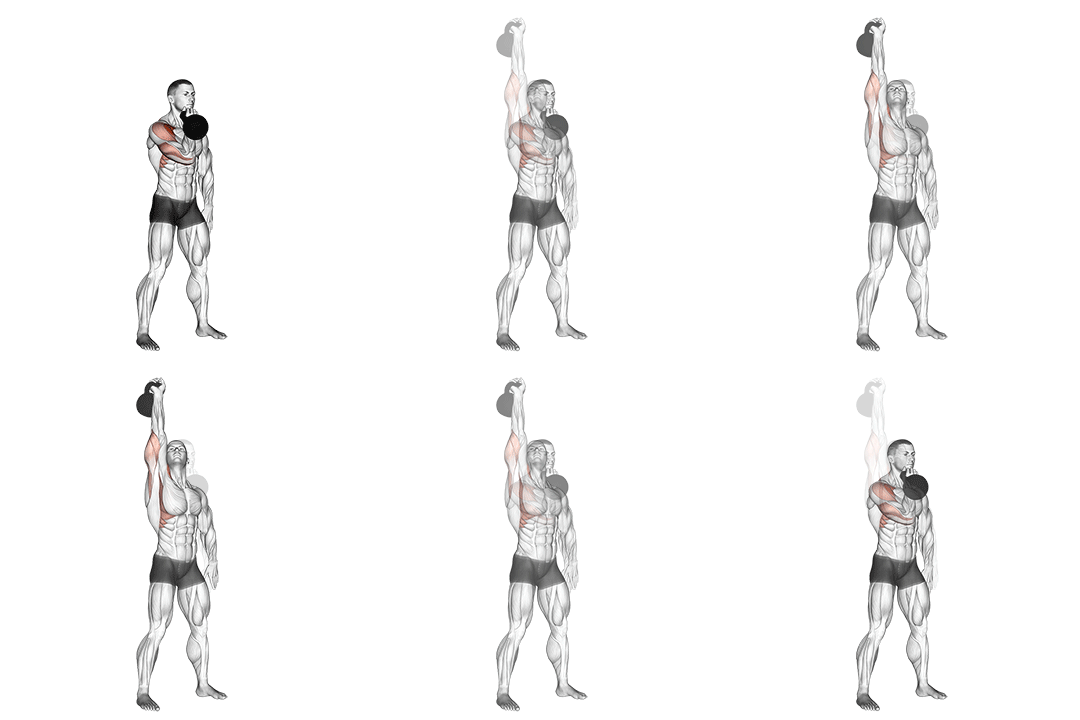
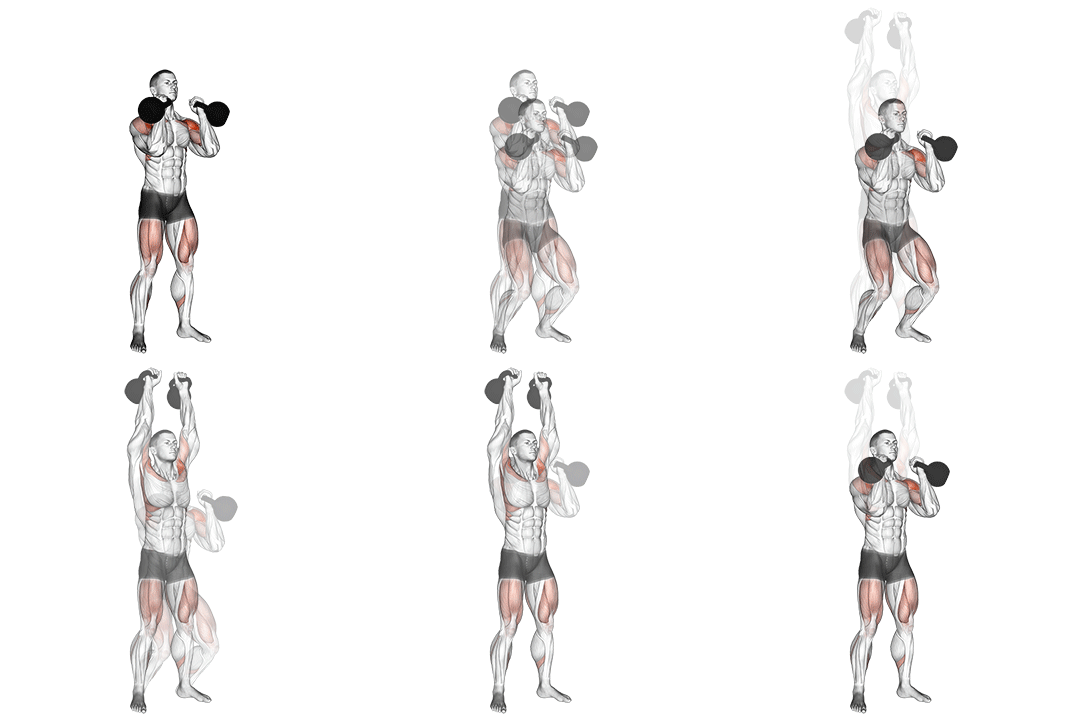
Kettlebell Arnold Press
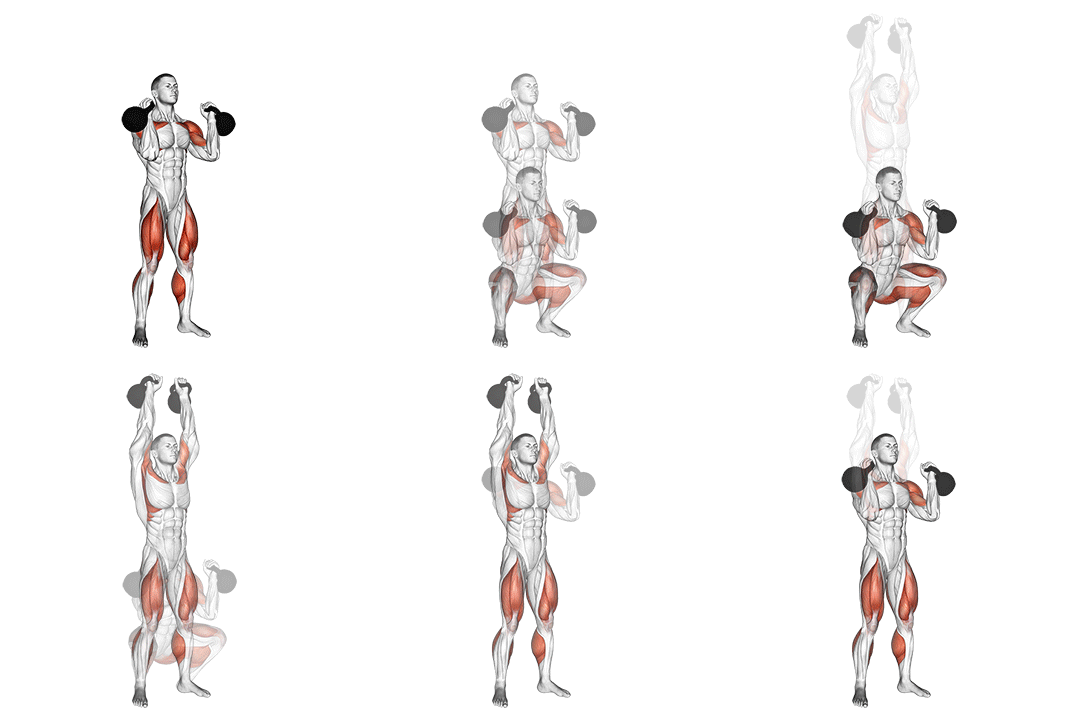
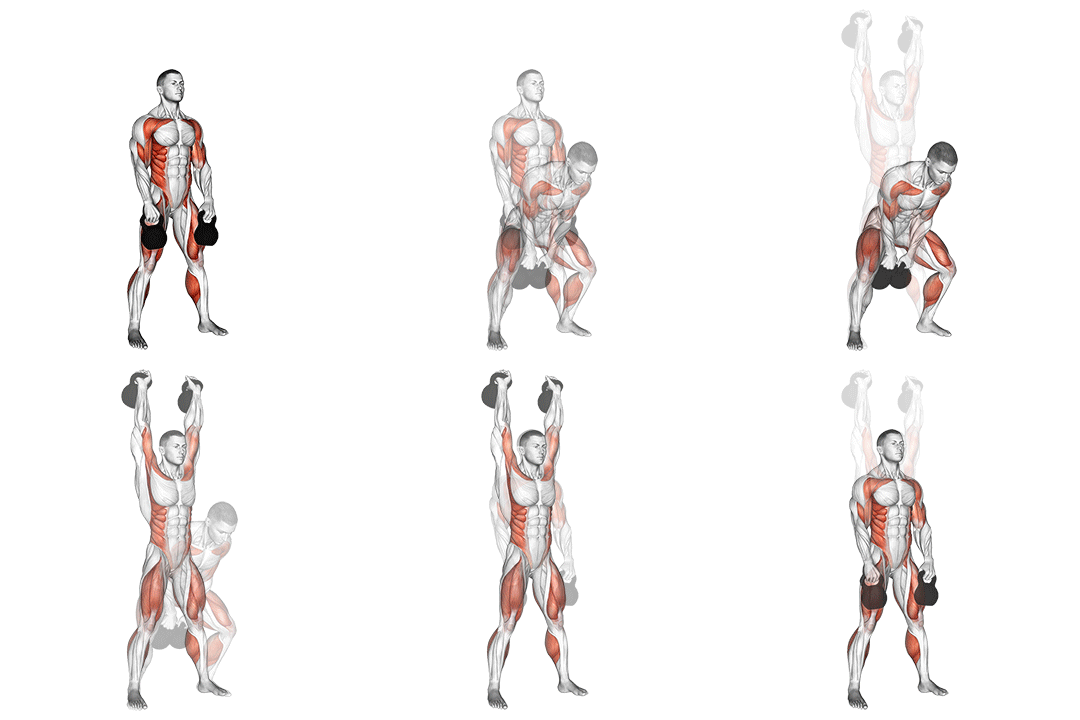
Kettlebell Thruster
Head-to-Head Comparison
| Attribute | Kettlebell Arnold Press | Kettlebell Thruster |
|---|---|---|
| Target Muscle |
Delts
|
Delts
|
| Body Part |
Shoulders
|
Shoulders
|
| Equipment |
Kettlebell
|
Kettlebell
|
| Difficulty |
Intermediate
|
Intermediate
|
| Movement Type |
Compound
|
Compound
|
| Secondary Muscles |
2
|
3
|
Secondary Muscles Activated
Kettlebell Arnold Press
Kettlebell Thruster
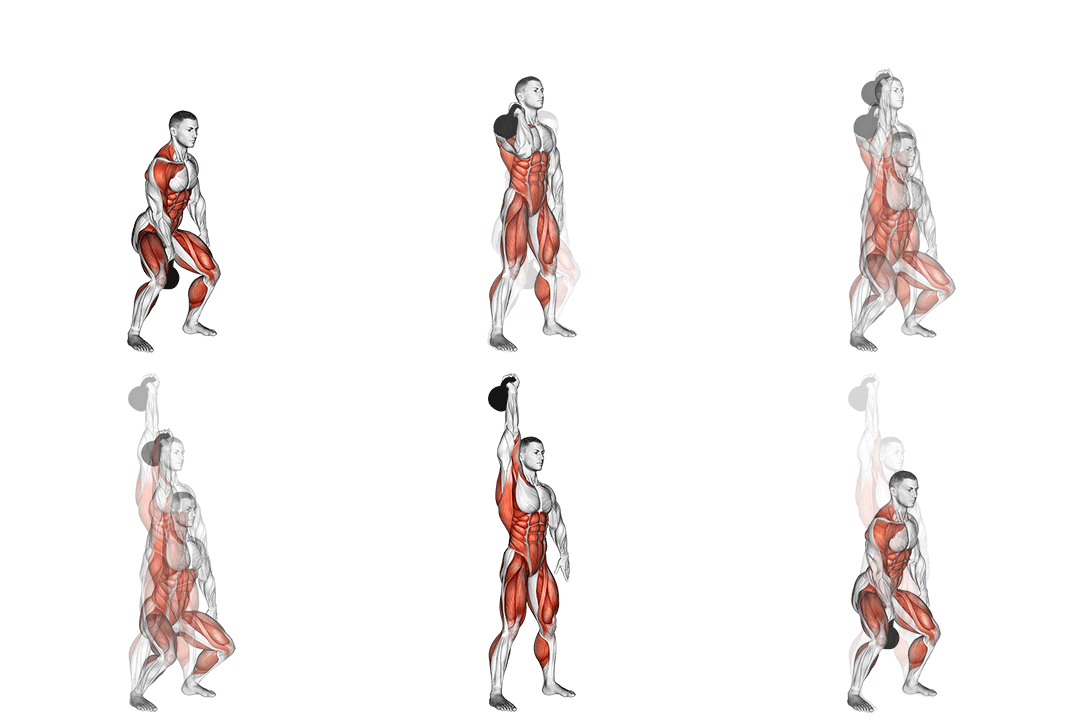
Visual Comparison
Overview
Kettlebell Arnold Press vs Kettlebell Thruster — you’re choosing between two compound kettlebell moves that both target the delts but load the body differently. I’ll walk you through muscle activation, movement mechanics, equipment needs, difficulty, and clear use cases so you can pick the right exercise for hypertrophy, strength, or conditioning. You’ll also see specific technique cues, rep ranges (6–12 for size, 3–6 for strength, 8–20 for conditioning), and the literal comparison tag {Exercise1} vs {Exercise2} to keep things clear.
Key Differences
- Both exercises target the Delts using Kettlebell. The main differences are in their movement patterns and muscle activation angles.
Pros & Cons
Kettlebell Arnold Press
+ Pros
- Direct shoulder overload for anterior and medial delts
- Greater triceps and upper-back stabilization demand
- Easy to program for 6–12 rep hypertrophy sets
- Controlled tempo allows focused time-under-tension
− Cons
- Requires good shoulder mobility and stability
- Higher risk of impingement if form breaks down
- Less lower‑body and metabolic stimulus compared to thruster
Kettlebell Thruster
+ Pros
- Full‑body power and quad/glute development
- More load can be handled via hip drive, enabling strength progress
- Excellent for metabolic conditioning and work capacity
- Works core anti‑extension under dynamic load
− Cons
- Less isolated shoulder stimulus than Arnold Press
- Requires solid squat mechanics to avoid knee or back stress
- Can turn into poor patterning if hip drive replaces technical press
When Each Exercise Wins
The Arnold Press isolates the deltoids with a rotational path and longer time under tension, making it better for targeted shoulder hypertrophy in the 6–12 rep range and with controlled tempos (2–3s eccentrics).
Thrusters let you use hip and knee extension to move heavier loads and train integrated strength; they allow progressive overload and low‑rep work (3–6) while developing total‑body force transfer.
For most beginners the thruster teaches a simple, functional squat-to-press pattern and provides more stimulus per rep; start light and prioritize squat depth and core brace to learn it safely.
Thrusters deliver both lower- and upper-body stimulus with one kettlebell, making them more efficient for limited-equipment sessions and conditioning circuits.
Frequently Asked Questions
Can I do both Kettlebell Arnold Press and Kettlebell Thruster in the same workout?
Yes. Pair them strategically: use thrusters early for power/conditioning sets (3–6 or 8–15 reps) and finish with Arnold Presses for 3–4 sets of 6–12 reps to isolate the delts. Keep total weekly volume appropriate to recovery.
Which exercise is better for beginners?
Thrusters are generally better for beginners because they teach a straightforward squat-to-press pattern and give more return per rep. Start light, master squat mechanics and core bracing before increasing load.
How do the muscle activation patterns differ?
Arnold Presses emphasize the delts through a rotational overhead path, increasing anterior and medial delt tension and scapular stabilization. Thrusters shift peak effort to hip and knee extension, so deltoid activation is secondary to lower‑body drive and core transfer.
Can Kettlebell Thruster replace Kettlebell Arnold Press?
It can replace Arnold Press for general conditioning or full‑body strength, but it won’t match isolated shoulder overload. If your goal is specific delt hypertrophy, keep the Arnold Press in your program.
Expert Verdict
Use the Kettlebell Arnold Press when your goal is targeted shoulder development and upper‑body time under tension. It’s the better pick for focused delt hypertrophy and for strengthening scapular stabilizers, especially in 6–12 rep sets with controlled rotation. Choose the Kettlebell Thruster when you want full‑body strength, power, or conditioning: it lets you handle more load via hip drive and builds quads, glutes, and core while still working the delts. For balanced programming, alternate: include Arnold Presses on dedicated shoulder days and Thrusters on full‑body or metabolic sessions to exploit each movement’s biomechanical strengths.
Also Compare
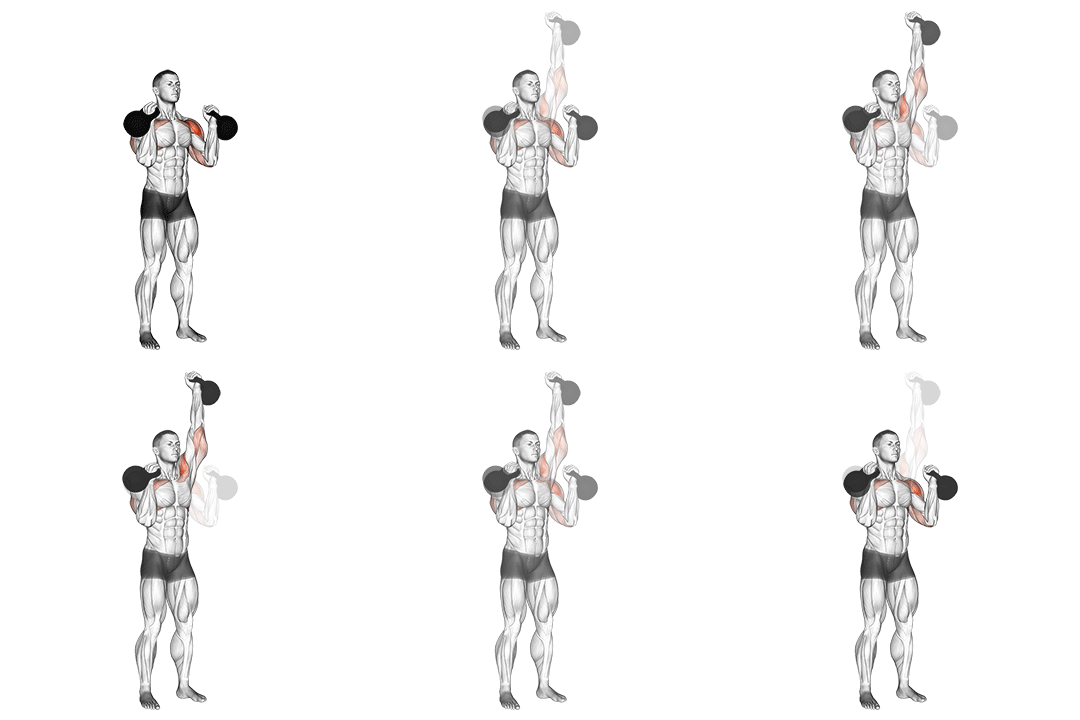
More comparisons with Kettlebell Arnold Press
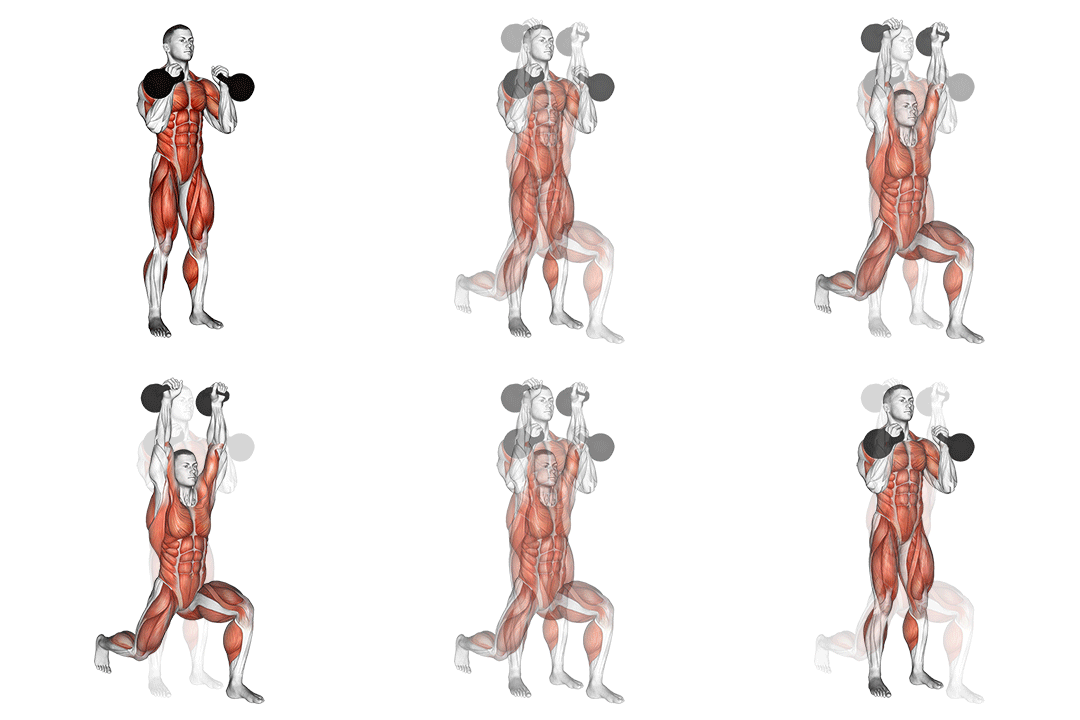
More comparisons with Kettlebell Thruster
Compare More Exercises
Use our free comparison tool to analyze any two exercises head-to-head.
Compare Exercises