

Kettlebell Double Jerk vs Kettlebell Double Push Press: Complete Comparison Guide
Kettlebell Double Jerk vs Kettlebell Double Push Press — two heavy-hitting overhead moves that both target your delts but ask different things of your body. In this guide you’ll get clear comparisons of muscle activation, equipment needs, learning curve, injury risk, and programming recommendations. I’ll walk you through technique cues, the biomechanics behind each lift (hip drive, force vectors, and shoulder length-tension), and specific rep ranges so you can pick the one that best fits your strength, power, or hypertrophy goals.
Exercise Comparison
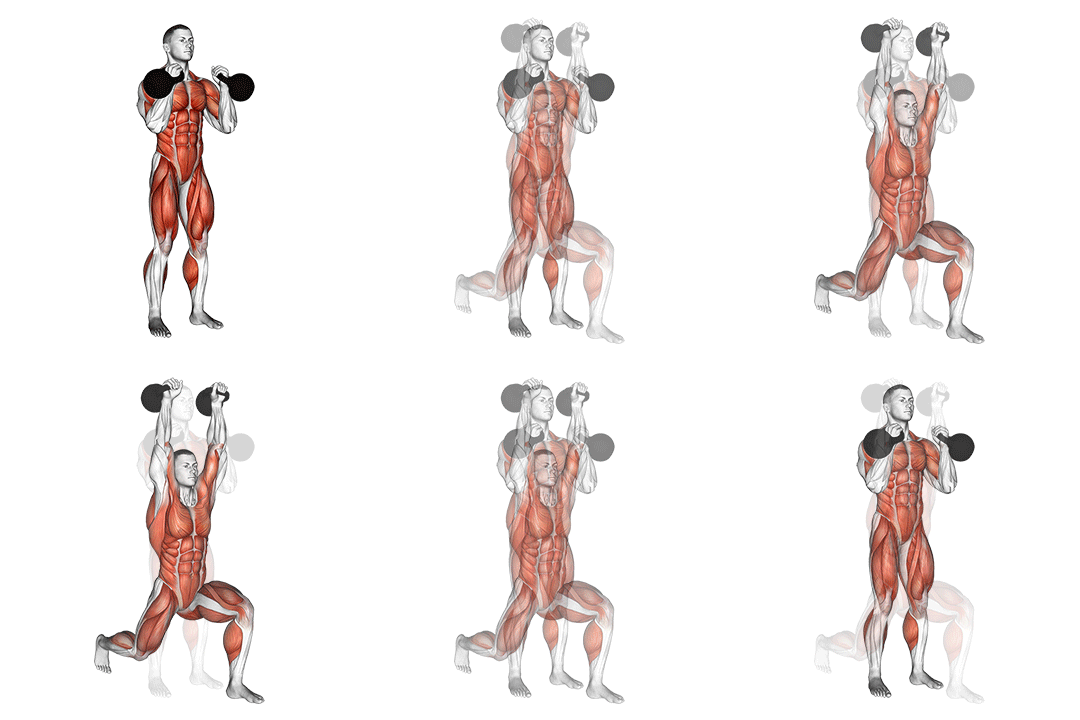
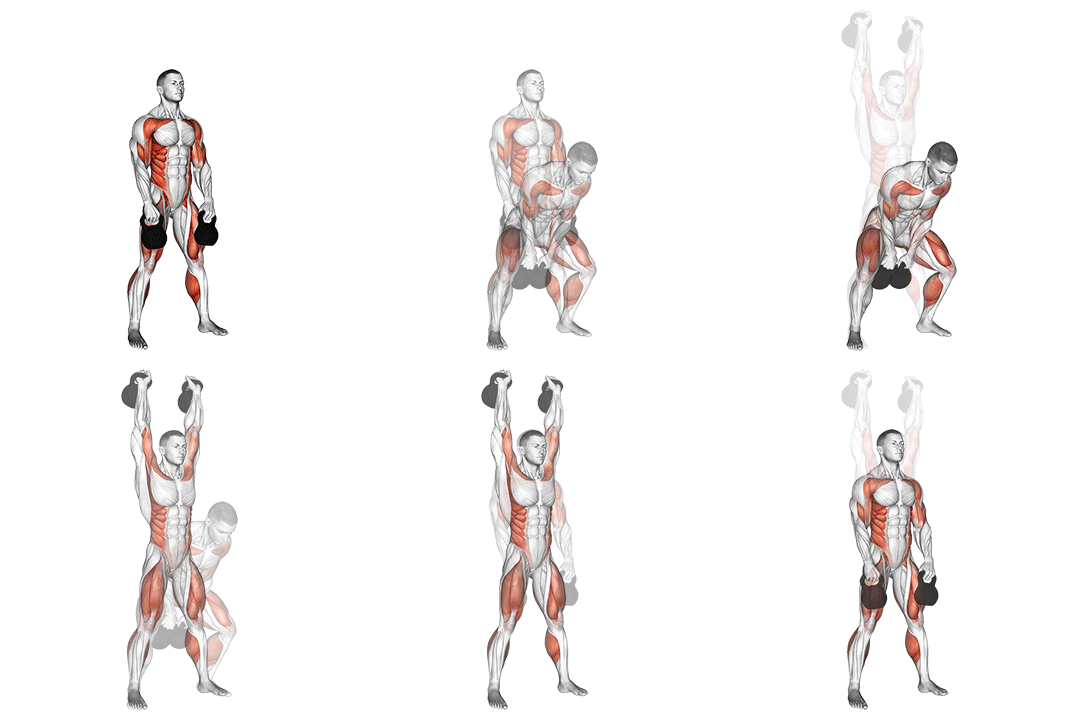
Kettlebell Double Jerk
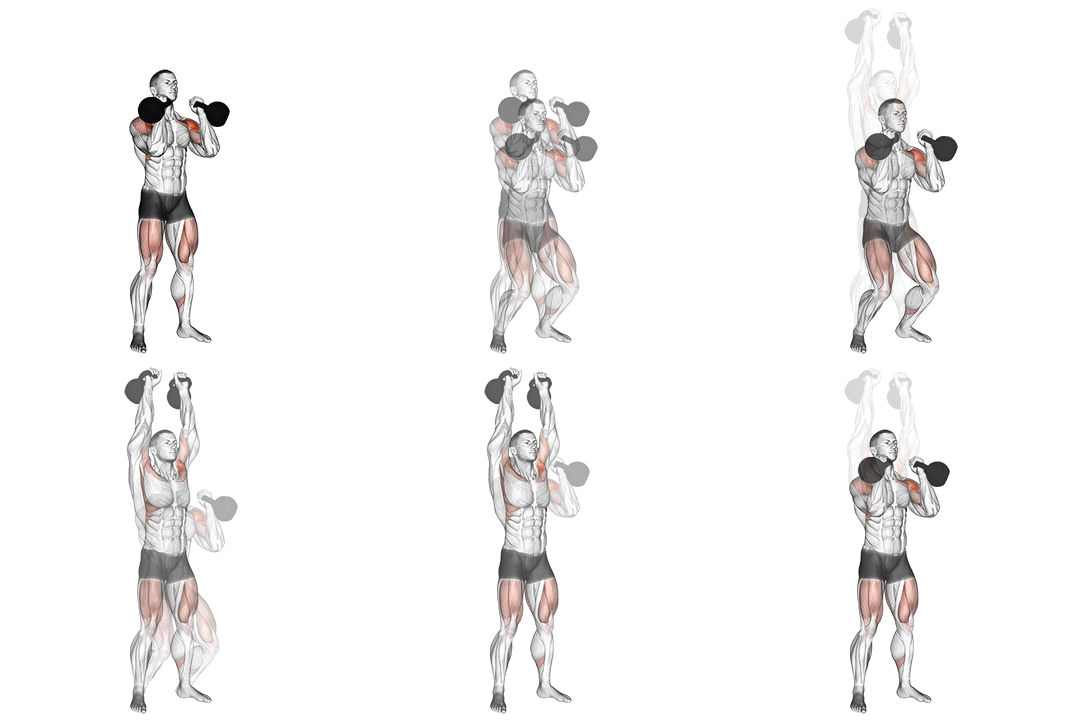
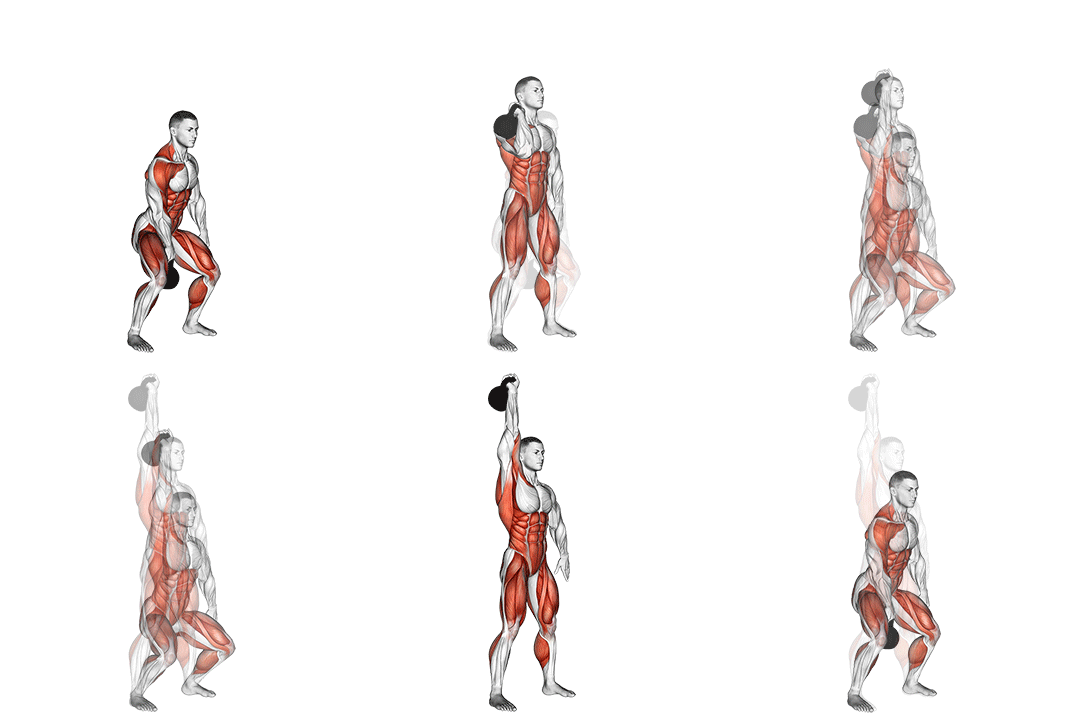
Kettlebell Double Push Press
Head-to-Head Comparison
| Attribute | Kettlebell Double Jerk | Kettlebell Double Push Press |
|---|---|---|
| Target Muscle |
Delts
|
Delts
|
| Body Part |
Shoulders
|
Shoulders
|
| Equipment |
Kettlebell
|
Kettlebell
|
| Difficulty |
Advanced
|
Intermediate
|
| Movement Type |
Compound
|
Compound
|
| Secondary Muscles |
2
|
2
|
Secondary Muscles Activated
Kettlebell Double Jerk
Kettlebell Double Push Press
Visual Comparison
Overview
Kettlebell Double Jerk vs Kettlebell Double Push Press — two heavy-hitting overhead moves that both target your delts but ask different things of your body. In this guide you’ll get clear comparisons of muscle activation, equipment needs, learning curve, injury risk, and programming recommendations. I’ll walk you through technique cues, the biomechanics behind each lift (hip drive, force vectors, and shoulder length-tension), and specific rep ranges so you can pick the one that best fits your strength, power, or hypertrophy goals.
Key Differences
- Difficulty levels differ: Kettlebell Double Jerk is advanced, while Kettlebell Double Push Press is intermediate.
- Both exercises target the Delts using Kettlebell. The main differences are in their movement patterns and muscle activation angles.
Pros & Cons
Kettlebell Double Jerk
+ Pros
- Allows heavier external loads (≈10–20% more) due to leg-driven impulse
- Develops power and explosive triple-extension (ankle, knee, hip)
- Improves coordination and timing between lower and upper body
- Great for transferring to Olympic-style and sport-specific overhead power
− Cons
- High technical demand with a steep learning curve
- Greater shoulder and wrist stabilization stress when receiving the load
- Requires more mobility and space for safe receiving positions
Kettlebell Double Push Press
+ Pros
- Easier to learn and coach — simple dip-drive-press mechanics
- Better for hypertrophy with controllable time under tension (4–12 reps)
- Lower technical and mobility demands; suitable for most trainees
- More accessible for home workouts and limited space
− Cons
- Generally can’t handle the same maximal load as the jerk
- Less emphasis on explosive power development
- Longer time under load can aggravate shoulder impingement if form breaks
When Each Exercise Wins
The push press allows steady deltoid time under tension and controlled rep ranges (6–12 reps) and is easier to load progressively for hypertrophy. Its continuous pressing action targets anterior and lateral deltoid fibers more consistently.
The jerk lets you move heavier loads by using leg drive and momentum, improving maximal overhead strength and power through high-intensity sets (1–5 reps). The explosive triple extension translates to higher force output.
Push press has a gentler learning curve and lower mobility demands, so beginners can safely develop shoulder strength, bracing, and pressing mechanics before attempting the more technical jerk.
Push press needs less space and mobility and doesn’t require dropping under the load, making it safer and more practical for home settings with limited room and flooring options.
Frequently Asked Questions
Can I do both Kettlebell Double Jerk and Kettlebell Double Push Press in the same workout?
Yes — structure them by intent: perform jerks early for low-rep strength/power (1–5 reps), then use push presses later for volume/hypertrophy (6–10 reps). Keep total weekly volume and load progression in check to avoid overtaxing shoulders and core.
Which exercise is better for beginners?
The Kettlebell Double Push Press is better for beginners because it has simpler timing, lower mobility demands, and teaches hip drive and bracing without the need to drop under the load. Use it to build shoulder strength before progressing to jerks.
How do the muscle activation patterns differ?
The push press produces sustained deltoid concentric activation during the press, while the jerk creates a short, high-intensity deltoid burst after an explosive triple extension followed by rapid eccentric stabilization during the catch. Triceps time under tension is longer in the push press, and core anti-extension demands spike during the jerk’s receive.
Can Kettlebell Double Push Press replace Kettlebell Double Jerk?
For hypertrophy and general strength, yes — the push press can replace the jerk and is easier to program. If your goal is maximal overhead strength or power development, the jerk is irreplaceable because it lets you use heavier loads and trains explosive timing.
Expert Verdict
Choose the Kettlebell Double Push Press if your priority is accessible shoulder hypertrophy, steady progression, and lower technical risk — program 3–5 sets of 6–12 reps with tempo control to overload the deltoids. Opt for the Kettlebell Double Jerk when you want to maximize overhead strength and power: train heavier triples, doubles, or singles (1–5 reps) focusing on explosive dip (20–30° hip/knee) and precise timing to receive the load. If you’re newer to overhead work, master the push press first to build bracing, shoulder stability, and mobility before adding the jerk’s timing and receiving demands.
Also Compare
More comparisons with Kettlebell Double Jerk
More comparisons with Kettlebell Double Push Press
Compare More Exercises
Use our free comparison tool to analyze any two exercises head-to-head.
Compare Exercises