

Kettlebell Double Push Press vs Kettlebell Double Snatch: Complete Comparison Guide
Kettlebell Double Push Press vs Kettlebell Double Snatch — if you want bigger, stronger shoulders you need to pick the right compound move. I’ll walk you through how each exercise loads the delts, which secondary muscles light up, the technical cues you need to hit safe reps, and which fits your goals: hypertrophy, strength, power, or conditioning. You’ll get clear progression options, rep ranges (4–6, 6–12, 8–20), and specific biomechanics like force vectors, hip drive, and length‑tension considerations so you can choose the smarter option for your plan.
Exercise Comparison
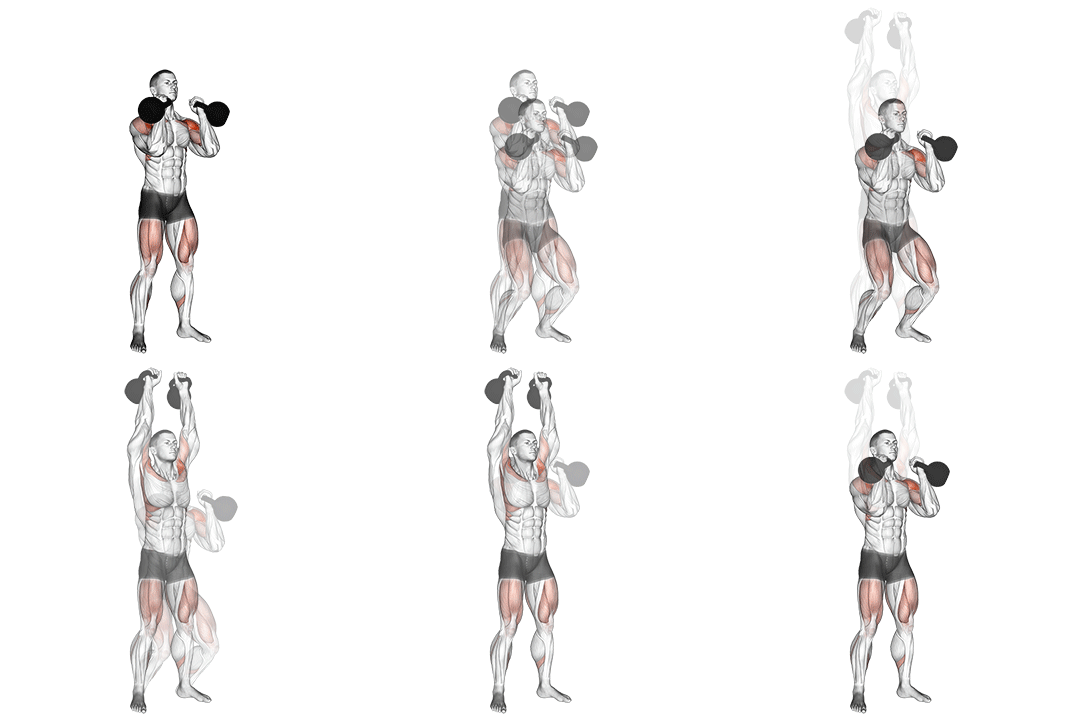
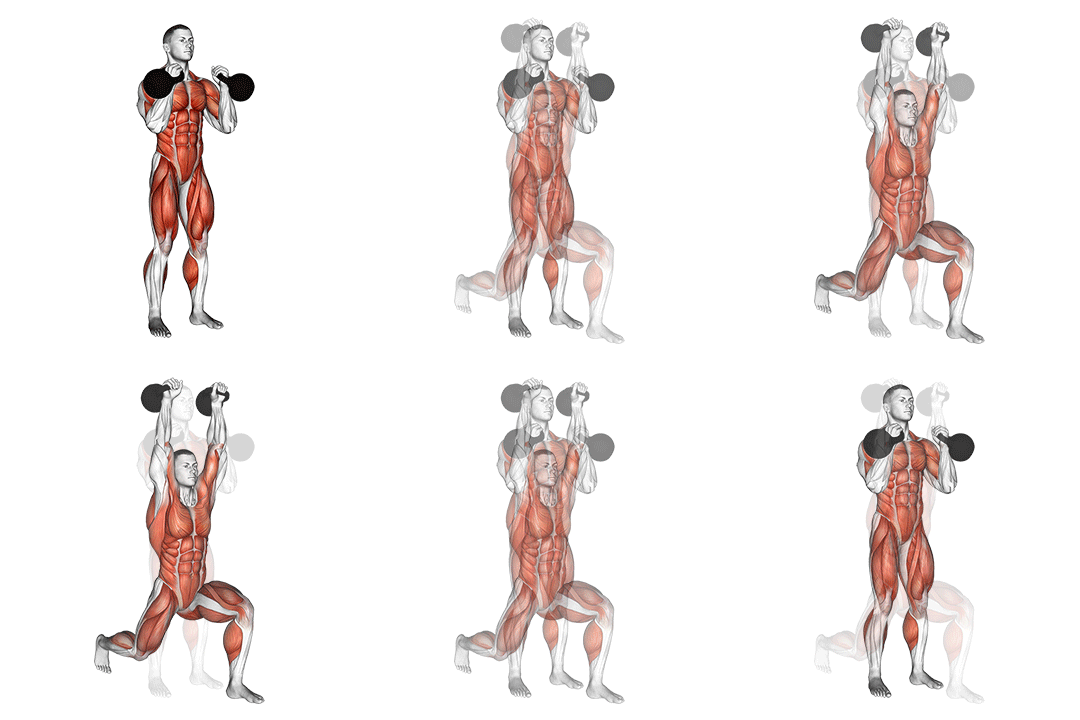
Kettlebell Double Push Press
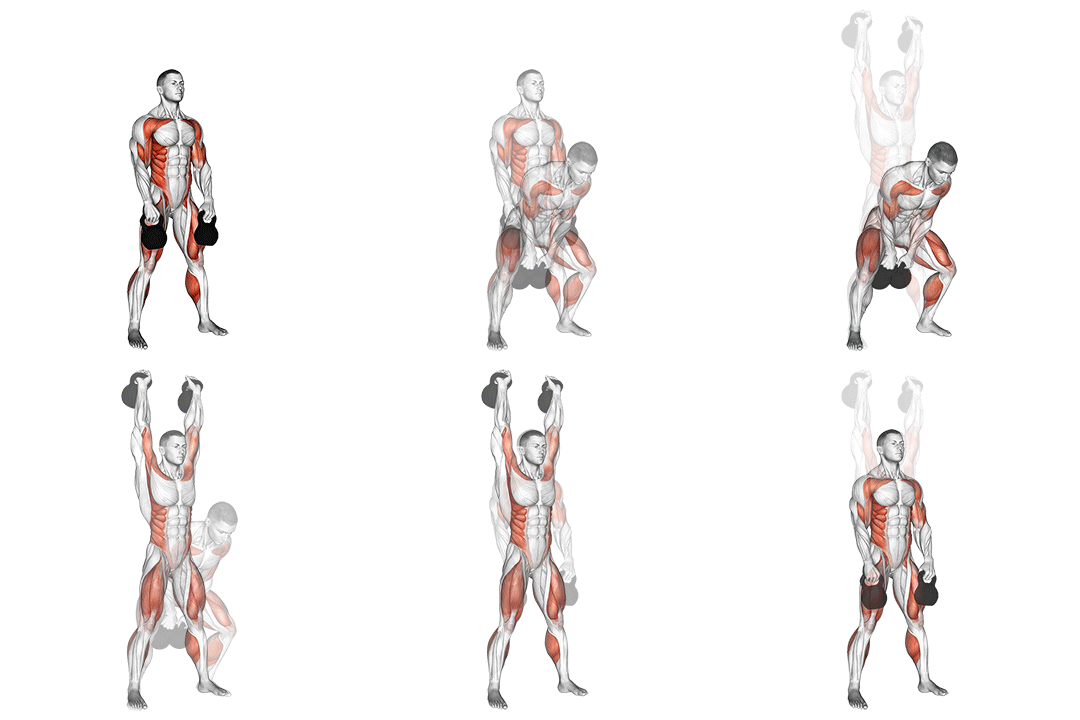
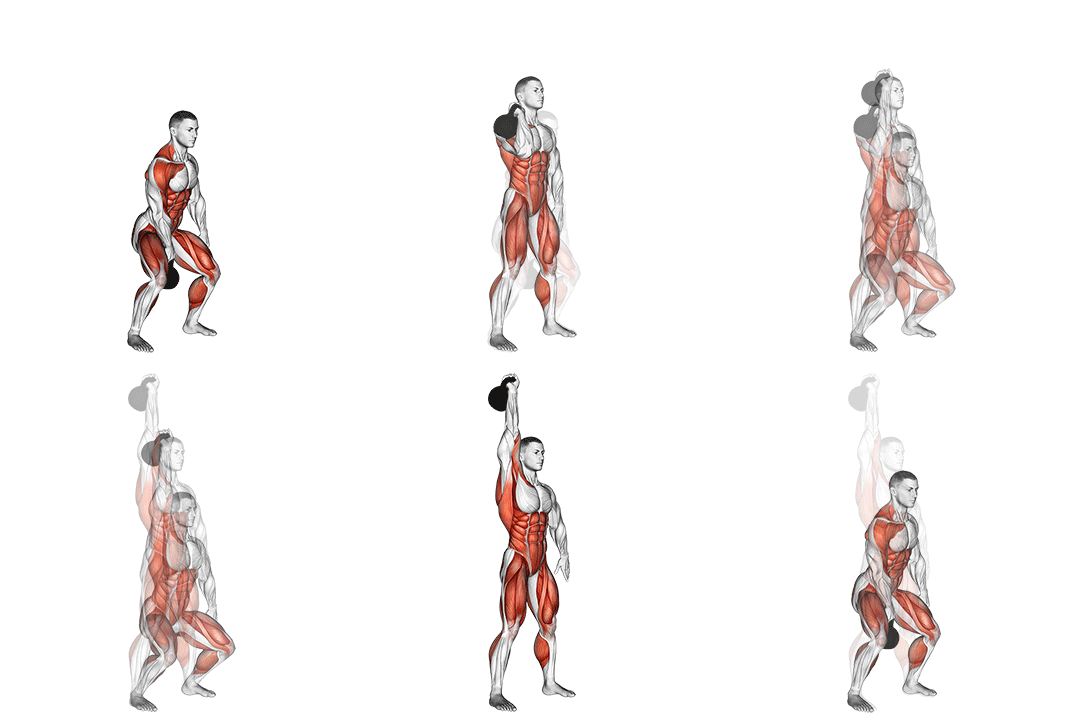
Kettlebell Double Snatch
Head-to-Head Comparison
| Attribute | Kettlebell Double Push Press | Kettlebell Double Snatch |
|---|---|---|
| Target Muscle |
Delts
|
Delts
|
| Body Part |
Shoulders
|
Shoulders
|
| Equipment |
Kettlebell
|
Kettlebell
|
| Difficulty |
Intermediate
|
Advanced
|
| Movement Type |
Compound
|
Compound
|
| Secondary Muscles |
2
|
3
|
Secondary Muscles Activated
Kettlebell Double Push Press
Kettlebell Double Snatch
Visual Comparison
Overview
Kettlebell Double Push Press vs Kettlebell Double Snatch — if you want bigger, stronger shoulders you need to pick the right compound move. I’ll walk you through how each exercise loads the delts, which secondary muscles light up, the technical cues you need to hit safe reps, and which fits your goals: hypertrophy, strength, power, or conditioning. You’ll get clear progression options, rep ranges (4–6, 6–12, 8–20), and specific biomechanics like force vectors, hip drive, and length‑tension considerations so you can choose the smarter option for your plan.
Key Differences
- Difficulty levels differ: Kettlebell Double Push Press is intermediate, while Kettlebell Double Snatch is advanced.
- Both exercises target the Delts using Kettlebell. The main differences are in their movement patterns and muscle activation angles.
Pros & Cons
Kettlebell Double Push Press
+ Pros
- Cleaner vertical force vector that targets anterior and lateral delts
- Easier to learn and scale for heavier loads
- Better for strict strength and hypertrophy progressions (4–12 rep ranges)
- Lower acute injury risk compared to ballistic snatches
− Cons
- Less carryover to explosive power and conditioning
- Relies on triceps and core—can plateau if those are weak
- Limited scapular/trap development compared with ballistic lifts
Kettlebell Double Snatch
+ Pros
- Superior for developing power and high‑velocity force production
- Greater recruitment of traps, posterior chain, and forearms
- High metabolic and conditioning demand if performed for reps
- Teaches hip‑to‑shoulder transfer of force, improving athletic carryover
− Cons
- Steep technical learning curve and higher injury risk if performed poorly
- Harder to load as progressively and safely for pure hypertrophy
- Greater demand on grip, wrists, and lumbar control
When Each Exercise Wins
The Push Press keeps the delts under more continuous tension and tolerates heavier loads in controlled reps (6–12 for size). Its vertical force vector and longer time under tension favor deltoid hypertrophy and allow progressive overload with lower technical breakdown.
For raw pressing strength the Push Press lets you progressively increase load and overload the shoulder‑elbow extension pattern safely (4–6 heavy reps). The controlled dip–drive mechanic translates directly to overhead pressing strength without the ballistic complexities of the snatch.
Beginners can learn the dip‑drive‑press pattern quickly and practice scapular control and triceps engagement without the high‑velocity timing demands of the snatch. It builds the strength and motor control needed before attempting advanced ballistic lifts.
The Push Press requires less vertical clearance, is more forgiving with imperfect form, and scales well with a single pair of kettlebells. It’s easier to program for strength, size, or conditioning in a small space.
Frequently Asked Questions
Can I do both Kettlebell Double Push Press and Kettlebell Double Snatch in the same workout?
Yes. Pair them intelligently: do heavy Push Press sets early for strength (4–6 reps) and add Snatch sets later for power or conditioning (6–12+ reps). Keep total volume in check and prioritize technique—fatigue can break down snatch mechanics.
Which exercise is better for beginners?
The Push Press is better for beginners because the movement is simpler to learn, tolerates heavier loads with safer mechanics, and builds the pressing and core stability needed before advancing to ballistic snatches.
How do the muscle activation patterns differ?
The Push Press produces sustained deltoid activation with triceps support during the controlled press, driven by a short leg dip. The Snatch shows phasic activation: explosive hip extension and trap shrug generate peak force, then the deltoids and scapular stabilizers spike during the fast overhead catch.
Can Kettlebell Double Snatch replace Kettlebell Double Push Press?
Not entirely. The Snatch can supplement or replace some pressing for power and conditioning, but it doesn’t match the Push Press for controlled overload and hypertrophy. If your goal is strict shoulder strength or size, keep the Push Press in your program.
Expert Verdict
If your priority is shoulder hypertrophy or measurable overhead strength, choose the Kettlebell Double Push Press: it gives a cleaner vertical force path, longer time under tension, and safer progressive loading (4–12 rep ranges). Pick the Kettlebell Double Snatch when you want to develop explosive power, conditioning, and full‑body coordination; the snatch produces higher peak forces and better trap/posterior chain recruitment but demands a solid hip hinge, wrist tolerance, and technical practice. Use the Push Press to build the base (6–12 weeks of strength work), then add Snatches for power and conditioning once your core, hips, and scapular stability are robust.
Also Compare
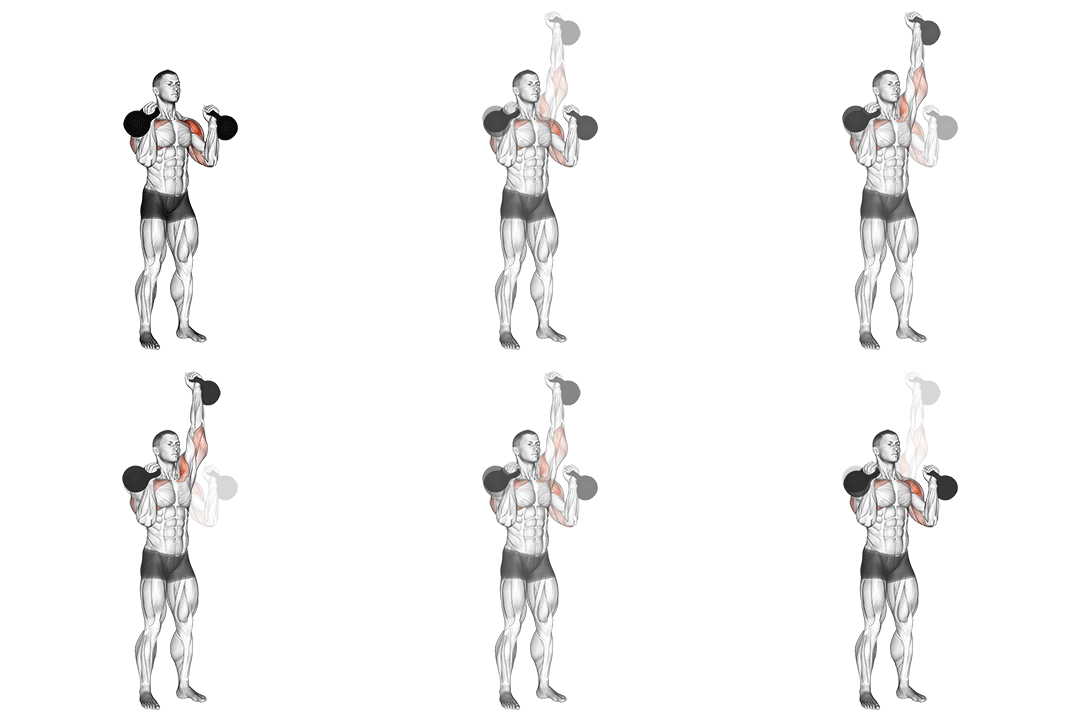
More comparisons with Kettlebell Double Push Press
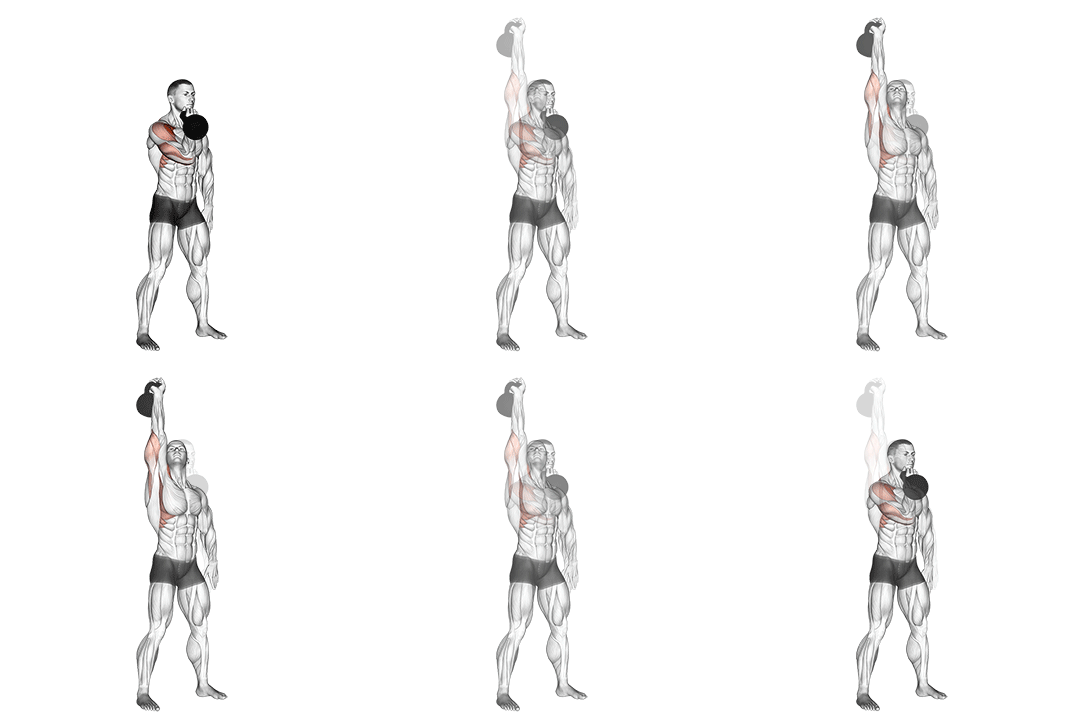
More comparisons with Kettlebell Double Snatch
Compare More Exercises
Use our free comparison tool to analyze any two exercises head-to-head.
Compare Exercises