

Kettlebell Double Snatch vs Kettlebell Thruster: Complete Comparison Guide
Kettlebell Double Snatch vs Kettlebell Thruster is a practical showdown if you want to prioritize shoulder development, power, or conditioning. I’ll walk you through how each exercise loads the delts and surrounding muscles, the movement mechanics and force vectors, equipment needs, and which one fits your goals and experience. You’ll get technique cues (hinge angles, elbow paths, breath timing), rep-range guidance, and clear recommendations so you can choose the right lift for shoulder power, hypertrophy, or general conditioning.
Exercise Comparison
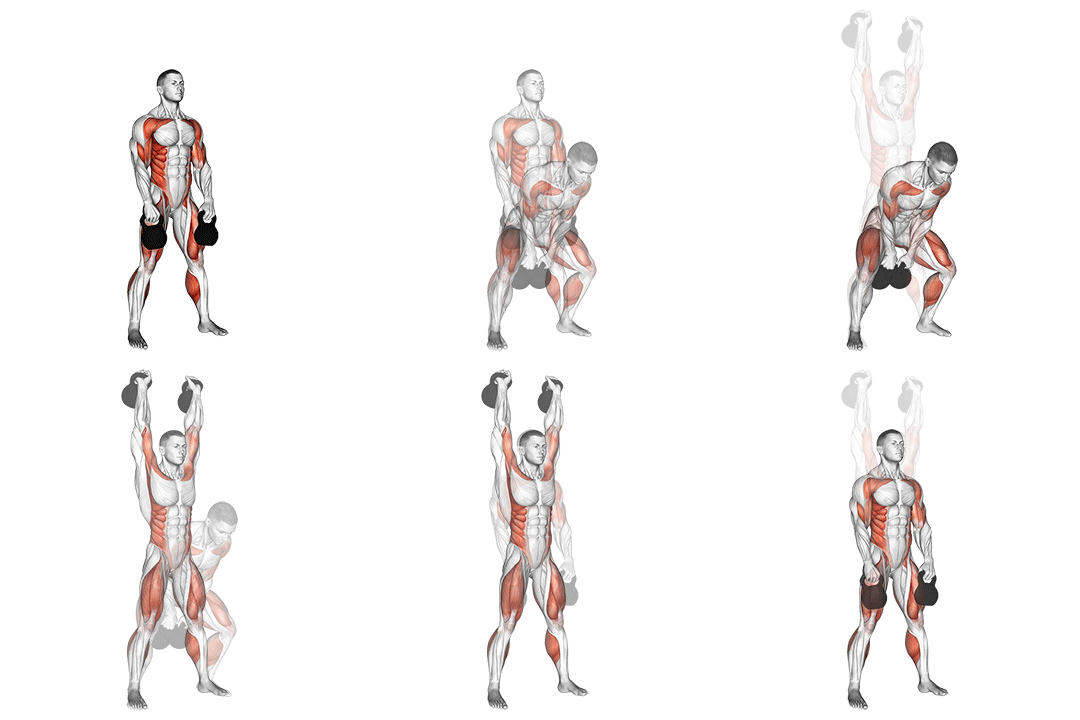
Kettlebell Double Snatch
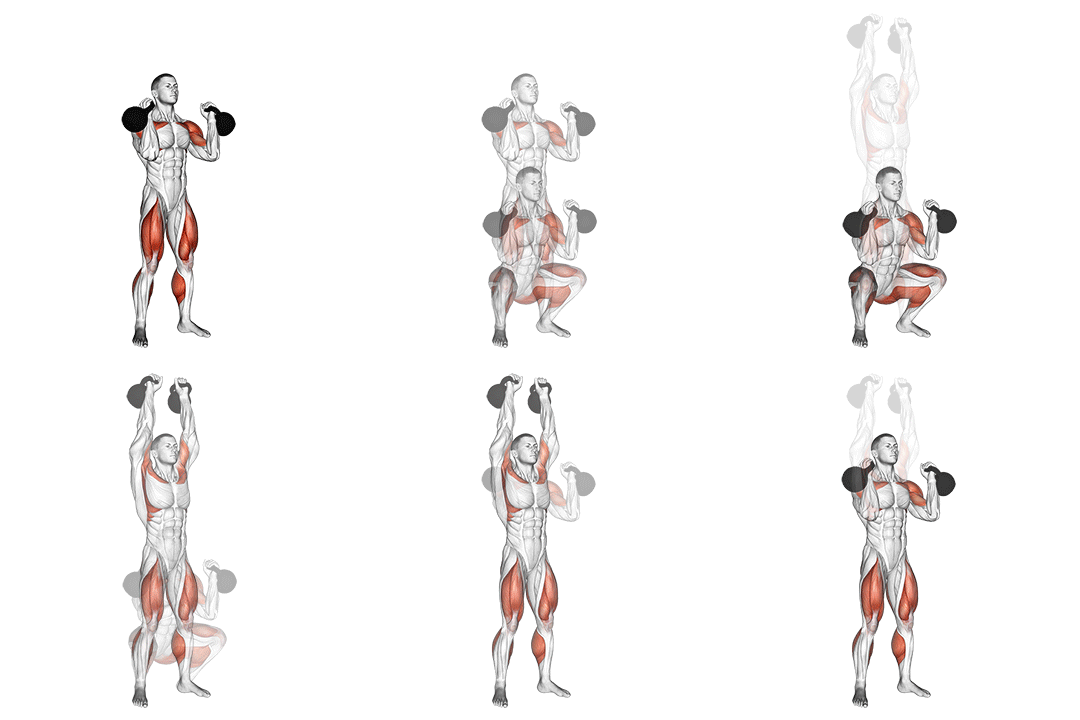
Kettlebell Thruster
Head-to-Head Comparison
| Attribute | Kettlebell Double Snatch | Kettlebell Thruster |
|---|---|---|
| Target Muscle |
Delts
|
Delts
|
| Body Part |
Shoulders
|
Shoulders
|
| Equipment |
Kettlebell
|
Kettlebell
|
| Difficulty |
Advanced
|
Intermediate
|
| Movement Type |
Compound
|
Compound
|
| Secondary Muscles |
3
|
3
|
Secondary Muscles Activated
Kettlebell Double Snatch
Kettlebell Thruster
Visual Comparison
Overview
Kettlebell Double Snatch vs Kettlebell Thruster is a practical showdown if you want to prioritize shoulder development, power, or conditioning. I’ll walk you through how each exercise loads the delts and surrounding muscles, the movement mechanics and force vectors, equipment needs, and which one fits your goals and experience. You’ll get technique cues (hinge angles, elbow paths, breath timing), rep-range guidance, and clear recommendations so you can choose the right lift for shoulder power, hypertrophy, or general conditioning.
Key Differences
- Difficulty levels differ: Kettlebell Double Snatch is advanced, while Kettlebell Thruster is intermediate.
- Both exercises target the Delts using Kettlebell. The main differences are in their movement patterns and muscle activation angles.
Pros & Cons
Kettlebell Double Snatch
+ Pros
- High shoulder power and rate-of-force development from ballistic hip drive
- Greater trapezius and forearm conditioning for overhead stability
- Excellent for conditioning and metabolic demand when done in sets of 10–20+
- Develops motor coordination and explosive triple extension
− Cons
- Advanced technique with a steep learning curve
- Higher acute injury risk to shoulders and wrists if timing is off
- Requires matched kettlebells and overhead clearance
Kettlebell Thruster
+ Pros
- Easier to learn for most lifters with transferable squat-to-press pattern
- Better for hypertrophy due to longer time under tension in the delts
- Scalable—works with single bell, alternating reps, or heavy doubles
- Strong carryover to strength and conditioning with 6–12 rep sets
− Cons
- Less emphasis on peak power and rate-of-force development
- Can overload lower back if squat mechanics or bracing are poor
- Shoulder receives a slower concentric load, limiting explosive training stimulus
When Each Exercise Wins
Thrusters put the delts under longer time-under-tension and recruit large lower-body muscles, allowing you to use moderate loads for 6–12 reps and control eccentric phases to maximize muscle growth.
For raw overhead strength and controlled overload you can load thrusters heavier and use slower tempos or pause presses; that controlled force vector produces more consistent strength adaptations versus the ballistic snatch.
Thrusters use familiar squat and press patterns and teach load transfer from hips to shoulders with less timing complexity, so you can learn safe mechanics within a few sessions.
Thrusters require less clearance, fewer technical demands, and work well with a single kettlebell—making them easier to program in limited space and equipment setups.
Frequently Asked Questions
Can I do both Kettlebell Double Snatch and Kettlebell Thruster in the same workout?
Yes—pair them smartly. Put snatches early for power work (3–6 sets of low reps) and thrusters later for hypertrophy or conditioning (3–5 sets of 8–12). Watch total volume to avoid shoulder and CNS fatigue.
Which exercise is better for beginners?
Kettlebell Thruster is better for most beginners because it uses familiar squat and press mechanics and requires less precise timing. Start with light loads, nail squat depth and bracing, then add load gradually.
How do the muscle activation patterns differ?
The double snatch uses a rapid stretch-shortening cycle and vertical force vector—delts peak during the explosive lockout with high trapezius and forearm engagement. The thruster emphasizes concentric deltoid work after hip/knee extension, giving longer time under tension and stronger quadriceps/glute contribution.
Can Kettlebell Thruster replace Kettlebell Double Snatch?
Not if your goal is pure power and rate-of-force development—the thruster gives more controlled strength and hypertrophy. For general conditioning or shoulder size, thrusters can replace snatches effectively, but include occasional ballistic work if you want explosive carryover.
Expert Verdict
Choose the kettlebell double snatch when your priority is shoulder power, explosive capacity, and conditioning—use it for sets of 3–8 per set per arm in power blocks, and emphasize hip hinge, punch-through lockout, and neutral spine. Choose the kettlebell thruster when your goal is shoulder hypertrophy, scalable strength, or beginner-friendly conditioning—use 6–12 reps per set, focus on a full squat (≈90° knee flexion), drive through heels, and press with a controlled 0–90° concentric. If you can, include both in periodized cycles: snatches in power/conditioning phases and thrusters in strength/hypertrophy phases.
Also Compare
More comparisons with Kettlebell Double Snatch
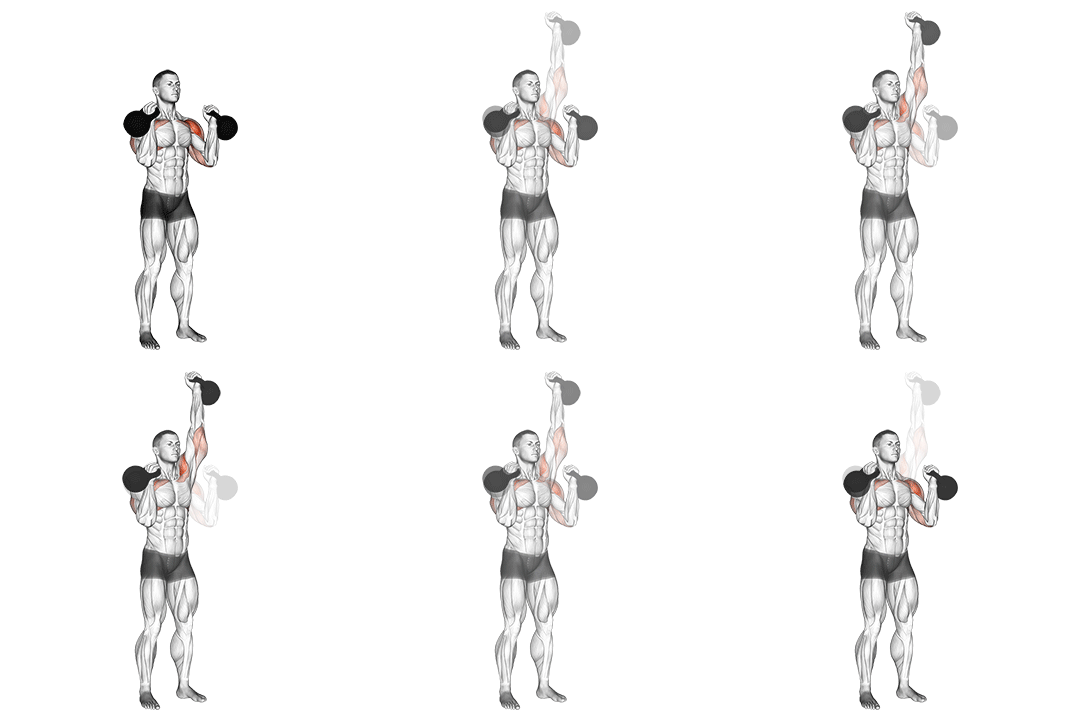
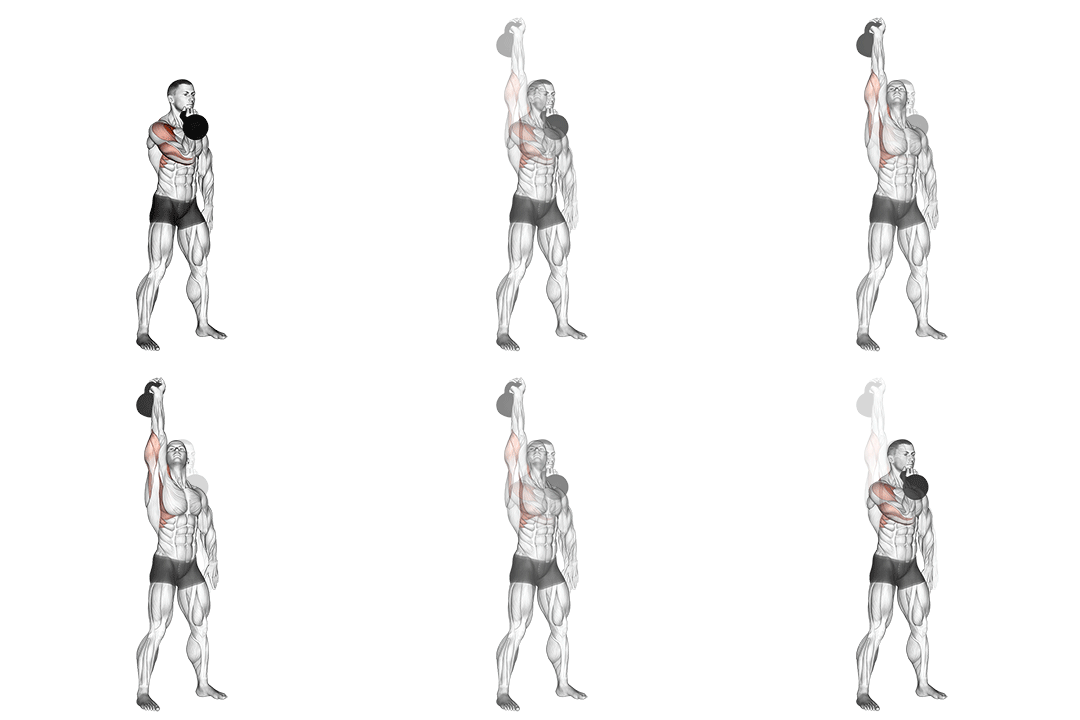
More comparisons with Kettlebell Thruster
Compare More Exercises
Use our free comparison tool to analyze any two exercises head-to-head.
Compare Exercises