

Lever Assisted Chin-up vs Lever Front Pulldown: Complete Comparison Guide
Lever Assisted Chin-up vs Lever Front Pulldown — if you want bigger, stronger lats but aren’t sure which lever machine to prioritize, you’re in the right place. I’ll walk you through how each move loads the latissimus dorsi, how they recruit the biceps and scapular retractors differently, and which one suits your goal (hypertrophy, strength, or staircase progressions). You’ll get clear technique cues, specific rep ranges, and programming tips so you can pick the one that accelerates your progress while minimizing injury risk.
Exercise Comparison
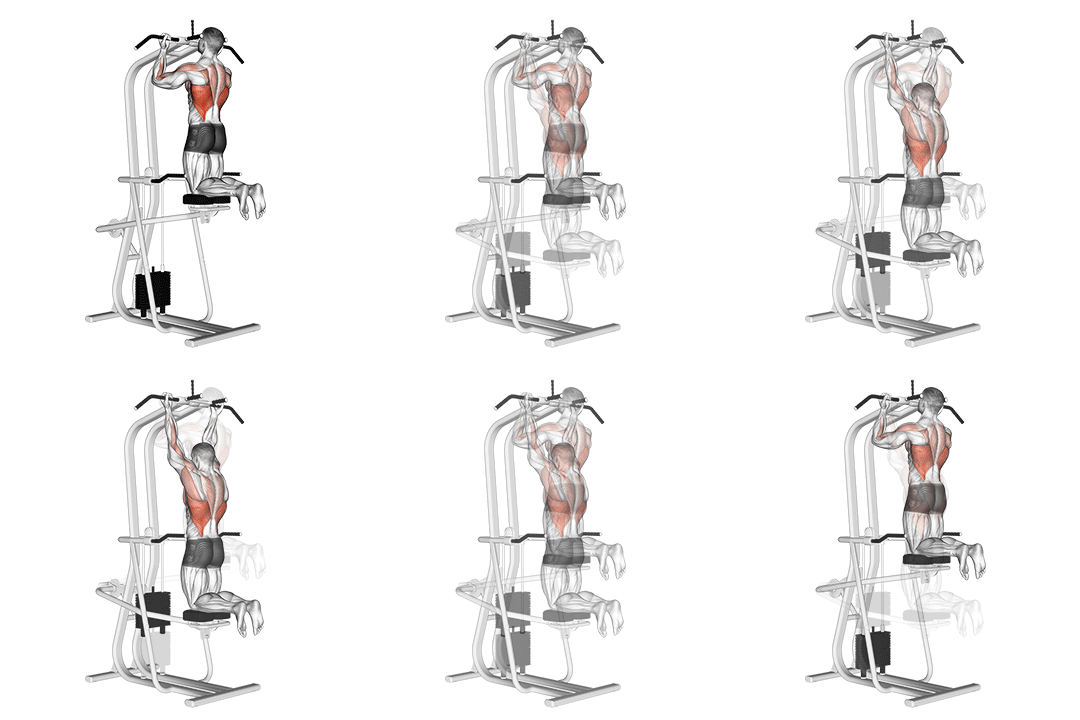
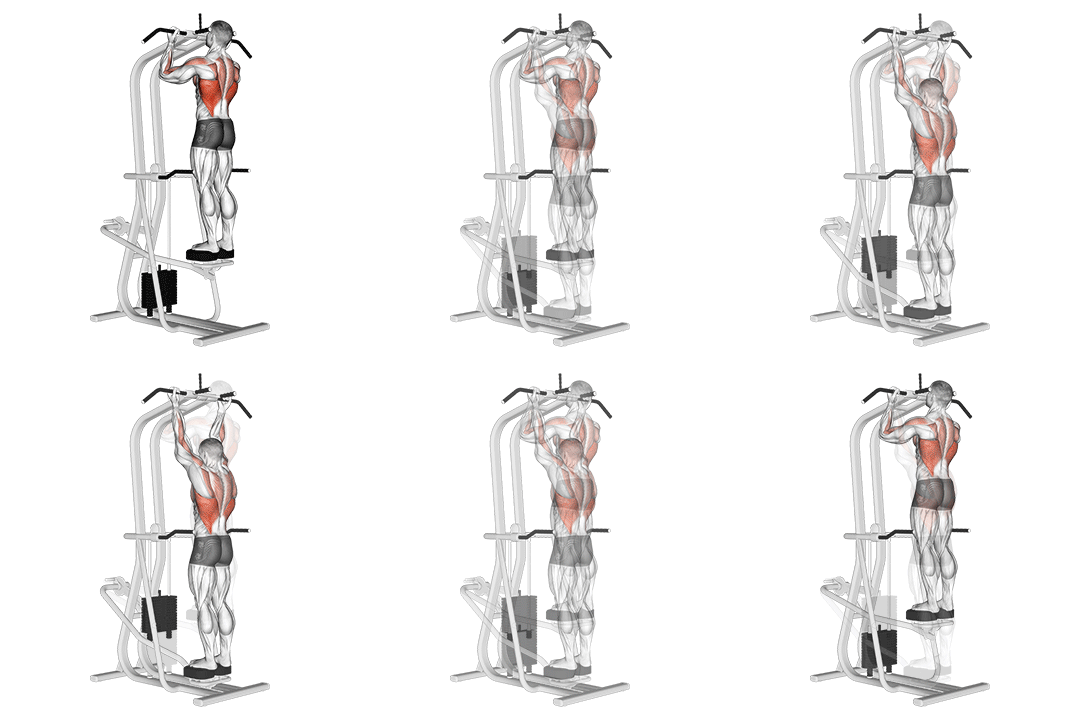
Lever Assisted Chin-up
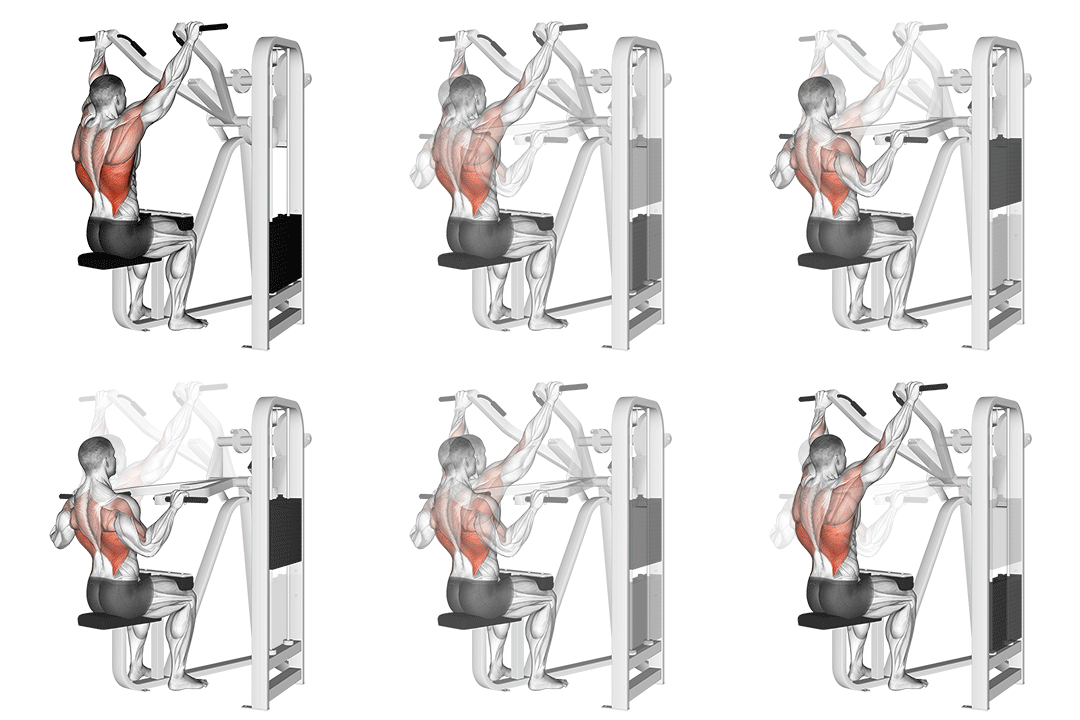
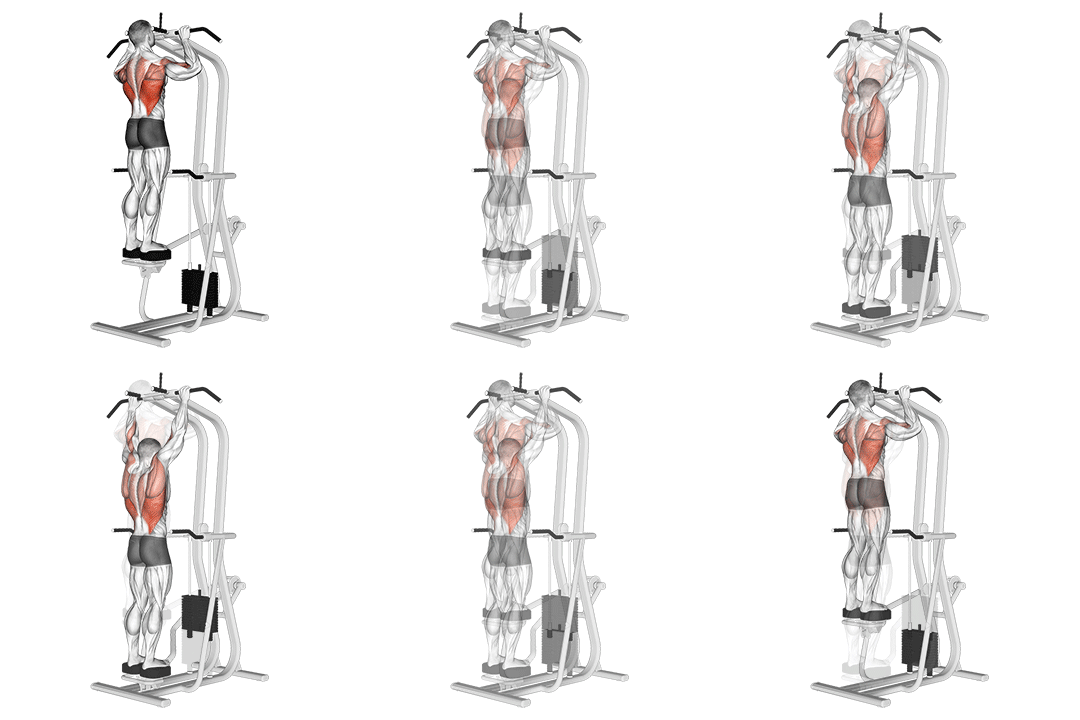
Lever Front Pulldown
Head-to-Head Comparison
| Attribute | Lever Assisted Chin-up | Lever Front Pulldown |
|---|---|---|
| Target Muscle |
Lats
|
Lats
|
| Body Part |
Back
|
Back
|
| Equipment |
Lever
|
Lever
|
| Difficulty |
Beginner
|
Beginner
|
| Movement Type |
Compound
|
Compound
|
| Secondary Muscles |
2
|
3
|
Secondary Muscles Activated
Lever Assisted Chin-up
Lever Front Pulldown
Visual Comparison
Overview
Lever Assisted Chin-up vs Lever Front Pulldown — if you want bigger, stronger lats but aren’t sure which lever machine to prioritize, you’re in the right place. I’ll walk you through how each move loads the latissimus dorsi, how they recruit the biceps and scapular retractors differently, and which one suits your goal (hypertrophy, strength, or staircase progressions). You’ll get clear technique cues, specific rep ranges, and programming tips so you can pick the one that accelerates your progress while minimizing injury risk.
Key Differences
- Both exercises target the Lats using Lever. The main differences are in their movement patterns and muscle activation angles.
Pros & Cons
Lever Assisted Chin-up
+ Pros
- Builds transferable bodyweight pulling strength and improves functional upper-body strength
- Higher biceps and forearm recruitment helps simultaneous arm development
- Large ROM for lats — strong eccentric control promotes muscle remodeling
- Clear progression to unassisted and weighted chin-ups by reducing assistance ~5–10% steps
− Cons
- Requires specific assisted chin-up machine which isn’t in every gym
- Higher coordination demand — poor form can load the shoulder incorrectly
- Less isolated lat work due to increased biceps involvement
Lever Front Pulldown
+ Pros
- Easier to learn and set up for most gym-goers — great for consistent volume
- Better lat isolation when you limit elbow flexion and focus on shoulder extension
- Fine-grain loading (2.5–5 lb increments) makes progressive overload simple
- Greater scapular retraction emphasis recruits rhomboids and rear delts for balanced back development
− Cons
- Less carryover to unassisted bodyweight pulling strength
- Some machines allow poor torso position, reducing lat recruitment if you sit too upright
- Grips and bar choice can limit biceps development compared with supinated chin-ups
When Each Exercise Wins
Pulldowns let you maintain constant tension and control the eccentric, which is ideal for a 6–12 rep hypertrophy range. You can more precisely isolate the lats by minimizing elbow flexion and focusing on shoulder extension and scapular retraction.
Assisted chin-ups build the specific motor pattern and joint stiffness needed for unassisted and weighted chin-ups. Reducing assistance in 5–10% bodyweight steps directly improves your bodyweight pulling strength.
Seated pulldowns provide stability so you can learn scapular set, tempo, and proper range of motion without managing whole-body tension. That makes it easier to progress volume safely in the 8–15 rep range.
If you can’t access a lever machine at home, band-assisted chin-ups or a doorway bar replicate the assisted chin-up pattern more easily than a pulldown. Bands let you simulate assistance and scale down by roughly 10–20% increments as you get stronger.
Frequently Asked Questions
Can I do both Lever Assisted Chin-up and Lever Front Pulldown in the same workout?
Yes — pairing them works well. Start with assisted chin-ups for strength and neural demand (3–6 sets of 3–6 or 6–8 reps), then use pulldowns for 2–4 sets of 8–12 reps to add hypertrophy-focused volume and controlled eccentrics.
Which exercise is better for beginners?
Lever Front Pulldown is generally better for beginners because it stabilizes the torso and lets you learn scapular depression and retraction. Once you develop control in the pulldown pattern, transition to assisted chin-ups to train full-range, bodyweight pulling.
How do the muscle activation patterns differ?
Chin-ups increase biceps and forearm activation due to a supinated or neutral grip and greater elbow flexion, while front pulldowns bias rhomboids and posterior deltoids via greater scapular retraction. Pulldowns maintain more constant tension through the eccentric thanks to the seated, braced position.
Can Lever Front Pulldown replace Lever Assisted Chin-up?
For lat hypertrophy, yes — pulldowns can effectively replace assisted chin-ups. For developing bodyweight pulling strength and improving unassisted chin-ups, pulldowns are a complementary exercise but not a full replacement.
Expert Verdict
Use Lever Front Pulldown when your priority is precise lat isolation, controlled eccentrics, and easy incremental loading — perfect for hypertrophy blocks (6–12 reps) and learning scapular control. Choose Lever Assisted Chin-up when you want transferable bodyweight strength, higher biceps stimulus, and a direct path to unassisted pull-ups; reduce assistance by ~5–10% as you improve. If you can, program both: start workouts or heavier days with assisted chin-ups for neural strength and finish with pulldowns for volume and targeted lat stimulus. Always cue a strong scapular retraction, chest-up position, and controlled 2–3 second eccentrics to maximize muscle growth and reduce injury risk.
Also Compare
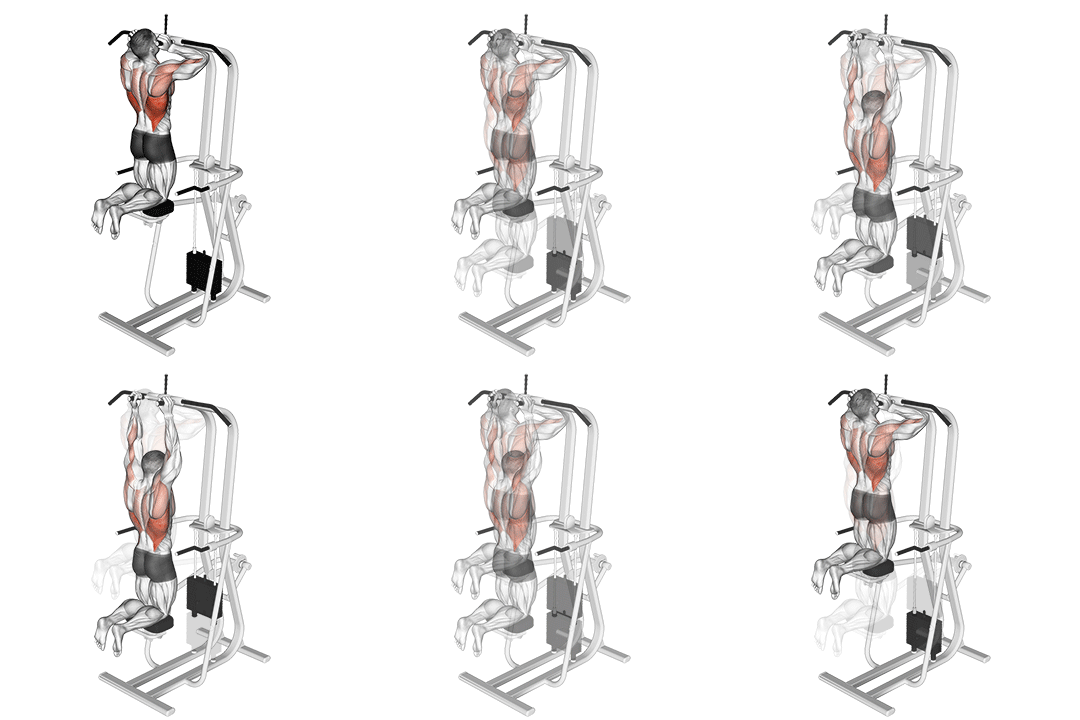
More comparisons with Lever Assisted Chin-up
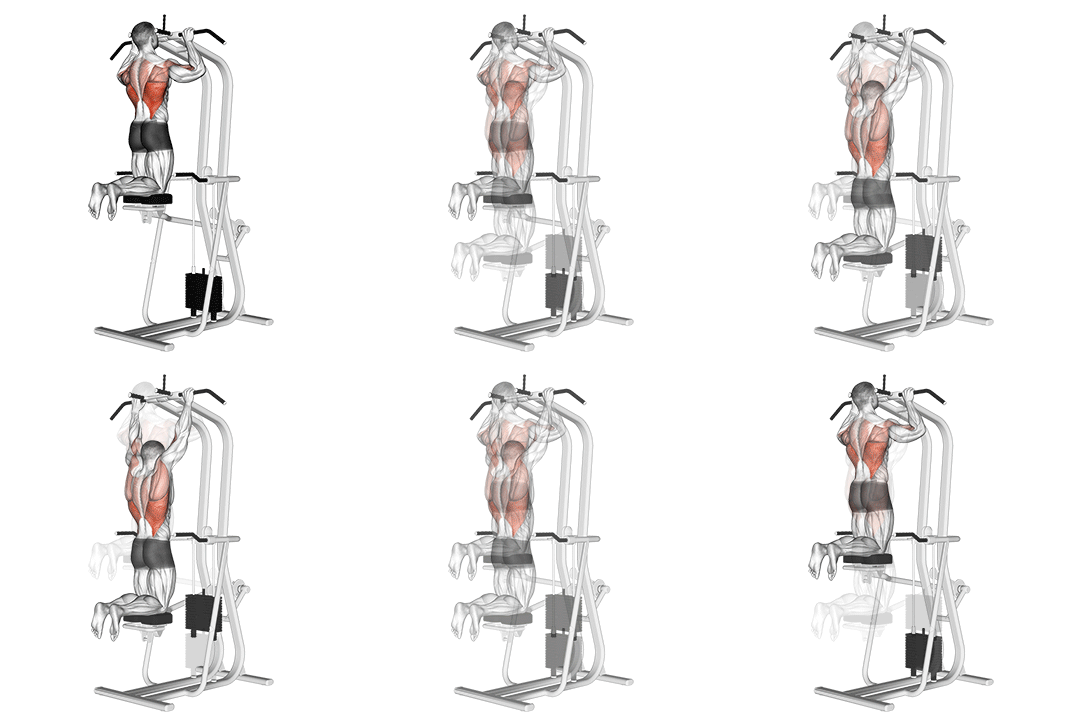
More comparisons with Lever Front Pulldown
Compare More Exercises
Use our free comparison tool to analyze any two exercises head-to-head.
Compare Exercises