

Lying (side) Quads Stretch vs Quads: Complete Comparison Guide
Lying (side) Quads Stretch vs Quads puts a static isolation stretch against a compound, movement-based quad exercise. You’ll get a clear breakdown of how each option activates the quadriceps, what secondary muscles come into play, which one fits home or gym setups, and practical cues you can use now. I’ll cover biomechanics (force vectors, length-tension), specific technique cues for safer performance, and actionable recommendations for muscle growth, strength, flexibility, and beginner programming.
Exercise Comparison
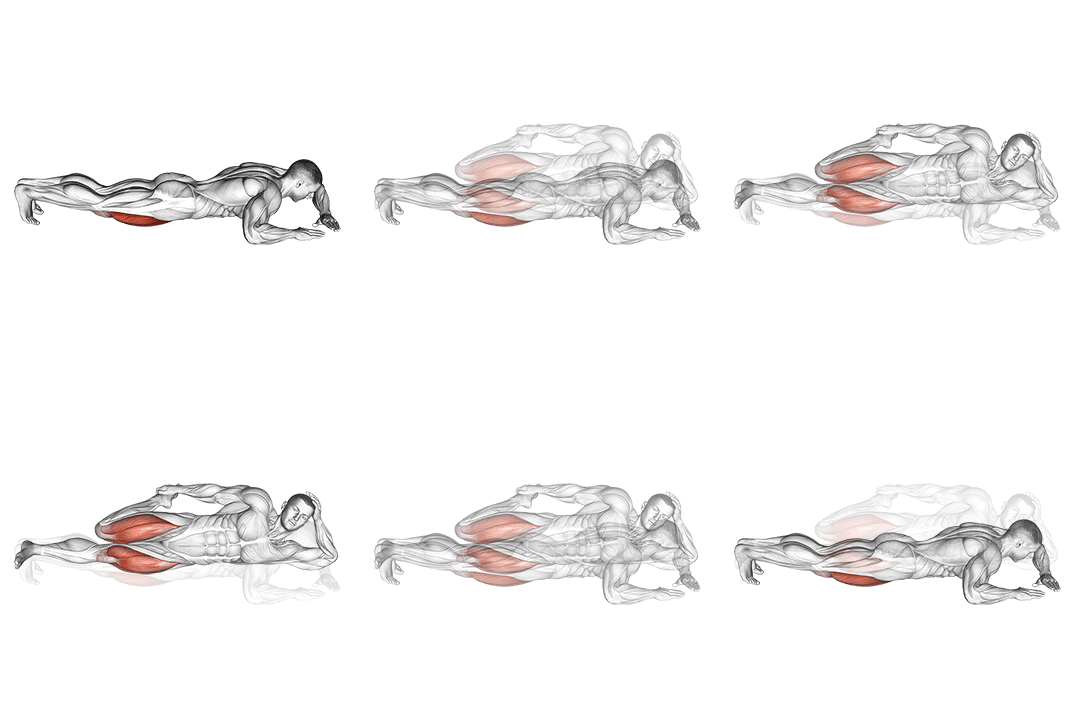
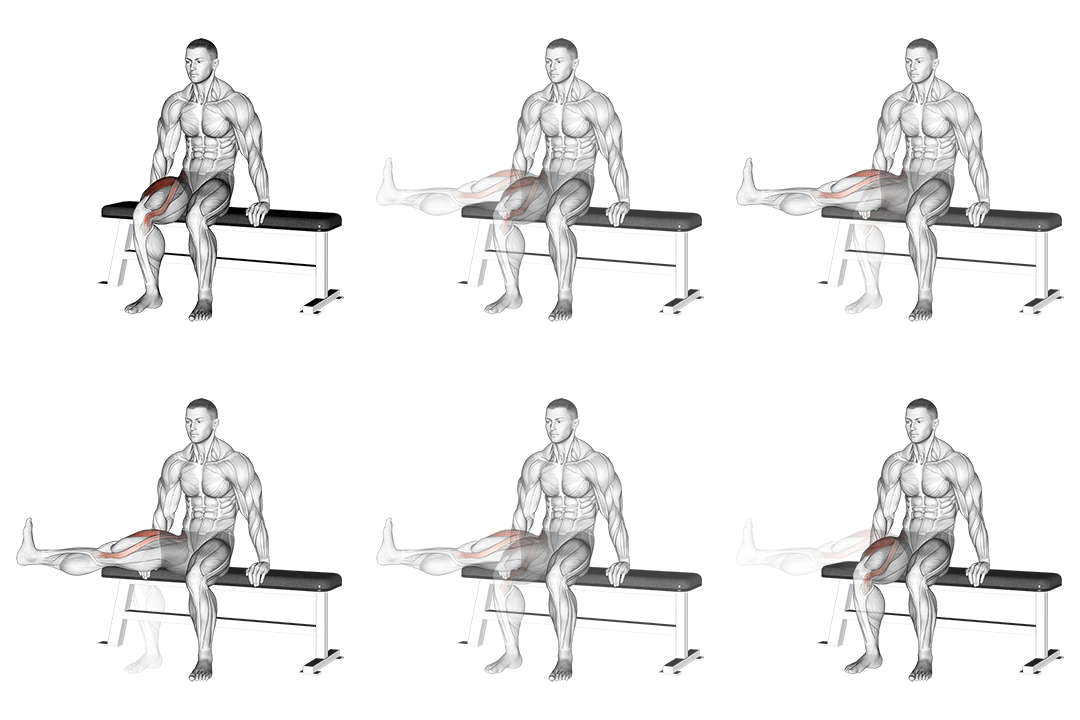
Lying (side) Quads Stretch
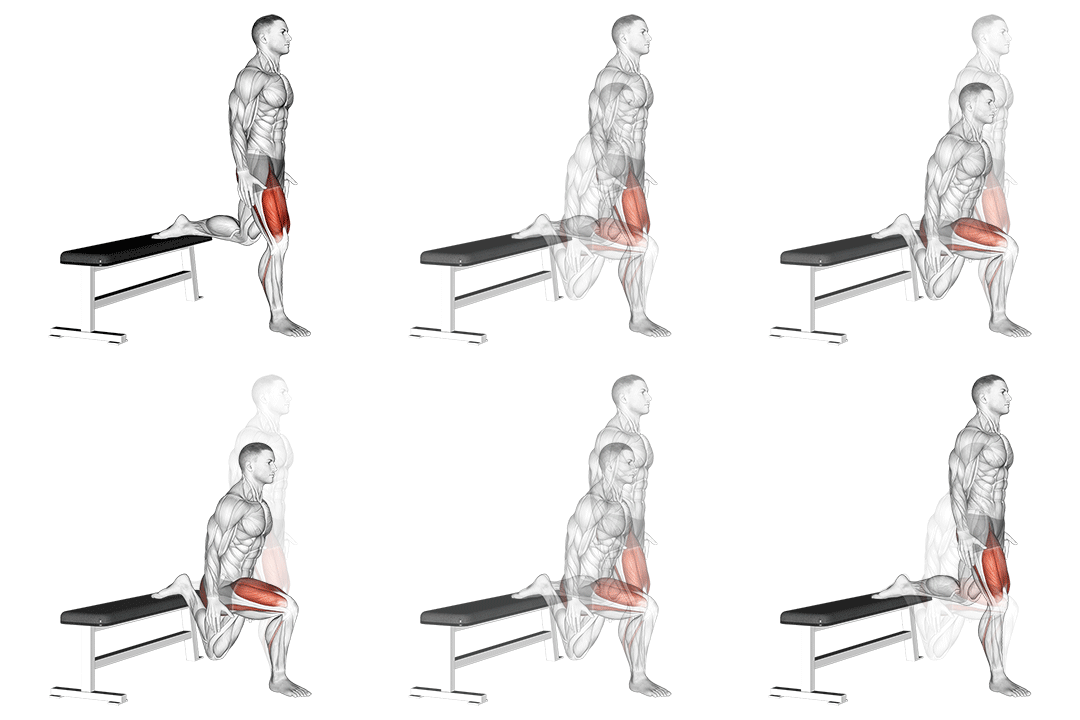
Quads
Head-to-Head Comparison
| Attribute | Lying (side) Quads Stretch | Quads |
|---|---|---|
| Target Muscle |
Quads
|
Quads
|
| Body Part |
Upper-legs
|
Upper-legs
|
| Equipment |
Body-weight
|
Body-weight
|
| Difficulty |
Beginner
|
Beginner
|
| Movement Type |
Isolation
|
Compound
|
| Secondary Muscles |
1
|
2
|
Secondary Muscles Activated
Lying (side) Quads Stretch
Quads
Visual Comparison
Overview
Lying (side) Quads Stretch vs Quads puts a static isolation stretch against a compound, movement-based quad exercise. You’ll get a clear breakdown of how each option activates the quadriceps, what secondary muscles come into play, which one fits home or gym setups, and practical cues you can use now. I’ll cover biomechanics (force vectors, length-tension), specific technique cues for safer performance, and actionable recommendations for muscle growth, strength, flexibility, and beginner programming.
Key Differences
- Lying (side) Quads Stretch is an isolation exercise, while Quads is a compound movement.
- Both exercises target the Quads using Body-weight. The main differences are in their movement patterns and muscle activation angles.
Pros & Cons
Lying (side) Quads Stretch
+ Pros
- Very low skill requirement and minimal equipment
- Improves passive quad length and knee flexion ROM
- Low joint loading—suitable for recovery and mobility sessions
- Easy to program intra-workout as a warm-up or cooldown (20–60s holds)
− Cons
- Produces little active overload for muscle growth or strength
- Limited progression options beyond duration and frequency
- Doesn’t train functional strength or multi-joint coordination
Quads
+ Pros
- Provides active overload for muscle growth and strength (8–20 reps or heavier)
- Trains hip and knee mechanics and functional movement patterns
- Easily progressed with load, tempo, unilateral work, and volume
- Greater metabolic and neuromuscular stimulus—better for hypertrophy and strength
− Cons
- Requires more motor control and mobility to perform safely
- Higher potential for form-related injury if coached poorly
- May fatigue multiple muscle groups, limiting isolation of the quads
When Each Exercise Wins
Quads compound movements provide active concentric/eccentric loading across the knee ROM and higher EMG—use 3–5 sets of 8–15 reps, or increase time-under-tension with 2–4 second eccentrics to stimulate muscle growth.
Compound loading produces greater force output and neural adaptations; progress with heavier resistance, lower reps (3–6) and focus on maintaining knee torque in the 20–60° region where quad torque peaks.
The stretch is the simplest movement to perform with minimal coaching, builds body awareness, and is low risk—ideal for improving knee flexion range before introducing compound patterns.
Body-weight compound Quads variations (squats, split squats, lunges) provide more conditioning and strength benefits with no equipment and adapt well to limited space using rep and tempo progressions.
Frequently Asked Questions
Can I do both Lying (side) Quads Stretch and Quads in the same workout?
Yes—use the lying side stretch as a warm-up to increase knee flexion and reduce passive stiffness (20–30s per side), then perform compound Quads sets for strength or hypertrophy. Post-workout, longer holds (30–60s) can aid recovery and maintain mobility.
Which exercise is better for beginners?
For absolute beginners the lying side quad stretch is safer and easier to learn, helping build range and awareness. After basic mobility is established, introduce body-weight Quads to build strength and coordination.
How do the muscle activation patterns differ?
The stretch keeps quads at long lengths with low voluntary EMG and sustained passive tension, influencing length-tension relationships. Compound Quads movements cycle through eccentric and concentric contractions with higher EMG, producing metabolic and mechanical stress that drives adaptation.
Can Quads replace Lying (side) Quads Stretch?
Quads can provide active conditioning but won’t replace the passive range and specific lengthening stimulus a stretch provides. If your priority is mobility or post-exercise recovery, keep the stretch alongside compound training.
Expert Verdict
Use the Lying (side) Quads Stretch when your goal is to improve quad length, recover between intense sessions, or increase knee flexion range—hold 20–60 seconds and add contract‑relax cycles for mobility gains. Choose Quads compound movements when you want active overload, muscle growth, or strength; program 3–5 sets of 6–15 reps depending on your goal and progressively add resistance or unilateral variations. For a balanced plan, pair the stretch as a warm-up/cooldown and the compound Quads work as the primary stimulus for strength and hypertrophy.
Also Compare
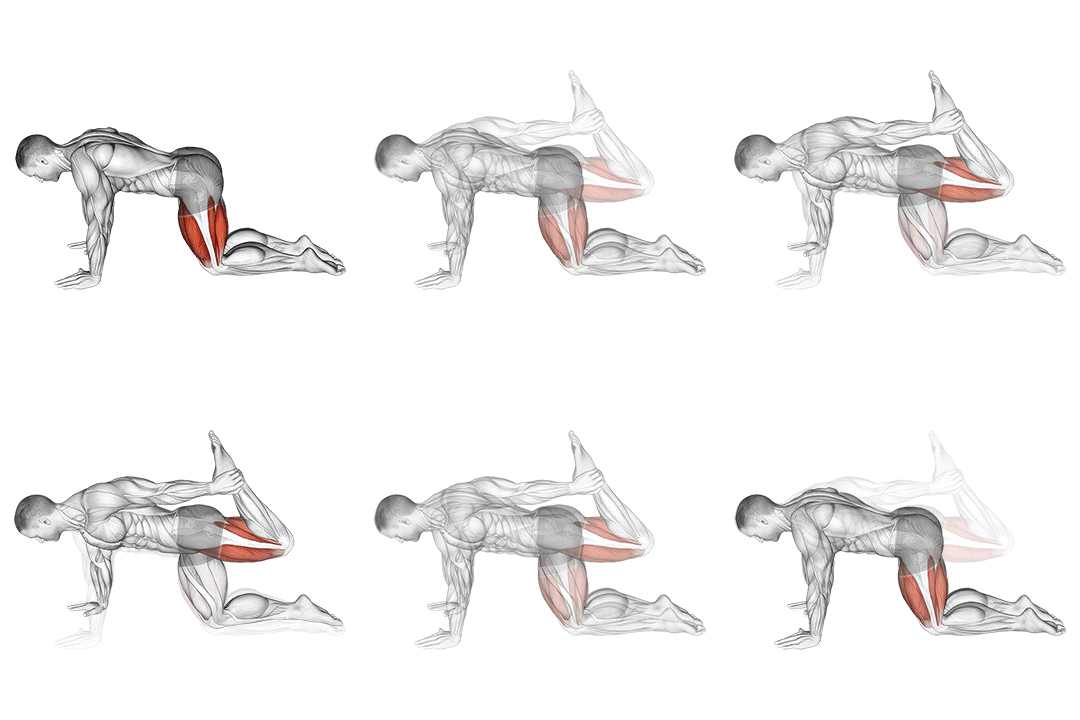
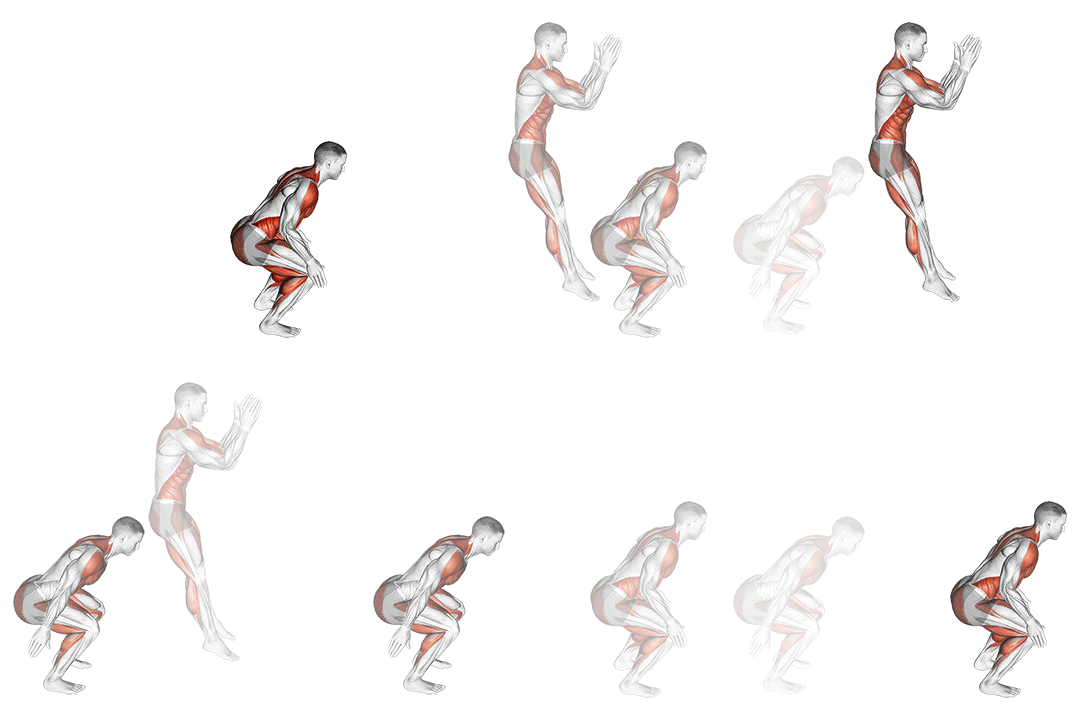
More comparisons with Lying (side) Quads Stretch
Compare More Exercises
Use our free comparison tool to analyze any two exercises head-to-head.
Compare Exercises