

Peroneals Stretch vs Posterior Tibialis Stretch: Complete Comparison Guide
Peroneals Stretch vs Posterior Tibialis Stretch — when you want targeted lower-leg mobility, picking the right stretch matters. This comparison walks you through muscle targets, biomechanics, equipment needs, technique cues, and when to use each move. You’ll get step-by-step cues for safe execution, recommended hold durations and rep ranges (e.g., 20–45 seconds, 2–4 sets), and clear winners for beginners, home workouts, strength-focused routines, and muscle growth. Read on so you can choose the stretch that best improves ankle mechanics, reduces injury risk, and complements your training goals.
Exercise Comparison
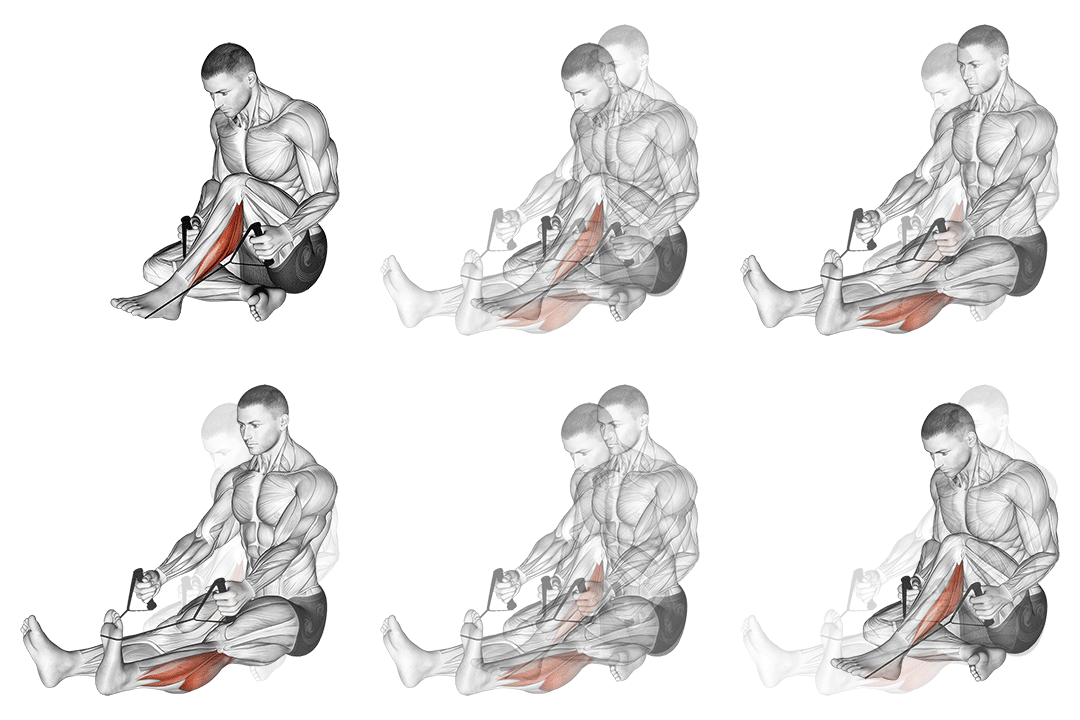
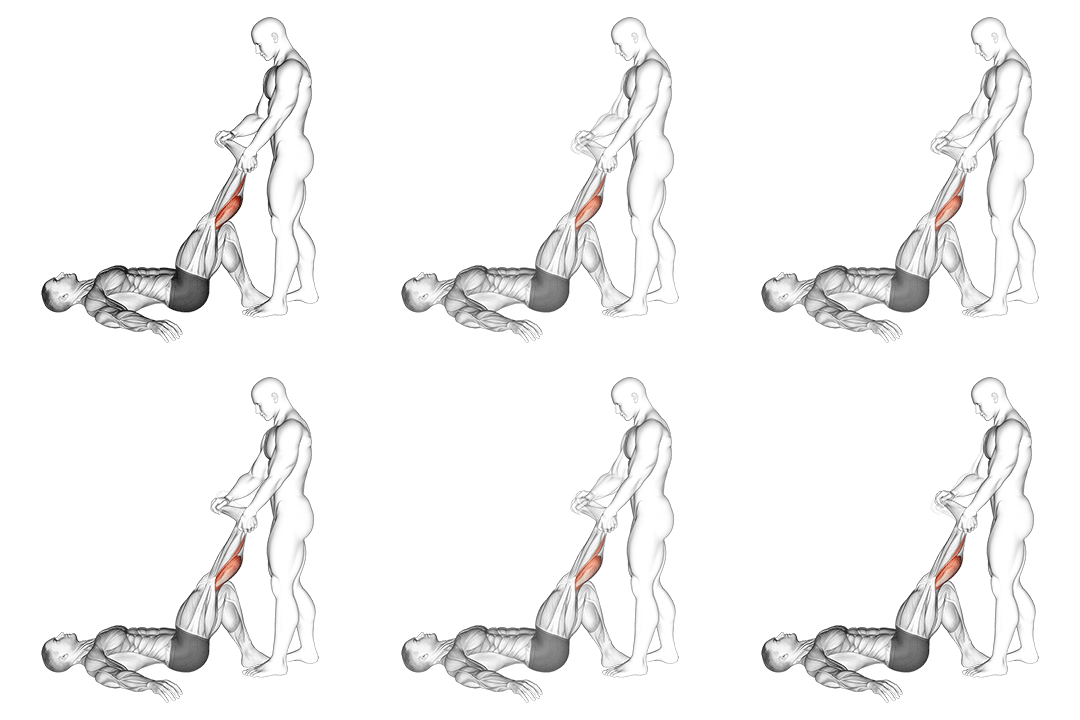
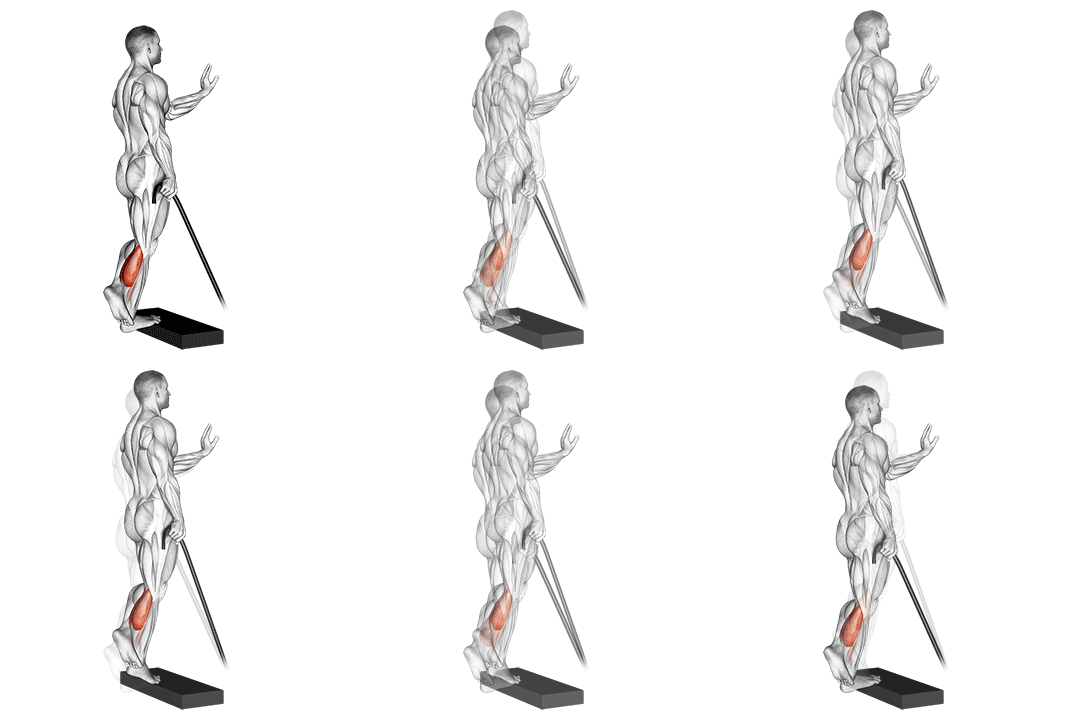
Peroneals Stretch
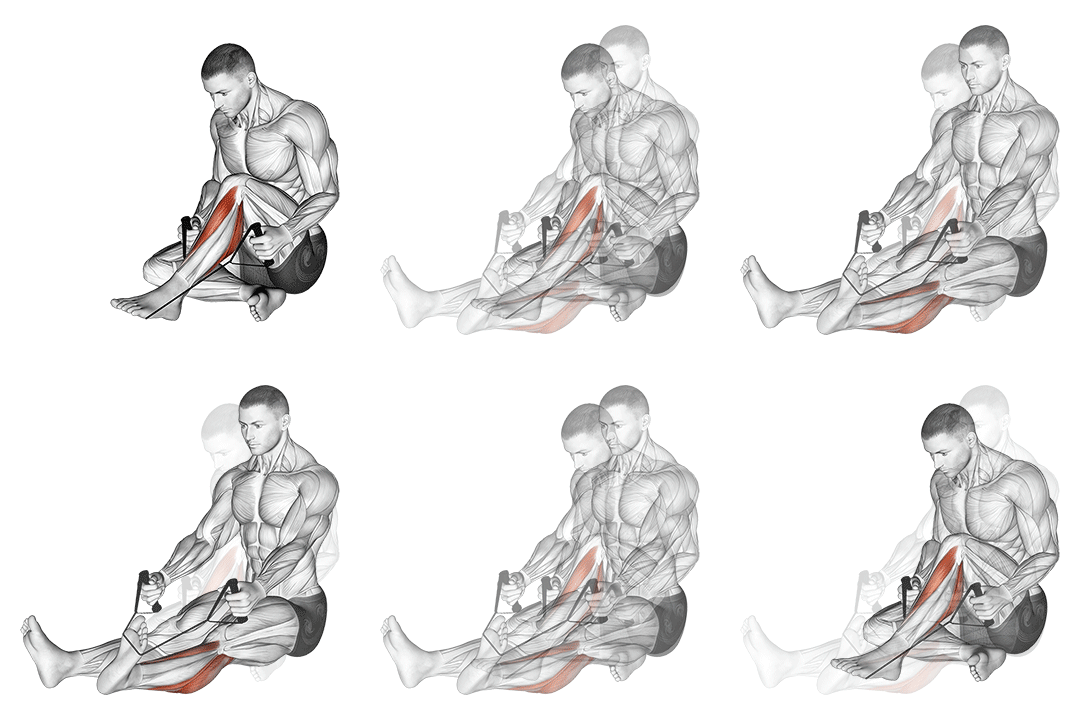
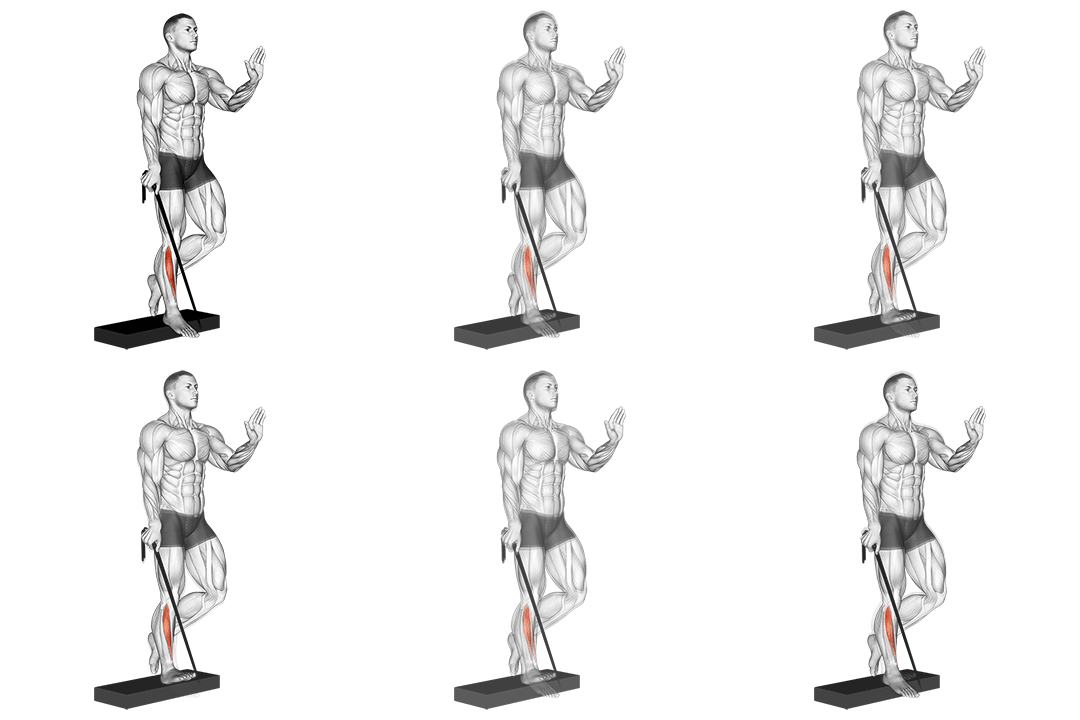
Posterior Tibialis Stretch
Head-to-Head Comparison
| Attribute | Peroneals Stretch | Posterior Tibialis Stretch |
|---|---|---|
| Target Muscle |
Calves
|
Calves
|
| Body Part |
Lower-legs
|
Lower-legs
|
| Equipment |
Rope
|
Rope
|
| Difficulty |
Beginner
|
Beginner
|
| Movement Type |
Isolation
|
Isolation
|
| Secondary Muscles |
2
|
2
|
Secondary Muscles Activated
Peroneals Stretch
Posterior Tibialis Stretch
Visual Comparison
Overview
Peroneals Stretch vs Posterior Tibialis Stretch — when you want targeted lower-leg mobility, picking the right stretch matters. This comparison walks you through muscle targets, biomechanics, equipment needs, technique cues, and when to use each move. You’ll get step-by-step cues for safe execution, recommended hold durations and rep ranges (e.g., 20–45 seconds, 2–4 sets), and clear winners for beginners, home workouts, strength-focused routines, and muscle growth. Read on so you can choose the stretch that best improves ankle mechanics, reduces injury risk, and complements your training goals.
Key Differences
- Both exercises target the Calves using Rope. The main differences are in their movement patterns and muscle activation angles.
Pros & Cons
Peroneals Stretch
+ Pros
- Directly targets lateral calf stabilizers and peroneal tendons
- Simple setup with rope or band and clear feedback at the ankle
- Useful for reducing lateral ankle stiffness and improving eversion control
- Low overall injury risk when held within pain-free range
− Cons
- Less influence on medial deep calf and tibialis posterior
- Limited progression options beyond tension and time
- May not address kinetic-chain compensation through hamstrings or quads
Posterior Tibialis Stretch
+ Pros
- Targets deep posterior compartment and medial calf length-tension
- Can influence proximal muscle chains (hamstrings, quadriceps) via knee angle
- Greater progression control through ankle and knee positioning
- Helpful for improving inversion control and medial arch support
− Cons
- Requires more precise positioning and cueing to isolate the tibialis posterior
- Slightly higher risk of provoking medial knee or calf discomfort if overdone
- Needs mindful knee/hip alignment to avoid compensatory tension
When Each Exercise Wins
Posterior Tibialis Stretch allows finer control of muscle length and tension (adjusting knee and ankle angles), which supports longer time under tension and targeted remodeling of the deep posterior fibers. Use 3–4 sets of 30–45s holds and pair with eccentric loading for best muscle growth outcomes.
Because it better engages the tibialis posterior and its inversion moment arm, this stretch can be paired with resisted inversion and plantarflexion to enhance strength transfer. Progress by adding isometric holds at 10–20° dorsiflexion and integrating resisted contractions.
Peroneals Stretch is easier to set up and gives immediate, easy-to-read feedback at the ankle, making it ideal for newcomers working on ankle mobility and lateral stability. Start with 2 sets of 20–30s and low tension.
Both require only a rope or band, but Peroneals Stretch is simpler to perform without a partner and needs minimal cueing. Its straightforward setup and lower demand on precise knee positioning make it more practical at home.
Frequently Asked Questions
Can I do both Peroneals Stretch and Posterior Tibialis Stretch in the same workout?
Yes. Perform Peroneals Stretch first for 1–2 sets of 20–30s to warm lateral tissues, then do Posterior Tibialis Stretch for 2–3 sets of 30–45s to target the deep posterior compartment. Monitor total volume—keep total hold time under 10 minutes per session to avoid excessive tissue irritation.
Which exercise is better for beginners?
Peroneals Stretch is better for beginners because it has a simpler setup and provides clearer feedback at the ankle. Start with low tension and 20–30s holds and focus on neutral knee alignment.
How do the muscle activation patterns differ?
Peroneals Stretch places a tensile vector across the lateral compartment, lengthening peroneus longus and brevis and reducing lateral stiffness; activation favors eversion control. Posterior Tibialis Stretch applies a medial-inversion vector that lengthens the deep posterior fibers and alters plantarflexion torque due to a larger inversion moment arm.
Can Posterior Tibialis Stretch replace Peroneals Stretch?
Not entirely. Posterior Tibialis Stretch can address medial deep calf issues but won’t sufficiently lengthen lateral peroneal tendons or improve eversion control. Use Posterior Tibialis when medial or inversion mechanics are the priority, and keep Peroneals if lateral stability or ankle pronation is a concern.
Expert Verdict
Choose Peroneals Stretch when your priority is lateral ankle mobility, reducing pronation-related stiffness, or when you need a low-skill, quick rehab tool. It’s the more accessible option for beginners and home use. Opt for Posterior Tibialis Stretch when you need to unload or lengthen the deep medial calf, improve inversion control, or influence proximal muscle chains; its variable knee and ankle positioning offers better progression for strength or targeted muscle remodeling. Use both in a program: Peroneals for daily mobility and Posterior Tibialis for focused therapeutic or strength-phase work, with 2–4 sets of 20–45s depending on tolerance.
Also Compare
More comparisons with Peroneals Stretch
More comparisons with Posterior Tibialis Stretch
Compare More Exercises
Use our free comparison tool to analyze any two exercises head-to-head.
Compare Exercises