

Peroneals Stretch vs Rope Jumping: Complete Comparison Guide
Peroneals Stretch vs Rope Jumping — you may wonder which to pick for better calf function, mobility, or conditioning. I’ll walk you through muscle targets, movement mechanics, equipment needs, learning curve, injury risk, and when to use each exercise in your routine. You’ll get clear technique cues (angles, tension, rep ranges), concrete progression options, and biomechanical reasoning so you can choose the right tool for mobility, rehab, or performance. Read on to see which exercise fits your goal and how to program it effectively in 1–3 sessions per week.
Exercise Comparison
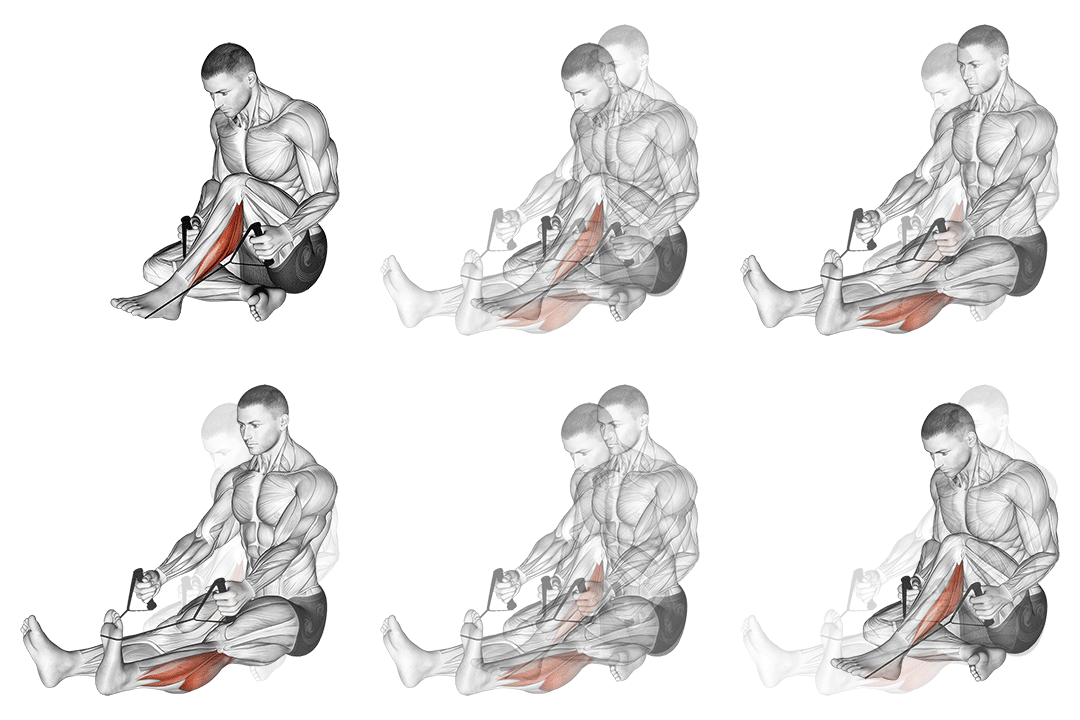
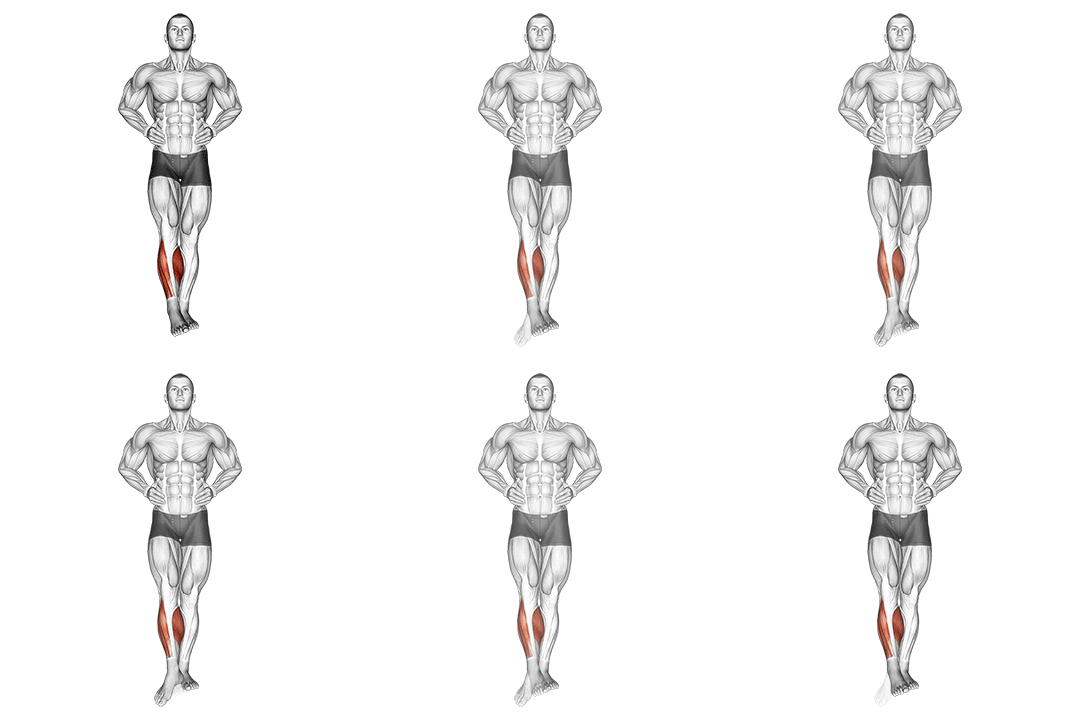
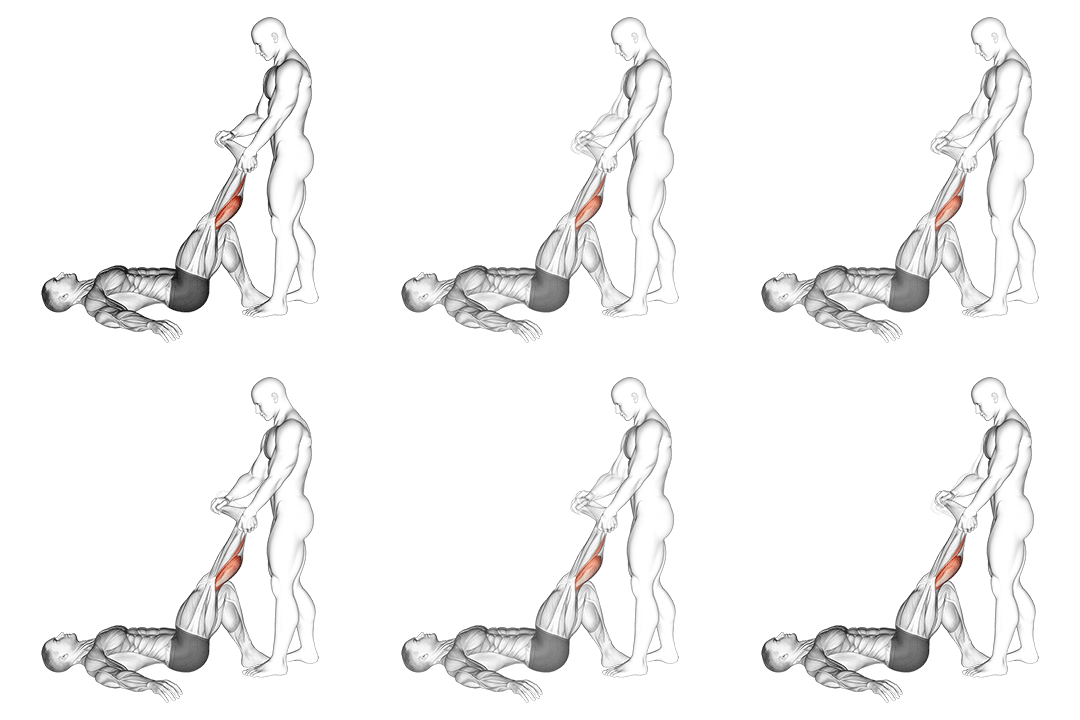
Peroneals Stretch
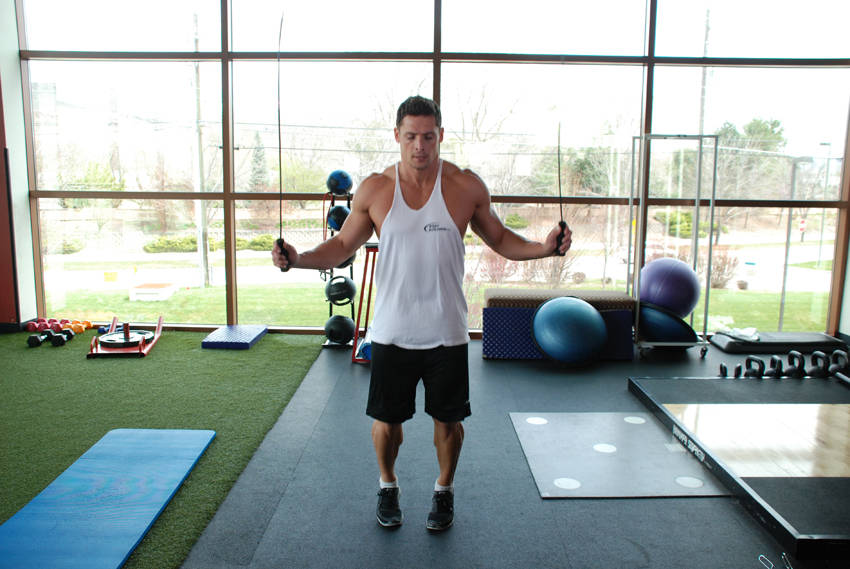
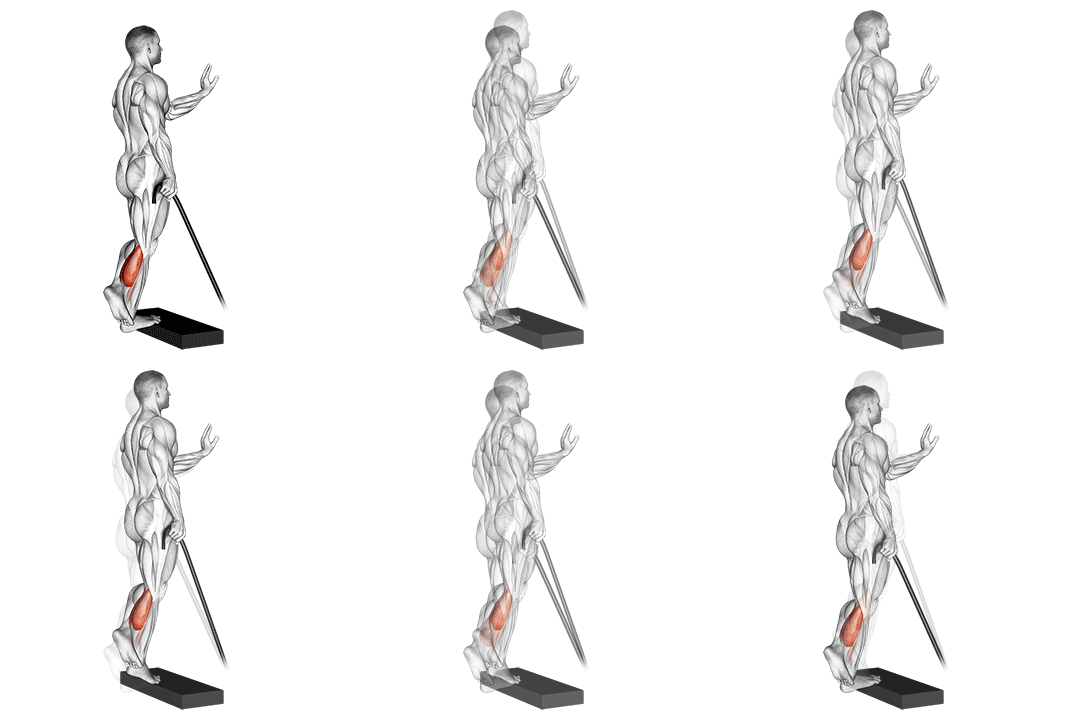
Rope Jumping
Head-to-Head Comparison
| Attribute | Peroneals Stretch | Rope Jumping |
|---|---|---|
| Target Muscle |
Calves
|
Calves
|
| Body Part |
Lower-legs
|
Cardio
|
| Equipment |
Rope
|
Rope
|
| Difficulty |
Beginner
|
Beginner
|
| Movement Type |
Isolation
|
Compound
|
| Secondary Muscles |
2
|
2
|
Secondary Muscles Activated
Peroneals Stretch
Rope Jumping
Visual Comparison
Overview
Peroneals Stretch vs Rope Jumping — you may wonder which to pick for better calf function, mobility, or conditioning. I’ll walk you through muscle targets, movement mechanics, equipment needs, learning curve, injury risk, and when to use each exercise in your routine. You’ll get clear technique cues (angles, tension, rep ranges), concrete progression options, and biomechanical reasoning so you can choose the right tool for mobility, rehab, or performance. Read on to see which exercise fits your goal and how to program it effectively in 1–3 sessions per week.
Key Differences
- Peroneals Stretch is an isolation exercise, while Rope Jumping is a compound movement.
- Both exercises target the Calves using Rope. The main differences are in their movement patterns and muscle activation angles.
Pros & Cons
Peroneals Stretch
+ Pros
- Directly improves lateral calf and ankle mobility
- Low impact; safe for acute rehab and beginners
- Requires almost no space or special surface
- Improves peroneal length–tension relationships and ankle stability
− Cons
- Low active loading; poor for building plantarflexion power
- Limited progression for strength or conditioning
- Can irritate tendons if overstretched or done aggressively
Rope Jumping
+ Pros
- Builds calf power and improves rate of force development
- Doubles as cardio conditioning for VO2 and endurance
- Easy to scale volume and intensity with intervals
- Engages posterior chain and improves coordination
− Cons
- Higher impact can stress Achilles, knees, and shins
- Requires coordination and practice to be efficient
- Needs enough ceiling height and a suitable surface
When Each Exercise Wins
Rope Jumping provides repetitive concentric-eccentric loading that stimulates muscle remodeling more than a passive stretch. Use higher-volume intervals (3–6 sets of 60–120 seconds or 300–500 jumps per session) to increase mechanical stimulus for calf muscle growth.
Rope jumping trains the stretch–shortening cycle and rate-of-force development critical for plantarflexion strength. Progress by adding single-leg jumps, weighted vests, or plyometric sets (6–10 reps per set) to increase force demands.
Peroneals Stretch is lower risk and easier to perform with simple cues — hold 30–60 seconds, 2–4 sets — making it ideal for improving ankle mobility and building a base before dynamic loading.
Peroneals Stretch needs almost no space or special surface and can be done with a towel or band. If you lack ceiling clearance or a shock-absorbing floor, choose the stretch over rope jumping.
Frequently Asked Questions
Can I do both Peroneals Stretch and Rope Jumping in the same workout?
Yes — perform Peroneals Stretch as a mobility primer (2–4 sets of 30–60 s) early to increase ankle range, then do rope jumping later as the dynamic stimulus. Keep the stretch pain-free and allow 2–5 minutes between mobility and high-impact sets to let tissues warm up.
Which exercise is better for beginners?
Peroneals Stretch is better initially because it lowers load while improving ankle control and mobility. Once you can achieve 10–20° dorsiflexion and pain-free eversion, add short rope-jumping drills of 30–60 seconds to build coordination.
How do the muscle activation patterns differ?
Peroneals Stretch primarily produces passive lengthening with low EMG and focuses on improving the muscle's resting length and tendon slack. Rope Jumping produces rapid eccentric-to-concentric cycles with higher peak EMG, short contact times (~100–250 ms), and greater demand on gastrocnemius–soleus for propulsion.
Can Rope Jumping replace Peroneals Stretch?
No — rope jumping increases active calf load and cardiovascular fitness but does not provide the targeted passive lengthening and tendon unloading of a peroneal stretch. Use rope jumping for power and conditioning, and keep targeted stretching for mobility or tendon rehab.
Expert Verdict
Use Peroneals Stretch when your priority is ankle mobility, peroneal tendon tolerance, or rehab — perform 2–4 sets of 30–90 seconds with controlled dorsiflexion and eversion cues, stopping before sharp pain. Choose Rope Jumping when you want calf power, conditioning, or to train the stretch–shortening cycle — program 3–6 short intervals (30–120 s) or 200–500 total jumps, and add single-leg work for strength. Be decisive: use the stretch for mobility and recovery, and use rope jumping for dynamic loading, strength, and cardio. Combine both across a week — mobility first, power work later — to protect tissue and maximize performance.
Also Compare
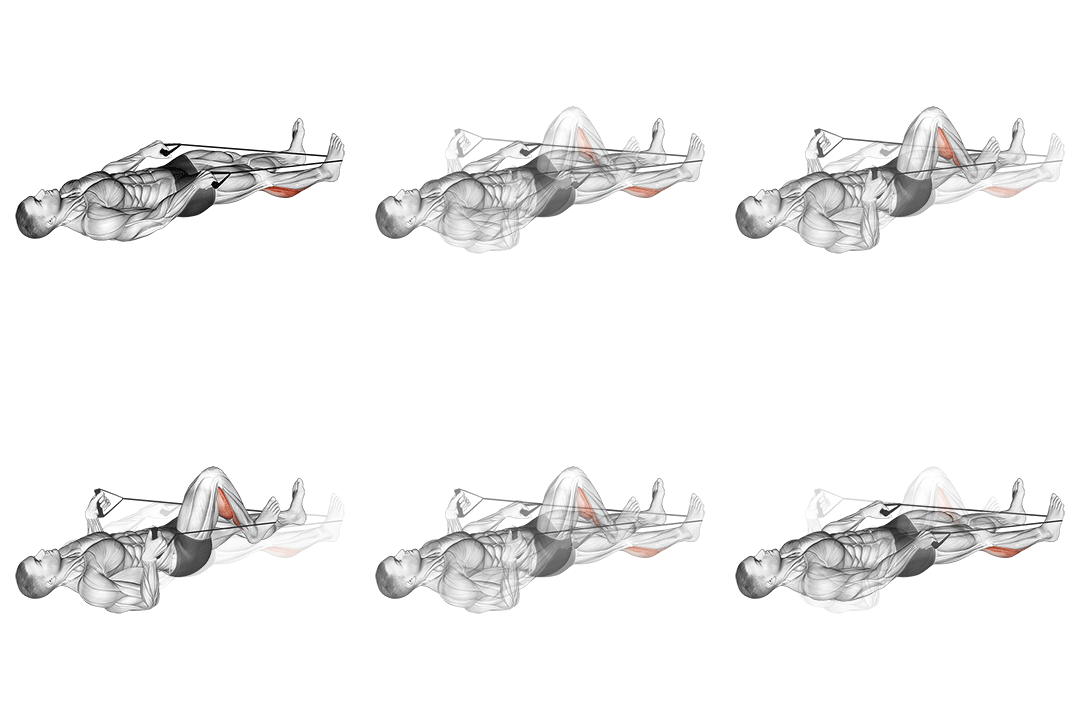
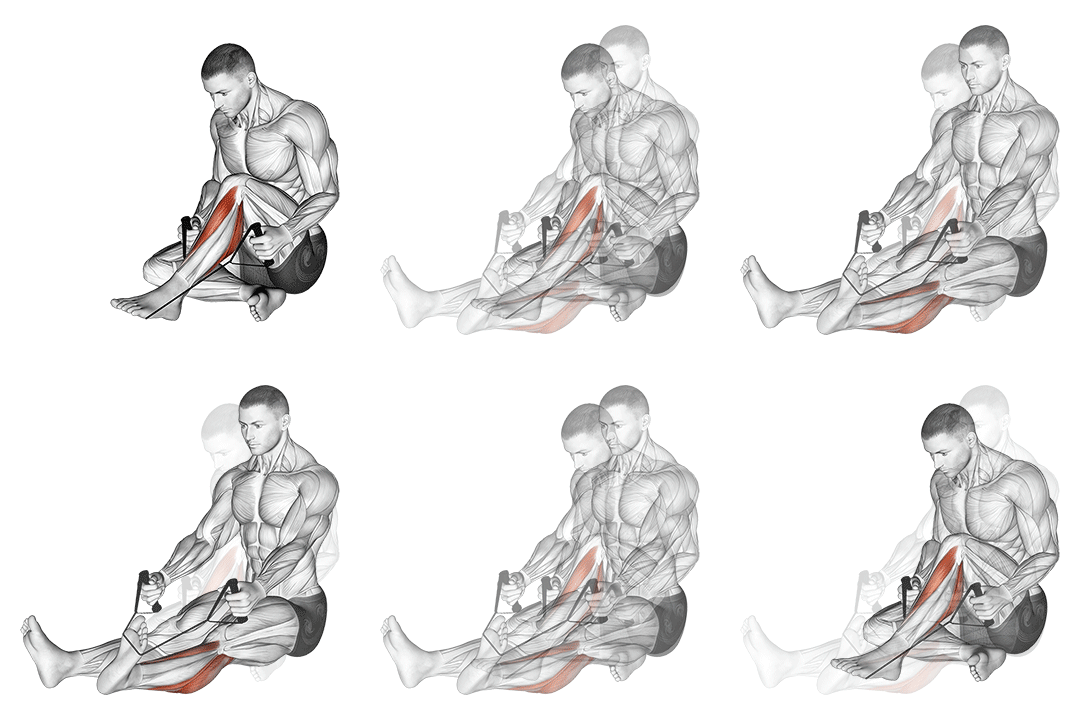
More comparisons with Peroneals Stretch
Compare More Exercises
Use our free comparison tool to analyze any two exercises head-to-head.
Compare Exercises