

Posterior Tibialis Stretch vs Rope Jumping: Complete Comparison Guide
Posterior Tibialis Stretch vs Rope Jumping — you’re deciding between a targeted calf mobility move and a dynamic cardio plyometric. {Exercise1} vs {Exercise2} appear similar because both name the rope and target the calves, but they produce very different force vectors, muscle length-tension effects, and training outcomes. In this guide I’ll show you how each loads the calf complex (gastrocnemius, soleus, posterior tibialis), how secondary muscles engage, specific technique cues, progression options, and clear recommendations so you can pick the right tool for mobility, endurance, or muscle growth.
Exercise Comparison
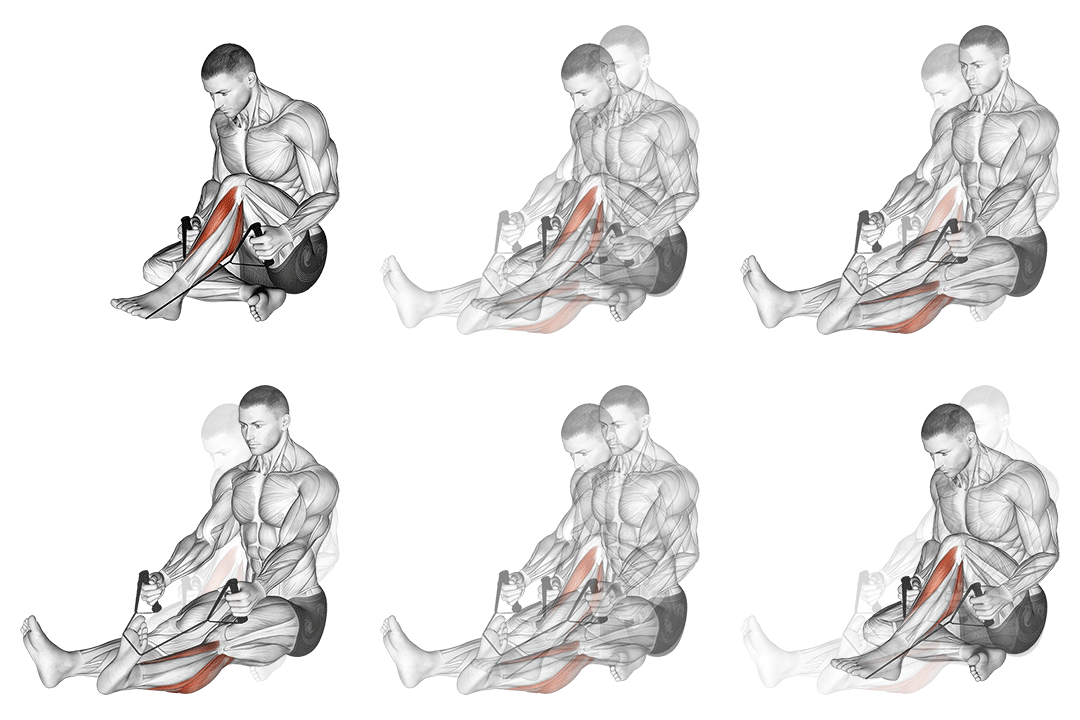
Posterior Tibialis Stretch
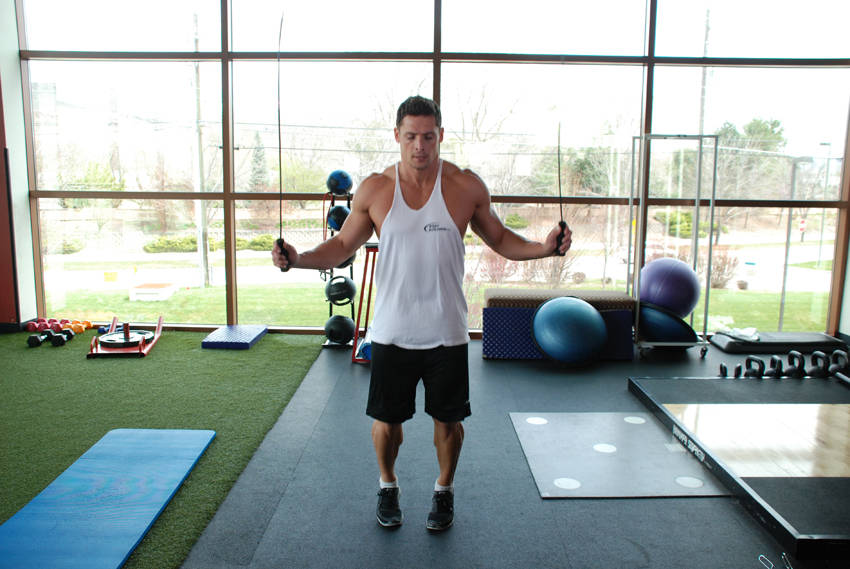
Rope Jumping
Head-to-Head Comparison
| Attribute | Posterior Tibialis Stretch | Rope Jumping |
|---|---|---|
| Target Muscle |
Calves
|
Calves
|
| Body Part |
Lower-legs
|
Cardio
|
| Equipment |
Rope
|
Rope
|
| Difficulty |
Beginner
|
Beginner
|
| Movement Type |
Isolation
|
Compound
|
| Secondary Muscles |
2
|
2
|
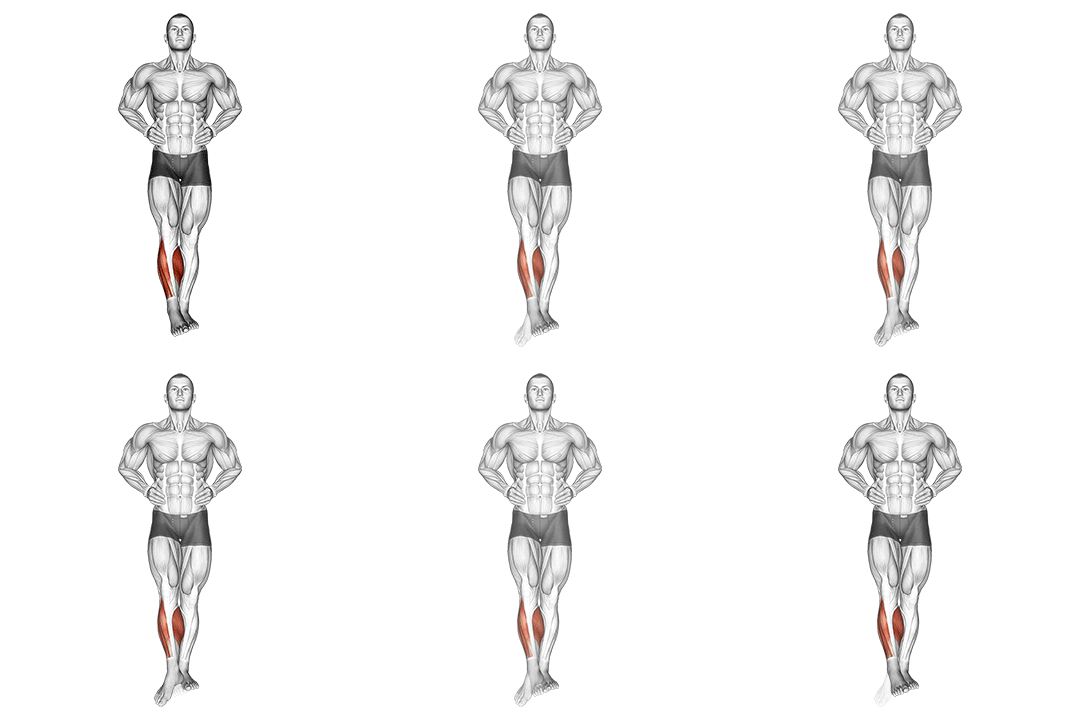
Secondary Muscles Activated
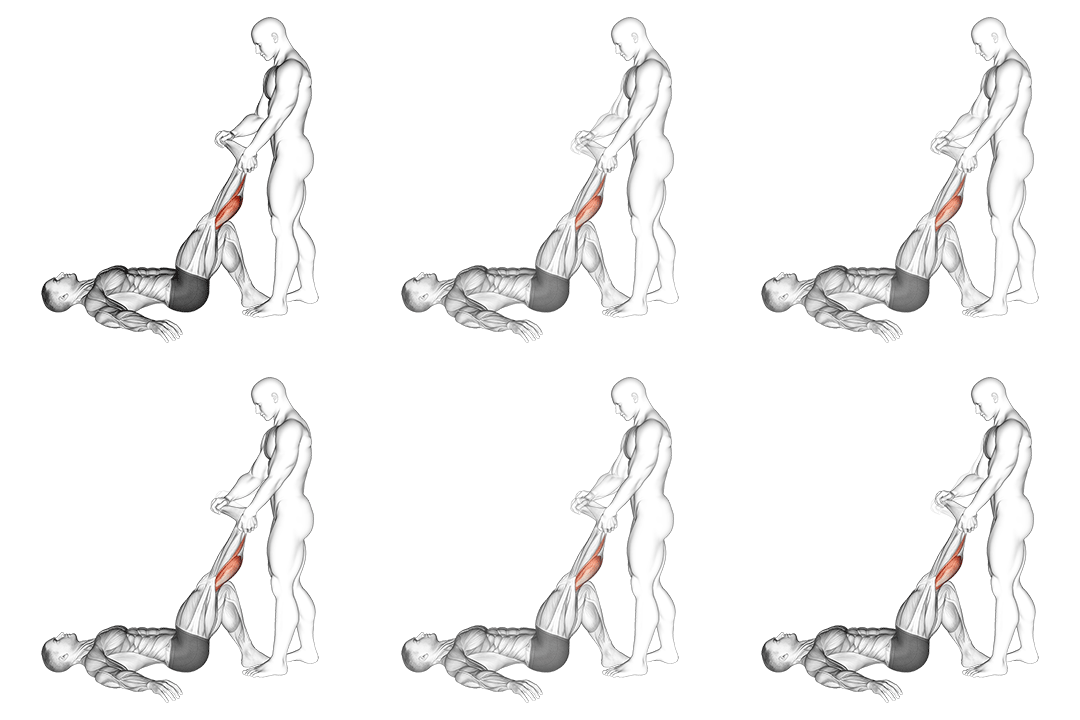
Posterior Tibialis Stretch
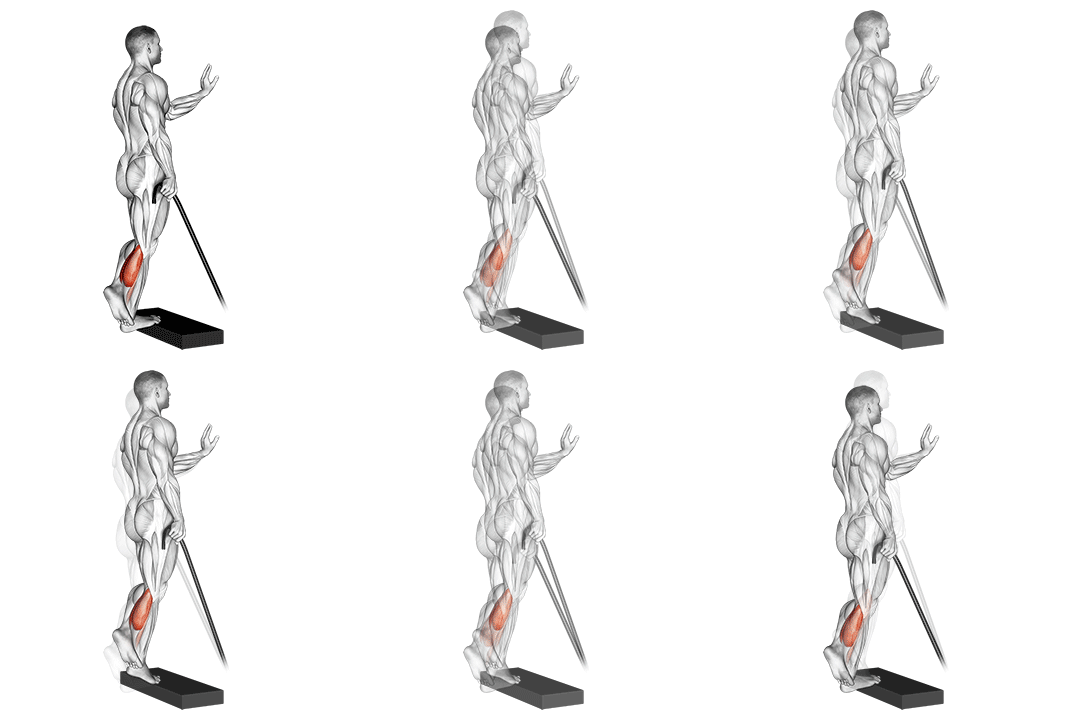
Rope Jumping
Visual Comparison
Overview
Posterior Tibialis Stretch vs Rope Jumping — you’re deciding between a targeted calf mobility move and a dynamic cardio plyometric. {Exercise1} vs {Exercise2} appear similar because both name the rope and target the calves, but they produce very different force vectors, muscle length-tension effects, and training outcomes. In this guide I’ll show you how each loads the calf complex (gastrocnemius, soleus, posterior tibialis), how secondary muscles engage, specific technique cues, progression options, and clear recommendations so you can pick the right tool for mobility, endurance, or muscle growth.
Key Differences
- Posterior Tibialis Stretch is an isolation exercise, while Rope Jumping is a compound movement.
- Both exercises target the Calves using Rope. The main differences are in their movement patterns and muscle activation angles.
Pros & Cons
Posterior Tibialis Stretch
+ Pros
- Isolates posterior tibialis and medial calf fibers for targeted mobility
- Low-impact and safe for most populations
- Requires minimal space and simple rope/strap setup
- Improves dorsiflexion and length-tension relationships with 30–60s holds
− Cons
- Does not provide significant active strength or hypertrophy stimulus
- Limited cardiovascular benefits
- Overstretching can irritate tendons if performed aggressively
Rope Jumping
+ Pros
- High metabolic and neuromuscular stimulus for calf endurance
- Loads gastrocnemius and soleus dynamically via stretch-shortening cycles
- Scalable intensity (duration, cadence, single-leg, double-unders)
- Adds cardio and coordination benefits in one exercise
− Cons
- Higher impact and greater risk for shin, Achilles, or knee issues
- Requires space, a proper surface, and coordination
- Less targeted for medial calf/posterior tibialis mobility
When Each Exercise Wins
Rope Jumping delivers repeated concentric-eccentric loading and stretch-shortening cycles that stimulate gastrocnemius and soleus growth better than a passive stretch. For true hypertrophy you still may need added resistance or high-volume specific calf raises, but rope jumping outperforms the stretch alone.
Rope Jumping builds reactive strength and improves rate of force development through quick ground contacts (150–250 ms) and elastic recoil. The Posterior Tibialis Stretch improves range of motion but won’t increase maximal plantarflexion force like repeated dynamic loading will.
The stretch is low-risk, easy to cue (neutral knee, gentle dorsiflexion to ~20–30°) and reinforces ankle mobility before adding impact. It’s ideal for managing stiffness or starting rehab-oriented programs.
You can perform the stretch in a small area with minimal equipment and no impact. Rope jumping is possible at home but needs space, safe flooring, and coordination to avoid knocking objects or landing on hard surfaces.
Frequently Asked Questions
Can I do both Posterior Tibialis Stretch and Rope Jumping in the same workout?
Yes—use the Posterior Tibialis Stretch as a mobility primer or cool-down and perform rope jumping in the main workout. Do the stretch before jumping to improve dorsiflexion, but limit intense stretching immediately before maximal plyometrics if you rely on elastic recoil.
Which exercise is better for beginners?
Posterior Tibialis Stretch is better for absolute beginners because it teaches ankle position and builds mobility with minimal risk. Newer trainees should master mobility and landing mechanics before progressing to coordinated rope jumping.
How do the muscle activation patterns differ?
The stretch produces sustained passive tension and low EMG amplitude, shifting length-tension relationships toward longer muscle lengths. Rope Jumping elicits high-frequency phasic activation in gastrocnemius and soleus with rapid concentric-eccentric cycles and integration of the stretch-shortening reflex.
Can Rope Jumping replace Posterior Tibialis Stretch?
No—rope jumping cannot fully replace targeted posterior tibialis stretching when your goal is specific ankle mobility or tendon length adaptations. Use rope jumping for conditioning and active calf loading, but retain targeted stretches if dorsiflexion or medial calf mobility is limited.
Expert Verdict
Choose the Posterior Tibialis Stretch when your goal is ankle mobility, reducing medial calf tightness, or preparing the kinetic chain for higher-load work. Use 30–60 second holds, keep knee position neutral, and progress by increasing dorsiflexion angle or using a band for gentle resistance. Choose Rope Jumping when you want cardio, reactive calf conditioning, and higher neuromuscular stimulus—start with 30-second intervals, 3–5 sets, and prioritize soft landings with ~150–250 ms contact times. For balanced programming, pair the stretch as a pre- or post-session mobility drill and use rope jumping for conditioning or dynamic calf strength.
Also Compare
More comparisons with Posterior Tibialis Stretch
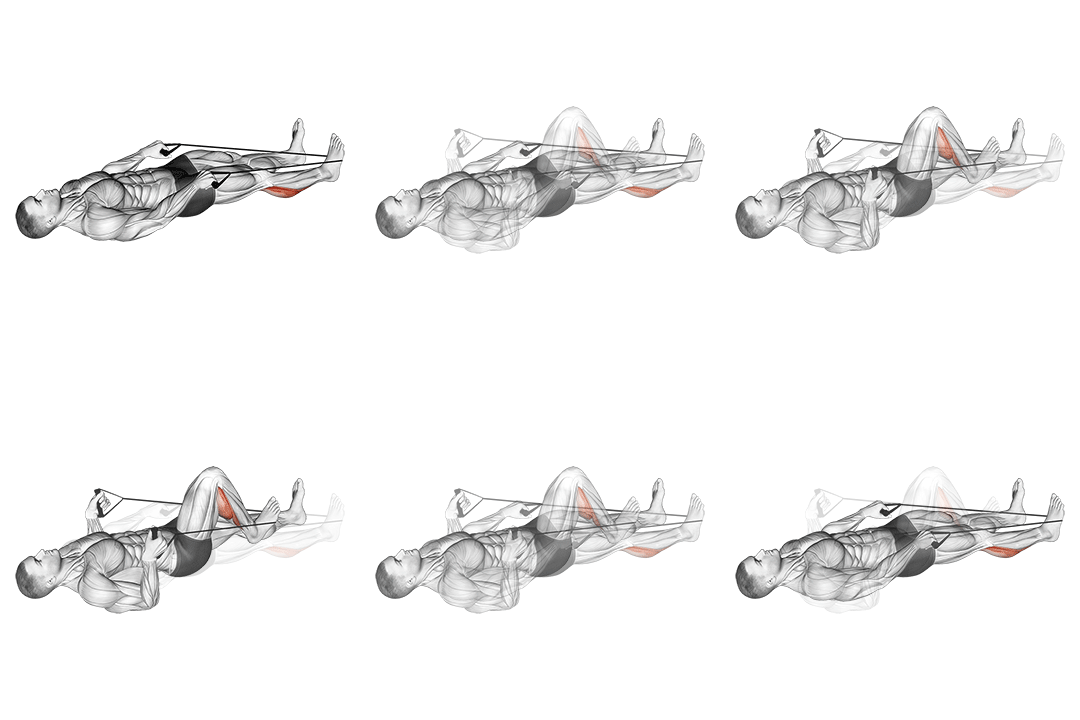
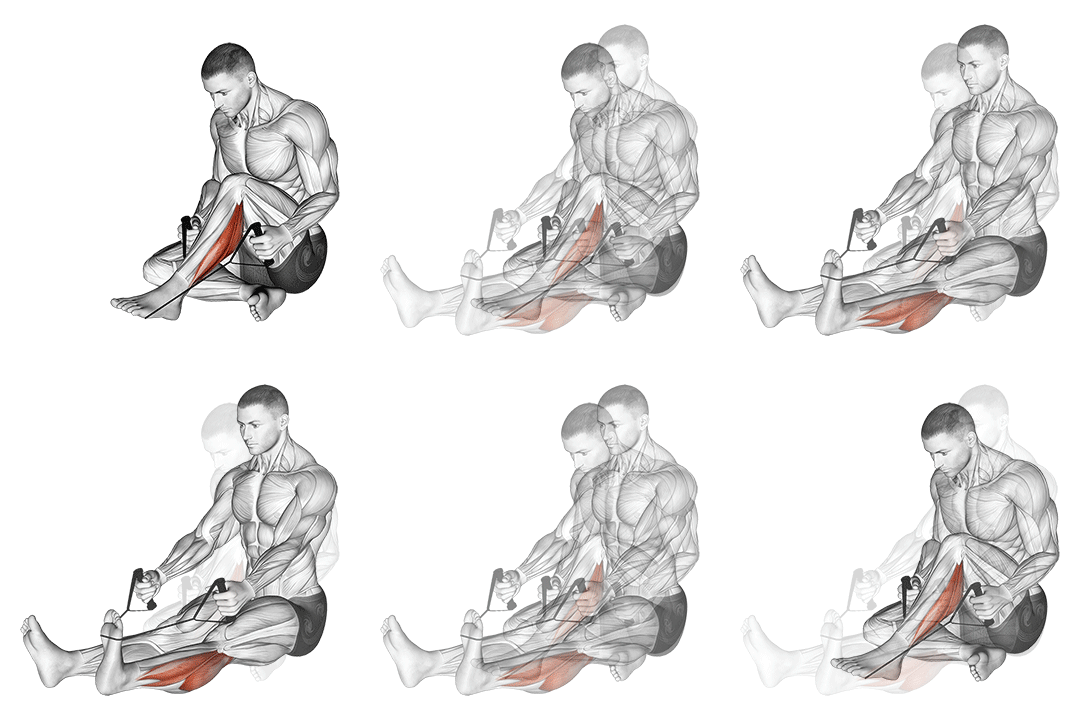
Compare More Exercises
Use our free comparison tool to analyze any two exercises head-to-head.
Compare Exercises