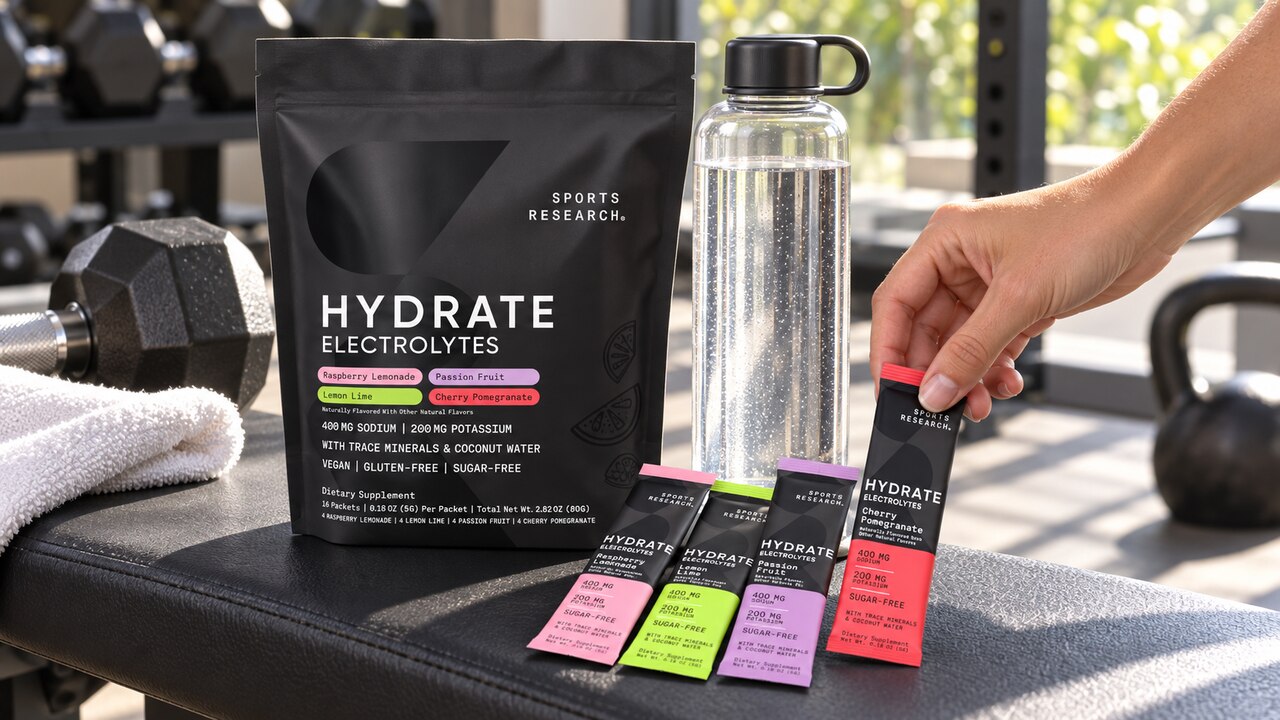
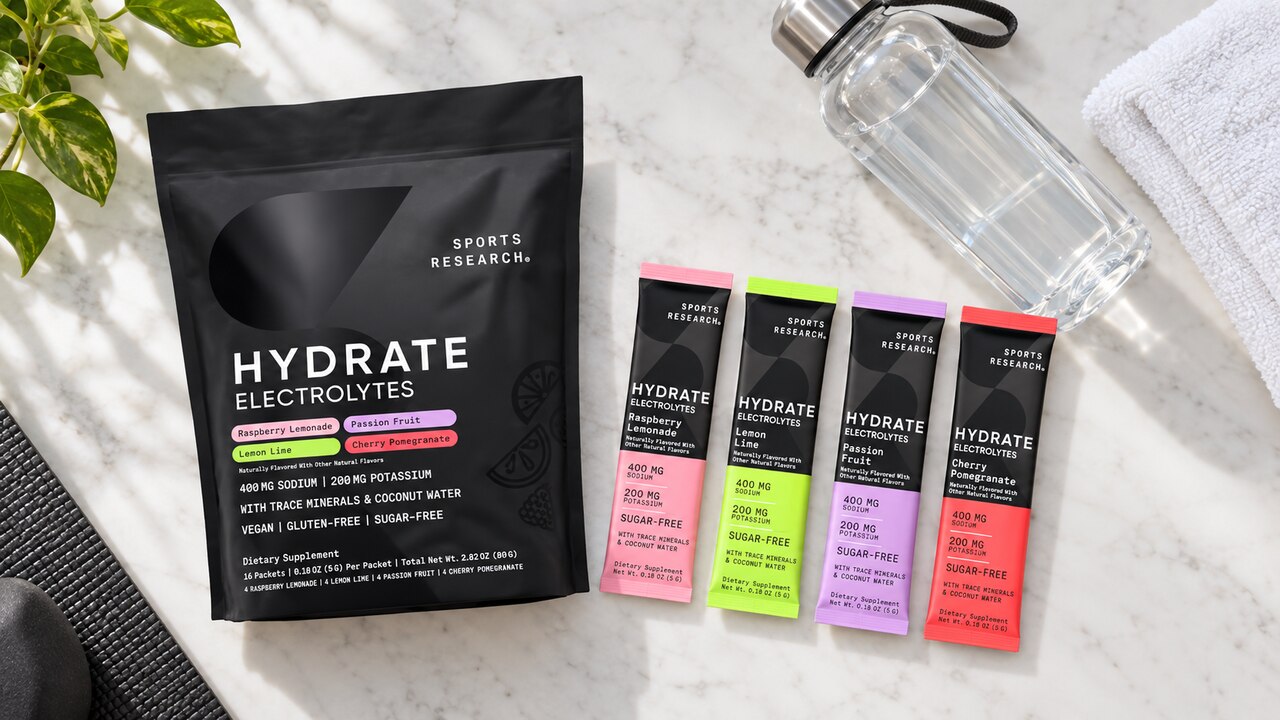
Sports Research Hydrate is a 16-packet electrolyte variety pack built around 400 mg of sodium, 200 mg of potassium, and 40 mg of magnesium per packet. Each 5 g packet has five calories and one gram of carbohydrate, so this is a low-calorie hydration mix rather than a carbohydrate fuel.
The formula makes the most sense for athletes who want a portable, sugar-free electrolyte option and can justify paying $1.43 per packet. It is less compelling for short, cool workouts where water and normal meals already cover fluid and electrolyte needs. It also contains coconut, which matters more than the “plant-based” presentation for anyone managing a tree-nut allergy.
FitnessVolt may earn a commission from purchases through our links. Tom Miller mixed and used the current 16-packet variety pack, checking flavor, mixability, packet handling, and hydration use during training. He also confirmed the electrolyte profile, certification, and current value.

Sports Research Hydrate Electrolytes, 16 Variety Packets
400 mg Sodium Per PacketA low-calorie electrolyte packet with useful sodium and potassium amounts, but no carbohydrate fuel and a relatively high per-serving price.
Pros
- 400 mg sodium and 200 mg potassium per packet
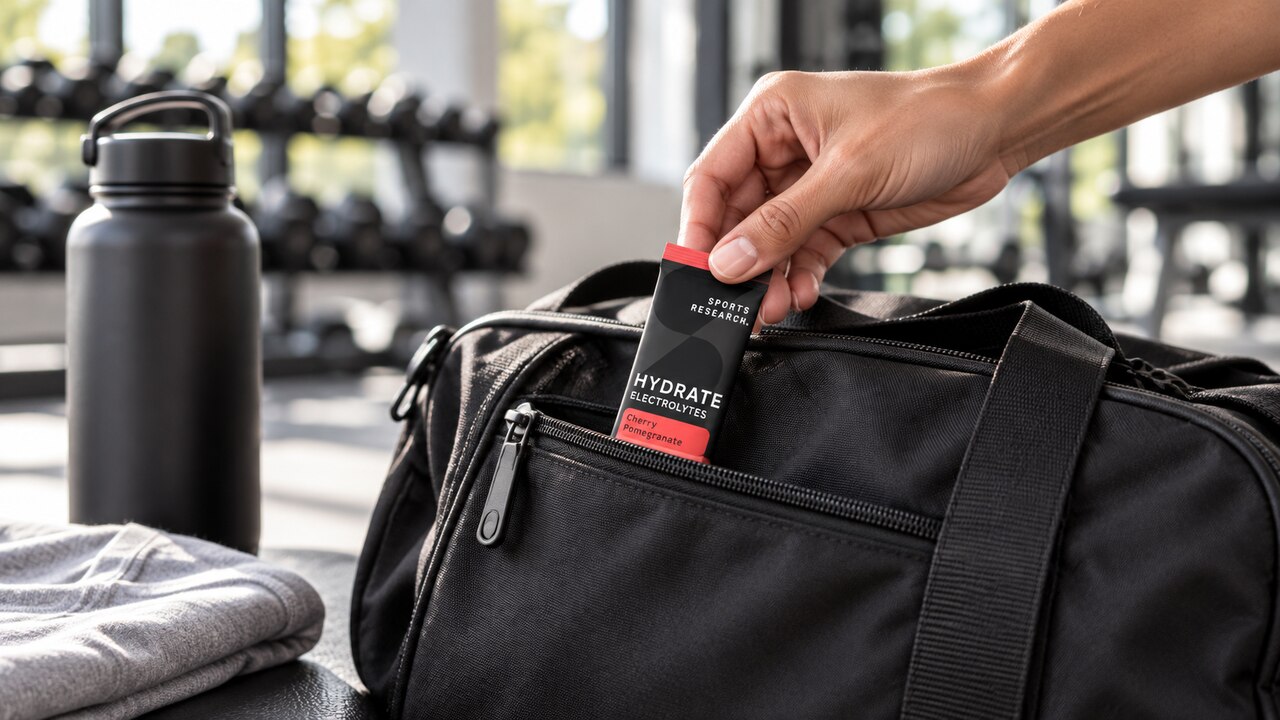
- Individually packed for a gym bag or travel
- Five calories and one gram of carbohydrate
- Exact product appears in the IGEN certification directory
Cons
- Costs about $1.43 per packet at the reviewed price
- Not a meaningful source of workout carbohydrate
- Contains coconut
- Variety pack prevents choosing only one flavor
What One Packet Actually Provides
The current label defines a serving as one 5 g packet. That serving supplies 400 mg sodium, 200 mg potassium, 40 mg magnesium, 237 mg chloride, and 300 mg coconut water powder. It also contains five calories and one gram of carbohydrate. The arithmetic is straightforward: the 16-count box contains 16 full servings, not 32 half-servings hidden behind a small scoop.
| Per packet | Amount | What it means |
|---|---|---|
| Sodium | 400 mg | The main electrolyte contribution |
| Potassium | 200 mg | A meaningful secondary electrolyte amount |
| Magnesium | 40 mg | Present, but not a high-dose magnesium supplement |
| Carbohydrate | 1 g | Hydration support, not endurance fuel |
| Coconut water powder | 300 mg | A labeled ingredient, not the same as 300 mg of electrolytes |
The coconut water number is easy to overread. It describes the amount of powder, while the mineral panel separately states the sodium, potassium, magnesium, and chloride totals. Buyers should compare the declared minerals, not assume coconut water powder automatically makes the drink more complete.
Hydration Needs Are Not One Size Fits All
The National Athletic Trainers’ Association position statement treats hydration as an individualized problem. Sweat rate, session length, heat, clothing, body size, acclimatization, and access to normal food all change the answer. That is a better framework than declaring that every workout needs an electrolyte packet.
For a short lifting session in a climate-controlled gym, water may be enough. A longer session, heavy sweating, outdoor heat, or back-to-back training can make a measured sodium source more useful. Sports Research gives buyers a known 400 mg starting point, but it cannot tell you how much sodium you personally lose in sweat.
The mix supplies almost no carbohydrate. That may be exactly what someone wants during an easy or shorter workout, but it is a limitation during prolonged endurance work where carbohydrate intake is part of the fueling plan. Electrolytes and fuel solve related but different problems.
How to Judge the Dose Against Your Session
The most useful personal check is body-mass change across a representative session. Weighing before and after training under similar conditions, while accounting for what you drink, can help estimate fluid loss. One measurement is noisy, but repeated observations are more useful than guessing from how sweaty a shirt looks.
Sodium concentration is only one part of the calculation. One packet always gives 400 mg, while the volume of water changes the concentration. The current label should control the mixing volume; doubling packets in one bottle doubles the minerals as well as the price. More concentrated is not automatically better, especially for someone whose stomach or clinical plan favors a lower amount.
Normal meals also restore sodium and potassium. A packet used after every workout can become an expensive habit when food and water already cover the need. Reserve it for sessions where portability, heat, duration, or measured sweat loss makes the convenience useful.
Price: Convenience Costs About $1.43 Each Time
The Amazon listing showed $22.95 and in-stock availability on September 11, 2026. Dividing that by 16 packets gives $1.43 per serving before tax, shipping, coupons, or subscription discounts. A daily packet would cost about $43 over 30 days at this snapshot.
That is a convenience price. The sealed packets are easy to count and carry, with no scoop or open tub in a bag. Someone who uses electrolytes every day can often lower the serving cost with a larger container. Someone who uses them only for hot or long sessions may value the packets more than the bulk savings.
FitnessVolt’s electrolyte supplement guide compares the broader category, while our hydration powder guide covers different formula and package options. This review stays with the exact Sports Research 16-packet box.
Certification Adds a Useful Quality Check
Nutrasource lists this product in its IGEN certification directory. That is a stronger, verifiable signal than a vague testing badge with no searchable record. The directory does not publish a lot-specific laboratory report, so the listing should not be stretched into a claim that every contaminant is absent.
The package also needs an ordinary allergen check. The label identifies coconut as a tree-nut ingredient. Anyone with an allergy should use the package in hand and medical guidance, not a front-of-box assumption about a hydration product.
Packets Versus a Tub
Packets win on repeatability and transport. They are sealed, pre-measured, and simple to share between a home, office, gym bag, and travel kit. A tub wins on packaging efficiency and usually on price per serving, but it requires a dry scoop and consistent measurement.
The variety format also creates a small buying risk. It can reveal which flavor someone prefers, yet it leaves no way to replace only the unwanted flavor inside the box. Flavor preferences vary, so the sweetener system may not suit every palate.
Who Should Buy It, and Who Should Skip It?
Buy it if you want a portable, sugar-free mix with a clearly stated 400 mg sodium dose and you use electrolytes selectively for longer, hotter, or sweatier sessions. The exact packet count and certification-directory entry also make it easier to evaluate than a formula with hidden mineral amounts.
Skip it if you need carbohydrate fuel, want the lowest cost per serving, or prefer one flavor rather than a variety box. It is also an automatic skip for someone who must avoid coconut.
People managing kidney conditions, blood-pressure medication, sodium or potassium restrictions, or interacting medications should ask their clinician whether an electrolyte supplement fits their plan. A precise label does not make the same mineral dose appropriate for everyone.
Bottom Line
Sports Research Hydrate earns a 4.2 out of 5 editorial rating for its useful 400 mg sodium dose, transparent mineral panel, portable packets, and searchable certification record. At $22.95, the convenience costs about $1.43 per serving. It is a practical low-calorie hydration option for selected demanding sessions, not a necessary upgrade to water for every workout and not a replacement for carbohydrate fuel.
Sources
- Sports Research. (Accessed September 11, 2026). Hydrate Electrolytes product page and current label.
- Nutrasource. (Accessed September 11, 2026). Sports Research Hydrate IGEN certification record.
- McDermott BP, et al. (2017). National Athletic Trainers’ Association position statement: fluid replacement for the physically active. Journal of Athletic Training.