

A 180 lb male with an Intermediate-level barbell clean-grip front squat of 239 lbs ranks at the 50th percentile (FVCP), stronger than ~50% of lifters. An Advanced lifter at this weight lifts 306 lbs (1.7x bodyweight).
FitnessVolt Competition Percentile (FVCP), based on 2.5M+ verified competition results
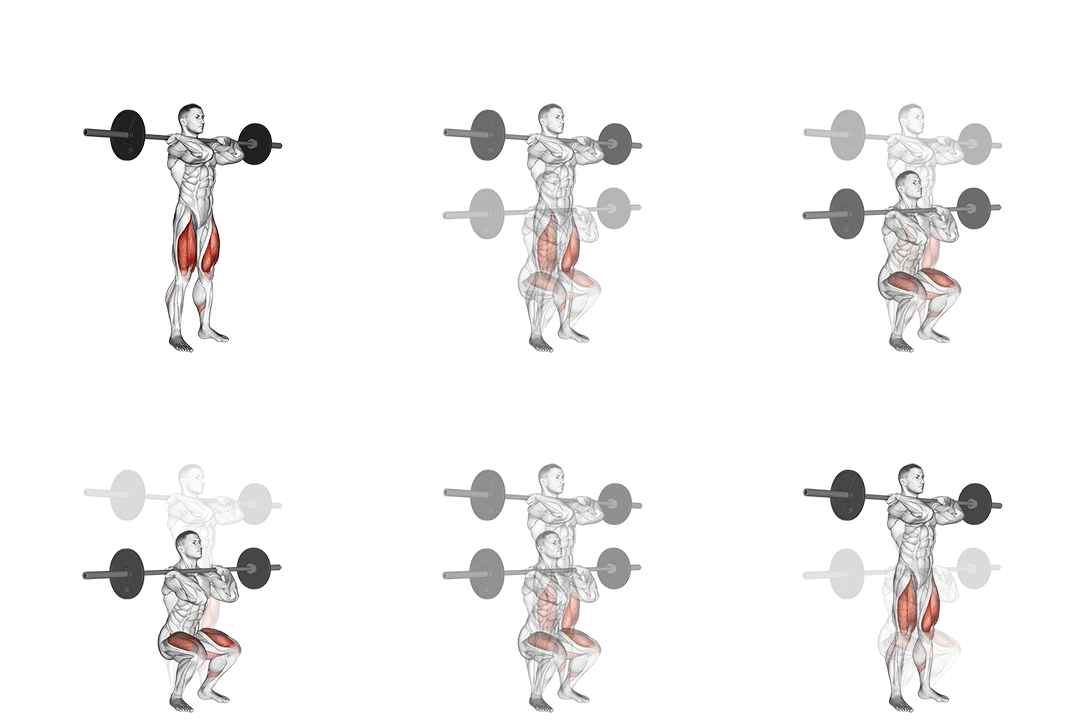
How strong is your barbell clean-grip front squat? Compare your 1RM against standards for 21 bodyweight categories, from Beginner to Elite.
Estimated Standards - Estimated from squat standards using a 0.82x ratio.. These values are derived from verified competition data for the base exercise. Learn about our methodology
How Strong Is Your barbell clean-grip front squat?
How Much Should You barbell clean-grip front squat?
1RM weight (lbs) you should be able to lift at each standard, based on your bodyweight.
| BW (lbs) | Beginner | Novice | Intermediate | Advanced | Elite |
|---|---|---|---|---|---|
| 110 | 61 | 93 | 137 | 188 | 244 |
| 120 | 71 | 107 | 153 | 207 | 266 |
| 130 | 82 | 121 | 169 | 225 | 286 |
| 140 | 93 | 133 | 184 | 242 | 306 |
| 150 | 103 | 145 | 198 | 259 | 325 |
| 160 | 113 | 157 | 212 | 276 | 343 |
| 170 | 123 | 170 | 226 | 291 | 360 |
| 180 | 133 | 181 | 239 | 306 | 377 |
| 190 | 143 | 193 | 253 | 321 | 393 |
| 200 | 153 | 203 | 265 | 335 | 409 |
| 210 | 162 | 214 | 277 | 349 | 424 |
| 220 | 171 | 225 | 289 | 362 | 439 |
| 230 | 180 | 235 | 301 | 375 | 453 |
| 240 | 189 | 245 | 312 | 388 | 467 |
| 250 | 198 | 255 | 324 | 400 | 481 |
| 260 | 206 | 265 | 335 | 412 | 494 |
| 270 | 215 | 275 | 345 | 424 | 507 |
| 280 | 223 | 284 | 356 | 435 | 520 |
| 290 | 231 | 293 | 366 | 447 | 532 |
| 300 | 239 | 302 | 376 | 458 | 544 |
| 310 | 247 | 311 | 385 | 469 | 556 |
| 90 | 32 | 58 | 93 | 137 | 185 |
| 100 | 38 | 65 | 102 | 147 | 198 |
| 110 | 42 | 71 | 110 | 157 | 208 |
| 120 | 47 | 77 | 117 | 165 | 219 |
| 130 | 52 | 83 | 125 | 174 | 229 |
| 140 | 56 | 89 | 131 | 182 | 238 |
| 150 | 60 | 94 | 138 | 189 | 247 |
| 160 | 64 | 99 | 144 | 197 | 255 |
| 170 | 68 | 104 | 150 | 203 | 262 |
| 180 | 72 | 109 | 156 | 210 | 270 |
| 190 | 76 | 113 | 161 | 216 | 277 |
| 200 | 80 | 118 | 166 | 223 | 285 |
| 210 | 83 | 122 | 171 | 229 | 291 |
| 220 | 87 | 126 | 176 | 235 | 298 |
| 230 | 90 | 130 | 181 | 240 | 304 |
| 240 | 93 | 134 | 186 | 245 | 310 |
| 250 | 97 | 139 | 190 | 251 | 316 |
| 260 | 100 | 142 | 195 | 256 | 321 |
How Does Age Affect barbell clean-grip front squat Strength?
How barbell clean-grip front squat standards change across different age groups. Values represent a 1RM in lbs.
| Age | Beginner | Novice | Intermediate | Advanced | Elite |
|---|---|---|---|---|---|
| 15 | 98 | 144 | 200 | 266 | 337 |
| 20 | 113 | 165 | 229 | 304 | 386 |
| 25 | 116 | 169 | 235 | 312 | 396 |
| 30 | 116 | 169 | 235 | 312 | 396 |
| 35 | 116 | 169 | 235 | 312 | 396 |
| 40 | 116 | 169 | 235 | 312 | 396 |
| 45 | 110 | 160 | 223 | 296 | 376 |
| 50 | 103 | 150 | 209 | 278 | 353 |
| 55 | 95 | 139 | 194 | 257 | 326 |
| 60 | 87 | 127 | 177 | 235 | 298 |
| 65 | 79 | 115 | 160 | 212 | 269 |
| 70 | 71 | 103 | 144 | 190 | 241 |
| 75 | 63 | 92 | 128 | 171 | 216 |
| 80 | 57 | 82 | 115 | 153 | 193 |
| 85 | 51 | 74 | 103 | 136 | 173 |
| 90 | 46 | 66 | 93 | 123 | 156 |
| 15 | 45 | 75 | 112 | 158 | 209 |
| 20 | 52 | 85 | 129 | 181 | 239 |
| 25 | 53 | 88 | 132 | 186 | 246 |
| 30 | 53 | 88 | 132 | 186 | 246 |
| 35 | 53 | 88 | 132 | 186 | 246 |
| 40 | 53 | 88 | 132 | 186 | 246 |
| 45 | 51 | 83 | 125 | 176 | 233 |
| 50 | 48 | 78 | 117 | 166 | 219 |
| 55 | 44 | 72 | 109 | 153 | 203 |
| 60 | 40 | 66 | 99 | 139 | 185 |
| 65 | 36 | 59 | 89 | 126 | 166 |
| 70 | 33 | 53 | 80 | 113 | 150 |
| 75 | 29 | 48 | 72 | 101 | 134 |
| 80 | 26 | 43 | 64 | 90 | 120 |
| 85 | 23 | 39 | 57 | 81 | 107 |
| 90 | 21 | 34 | 52 | 73 | 97 |
What Do barbell clean-grip front squat Strength Standards Mean?
Stronger than 5% of lifters. You are learning to hit proper depth on the barbell clean-grip front squat, building ankle and hip mobility, and developing the bracing pattern needed to keep your torso upright under load.
Stronger than 20% of lifters. You can execute the barbell clean-grip front squat with consistent depth and bracing. You are adding weight session to session using linear progression and building foundational leg strength.
Stronger than 50% of lifters. Your barbell clean-grip front squat technique is solid through heavy loads. You use periodized programming, understand RPE-based autoregulation, and can grind through sticking points without form breakdown.
Stronger than 80% of lifters. You have refined your barbell clean-grip front squat stance, bar position, and breathing to maximize leverage. You train with block periodization, manage fatigue across training cycles, and likely compete or train at a competitive level.
Stronger than 95% of lifters. Your barbell clean-grip front squat is at a regional or national competitive standard. You have years of structured peaking cycles behind you and have optimized every technical detail from walkout to lockout.
How to Progress Your barbell clean-grip front squat
Tier-specific training recommendations to move your barbell clean-grip front squat to the next level.
- Train the barbell clean-grip front squat 2x per week, focusing on hitting consistent depth every rep.
- Use linear progression: add 5 lbs each session as long as form stays solid.
- Record sets at RPE 6-7 to build volume without excessive fatigue.
- Prioritize ankle and hip mobility work before each session.
- Switch from linear to weekly periodization (e.g., light/medium/heavy days).
- Add a barbell clean-grip front squat variation (pause squats, tempo squats) for weak-point work.
- Keep most working sets at RPE 7-8, with occasional top singles at RPE 9.
- Start tracking your training volume (sets x reps x load) week to week.
- Run 4-6 week training blocks with planned intensity peaks and deloads.
- Use RPE 8-9 for primary sets, RPE 7 for backoff volume.
- Address specific sticking points with targeted accessory work.
- Manage fatigue: total weekly sets of 12-20 for the barbell clean-grip front squat movement pattern.
- Run structured peaking cycles (8-12 weeks) leading to maximal attempts.
- Fine-tune technique details: walkout, descent speed, breath timing.
- Use the RPE chart to hit precise percentages during peaking blocks.
- Consider competing to test your barbell clean-grip front squat under meet conditions.
How to Perform barbell clean-grip front squat
Read the complete barbell clean-grip front squat guide on FitnessVolt →
Where Do These barbell clean-grip front squat Standards Come From?
These barbell clean-grip front squat standards are based on 2.5M+ verified competition results from powerlifting, weightlifting, and strongman federations worldwide. Every number comes from a sanctioned meet with certified judges - not self-reported gym lifts. Data is sourced from OpenPowerlifting and other verified competition databases, ensuring accuracy you can trust.
Last Updated: March 30, 2026
Reviewed by the Fitness Volt Editorial Team, certified strength training analysts.
Is Your barbell clean-grip front squat Good for Your Weight?
Strength standards help you objectively measure your barbell clean-grip front squat performance relative to other lifters of the same bodyweight and sex. Here is how to interpret them:
- Find your bodyweight in the left column of the table above.
- Look across the row to find which strength level your 1RM falls into.
- Use the age tab to see how your strength compares within your age group.
- Switch between Male and Female standards using the toggle - each has its own dataset.
If you do not know your 1RM, use the E1RM Calculator to estimate it from any rep set. For example, if you can barbell clean-grip front squat 185 lbs for 5 reps, the calculator will estimate your max.
These standards are derived from 2.5M+ competition results across powerlifting, weightlifting, and strongman federations worldwide, combined with community training data.