

A 180 lb male with an Intermediate-level barbell step-up of 146 lbs ranks at the 50th percentile (FVCP), stronger than ~50% of lifters. An Advanced lifter at this weight lifts 187 lbs (1.04x bodyweight).
FitnessVolt Competition Percentile (FVCP), based on 2.5M+ verified competition results
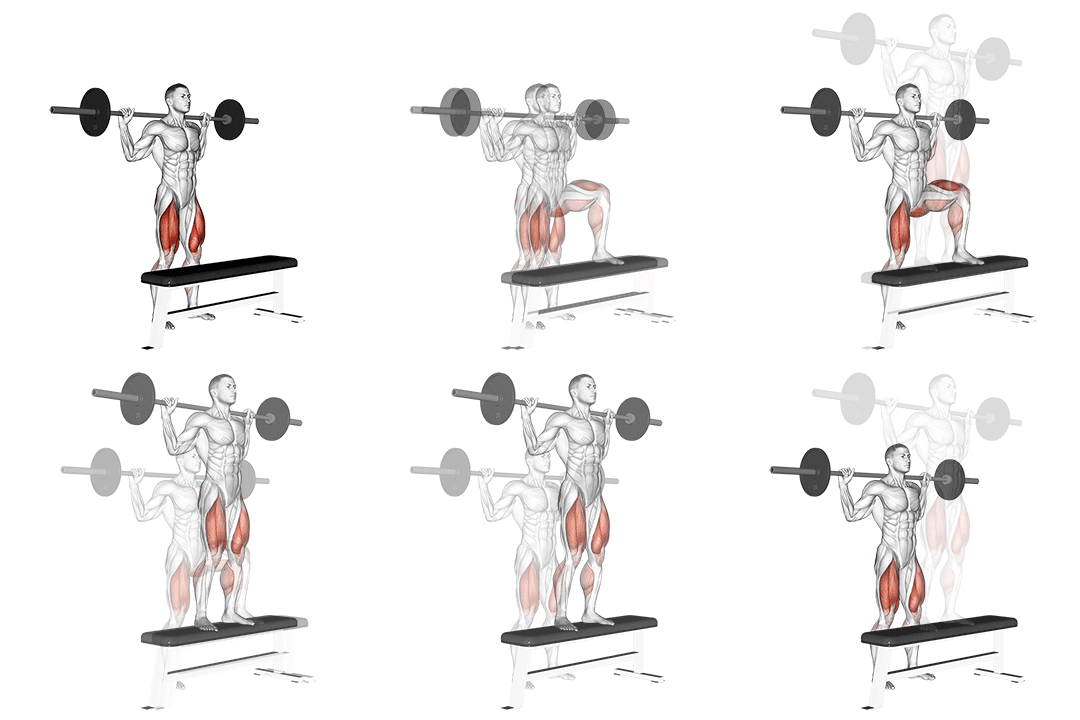
How strong is your barbell step-up? Compare your 1RM against standards for 21 bodyweight categories, from Beginner to Elite.
Estimated Standards - Estimated from squat standards using a 0.5x ratio.. These values are derived from verified competition data for the base exercise. Learn about our methodology
How Strong Is Your barbell step-up?
How Much Should You barbell step-up?
1RM weight (lbs) you should be able to lift at each standard, based on your bodyweight.
| BW (lbs) | Beginner | Novice | Intermediate | Advanced | Elite |
|---|---|---|---|---|---|
| 110 | 37 | 57 | 84 | 115 | 149 |
| 120 | 44 | 66 | 94 | 126 | 162 |
| 130 | 50 | 74 | 103 | 137 | 175 |
| 140 | 57 | 81 | 112 | 148 | 187 |
| 150 | 63 | 89 | 121 | 158 | 198 |
| 160 | 69 | 96 | 130 | 168 | 209 |
| 170 | 75 | 104 | 138 | 178 | 220 |
| 180 | 81 | 111 | 146 | 187 | 230 |
| 190 | 87 | 118 | 154 | 196 | 240 |
| 200 | 93 | 124 | 162 | 204 | 250 |
| 210 | 99 | 131 | 169 | 213 | 259 |
| 220 | 105 | 137 | 177 | 221 | 268 |
| 230 | 110 | 144 | 184 | 229 | 277 |
| 240 | 115 | 150 | 191 | 237 | 285 |
| 250 | 121 | 156 | 198 | 244 | 293 |
| 260 | 126 | 162 | 204 | 252 | 302 |
| 270 | 131 | 168 | 211 | 259 | 309 |
| 280 | 136 | 173 | 217 | 266 | 317 |
| 290 | 141 | 179 | 223 | 273 | 325 |
| 300 | 146 | 184 | 230 | 280 | 332 |
| 310 | 151 | 190 | 235 | 286 | 339 |
| 90 | 20 | 36 | 57 | 84 | 113 |
| 100 | 23 | 40 | 62 | 90 | 121 |
| 110 | 26 | 44 | 67 | 96 | 127 |
| 120 | 29 | 47 | 72 | 101 | 134 |
| 130 | 32 | 51 | 76 | 106 | 140 |
| 140 | 34 | 54 | 80 | 111 | 145 |
| 150 | 37 | 58 | 84 | 116 | 151 |
| 160 | 39 | 61 | 88 | 120 | 156 |
| 170 | 42 | 64 | 92 | 124 | 160 |
| 180 | 44 | 67 | 95 | 128 | 165 |
| 190 | 47 | 69 | 98 | 132 | 169 |
| 200 | 49 | 72 | 102 | 136 | 174 |
| 210 | 51 | 75 | 105 | 140 | 178 |
| 220 | 53 | 77 | 108 | 143 | 182 |
| 230 | 55 | 80 | 111 | 147 | 186 |
| 240 | 57 | 82 | 114 | 150 | 189 |
| 250 | 59 | 85 | 116 | 153 | 193 |
| 260 | 61 | 87 | 119 | 156 | 196 |
How Does Age Affect barbell step-up Strength?
How barbell step-up standards change across different age groups. Values represent a 1RM in lbs.
| Age | Beginner | Novice | Intermediate | Advanced | Elite |
|---|---|---|---|---|---|
| 15 | 60 | 88 | 122 | 162 | 206 |
| 20 | 69 | 101 | 140 | 186 | 236 |
| 25 | 71 | 103 | 144 | 191 | 242 |
| 30 | 71 | 103 | 144 | 191 | 242 |
| 35 | 71 | 103 | 144 | 191 | 242 |
| 40 | 71 | 103 | 144 | 191 | 242 |
| 45 | 67 | 98 | 136 | 181 | 229 |
| 50 | 63 | 92 | 128 | 170 | 215 |
| 55 | 58 | 85 | 118 | 157 | 199 |
| 60 | 53 | 78 | 108 | 143 | 182 |
| 65 | 48 | 70 | 98 | 130 | 164 |
| 70 | 43 | 63 | 88 | 116 | 147 |
| 75 | 39 | 56 | 78 | 104 | 132 |
| 80 | 35 | 50 | 70 | 93 | 118 |
| 85 | 31 | 45 | 63 | 83 | 106 |
| 90 | 28 | 41 | 57 | 75 | 95 |
| 15 | 28 | 46 | 69 | 97 | 128 |
| 20 | 32 | 52 | 79 | 111 | 146 |
| 25 | 33 | 54 | 81 | 114 | 150 |
| 30 | 33 | 54 | 81 | 114 | 150 |
| 35 | 33 | 54 | 81 | 114 | 150 |
| 40 | 33 | 54 | 81 | 114 | 150 |
| 45 | 31 | 51 | 77 | 108 | 142 |
| 50 | 29 | 48 | 72 | 101 | 134 |
| 55 | 27 | 44 | 67 | 94 | 124 |
| 60 | 25 | 40 | 61 | 85 | 113 |
| 65 | 22 | 36 | 55 | 77 | 102 |
| 70 | 20 | 33 | 49 | 69 | 92 |
| 75 | 18 | 29 | 44 | 62 | 82 |
| 80 | 16 | 26 | 39 | 55 | 73 |
| 85 | 14 | 24 | 35 | 50 | 66 |
| 90 | 13 | 21 | 32 | 45 | 59 |
What Do barbell step-up Strength Standards Mean?
Stronger than 5% of lifters. You are developing the hip-hinge pattern for the barbell step-up, learning to load your hamstrings and glutes while keeping a neutral spine under tension.
Stronger than 20% of lifters. You can perform the barbell step-up with a consistent hinge pattern and controlled eccentric. You are building posterior chain strength and grip endurance through progressive loading.
Stronger than 50% of lifters. Your barbell step-up leverages a strong hip drive and solid lockout. You program variations strategically, use RPE to manage intensity, and have built serious hamstring and glute development.
Stronger than 80% of lifters. You have optimized your barbell step-up setup, grip strategy, and bracing sequence for maximal output. You train with periodized blocks and manage recovery to handle high-intensity pulling sessions.
Stronger than 95% of lifters. Your barbell step-up is competition-caliber. You have dialed in every variable from stance width to breathing cadence and can execute near-maximal pulls with technical consistency.
How to Progress Your barbell step-up
Tier-specific training recommendations to move your barbell step-up to the next level.
- Train the barbell step-up 1-2x per week, drilling the hip-hinge pattern with moderate loads.
- Focus on keeping a neutral spine throughout the entire range of motion.
- Use linear progression: add 5-10 lbs per session while form remains solid.
- Build grip endurance with holds at the top of each set.
- Add a hinge variation (deficit, pause, or tempo) to address weak positions.
- Program the barbell step-up with RPE 7-8 working sets and occasional heavier singles.
- Strengthen your grip separately if it becomes a limiting factor.
- Begin tracking volume load to manage posterior chain fatigue.
- Run 4-6 week blocks alternating between volume accumulation and intensity peaks.
- Use RPE 8-9 for top sets, with calculated backoff sets at RPE 7.
- Address posterior chain weak points with targeted Romanian deadlifts, hip thrusts, or glute-ham raises.
- Manage weekly hinge volume (10-16 hard sets) to avoid CNS fatigue.
- Run peaking cycles with precise RPE targets for each session.
- Optimize your setup: stance, grip, hip height, and bracing sequence.
- Manage recovery carefully - heavy hinge work has high systemic fatigue.
- Test your barbell step-up in competition or mock-meet conditions.
How to Perform barbell step-up
Where Do These barbell step-up Standards Come From?
These barbell step-up standards are based on 2.5M+ verified competition results from powerlifting, weightlifting, and strongman federations worldwide. Every number comes from a sanctioned meet with certified judges - not self-reported gym lifts. Data is sourced from OpenPowerlifting and other verified competition databases, ensuring accuracy you can trust.
Last Updated: March 30, 2026
Reviewed by the Fitness Volt Editorial Team, certified strength training analysts.
Is Your barbell step-up Good for Your Weight?
Strength standards help you objectively measure your barbell step-up performance relative to other lifters of the same bodyweight and sex. Here is how to interpret them:
- Find your bodyweight in the left column of the table above.
- Look across the row to find which strength level your 1RM falls into.
- Use the age tab to see how your strength compares within your age group.
- Switch between Male and Female standards using the toggle - each has its own dataset.
If you do not know your 1RM, use the E1RM Calculator to estimate it from any rep set. For example, if you can barbell step-up 185 lbs for 5 reps, the calculator will estimate your max.
These standards are derived from 2.5M+ competition results across powerlifting, weightlifting, and strongman federations worldwide, combined with community training data.