What is a good Cable Underhand Pulldown?
For a 180 lb male, an Intermediate Cable Underhand Pulldown is about 115 lb (0.64x bodyweight). Advanced starts around 148 lb. Enter your own bodyweight below to get the exact standard and FVCP rank.
Cable Underhand Pulldown Standards by Bodyweight
Estimates from the FitnessVolt standards model, scaled from the Bench Press table by a fixed ratio of 0.52. Updated March 29, 2026. Find the row closest to your bodyweight. Beginner is a first target for a new lifter, Novice a few months in, Intermediate about one to two years of structured training, Advanced several years, Elite the top of the table.
| BW (lbs) | Beginner | Novice | Intermediate | Advanced | Elite |
|---|---|---|---|---|---|
| 110 | 28 | 44 | 65 | 90 | 118 |
| 120 | 33 | 50 | 73 | 99 | 128 |
| 130 | 38 | 57 | 80 | 108 | 138 |
| 140 | 43 | 63 | 88 | 116 | 148 |
| 150 | 48 | 69 | 95 | 125 | 157 |
| 160 | 53 | 75 | 102 | 133 | 166 |
| 170 | 58 | 81 | 109 | 140 | 175 |
| 180 | 63 | 86 | 115 | 148 | 183 |
| 190 | 68 | 92 | 122 | 155 | 191 |
| 200 | 72 | 97 | 128 | 162 | 199 |
| 210 | 77 | 102 | 134 | 169 | 206 |
| 220 | 81 | 108 | 140 | 176 | 214 |
| 230 | 86 | 113 | 146 | 182 | 221 |
| 240 | 90 | 118 | 151 | 188 | 228 |
| 250 | 94 | 123 | 157 | 194 | 235 |
| 260 | 99 | 127 | 162 | 201 | 241 |
| 270 | 102 | 132 | 167 | 206 | 248 |
| 280 | 107 | 137 | 173 | 212 | 254 |
| 290 | 111 | 141 | 177 | 218 | 260 |
| 300 | 114 | 146 | 183 | 223 | 266 |
| 310 | 119 | 150 | 187 | 228 | 272 |
| 90 | 10 | 21 | 37 | 58 | 82 |
| 100 | 12 | 24 | 41 | 63 | 88 |
| 110 | 14 | 27 | 45 | 68 | 94 |
| 120 | 17 | 30 | 49 | 72 | 99 |
| 130 | 19 | 33 | 53 | 77 | 104 |
| 140 | 21 | 36 | 56 | 81 | 109 |
| 150 | 22 | 38 | 59 | 85 | 113 |
| 160 | 24 | 41 | 62 | 88 | 118 |
| 170 | 27 | 43 | 66 | 92 | 122 |
| 180 | 29 | 46 | 69 | 96 | 126 |
| 190 | 30 | 48 | 71 | 99 | 130 |
| 200 | 32 | 50 | 74 | 102 | 134 |
| 210 | 34 | 53 | 77 | 106 | 137 |
| 220 | 35 | 55 | 80 | 109 | 140 |
| 230 | 37 | 57 | 82 | 111 | 144 |
| 240 | 39 | 59 | 84 | 114 | 147 |
| 250 | 41 | 61 | 87 | 117 | 150 |
| 260 | 42 | 63 | 89 | 120 | 153 |
The Cable Underhand Pulldown standard at each level as bodyweight rises, for the sex selected above. Exact numbers in the table above.
Cable Underhand Pulldown Standards by Age
How the Cable Underhand Pulldown standards change with age, as a 1RM in lb. This table is not tied to one bodyweight, so read it for the trend and use the bodyweight table above for your own number.
| Age | Beginner | Novice | Intermediate | Advanced | Elite |
|---|---|---|---|---|---|
| 15 | 46 | 68 | 96 | 129 | 165 |
| 20 | 53 | 78 | 110 | 148 | 189 |
| 25 | 54 | 80 | 113 | 151 | 193 |
| 30 | 54 | 80 | 113 | 151 | 193 |
| 35 | 54 | 80 | 113 | 151 | 193 |
| 40 | 54 | 80 | 113 | 151 | 193 |
| 45 | 51 | 76 | 107 | 144 | 184 |
| 50 | 48 | 71 | 100 | 135 | 172 |
| 55 | 44 | 66 | 93 | 125 | 159 |
| 60 | 41 | 60 | 85 | 114 | 146 |
| 65 | 36 | 54 | 76 | 103 | 132 |
| 70 | 33 | 49 | 69 | 92 | 118 |
| 75 | 29 | 44 | 61 | 83 | 106 |
| 80 | 26 | 39 | 55 | 74 | 94 |
| 85 | 23 | 35 | 49 | 66 | 85 |
| 90 | 21 | 31 | 44 | 60 | 76 |
| 15 | 17 | 31 | 49 | 72 | 99 |
| 20 | 19 | 35 | 57 | 83 | 113 |
| 25 | 20 | 36 | 58 | 85 | 116 |
| 30 | 20 | 36 | 58 | 85 | 116 |
| 35 | 20 | 36 | 58 | 85 | 116 |
| 40 | 20 | 36 | 58 | 85 | 116 |
| 45 | 19 | 34 | 55 | 81 | 110 |
| 50 | 18 | 32 | 51 | 76 | 103 |
| 55 | 17 | 30 | 48 | 70 | 95 |
| 60 | 15 | 27 | 44 | 64 | 87 |
| 65 | 14 | 24 | 40 | 58 | 79 |
| 70 | 12 | 22 | 35 | 52 | 71 |
| 75 | 11 | 20 | 32 | 46 | 63 |
| 80 | 10 | 18 | 28 | 42 | 57 |
| 85 | 9 | 16 | 25 | 37 | 50 |
| 90 | 8 | 14 | 23 | 33 | 46 |
The Cable Underhand Pulldown standard at each level as age rises, for the sex selected above. Exact numbers in the table above.
Check Your Cable Underhand Pulldown Level
Over 40? Add your age and the calculator also shows an age-adjusted level and an age-30 equivalent, using the McCulloch age factor to scale your lift to peak age. Every age band is in the standards by age table above.
What the Cable Underhand Pulldown Strength Levels Mean
You are building the mind-muscle connection for the Cable Underhand Pulldown, learning to initiate the pull with your back rather than your arms, and developing basic grip strength.
You can perform the Cable Underhand Pulldown with proper scapular retraction and a controlled range of motion. You are progressively overloading and building back thickness and lat width.
Your Cable Underhand Pulldown shows strong back engagement with minimal momentum. You use RPE to regulate pulling intensity and train strategically to balance horizontal and vertical pull volume.
You have built substantial back development through the Cable Underhand Pulldown with refined technique and heavy loads. Your grip is no longer a limiting factor, and you manage rowing and pulling fatigue across training blocks.
Your Cable Underhand Pulldown strength is exceptional. You can handle loads that most lifters cannot move with strict form, and your back development reflects years of high-volume, periodized pulling work.
How to Progress Your Cable Underhand Pulldown
Tier-specific training recommendations to move your Cable Underhand Pulldown to the next level.
- Train the Cable Underhand Pulldown 2x per week, focusing on initiating the pull from your back, not your arms.
- Use linear progression with strict form - no swinging or excessive body English.
- Pause briefly at peak contraction to build the mind-muscle connection.
- Develop grip strength in parallel to avoid it becoming a bottleneck.
- Add a pull variation (different grip width, underhand, or single-arm) for balanced development.
- Increase pulling volume to 10-15 sets per week across all back movements.
- Program the Cable Underhand Pulldown at RPE 7-8, saving RPE 9 work for top sets only.
- Balance horizontal pulls (rows) with vertical pulls (pulldowns/pull-ups).
- Run 4-6 week blocks with progressive overload on the Cable Underhand Pulldown.
- Use RPE 8-9 for heavy sets with calculated backoff work at RPE 6-7.
- Add controlled eccentrics and paused reps to break through plateaus.
- Total back volume of 15-22 sets per week, distributed across pull patterns.
- Maximize the Cable Underhand Pulldown through advanced intensity techniques and precise volume management.
- Use periodized blocks with planned overreaching and supercompensation phases.
- Refine execution: squeeze at contraction, controlled stretch, zero momentum.
- Your back development should reflect years of disciplined, high-volume pulling.
How to Perform Cable Underhand Pulldown
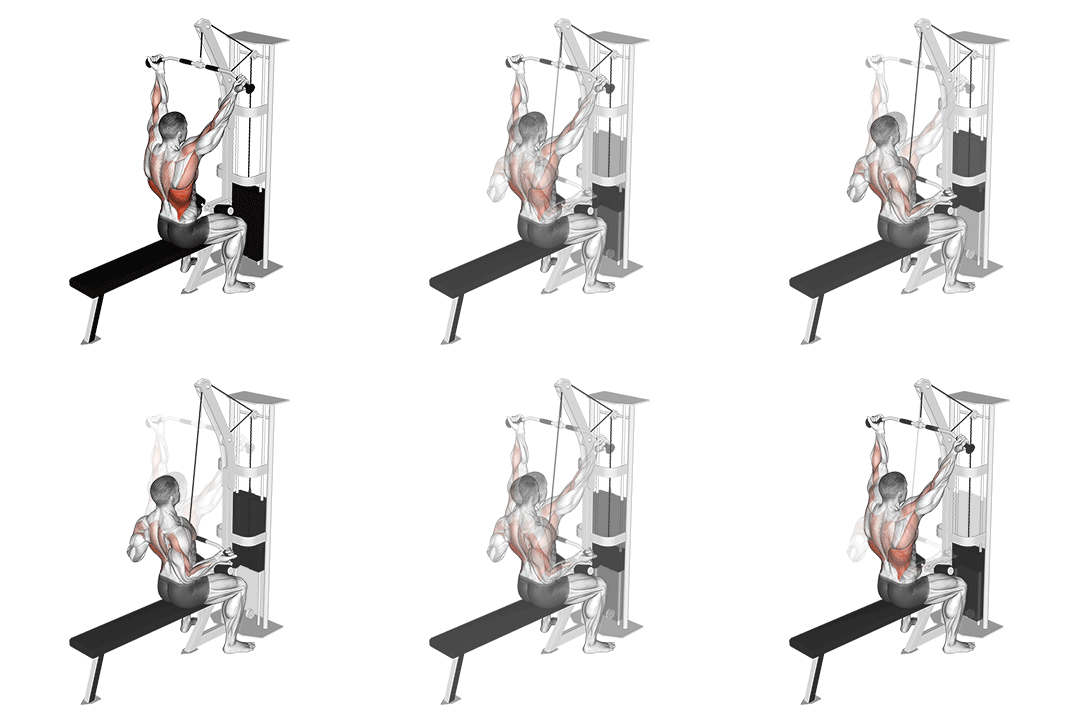
Read the complete Cable Underhand Pulldown guide on FitnessVolt →
Where Do These Cable Underhand Pulldown Standards Come From?
The levels on this page are estimates from the FitnessVolt strength standards model. The Cable Underhand Pulldown table is the Bench Press table scaled by a fixed FitnessVolt ratio of 0.52 (confidence: medium). It is a set of targets, not a measured population. There is no competition or gym dataset for the Cable Underhand Pulldown itself. Reader-submitted benchmarks appear only after enough entries are logged for this lift.
Standards data last refreshed: March 29, 2026
- Level tables: the FitnessVolt strength standards model, not meet data.
- Method: Strength standards methodology - how the level tables are built and where each data source on the site comes from.
Fitness Volt strength standards model, 2026. Beginner to Elite levels are model values, not competition percentiles. https://fitnessvolt.com/strength-standards/methodology/
Frequently Asked Questions
Related Exercise Standards