

A 180 lb male with an Intermediate-level Dumbbell Reverse Wrist Curl of 45 lbs ranks at the 50th percentile (FVCP), stronger than ~50% of lifters. An Advanced lifter at this weight lifts 83 lbs (0.46x bodyweight).
FitnessVolt Competition Percentile (FVCP), based on 2.5M+ verified competition results
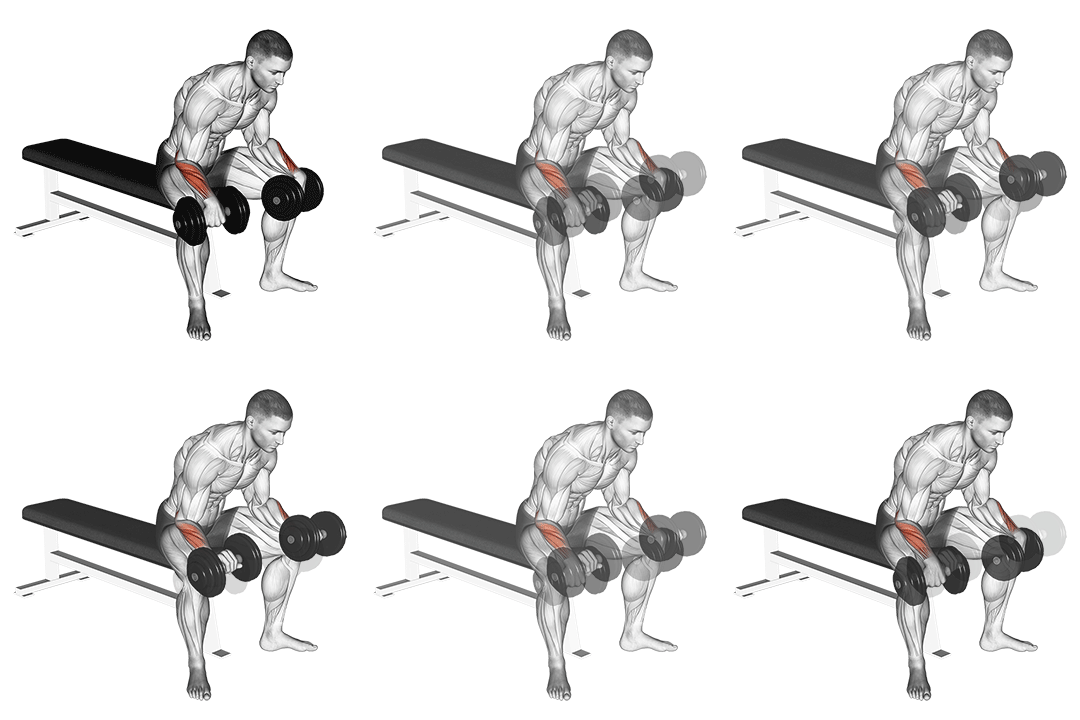
How strong is your Dumbbell Reverse Wrist Curl? Compare your 1RM against standards for 21 bodyweight categories, from Beginner to Elite.
How Strong Is Your Dumbbell Reverse Wrist Curl?
How Much Should You Dumbbell Reverse Wrist Curl?
1RM weight (lbs) you should be able to lift at each standard, based on your bodyweight.
| BW (lbs) | Beginner | Novice | Intermediate | Advanced | Elite |
|---|---|---|---|---|---|
| 110 | 2 | 12 | 35 | 68 | 111 |
| 120 | 2 | 13 | 36 | 71 | 114 |
| 130 | 2 | 14 | 38 | 73 | 117 |
| 140 | 3 | 15 | 40 | 75 | 119 |
| 150 | 3 | 16 | 41 | 77 | 122 |
| 160 | 4 | 17 | 43 | 79 | 124 |
| 170 | 4 | 18 | 44 | 81 | 127 |
| 180 | 4 | 19 | 45 | 83 | 129 |
| 190 | 5 | 20 | 46 | 84 | 131 |
| 200 | 5 | 21 | 48 | 86 | 133 |
| 210 | 6 | 21 | 49 | 87 | 135 |
| 220 | 6 | 22 | 50 | 89 | 137 |
| 230 | 6 | 23 | 51 | 90 | 138 |
| 240 | 7 | 23 | 52 | 92 | 140 |
| 250 | 7 | 24 | 53 | 93 | 142 |
| 260 | 7 | 25 | 54 | 94 | 143 |
| 270 | 8 | 25 | 55 | 96 | 145 |
| 280 | 8 | 26 | 56 | 97 | 146 |
| 290 | 8 | 27 | 57 | 98 | 148 |
| 300 | 9 | 27 | 58 | 99 | 149 |
| 310 | 9 | 28 | 58 | 100 | 151 |
| 90 | 3 | 9 | 17 | 29 | 43 |
| 100 | 4 | 10 | 19 | 31 | 46 |
| 110 | 5 | 12 | 21 | 34 | 49 |
| 120 | 6 | 13 | 23 | 36 | 51 |
| 130 | 7 | 14 | 25 | 38 | 54 |
| 140 | 8 | 16 | 27 | 40 | 56 |
| 150 | 9 | 17 | 28 | 42 | 59 |
| 160 | 10 | 18 | 30 | 44 | 61 |
| 170 | 11 | 19 | 31 | 46 | 63 |
| 180 | 11 | 20 | 33 | 48 | 65 |
| 190 | 12 | 22 | 34 | 50 | 67 |
| 200 | 13 | 23 | 35 | 51 | 69 |
| 210 | 14 | 24 | 37 | 53 | 71 |
| 220 | 15 | 25 | 38 | 54 | 72 |
| 230 | 15 | 26 | 39 | 56 | 74 |
| 240 | 16 | 27 | 40 | 57 | 76 |
| 250 | 17 | 28 | 42 | 59 | 77 |
| 260 | 18 | 29 | 43 | 60 | 79 |
How Does Age Affect Dumbbell Reverse Wrist Curl Strength?
How Dumbbell Reverse Wrist Curl standards change across different age groups. Values represent a 1RM in lbs.
| Age | Beginner | Novice | Intermediate | Advanced | Elite |
|---|---|---|---|---|---|
| 15 | 3 | 15 | 37 | 69 | 108 |
| 20 | 4 | 17 | 43 | 79 | 124 |
| 25 | 4 | 18 | 44 | 81 | 127 |
| 30 | 4 | 18 | 44 | 81 | 127 |
| 35 | 4 | 18 | 44 | 81 | 127 |
| 40 | 4 | 18 | 44 | 81 | 127 |
| 45 | 4 | 17 | 42 | 77 | 121 |
| 50 | 3 | 16 | 39 | 72 | 113 |
| 55 | 3 | 15 | 36 | 67 | 105 |
| 60 | 3 | 13 | 33 | 61 | 96 |
| 65 | 3 | 12 | 30 | 55 | 86 |
| 70 | 2 | 11 | 27 | 49 | 77 |
| 75 | 2 | 10 | 24 | 44 | 69 |
| 80 | 2 | 9 | 21 | 39 | 62 |
| 85 | 2 | 8 | 19 | 35 | 56 |
| 90 | 2 | 7 | 17 | 32 | 50 |
| 15 | 6 | 13 | 23 | 35 | 50 |
| 20 | 7 | 15 | 26 | 41 | 57 |
| 25 | 7 | 15 | 27 | 42 | 59 |
| 30 | 7 | 15 | 27 | 42 | 59 |
| 35 | 7 | 15 | 27 | 42 | 59 |
| 40 | 7 | 15 | 27 | 42 | 59 |
| 45 | 7 | 15 | 26 | 39 | 56 |
| 50 | 7 | 14 | 24 | 37 | 52 |
| 55 | 6 | 13 | 22 | 34 | 48 |
| 60 | 6 | 12 | 20 | 31 | 44 |
| 65 | 5 | 11 | 18 | 28 | 40 |
| 70 | 5 | 9 | 16 | 25 | 36 |
| 75 | 4 | 8 | 15 | 23 | 32 |
| 80 | 4 | 8 | 13 | 20 | 29 |
| 85 | 3 | 7 | 12 | 18 | 26 |
| 90 | 3 | 6 | 11 | 16 | 23 |
What Do Dumbbell Reverse Wrist Curl Strength Standards Mean?
Stronger than 5% of lifters. You are learning dumbbell stabilization and control on the Dumbbell Reverse Wrist Curl, building the controlled movement pattern and mind-muscle connection needed to train the target muscle effectively.
Stronger than 20% of lifters. You can perform the Dumbbell Reverse Wrist Curl with strict form and a smooth tempo. You are adding resistance progressively without sacrificing range of motion or using body English.
Stronger than 50% of lifters. Your Dumbbell Reverse Wrist Curl is performed with excellent control and targeted tension. You use RPE to manage isolation work intensity and program it strategically within your training split.
Stronger than 80% of lifters. You have built significant strength on the Dumbbell Reverse Wrist Curl through disciplined, progressive training. You employ advanced techniques like drop sets, pauses, and tempo work to continue driving adaptation.
Stronger than 95% of lifters. Your Dumbbell Reverse Wrist Curl strength is at the upper end of what most lifters achieve. You have maximized the target muscle development through years of focused, periodized isolation work.
How to Progress Your Dumbbell Reverse Wrist Curl
Tier-specific training recommendations to move your Dumbbell Reverse Wrist Curl to the next level.
- Train the Dumbbell Reverse Wrist Curl 2x per week with slow, controlled reps.
- Focus on full range of motion and eliminating momentum or swinging.
- Keep sets at RPE 6-7 to develop proper movement patterns.
- Build the mind-muscle connection - feel the target muscle working on every rep.
- Increase load progressively while keeping strict form on the Dumbbell Reverse Wrist Curl.
- Program 3-4 sets of 8-15 reps at RPE 7-8.
- Add a variation (different grip, angle, or equipment) to address development gaps.
- Place isolation work after your primary compound movements.
- Use drop sets, paused reps, and partial reps to break through Dumbbell Reverse Wrist Curl plateaus.
- Train at RPE 8-9 with advanced intensity techniques on your last 1-2 sets.
- Manipulate tempo to increase time under tension without compromising form.
- Manage total volume for the target muscle group across all exercises.
- Maximize Dumbbell Reverse Wrist Curl strength through precise programming and fatigue management.
- Use periodized blocks to cycle between volume, intensity, and deload phases.
- Quality of contraction matters more than load at this level.
- Continuous refinement of technique will yield the remaining gains.
How to Perform Dumbbell Reverse Wrist Curl
- Sit on a bench and hold a dumbbell in each hand with an overhand grip.
- Rest your forearms on your thighs or a bench, allowing your wrists to hang over the edge.
- Start with your wrists in a neutral position, palms facing down.
- Slowly curl your wrists upward, raising the back of your hands towards the ceiling.
- Pause briefly at the top of the movement, feeling the contraction in your forearm extensors.
- Slowly lower the dumbbells back to the starting position, controlling the motion.
- Repeat for the desired number of repetitions.
- Breathing: Exhale as you curl your wrists upward and inhale as you return to the starting position.
Read the complete Dumbbell Reverse Wrist Curl guide on FitnessVolt →
Tips for Dumbbell Reverse Wrist Curl
- Keep the movement slow and controlled to maximize muscle engagement.
- Avoid using too much weight to maintain proper form and prevent injury.
- Ensure your forearms remain stationary on your thighs or bench throughout the exercise.
Where Do These Dumbbell Reverse Wrist Curl Standards Come From?
These Dumbbell Reverse Wrist Curl standards are based on 2.5M+ verified competition results from powerlifting, weightlifting, and strongman federations worldwide. Every number comes from a sanctioned meet with certified judges - not self-reported gym lifts. Data is sourced from OpenPowerlifting and other verified competition databases, ensuring accuracy you can trust.
Last Updated: March 30, 2026
Reviewed by the Fitness Volt Editorial Team, certified strength training analysts.
Is Your Dumbbell Reverse Wrist Curl Good for Your Weight?
Strength standards help you objectively measure your Dumbbell Reverse Wrist Curl performance relative to other lifters of the same bodyweight and sex. Here is how to interpret them:
- Find your bodyweight in the left column of the table above.
- Look across the row to find which strength level your 1RM falls into.
- Use the age tab to see how your strength compares within your age group.
- Switch between Male and Female standards using the toggle - each has its own dataset.
If you do not know your 1RM, use the E1RM Calculator to estimate it from any rep set. For example, if you can Dumbbell Reverse Wrist Curl 185 lbs for 5 reps, the calculator will estimate your max.
These standards are derived from 2.5M+ competition results across powerlifting, weightlifting, and strongman federations worldwide, combined with community training data.