

A 180 lb male with an Intermediate-level lever t bar row of 128 lbs ranks at the 50th percentile (FVCP), stronger than ~50% of lifters. An Advanced lifter at this weight lifts 165 lbs (0.92x bodyweight).
FitnessVolt Competition Percentile (FVCP), based on 2.5M+ verified competition results
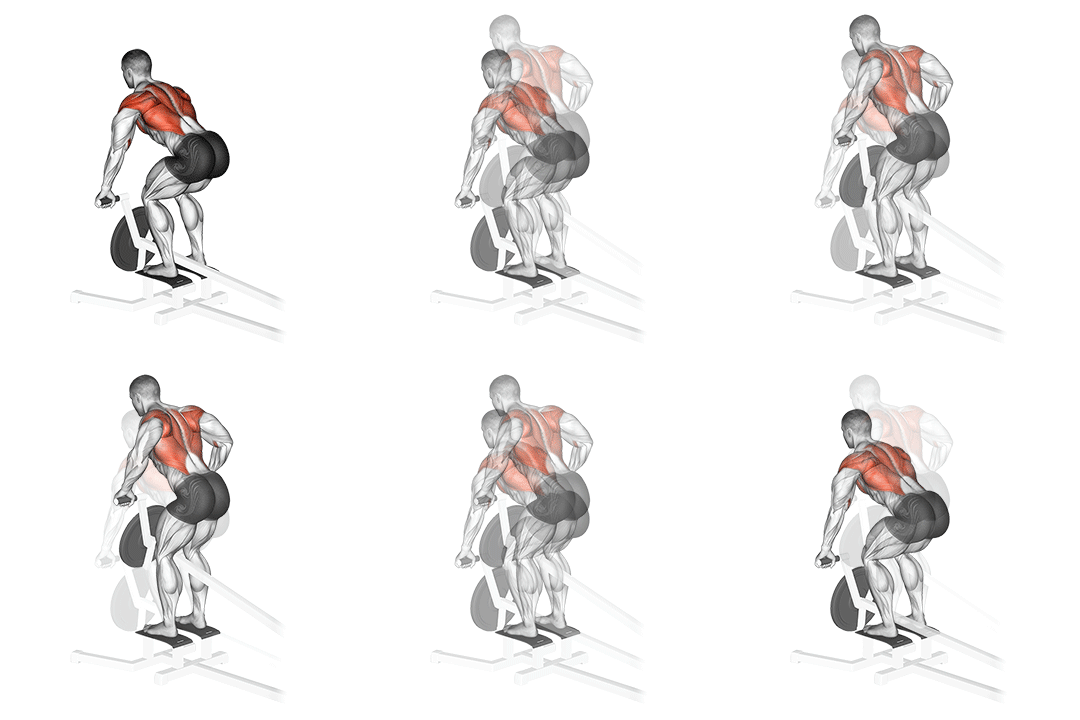
How strong is your lever t bar row? Compare your 1RM against standards for 21 bodyweight categories, from Beginner to Elite.
Estimated Standards - Estimated from bench-press standards using a 0.58x ratio.. These values are derived from verified competition data for the base exercise. Learn about our methodology
How Strong Is Your lever t bar row?
How Much Should You lever t bar row?
1RM weight (lbs) you should be able to lift at each standard, based on your bodyweight.
| BW (lbs) | Beginner | Novice | Intermediate | Advanced | Elite |
|---|---|---|---|---|---|
| 110 | 31 | 49 | 73 | 100 | 131 |
| 120 | 37 | 56 | 81 | 111 | 143 |
| 130 | 42 | 63 | 89 | 121 | 154 |
| 140 | 48 | 70 | 98 | 130 | 165 |
| 150 | 54 | 77 | 106 | 139 | 175 |
| 160 | 59 | 84 | 114 | 148 | 185 |
| 170 | 65 | 90 | 121 | 157 | 195 |
| 180 | 70 | 96 | 128 | 165 | 204 |
| 190 | 75 | 103 | 136 | 173 | 213 |
| 200 | 81 | 108 | 143 | 181 | 222 |
| 210 | 86 | 114 | 149 | 189 | 230 |
| 220 | 90 | 120 | 156 | 196 | 238 |
| 230 | 96 | 126 | 162 | 203 | 247 |
| 240 | 100 | 132 | 169 | 210 | 254 |
| 250 | 105 | 137 | 175 | 217 | 262 |
| 260 | 110 | 142 | 181 | 224 | 269 |
| 270 | 114 | 147 | 187 | 230 | 276 |
| 280 | 119 | 153 | 193 | 237 | 283 |
| 290 | 124 | 158 | 198 | 243 | 290 |
| 300 | 128 | 162 | 204 | 249 | 296 |
| 310 | 132 | 168 | 209 | 255 | 303 |
| 90 | 11 | 23 | 41 | 64 | 91 |
| 100 | 13 | 27 | 46 | 70 | 98 |
| 110 | 16 | 30 | 50 | 75 | 104 |
| 120 | 19 | 34 | 55 | 81 | 110 |
| 130 | 21 | 37 | 59 | 86 | 116 |
| 140 | 23 | 40 | 63 | 90 | 121 |
| 150 | 25 | 43 | 66 | 95 | 126 |
| 160 | 27 | 46 | 70 | 99 | 132 |
| 170 | 30 | 48 | 73 | 103 | 136 |
| 180 | 32 | 51 | 77 | 107 | 140 |
| 190 | 34 | 54 | 79 | 111 | 145 |
| 200 | 36 | 56 | 83 | 114 | 149 |
| 210 | 38 | 59 | 86 | 118 | 153 |
| 220 | 39 | 61 | 89 | 121 | 157 |
| 230 | 42 | 63 | 91 | 124 | 161 |
| 240 | 44 | 66 | 94 | 128 | 164 |
| 250 | 45 | 68 | 97 | 131 | 168 |
| 260 | 47 | 70 | 99 | 133 | 171 |
How Does Age Affect lever t bar row Strength?
How lever t bar row standards change across different age groups. Values represent a 1RM in lbs.
| Age | Beginner | Novice | Intermediate | Advanced | Elite |
|---|---|---|---|---|---|
| 15 | 51 | 76 | 107 | 144 | 184 |
| 20 | 59 | 87 | 122 | 165 | 211 |
| 25 | 60 | 89 | 126 | 169 | 216 |
| 30 | 60 | 89 | 126 | 169 | 216 |
| 35 | 60 | 89 | 126 | 169 | 216 |
| 40 | 60 | 89 | 126 | 169 | 216 |
| 45 | 57 | 85 | 119 | 160 | 205 |
| 50 | 53 | 79 | 112 | 150 | 192 |
| 55 | 49 | 74 | 104 | 139 | 177 |
| 60 | 45 | 67 | 95 | 127 | 162 |
| 65 | 41 | 60 | 85 | 115 | 147 |
| 70 | 37 | 55 | 77 | 103 | 132 |
| 75 | 32 | 49 | 68 | 92 | 118 |
| 80 | 29 | 44 | 61 | 82 | 105 |
| 85 | 26 | 39 | 55 | 74 | 95 |
| 90 | 24 | 35 | 49 | 67 | 85 |
| 15 | 19 | 34 | 55 | 81 | 110 |
| 20 | 21 | 39 | 63 | 92 | 126 |
| 25 | 22 | 40 | 64 | 95 | 129 |
| 30 | 22 | 40 | 64 | 95 | 129 |
| 35 | 22 | 40 | 64 | 95 | 129 |
| 40 | 22 | 40 | 64 | 95 | 129 |
| 45 | 21 | 38 | 61 | 90 | 122 |
| 50 | 20 | 36 | 57 | 85 | 115 |
| 55 | 19 | 33 | 53 | 78 | 106 |
| 60 | 17 | 30 | 49 | 71 | 97 |
| 65 | 15 | 27 | 44 | 64 | 88 |
| 70 | 13 | 24 | 39 | 58 | 79 |
| 75 | 12 | 22 | 35 | 52 | 70 |
| 80 | 11 | 20 | 31 | 46 | 63 |
| 85 | 10 | 17 | 28 | 41 | 56 |
| 90 | 9 | 16 | 26 | 37 | 51 |
What Do lever t bar row Strength Standards Mean?
Stronger than 5% of lifters. You are building the mind-muscle connection for the lever t bar row, learning to initiate the pull with your back rather than your arms, and developing basic grip strength.
Stronger than 20% of lifters. You can perform the lever t bar row with proper scapular retraction and a controlled range of motion. You are progressively overloading and building back thickness and lat width.
Stronger than 50% of lifters. Your lever t bar row shows strong back engagement with minimal momentum. You use RPE to regulate pulling intensity and train strategically to balance horizontal and vertical pull volume.
Stronger than 80% of lifters. You have built substantial back development through the lever t bar row with refined technique and heavy loads. Your grip is no longer a limiting factor, and you manage rowing and pulling fatigue across training blocks.
Stronger than 95% of lifters. Your lever t bar row strength is exceptional. You can handle loads that most lifters cannot move with strict form, and your back development reflects years of high-volume, periodized pulling work.
How to Progress Your lever t bar row
Tier-specific training recommendations to move your lever t bar row to the next level.
- Train the lever t bar row 2x per week, focusing on initiating the pull from your back, not your arms.
- Use linear progression with strict form - no swinging or excessive body English.
- Pause briefly at peak contraction to build the mind-muscle connection.
- Develop grip strength in parallel to avoid it becoming a bottleneck.
- Add a pull variation (different grip width, underhand, or single-arm) for balanced development.
- Increase pulling volume to 10-15 sets per week across all back movements.
- Program the lever t bar row at RPE 7-8, saving RPE 9 work for top sets only.
- Balance horizontal pulls (rows) with vertical pulls (pulldowns/pull-ups).
- Run 4-6 week blocks with progressive overload on the lever t bar row.
- Use RPE 8-9 for heavy sets with calculated backoff work at RPE 6-7.
- Add controlled eccentrics and paused reps to break through plateaus.
- Total back volume of 15-22 sets per week, distributed across pull patterns.
- Maximize the lever t bar row through advanced intensity techniques and precise volume management.
- Use periodized blocks with planned overreaching and supercompensation phases.
- Refine execution: squeeze at contraction, controlled stretch, zero momentum.
- Your back development should reflect years of disciplined, high-volume pulling.
How to Perform lever t bar row
Where Do These lever t bar row Standards Come From?
These lever t bar row standards are based on 2.5M+ verified competition results from powerlifting, weightlifting, and strongman federations worldwide. Every number comes from a sanctioned meet with certified judges - not self-reported gym lifts. Data is sourced from OpenPowerlifting and other verified competition databases, ensuring accuracy you can trust.
Last Updated: March 30, 2026
Reviewed by the Fitness Volt Editorial Team, certified strength training analysts.
Is Your lever t bar row Good for Your Weight?
Strength standards help you objectively measure your lever t bar row performance relative to other lifters of the same bodyweight and sex. Here is how to interpret them:
- Find your bodyweight in the left column of the table above.
- Look across the row to find which strength level your 1RM falls into.
- Use the age tab to see how your strength compares within your age group.
- Switch between Male and Female standards using the toggle - each has its own dataset.
If you do not know your 1RM, use the E1RM Calculator to estimate it from any rep set. For example, if you can lever t bar row 185 lbs for 5 reps, the calculator will estimate your max.
These standards are derived from 2.5M+ competition results across powerlifting, weightlifting, and strongman federations worldwide, combined with community training data.