

A 180 lb male with an Intermediate-level smith close-grip bench press of 181 lbs ranks at the 50th percentile (FVCP), stronger than ~50% of lifters. An Advanced lifter at this weight lifts 233 lbs (1.29x bodyweight).
FitnessVolt Competition Percentile (FVCP), based on 2.5M+ verified competition results
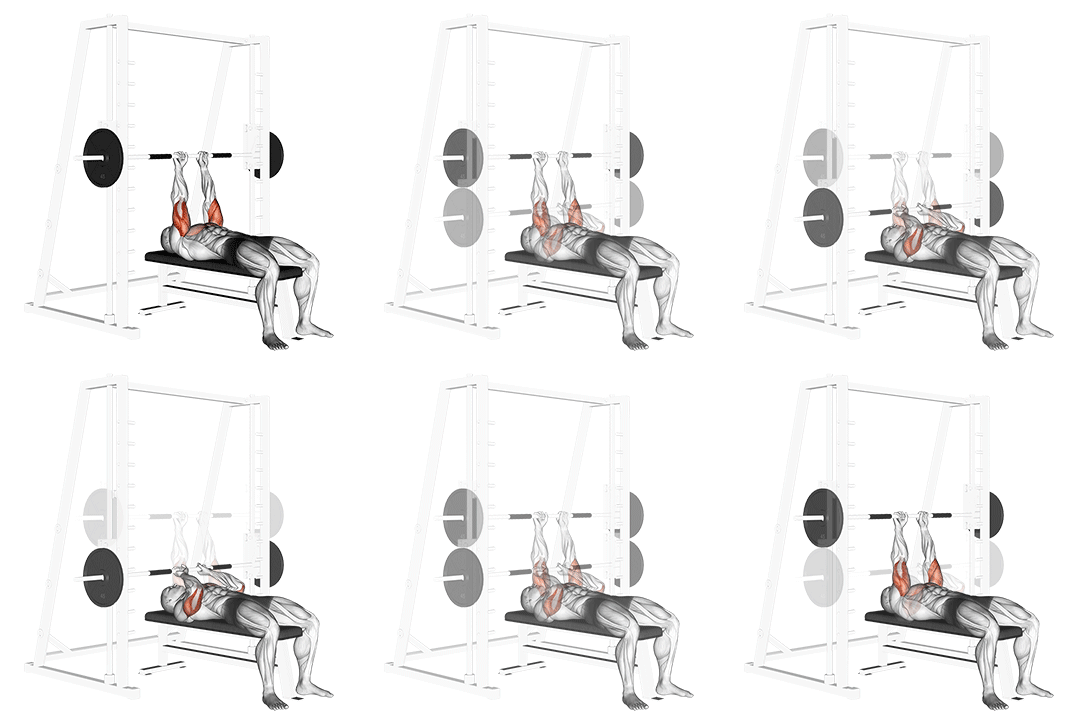
How strong is your smith close-grip bench press? Compare your 1RM against standards for 21 bodyweight categories, from Beginner to Elite.
Estimated Standards - Estimated from bench-press standards using a 0.82x ratio.. These values are derived from verified competition data for the base exercise. Learn about our methodology
How Strong Is Your smith close-grip bench press?
How Much Should You smith close-grip bench press?
1RM weight (lbs) you should be able to lift at each standard, based on your bodyweight.
| BW (lbs) | Beginner | Novice | Intermediate | Advanced | Elite |
|---|---|---|---|---|---|
| 110 | 43 | 69 | 103 | 142 | 185 |
| 120 | 52 | 80 | 115 | 157 | 203 |
| 130 | 60 | 89 | 126 | 171 | 218 |
| 140 | 68 | 99 | 139 | 184 | 234 |
| 150 | 76 | 109 | 149 | 197 | 248 |
| 160 | 84 | 118 | 161 | 209 | 262 |
| 170 | 92 | 127 | 171 | 221 | 276 |
| 180 | 99 | 136 | 181 | 233 | 289 |
| 190 | 107 | 145 | 192 | 244 | 301 |
| 200 | 114 | 153 | 202 | 256 | 313 |
| 210 | 121 | 162 | 211 | 267 | 326 |
| 220 | 128 | 170 | 221 | 277 | 337 |
| 230 | 135 | 178 | 230 | 287 | 349 |
| 240 | 142 | 186 | 239 | 297 | 359 |
| 250 | 148 | 194 | 247 | 307 | 370 |
| 260 | 156 | 201 | 256 | 317 | 380 |
| 270 | 162 | 208 | 264 | 326 | 390 |
| 280 | 168 | 216 | 272 | 335 | 400 |
| 290 | 175 | 223 | 280 | 344 | 410 |
| 300 | 180 | 230 | 288 | 352 | 419 |
| 310 | 187 | 237 | 295 | 360 | 429 |
| 90 | 16 | 33 | 58 | 91 | 129 |
| 100 | 19 | 38 | 65 | 99 | 139 |
| 110 | 22 | 43 | 71 | 107 | 148 |
| 120 | 26 | 48 | 77 | 114 | 156 |
| 130 | 30 | 52 | 83 | 121 | 164 |
| 140 | 33 | 57 | 89 | 128 | 171 |
| 150 | 35 | 61 | 93 | 134 | 179 |
| 160 | 39 | 65 | 98 | 139 | 186 |
| 170 | 42 | 68 | 103 | 145 | 193 |
| 180 | 45 | 72 | 108 | 151 | 198 |
| 190 | 48 | 76 | 112 | 157 | 205 |
| 200 | 51 | 80 | 117 | 162 | 211 |
| 210 | 53 | 83 | 121 | 166 | 216 |
| 220 | 56 | 86 | 125 | 171 | 221 |
| 230 | 59 | 89 | 129 | 175 | 227 |
| 240 | 62 | 93 | 133 | 180 | 232 |
| 250 | 64 | 96 | 137 | 185 | 237 |
| 260 | 66 | 99 | 140 | 189 | 242 |
How Does Age Affect smith close-grip bench press Strength?
How smith close-grip bench press standards change across different age groups. Values represent a 1RM in lbs.
| Age | Beginner | Novice | Intermediate | Advanced | Elite |
|---|---|---|---|---|---|
| 15 | 72 | 107 | 152 | 203 | 260 |
| 20 | 83 | 123 | 173 | 233 | 298 |
| 25 | 84 | 126 | 178 | 239 | 305 |
| 30 | 84 | 126 | 178 | 239 | 305 |
| 35 | 84 | 126 | 178 | 239 | 305 |
| 40 | 84 | 126 | 178 | 239 | 305 |
| 45 | 80 | 120 | 169 | 226 | 289 |
| 50 | 75 | 112 | 158 | 212 | 271 |
| 55 | 70 | 104 | 147 | 197 | 251 |
| 60 | 64 | 94 | 134 | 180 | 230 |
| 65 | 57 | 85 | 121 | 162 | 207 |
| 70 | 52 | 77 | 108 | 145 | 186 |
| 75 | 46 | 69 | 97 | 130 | 166 |
| 80 | 41 | 62 | 87 | 116 | 148 |
| 85 | 37 | 55 | 78 | 104 | 134 |
| 90 | 34 | 49 | 70 | 94 | 120 |
| 15 | 27 | 48 | 78 | 114 | 156 |
| 20 | 30 | 55 | 89 | 130 | 178 |
| 25 | 31 | 57 | 91 | 134 | 183 |
| 30 | 31 | 57 | 91 | 134 | 183 |
| 35 | 31 | 57 | 91 | 134 | 183 |
| 40 | 31 | 57 | 91 | 134 | 183 |
| 45 | 30 | 54 | 87 | 127 | 173 |
| 50 | 28 | 51 | 81 | 120 | 162 |
| 55 | 26 | 47 | 75 | 111 | 150 |
| 60 | 24 | 43 | 69 | 101 | 137 |
| 65 | 21 | 39 | 62 | 91 | 124 |
| 70 | 19 | 34 | 56 | 82 | 112 |
| 75 | 17 | 31 | 50 | 73 | 99 |
| 80 | 16 | 28 | 44 | 66 | 89 |
| 85 | 14 | 25 | 40 | 58 | 80 |
| 90 | 12 | 22 | 36 | 52 | 72 |
What Do smith close-grip bench press Strength Standards Mean?
Stronger than 5% of lifters. You are learning the movement path and resistance curve on the smith close-grip bench press, building the shoulder stability and pressing coordination needed to handle heavier loads safely.
Stronger than 20% of lifters. You can press with a consistent path and controlled tempo on the smith close-grip bench press. You are progressing linearly and building the chest, shoulder, and tricep base needed for intermediate strength.
Stronger than 50% of lifters. Your smith close-grip bench press technique is efficient under heavy loads. You use programmed variations, understand how to manage pressing fatigue, and can grind through the mid-range sticking point.
Stronger than 80% of lifters. You have optimized your smith close-grip bench press setup for maximal force production - arch, leg drive, and grip width are dialed in. You train with periodized intensity blocks and accessory work targeting weak points.
Stronger than 95% of lifters. Your smith close-grip bench press is at a competitive standard. You have refined every aspect of the lift through years of structured peaking and can produce maximal force with technical precision.
How to Progress Your smith close-grip bench press
Tier-specific training recommendations to move your smith close-grip bench press to the next level.
- Train the smith close-grip bench press 2-3x per week to build pressing strength and shoulder stability.
- Use linear progression: add 2.5-5 lbs per session.
- Practice controlled eccentrics (3-second lowering) to build tendon strength.
- Keep working sets at RPE 6-7 to accumulate quality volume.
- Add a pressing variation (close-grip, incline, or paused) for weak-point development.
- Increase frequency to 2-3 sessions per week with varied rep ranges.
- Program most sets at RPE 7-8 with one heavy session including RPE 9 work.
- Build tricep and shoulder accessory volume to support the smith close-grip bench press.
- Run 4-6 week blocks with planned volume and intensity progression.
- Use RPE 8-9 for competition-style sets, RPE 7 for volume backoffs.
- Target your sticking point with specific accessory work (board press, pin press, bands).
- Manage total weekly pressing volume (12-20 sets) across all push movements.
- Peak with structured 8-12 week cycles targeting a competition or max attempt.
- Refine your setup: arch, leg drive, grip width, and bar path for maximal efficiency.
- Use the RPE chart for precise percentage work during peaking phases.
- Test your smith close-grip bench press under competition-style commands and judging.
How to Perform smith close-grip bench press
Read the complete smith close-grip bench press guide on FitnessVolt →
Where Do These smith close-grip bench press Standards Come From?
These smith close-grip bench press standards are based on 2.5M+ verified competition results from powerlifting, weightlifting, and strongman federations worldwide. Every number comes from a sanctioned meet with certified judges - not self-reported gym lifts. Data is sourced from OpenPowerlifting and other verified competition databases, ensuring accuracy you can trust.
Last Updated: March 30, 2026
Reviewed by the Fitness Volt Editorial Team, certified strength training analysts.
Is Your smith close-grip bench press Good for Your Weight?
Strength standards help you objectively measure your smith close-grip bench press performance relative to other lifters of the same bodyweight and sex. Here is how to interpret them:
- Find your bodyweight in the left column of the table above.
- Look across the row to find which strength level your 1RM falls into.
- Use the age tab to see how your strength compares within your age group.
- Switch between Male and Female standards using the toggle - each has its own dataset.
If you do not know your 1RM, use the E1RM Calculator to estimate it from any rep set. For example, if you can smith close-grip bench press 185 lbs for 5 reps, the calculator will estimate your max.
These standards are derived from 2.5M+ competition results across powerlifting, weightlifting, and strongman federations worldwide, combined with community training data.