

Keg Toss Training Guide
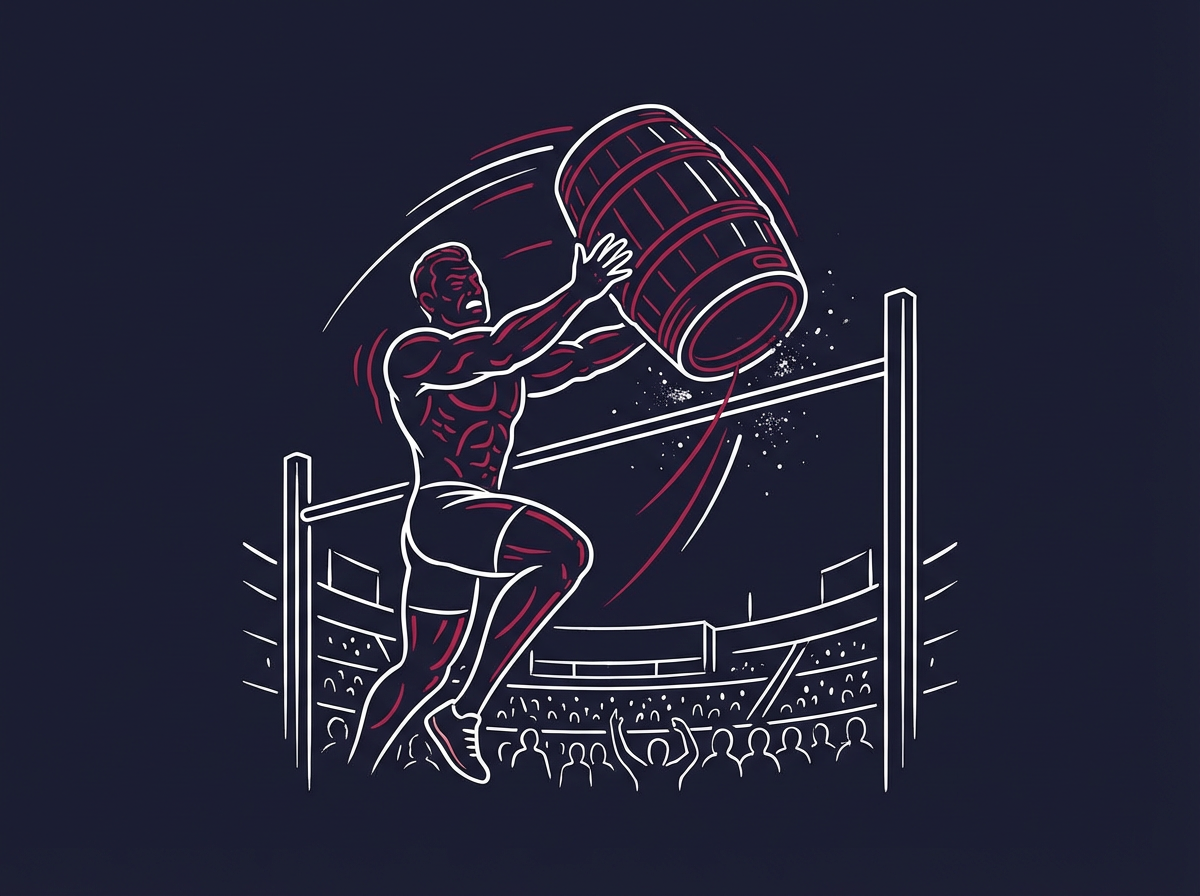
Keg toss (or keg throw) requires athletes to throw weighted beer kegs over a high bar, typically 14-16 feet up. This event tests explosive power, timing, and the courage to commit fully to a heavy overhead throw.
Proper Technique
Start with the keg on the ground. Grab it by the rim or handles with both hands.
Clean the keg to your chest using hip drive and arm pull, similar to stone loading technique.
Position the keg at chest/shoulder height, finding your throwing grip. Some prefer overhand, others underhand.
Dip your knees slightly while keeping the keg high on your chest.
Explosively extend through your legs, hips, and throw the keg upward and slightly forward.
Release at the optimal point (when your arms are fully extended and momentum peaks). Timing is critical.
Watch the keg to confirm it cleared the bar, then prepare for the next weight or distance.
Common Mistakes & Corrections
Essential Equipment
Weighted Beer Kegs
Empty or filled kegs ranging from 15-50 lbs. Competition typically uses 3-5 kegs of increasing weight.
High Bar or Crossbar
Bar positioned 14-16 feet high (height varies by competition and gender class).
Crash Mat Area
Behind the bar to catch falling kegs safely. Never stand in the landing zone during competition.
Chalk
Helps maintain grip during the clean and throw. Apply to hands and forearms before each attempt.
Wrist Wraps (optional)
Provide support during the explosive throw portion. Some athletes prefer no wraps for better feel.
Training Progression
| Level | Target Performance | Notes |
|---|---|---|
| Beginner | 15-20 lbs over 12-13 feet | Focus on technique and form |
| Intermediate | 25-35 lbs over 14-15 feet | Build work capacity and consistency |
| Advanced | 40-50 lbs over 15-16 feet | Peak strength and event-specific training |
| Competition | Multiple kegs (15-50 lbs) over 15-16 feet, fastest time or most cleared | Competition-ready performance standards |
About Keg Toss Training
Master the Keg Toss with our comprehensive training guide covering proper technique, common mistakes, equipment recommendations, and progression standards from beginner to competition level.
Whether you're training for your first strongman competition or looking to improve your keg toss performance, this guide provides everything you need to train safely and effectively. Learn the biomechanics, equipment setup, and training progressions used by top strongman athletes.
Combine this training guide with our strength standards to track your progress and see how you compare to other athletes at your level.