

Yoke Walk Training Guide
The yoke walk tests raw carrying strength, core stability, and mental toughness under extreme loads. Athletes must walk a loaded yoke frame (often 2-3x bodyweight) for distance or time, maintaining balance and speed despite crushing weight.
Proper Technique
Step under the yoke and position it across your upper traps/shoulders (similar to back squat position).
Grip the frame handles firmly, keeping your torso upright and core braced before standing.
Stand up with the yoke using leg drive, finding your balance point before taking any steps forward.
Take short, quick steps (12-18 inches) rather than long strides. Keep your core rigid and eyes forward.
If you feel yourself tipping forward or back, shuffle your feet quickly to regain balance rather than fighting it.
Drive through each step, maintaining consistent pace. Don't slow down - momentum is your friend.
At the finish line, walk the yoke completely across (don't stop short) and set it down under control.
Common Mistakes & Corrections
Essential Equipment
Yoke Frame
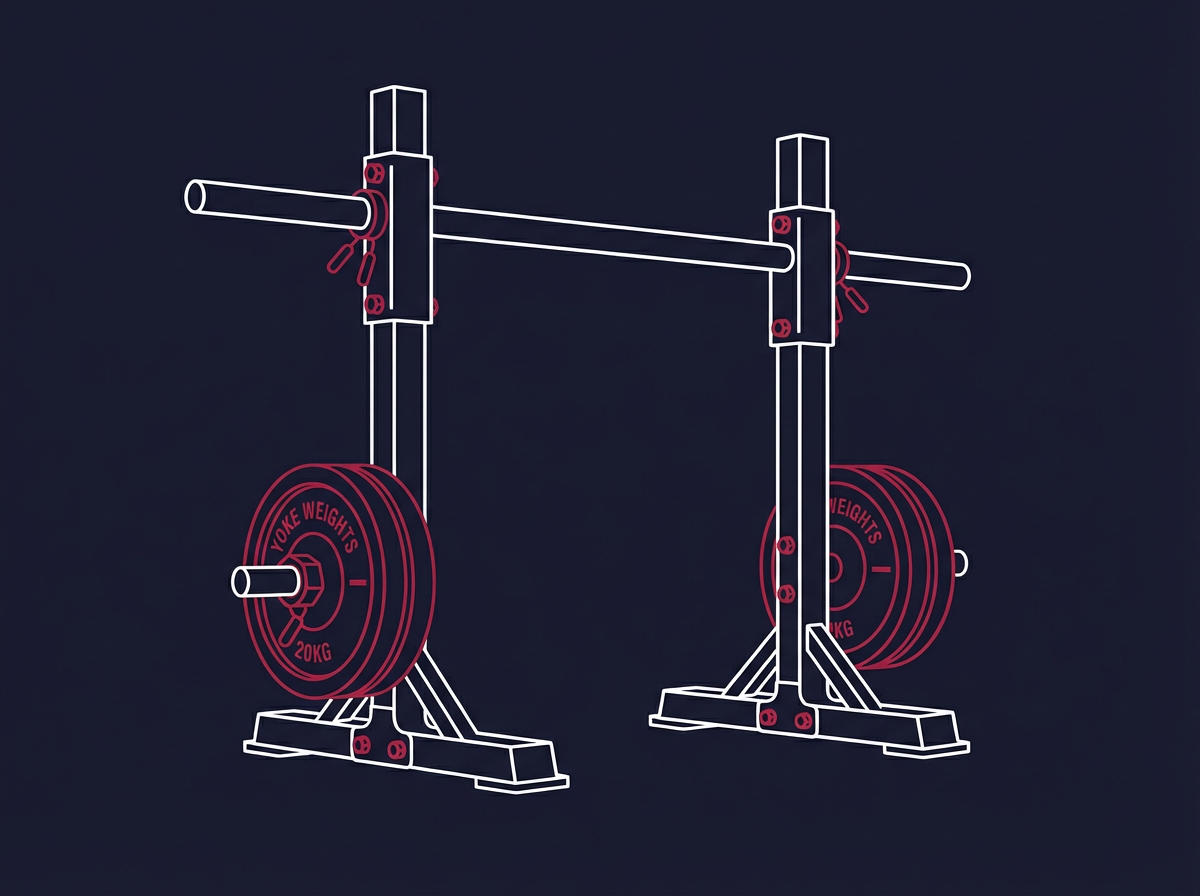
Steel frame apparatus with crossbar and loading posts. Competition yokes typically have 18-24 inch wide shoulder platform.
Weight Plates for Loading
Heavy plates loaded onto yoke posts. Competition weights typically 600-1200+ lbs depending on weight class.
Baby Powder/Slippery Cream
Applied to neck/traps to help the yoke slide into position more easily. Reduces friction burns.
Belt
Essential for core stability under extreme vertical loading. Use your stiffest, most supportive belt.
Knee Sleeves
Provide support and confidence when carrying 2-3x bodyweight. The psychological benefit alone is valuable.
Training Progression
| Level | Target Performance | Notes |
|---|---|---|
| Beginner | 1x bodyweight for 50 feet | Focus on technique and form |
| Intermediate | 1.5-2x bodyweight for 50 feet | Build work capacity and consistency |
| Advanced | 2-2.5x bodyweight for 50 feet | Peak strength and event-specific training |
| Competition | 2.5-3x+ bodyweight for 50-75 feet in under 20 seconds (elite level) | Competition-ready performance standards |
About Yoke Walk Training
Master the Yoke Walk with our comprehensive training guide covering proper technique, common mistakes, equipment recommendations, and progression standards from beginner to competition level.
Whether you're training for your first strongman competition or looking to improve your yoke walk performance, this guide provides everything you need to train safely and effectively. Learn the biomechanics, equipment setup, and training progressions used by top strongman athletes.
Combine this training guide with our strength standards to track your progress and see how you compare to other athletes at your level.