

10 Best Barbell Shrug Behind The Back Alternatives for Gym & Home
If you can't perform barbell shrugs behind the back, use dumbbell shrugs, trap-bar shrugs, cable shrugs, farmer carries, or scapular pull-ups to load the traps. Focus on full scapular elevation: keep a neutral spine, pull the shoulders straight up toward the ears, pause 1–2 seconds and feel upper-trap contraction.
Original Exercise: Barbell Shrug Behind The Back
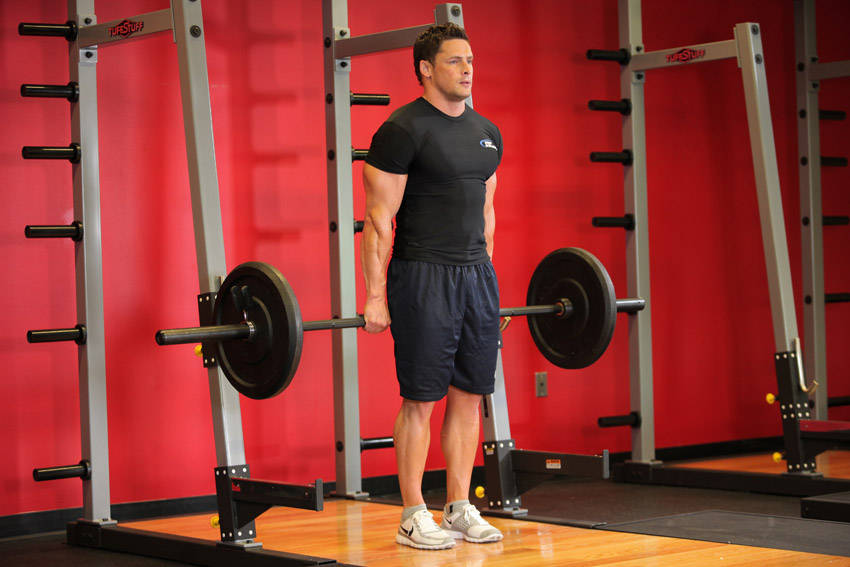
How to Perform Barbell Shrug Behind The Back
- Stand up straight with your feet at shoulder width as you hold a barbell with both hands behind your back using a pronated grip (palms facing back). Tip: Your hands should be a little wider than shoulder width apart. You can use wrist wraps for this exercise for better grip. This will be your starting position.
- Raise your shoulders up as far as you can go as you breathe out and hold the contraction for a second. Tip: Refrain from trying to lift the barbell by using your biceps. The arms should remain stretched out at all times.
- Slowly return to the starting position as you breathe in.
- Repeat for the recommended amount of repetitions.
Pro Tips
- Category: Strength
- Force: Pull
- Movement type: Isolation
Ranked Barbell Shrug Behind The Back Alternatives
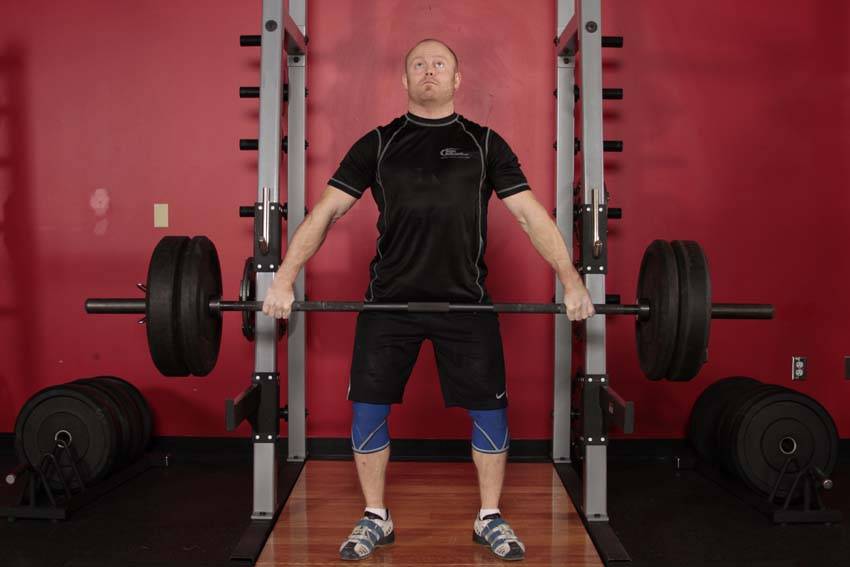
1. Snatch Shrug
90% MatchHow to perform this exercise
- Begin with a wide grip, with the bar hanging at the mid thigh position. You can use a hook or overhand grip. Your back should be straight and inclined slightly forward.
- Shrug your shoulders towards your ears. While this exercise can usually by loaded with heavier weight than a snatch, avoid overloading to the point that the execution slows down.
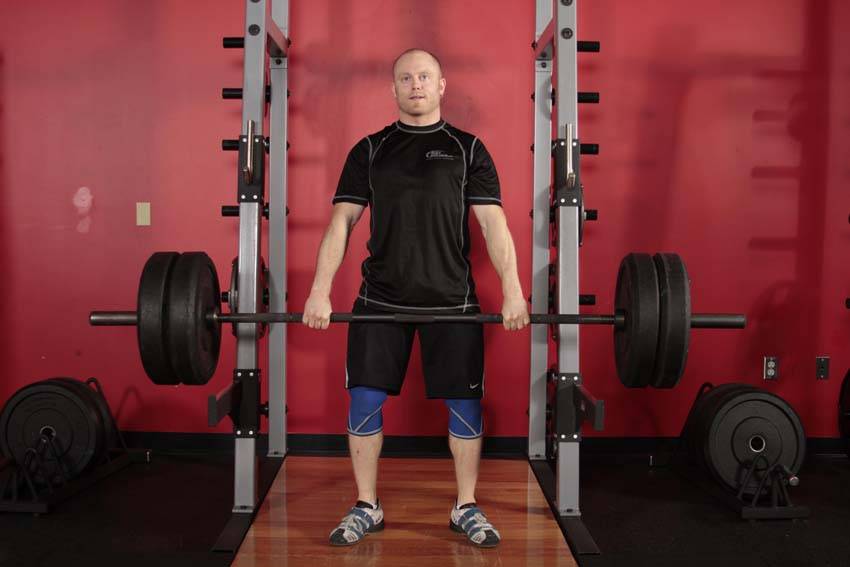
2. Clean Shrug
84.4% MatchHow to perform this exercise
- Begin with a shoulder width, double overhand or hook grip, with the bar hanging at the mid thigh position. Your back should be straight and inclined slightly forward.
- Shrug your shoulders towards your ears. While this exercise can usually by loaded with heavier weight than a clean, avoid overloading to the point that the execution slows down.
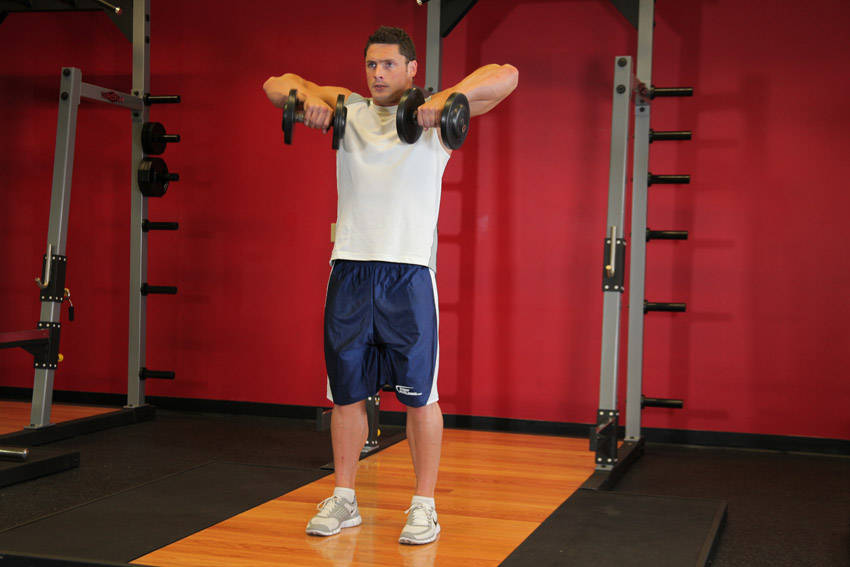
3. Standing Dumbbell Upright Row
77.1% MatchHow to perform this exercise
- Grasp a dumbbell in each hand with a pronated (palms forward) grip that is slightly less than shoulder width. The dumbbells should be resting on top of your thighs. Your arms should be extended with a slight bend at the elbows and your back should be straight. This will be your starting position.
- Use your side shoulders to lift the dumbbells as you exhale. The dumbbells should be close to the body as you move it up and the elbows should drive the motion. Continue to lift them until they nearly touch your chin. Tip: Your elbows should drive the motion. As you lift the dumbbells, your elbows should always be higher than your forearms. Also, keep your torso stationary and pause for a second at the top of the movement.
- Lower the dumbbells back down slowly to the starting position. Inhale as you perform this portion of the movement.
- Repeat for the recommended amount of repetitions.
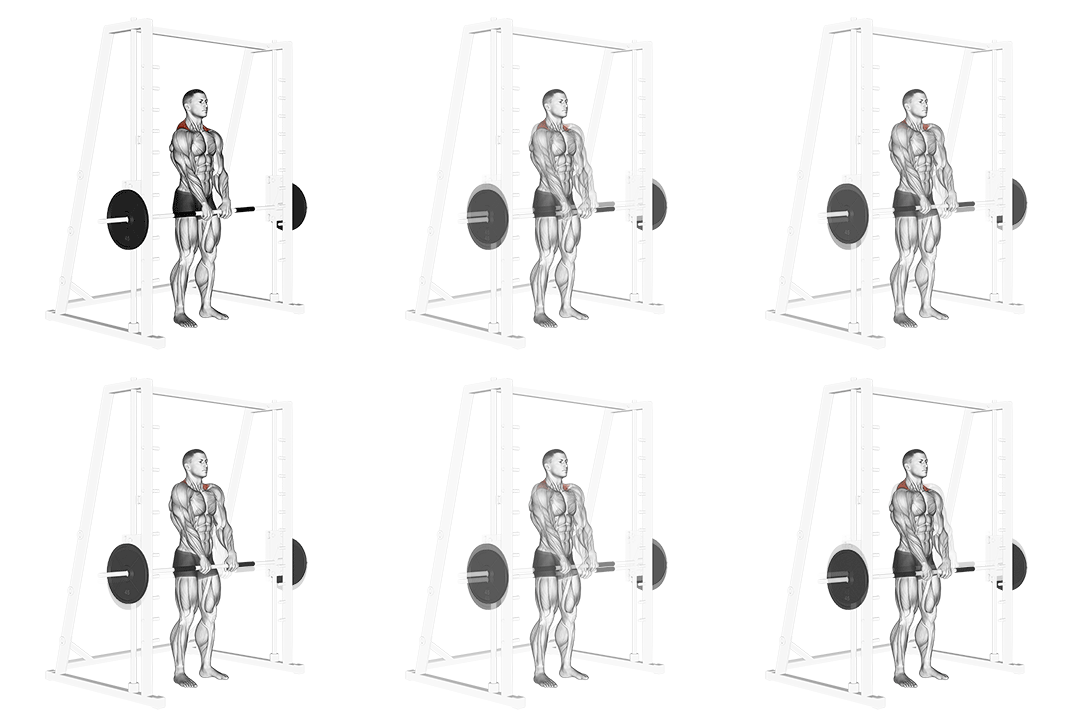
4. Smith Shrug
76.6% MatchHow to perform this exercise
- Stand with your feet shoulder-width apart and your knees slightly bent.
- Grasp the barbell with an overhand grip, hands slightly wider than shoulder-width apart.
- Keep your arms straight and your shoulders relaxed.
- Lift your shoulders up towards your ears, squeezing your traps at the top.
- Hold for a moment, then slowly lower your shoulders back down to the starting position.
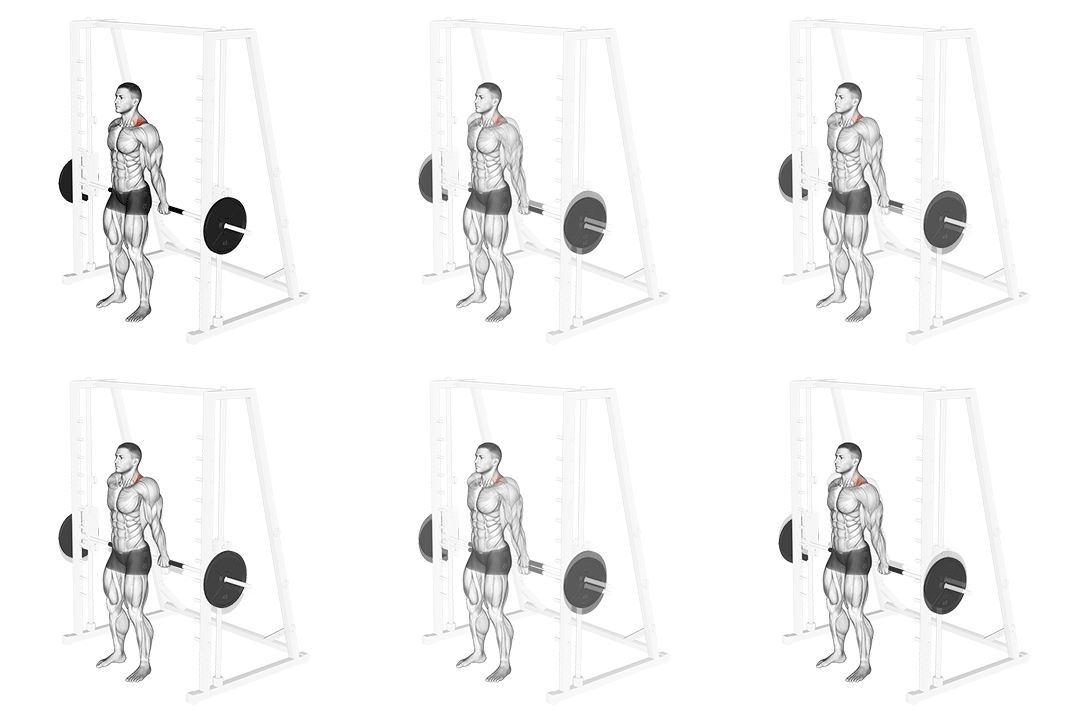
5. Smith Back Shrug
73.9% MatchHow to perform this exercise
- Stand with your feet shoulder-width apart and your knees slightly bent.
- Grasp the barbell with an overhand grip, hands slightly wider than shoulder-width apart.
- Keep your arms straight and allow the barbell to hang in front of your thighs.
- Lift your shoulders straight up towards your ears, squeezing your traps at the top.
- Hold for a moment, then lower your shoulders back down to the starting position.
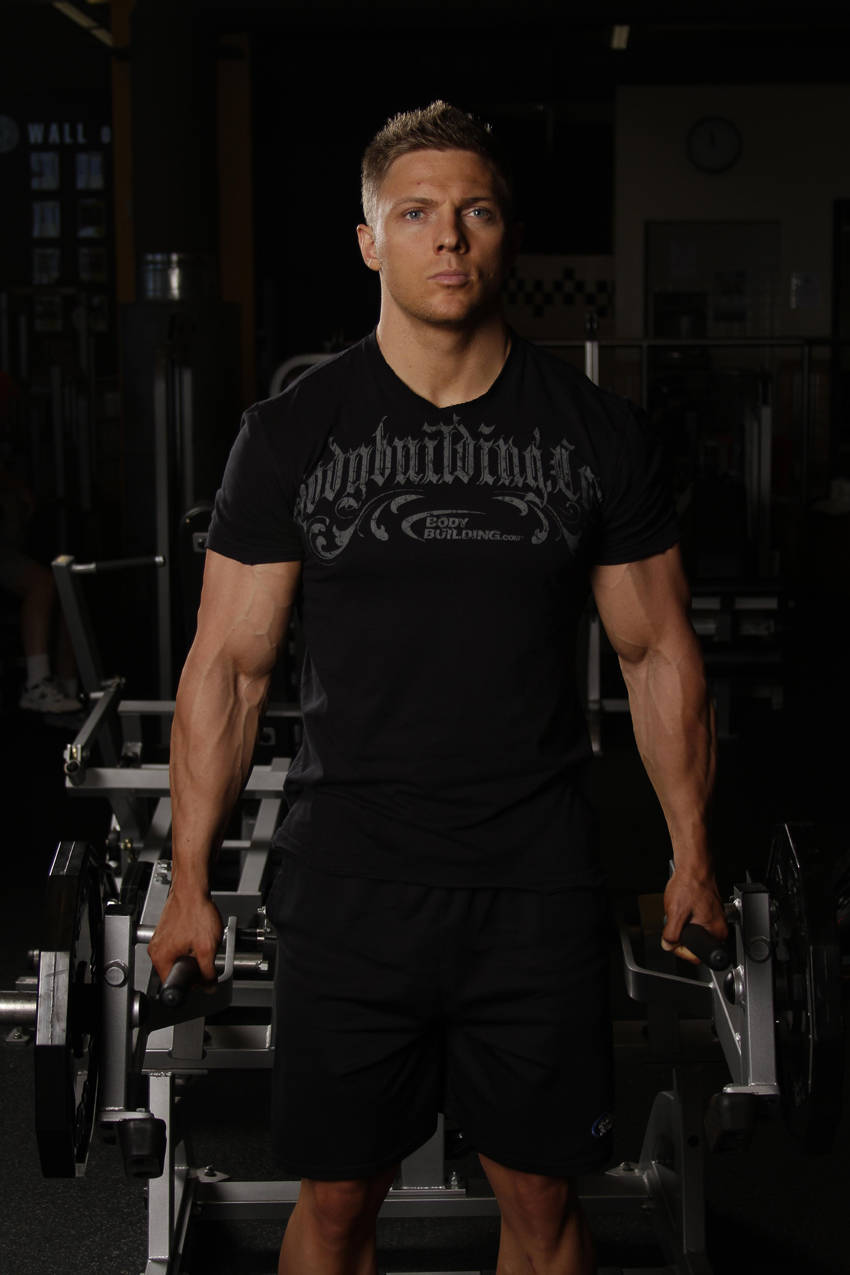
6. Leverage Shrug
72.6% MatchHow to perform this exercise
- Load the pins to an appropriate weight. Position yourself directly between the handles.
- Grasp the top handles with a comfortable grip, and then lower your hips as you take a breath. Look forward with your head and keep your chest up.
- Drive through the floor with your heels, extending your hips and knees as you rise to a standing position. Keep your arms straight throughout the movement, finishing with your shoulders back. This will be your starting position.
- Raise the weight by shrugging the shoulders towards your ears, moving straight up and down.
- Pause at the top of the motion, and then return the weight to the starting position.
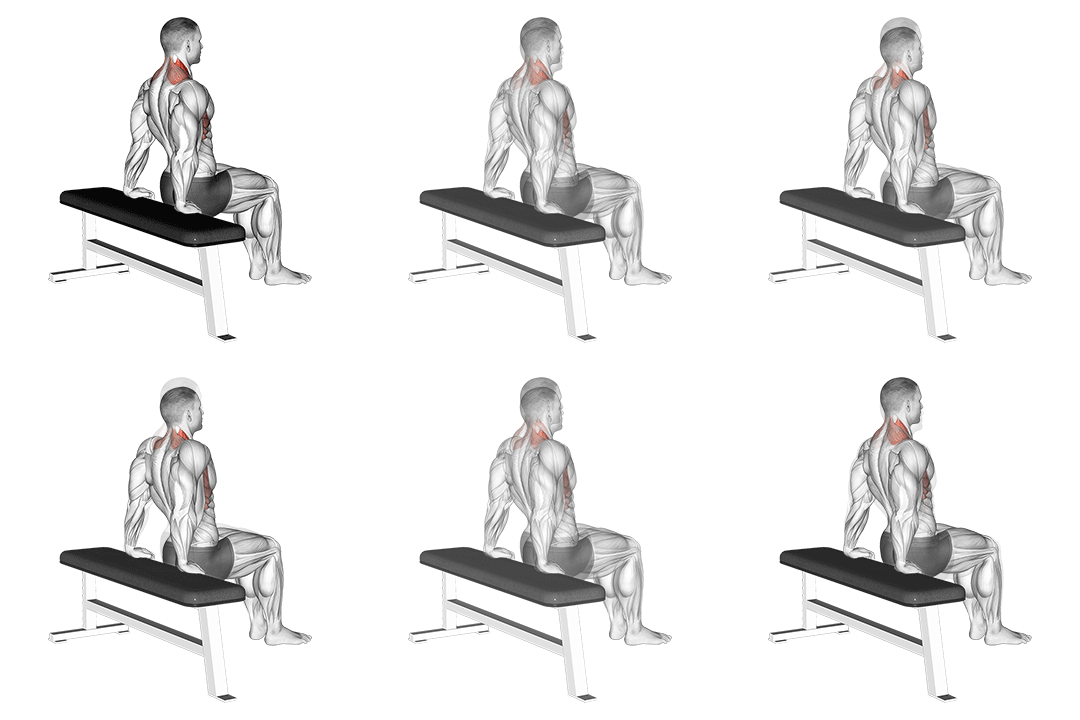
7. Scapula Dips
70.7% MatchHow to perform this exercise
- Start by standing with your feet shoulder-width apart and your arms extended in front of you.
- Bend your knees slightly and hinge forward at the hips, keeping your back straight.
- Lower your body by bending your elbows and retracting your shoulder blades, as if you are trying to squeeze a pencil between them.
- Pause for a moment at the bottom, then push through your hands to extend your elbows and return to the starting position.
- Repeat for the desired number of repetitions.
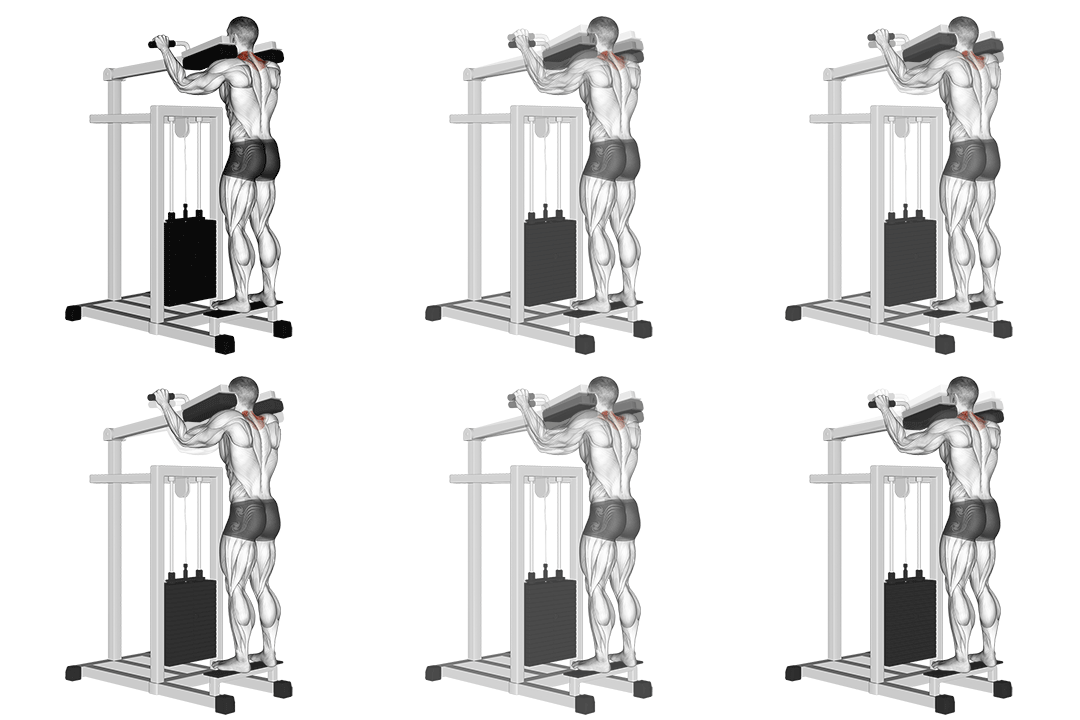
8. Lever Gripless Shrug
69.9% MatchHow to perform this exercise
- Adjust the seat height and position yourself on the leverage machine.
- Grasp the handles with your palms facing inwards and your arms fully extended.
- Keeping your back straight, exhale and elevate your shoulders as high as possible.
- Hold the contraction for a brief moment, then inhale and slowly lower your shoulders back down to the starting position.
- Repeat for the desired number of repetitions.
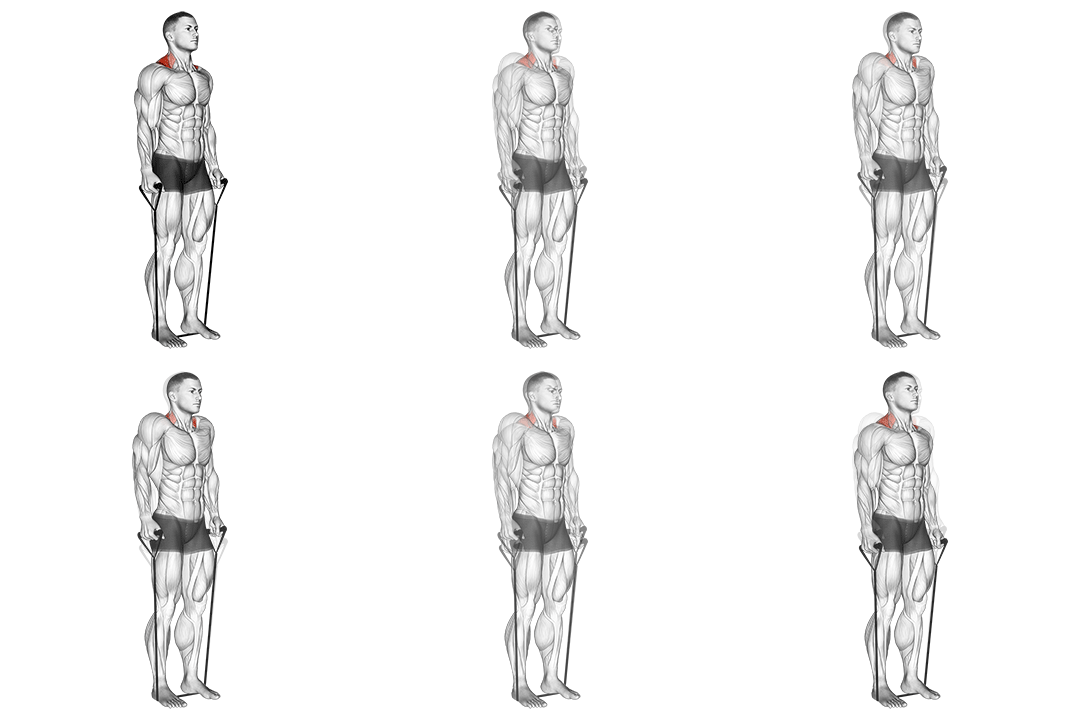
9. Band Shrug
69.4% MatchHow to perform this exercise
- Stand with your feet shoulder-width apart and place the band under your feet, holding the ends with your hands.
- Keep your arms straight and relaxed, and let the band hang in front of your thighs.
- Engage your traps by shrugging your shoulders upward, lifting the band as high as possible.
- Hold the contraction for a moment, then slowly lower your shoulders back down to the starting position.
- Repeat for the desired number of repetitions.
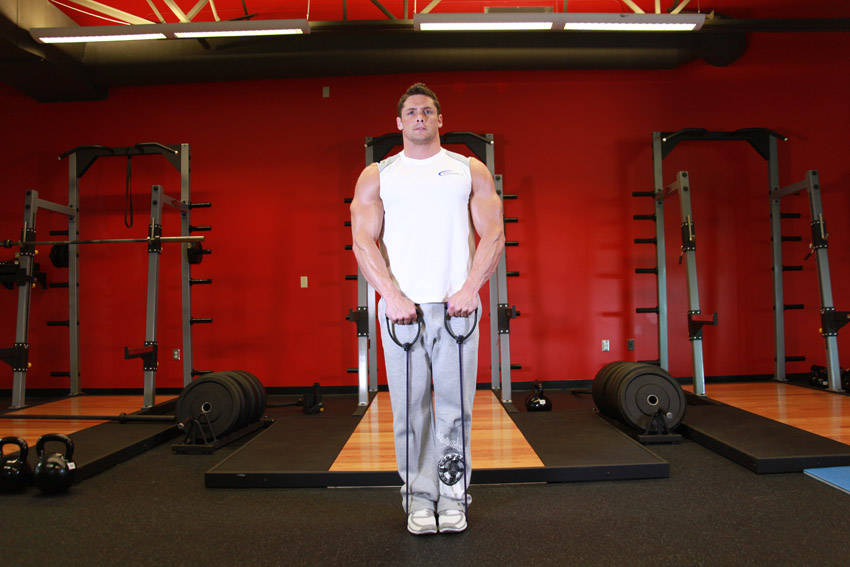
10. Upright Row - With Bands
67% MatchHow to perform this exercise
- To begin, stand on an exercise band so that tension begins at arm's length. Grasp the handles using a pronated (palms facing your thighs) grip that is slightly less than shoulder width. The handles should be resting on top of your thighs. Your arms should be extended with a slight bend at the elbows and your back should be straight. This will be your starting position.
- Use your side shoulders to lift the handles as you exhale. The handles should be close to the body as you move them up. Continue to lift the handles until they nearly touches your chin. Tip: Your elbows should drive the motion. As you lift the handles, your elbows should always be higher than your forearms. Also, keep your torso stationary and pause for a second at the top of the movement.
- Lower the handles back down slowly to the starting position. Inhale as you perform this portion of the movement.
- Repeat for the recommended amount of repetitions.
Why You Might Need a Barbell Shrug Behind The Back Alternative
You might substitute barbell shrugs behind the back because of shoulder mobility limits, sternoclavicular discomfort, or lack of a suitable barbell. The behind-the-back grip forces horizontal shoulder internal rotation and can reduce safe range of motion for scapular elevation, increasing joint stress. Choose an alternative that preserves upward scapular glide and upper-trap recruitment. For example, use a trap-bar shrug: stand inside the bar, maintain neutral spine and shrug straight up to limit shoulder rotation while keeping the load axis aligned with your torso.
How to Choose the Right Substitute
Pick an alternative based on pain, grip position, loading capacity and movement pattern. If you have shoulder impingement, favor neutral-grip options (trap-bar or dumbbell shrugs) to reduce internal rotation. If you need unilateral correction, select single-arm dumbbell shrugs and check symmetry with a 3–5 rep test. For maximal progressive overload choose heavy, short-range options like trap-bar shrugs or loaded farmer carries; cue full scapular elevation and controlled eccentric descent to maximize motor unit recruitment in the upper traps.
Frequently Asked Questions
What muscles does Barbell Shrug Behind The Back work?
Barbell shrug behind the back primarily targets the upper trapezius, which elevates the scapula. It also engages the levator scapulae and, to a lesser extent, the middle traps and rhomboids when you add scapular retraction; cue: shrug straight up without extending the neck to maximize upper-trap activation.
What is the best bodyweight alternative to Barbell Shrug Behind The Back?
A scapular pull-up or inverted scapular shrug is the best bodyweight option to train scapular elevation and control. Hang or set your body in an inverted row position with straight arms, depress and pull the shoulder blades down and up while keeping the elbows locked to feel trap engagement.
Can I build muscle without doing Barbell Shrug Behind The Back?
Yes. You can build trap size using heavy dumbbell shrugs, trap-bar shrugs, cable shrugs, and farmer carries while applying progressive overload. Focus on progressive load, full scapular elevation, and 1–2 second peak squeezes to drive hypertrophy in the upper traps.
More Exercise Alternatives
Find Alternatives for Any Exercise
Use the exercise substitution finder to compare ranked alternatives for your available equipment and training preference.
Try the Exercise Substitution Finder →