

10 Best Barbell Shrug Alternatives for Gym or Home
The Barbell Shrug is done standing with a barbell. Ranked closest by our scoring: the Cable Shrug, the Dumbbell Shrug and the Smith Machine Behind The Back Shrug. Four harder versions, among them the Hang Clean - Below The Knees and the Barbell Bent Arm Pullover, are listed below as progressions rather than swaps.
What can you do instead of Barbell Shrug? Use dumbbell shrugs, trap-bar shrugs, cable shrugs, Smith-machine shrugs, or farmer’s carries to target the upper traps. Cue: pull the scapulae straight up, lock the elbows, keep a neutral spine, and pause at peak contraction to maximize upper-trap activation and time under tension.
Updated Ranked by our 12-factor similarity model How it works
Original Exercise: Barbell Shrug
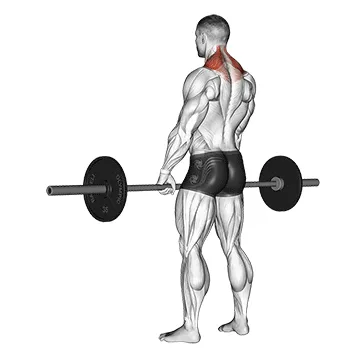
- Primary muscle
- Traps
- Equipment
- Barbell
- Difficulty
- Beginner
- Type
- Isolation
Secondary muscles: Shoulders
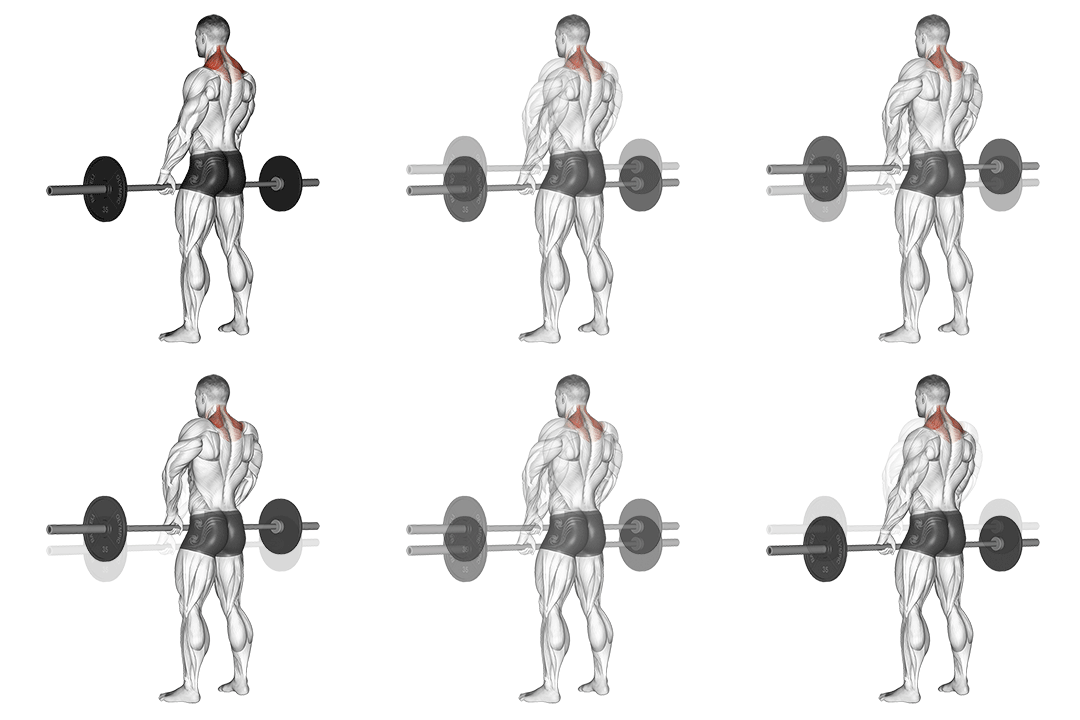
How to perform Barbell Shrug
- Stand with your feet shoulder-width apart and hold a barbell in front of you with an overhand grip.
- Keep your arms straight and your back straight throughout the exercise.
- Lift your shoulders up towards your ears as high as possible, squeezing your traps at the top.
- Hold for a moment, then slowly lower your shoulders back down to the starting position.
- Repeat for the desired number of repetitions.
Ranked Barbell Shrug Alternatives
10 substitutes, ranked by how closely each one matches the Barbell Shrug on movement pattern, muscles worked, equipment and body position. The higher the score, the less you change. Open "How to perform this exercise" on a card for the steps; every card title links to that exercise's own alternatives page. Harder versions are tagged as progressions and kept out of the top spot even when they score higher.
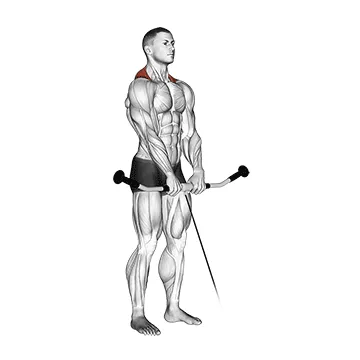
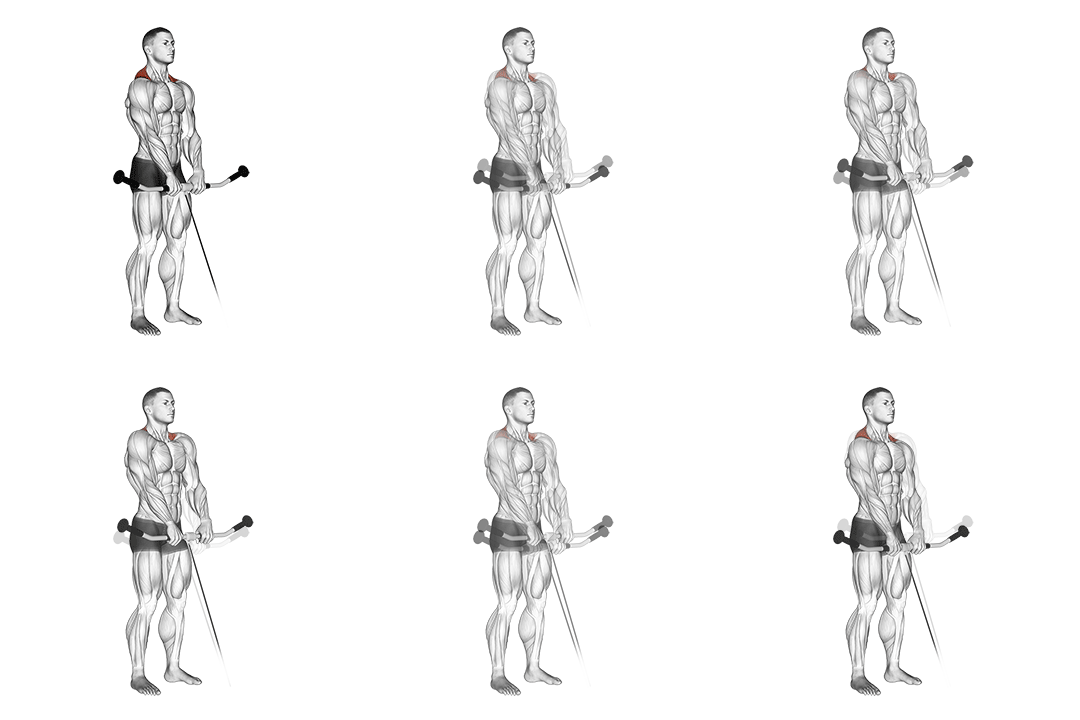
Best match 1. Cable Shrug
85% match- Traps
- Cable
- Beginner
- Isolation
A good swap when you have a cable machine to work with, and it still works the traps.
How to perform this exercise
- Stand facing the cable machine with your feet shoulder-width apart.
- Grasp the cable handles with an overhand grip and let your arms hang down in front of you.
- Keeping your arms straight, shrug your shoulders up towards your ears.
- Hold the contraction for a moment, then slowly lower your shoulders back down to the starting position.
- Repeat for the desired number of repetitions.
Sets and reps: 3 sets of 10 to 15 reps.
Why this matches
- Primary muscle: traps, the same as the Barbell Shrug
- Equipment: a cable, not free weights
- Body position: standing, the same as the Barbell Shrug
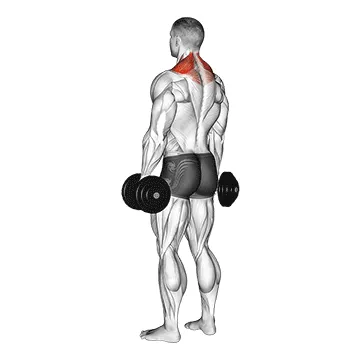
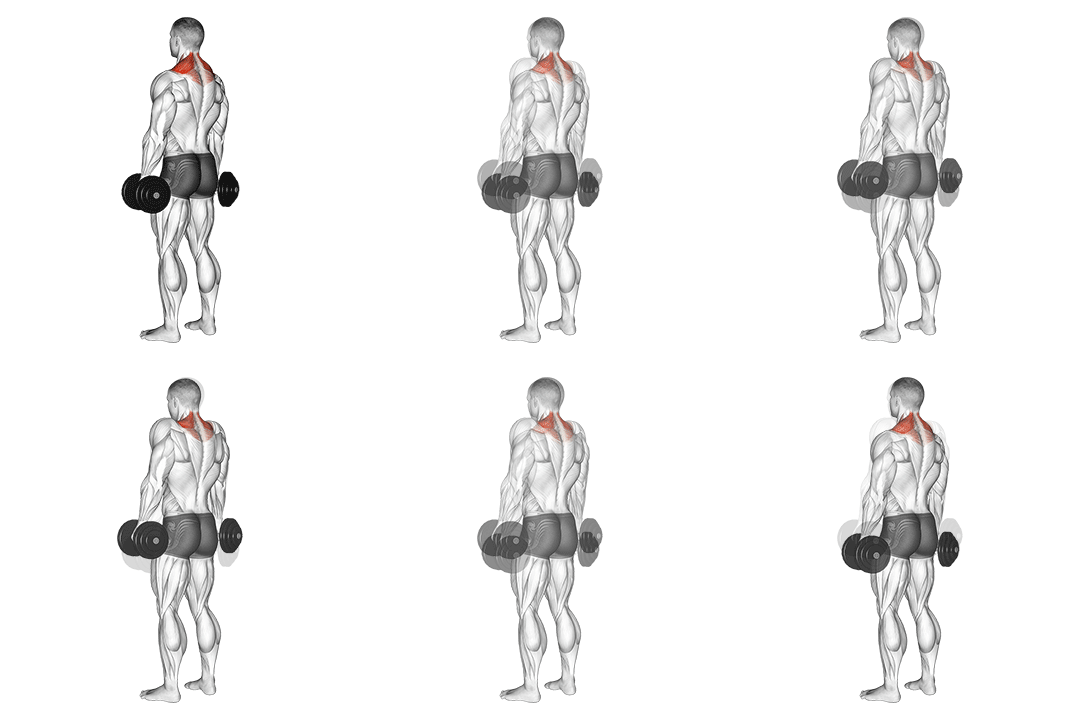
2. Dumbbell Shrug
83% match- Traps
- Dumbbell
- Beginner
- Isolation
A good swap when you have dumbbells to work with, and it still works the traps.
How to perform this exercise
- Stand with your feet shoulder-width apart and hold a dumbbell in each hand with your palms facing your body.
- Keep your arms straight and let the dumbbells hang by your sides.
- Raise your shoulders as high as possible, as if you are trying to touch your ears with your shoulders.
- Hold the contraction for a second, then slowly lower your shoulders back down to the starting position.
- Repeat for the desired number of repetitions.
Sets and reps: 3 sets of 10 to 15 reps.
Why this matches
- Primary muscle: traps, the same as the Barbell Shrug
- Equipment: free weights, the same as the Barbell Shrug
- Body position: standing, the same as the Barbell Shrug
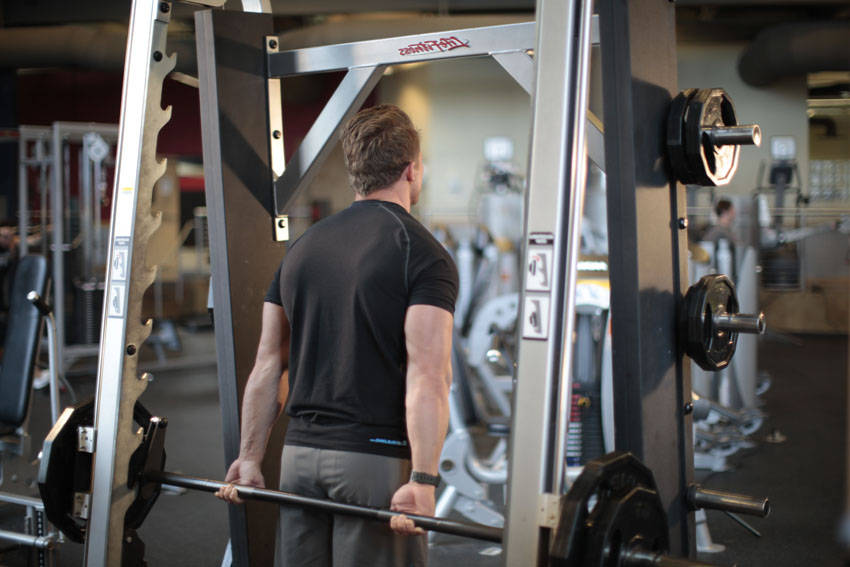
- Traps
- Machine
- Beginner
- Isolation
A good swap when you have a machine to work with, and it still works the traps.
How to perform this exercise
- With the bar at thigh level, load an appropriate weight.
- Stand with the bar behind you, taking a shoulder-width, pronated grip on the bar and unhook the weight. You should be standing up straight with your head and chest up and your arms extended. This will be your starting position.
- Initiate the movement by shrugging your shoulders straight up. Do not flex the arms or wrist during the movement.
- After a brief pause return the weight to the starting position.
- Repeat for the desired number of repetitions before engaging the hooks to rack the weight.
Sets and reps: 3 sets of 10 to 15 reps.
Why this matches
- Primary muscle: traps, the same as the Barbell Shrug
- Equipment: a machine, not free weights
- Body position: standing, the same as the Barbell Shrug
- Balance: easier to stay steady on than the Barbell Shrug
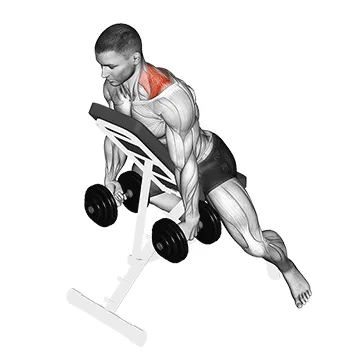
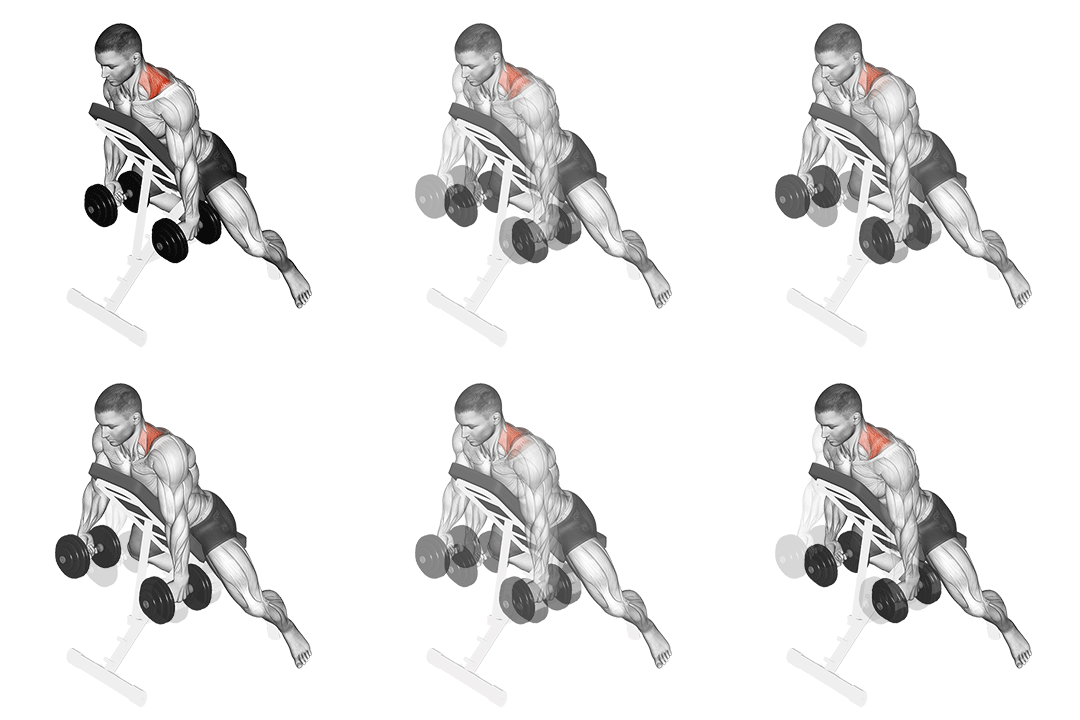
4. Dumbbell Decline Shrug
76% match- Traps
- Dumbbell
- Beginner
- Isolation
How to perform this exercise
- Set up a decline bench at a 45-degree angle.
- Lie face down on the bench with your chest and stomach resting against it.
- Hold a dumbbell in each hand with your arms fully extended towards the floor.
- Keeping your arms straight, raise your shoulders towards your ears as high as possible.
- Hold the contraction for a moment, then slowly lower the dumbbells back to the starting position.
- Repeat for the desired number of repetitions.
Sets and reps: 3 sets of 10 to 15 reps.
Why this matches
- Primary muscle: traps, the same as the Barbell Shrug
- Equipment: free weights, the same as the Barbell Shrug
- Body position: lying face down, not standing
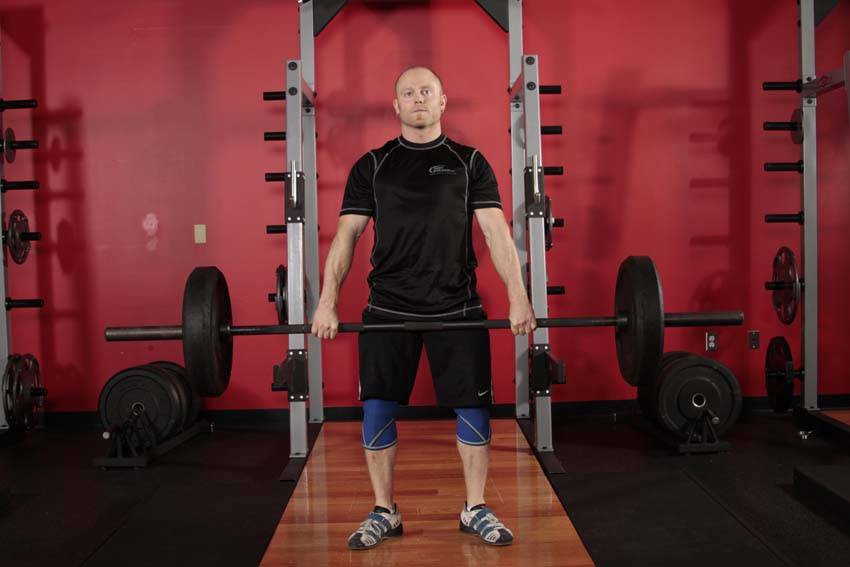
Progression
5. Hang Clean - Below The Knees
71% match- Quads
- Barbell
- Advanced
- Compound
A looser match: it uses the same equipment, but it works the quads rather than the traps.
How to perform this exercise
- Begin with a shoulder width, double overhand or hook grip, with the bar hanging just below the knees. Your back should be straight and inclined slightly forward.
- Begin by aggressively extending through the hips, knees and ankles, driving the weight upward. As you do so, shrug your shoulders towards your ears. As full extension is achieved, transition into the third pull by aggressively shrugging and flexing the arms with the elbows up and out.
- At peak extension, aggressively pull yourself down, rotating your elbows under the bar as you do so. Receive the bar in a front squat position, the depth of which is dependent upon the height of the bar at the end of the third pull. The bar should be racked onto the protracted shoulders, lightly touching the throat with the hands relaxed. Continue to descend to the bottom squat position, which will help in the recovery.
- Immediately recover by driving through the heels, keeping the torso upright and elbows up. Continue until you have risen to a standing position.
Sets and reps: 3 to 5 sets of 5 to 8 reps.
Why this matches
- Primary muscle: quads, not traps
- Equipment: free weights, the same as the Barbell Shrug
- Body position: standing, the same as the Barbell Shrug
- Balance: harder to stay steady on than the Barbell Shrug
Progression
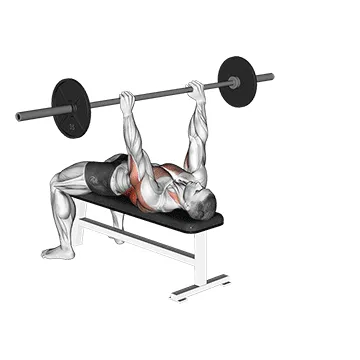
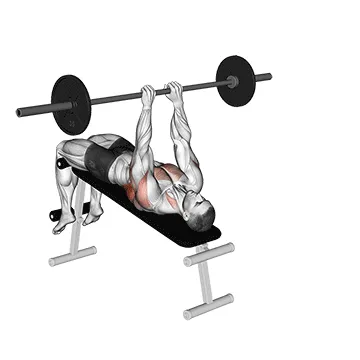
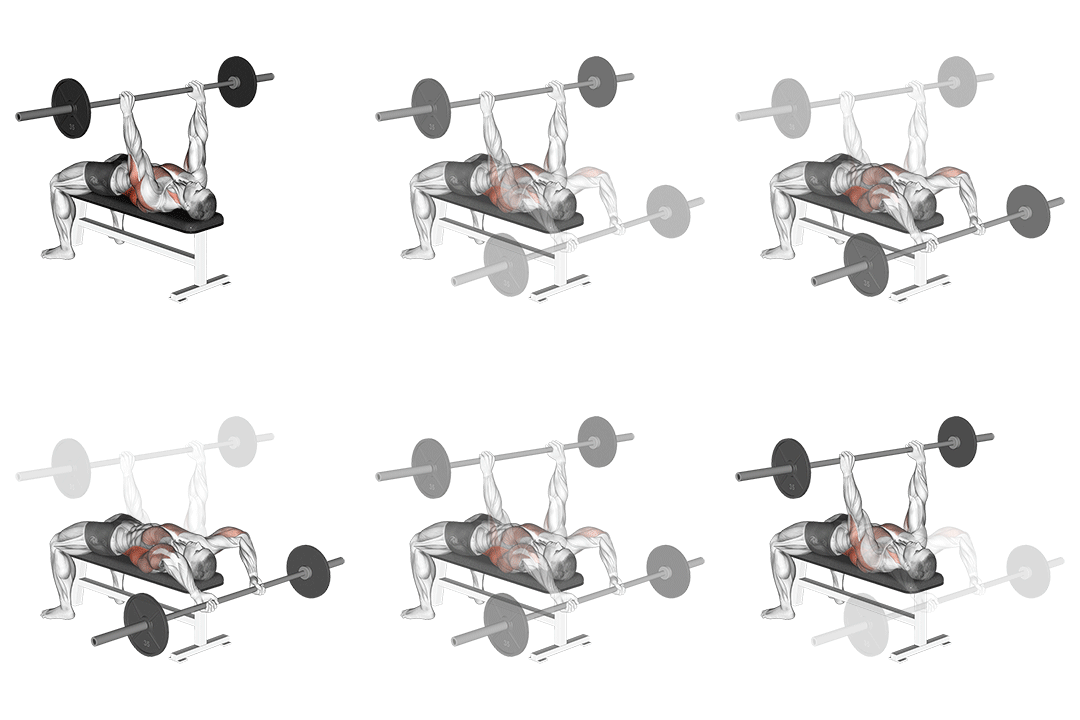
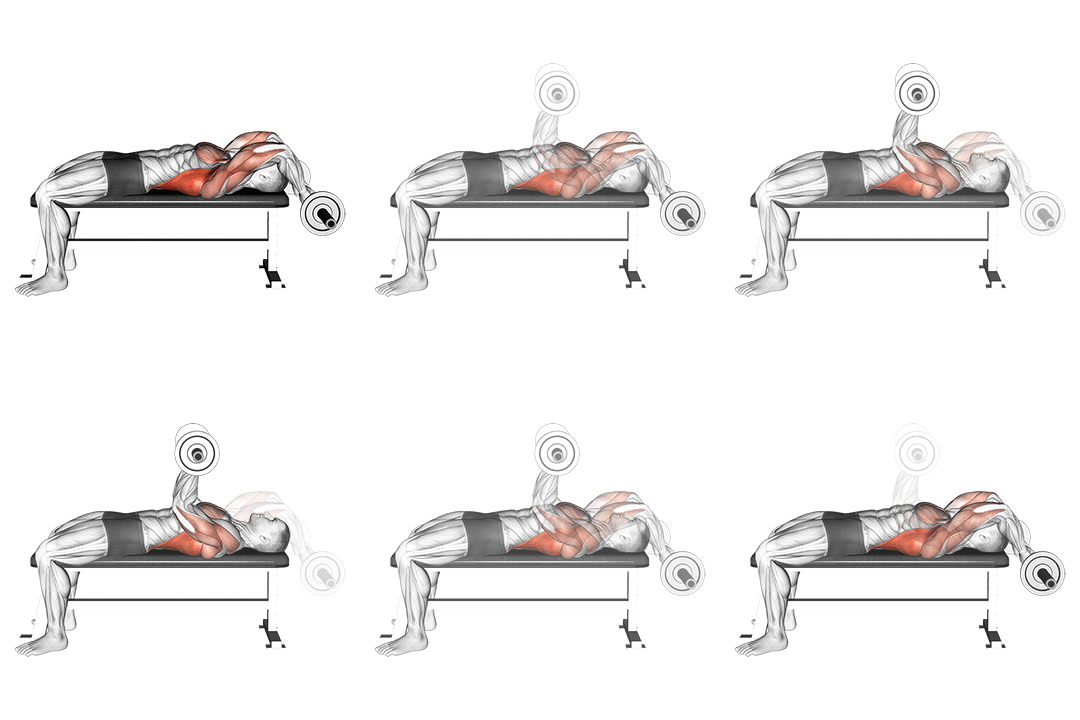
6. Barbell Bent Arm Pullover
71% match- Lats
- Barbell
- Intermediate
- Isolation
A looser match: it uses the same equipment, but it works the lats rather than the traps.
How to perform this exercise
- Lie flat on a bench with your head at one end and your feet on the floor.
- Hold a barbell with a shoulder-width grip and extend your arms straight above your chest.
- Lower the barbell behind your head while keeping your arms slightly bent.
- Pause for a moment, then raise the barbell back to the starting position.
- Repeat for the desired number of repetitions.
Sets and reps: 3 sets of 10 to 15 reps.
Why this matches
- Primary muscle: lats, not traps
- Equipment: free weights, the same as the Barbell Shrug
- Body position: lying on your back, not standing
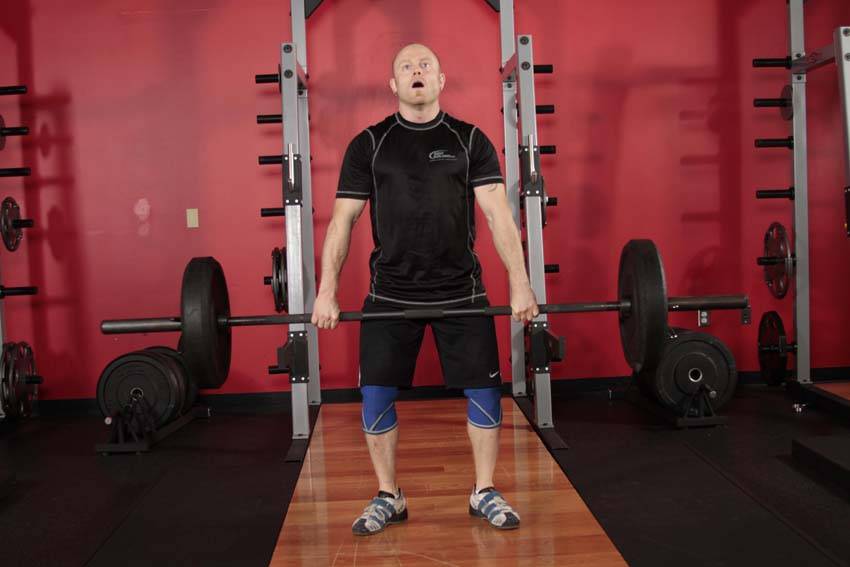
Progression
7. Hang Clean
70% match- Quads
- Barbell
- Advanced
- Compound
How to perform this exercise
- Begin with a shoulder width, double overhand or hook grip, with the bar hanging at the mid thigh position. Your back should be straight and inclined slightly forward.
- Begin by aggressively extending through the hips, knees and ankles, driving the weight upward. As you do so, shrug your shoulders towards your ears.
- Immediately recover by driving through the heels, keeping the torso upright and elbows up. Continue until you have risen to a standing position.
Sets and reps: 3 to 5 sets of 5 to 8 reps.
Why this matches
- Primary muscle: quads, not traps
- Equipment: free weights, the same as the Barbell Shrug
- Body position: standing, the same as the Barbell Shrug
- Balance: harder to stay steady on than the Barbell Shrug
Progression
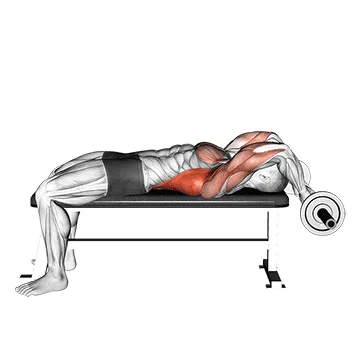
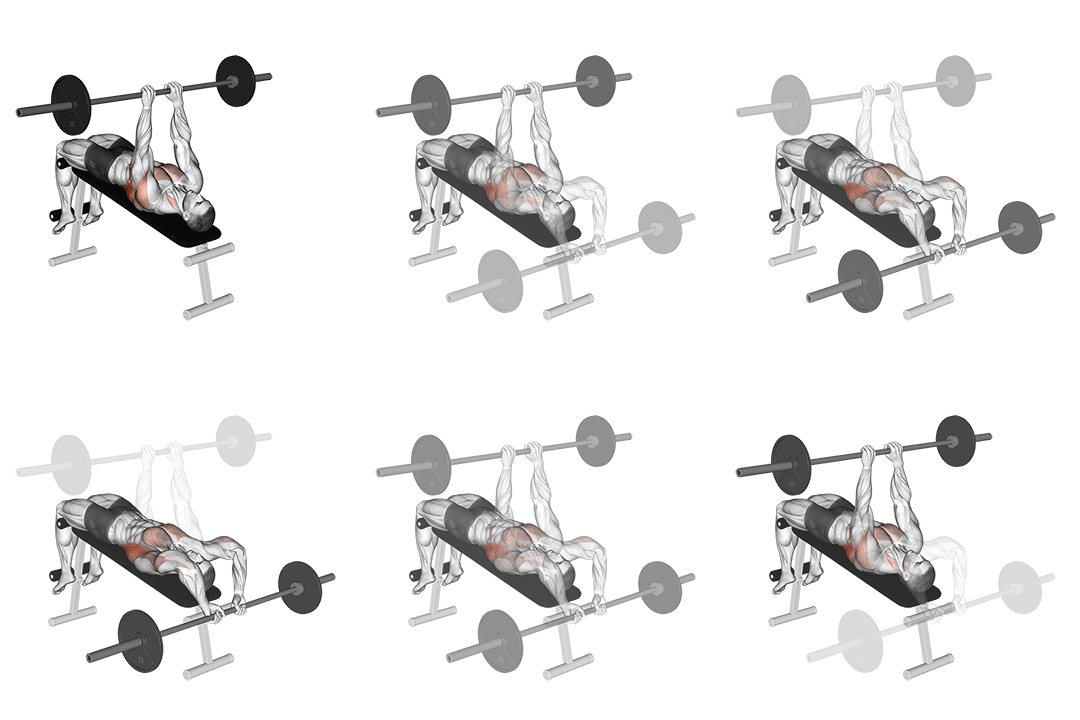
8. Barbell Decline Bent Arm Pullover
70% match- Lats
- Barbell
- Intermediate
- Isolation
How to perform this exercise
- Lie down on a decline bench with your head lower than your hips and your feet secured.
- Hold a barbell with a pronated grip (palms facing away from you) and extend your arms straight above your chest.
- Lower the barbell behind your head in a controlled manner, keeping your arms slightly bent.
- Pause for a moment, then raise the barbell back to the starting position by contracting your lats.
- Repeat for the desired number of repetitions.
Sets and reps: 3 sets of 10 to 15 reps.
Why this matches
- Primary muscle: lats, not traps
- Equipment: free weights, the same as the Barbell Shrug
- Body position: lying on your back, not standing
- Balance: easier to stay steady on than the Barbell Shrug
9. EZ Bar Lying Bent Arms Pullover
70% match- Lats
- Ez-barbell
- Intermediate
- Isolation
How to perform this exercise
- Lie flat on a bench with your head at one end and your feet on the floor.
- Hold the EZ barbell with a pronated grip (palms facing away from you) and your hands shoulder-width apart.
- Extend your arms straight above your chest, keeping a slight bend in your elbows.
- Lower the barbell in an arc motion behind your head, maintaining the slight bend in your elbows.
- Pause for a moment, then return the barbell to the starting position by reversing the arc motion.
- Repeat for the desired number of repetitions.
Sets and reps: 3 sets of 10 to 15 reps.
Why this matches
- Primary muscle: lats, not traps
- Equipment: free weights, the same as the Barbell Shrug
- Body position: lying on your back, not standing
- Balance: easier to stay steady on than the Barbell Shrug
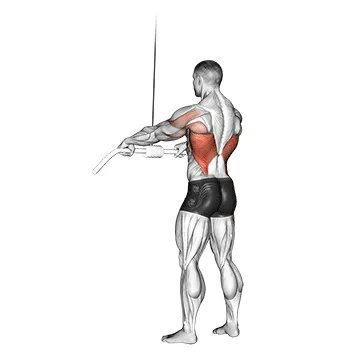
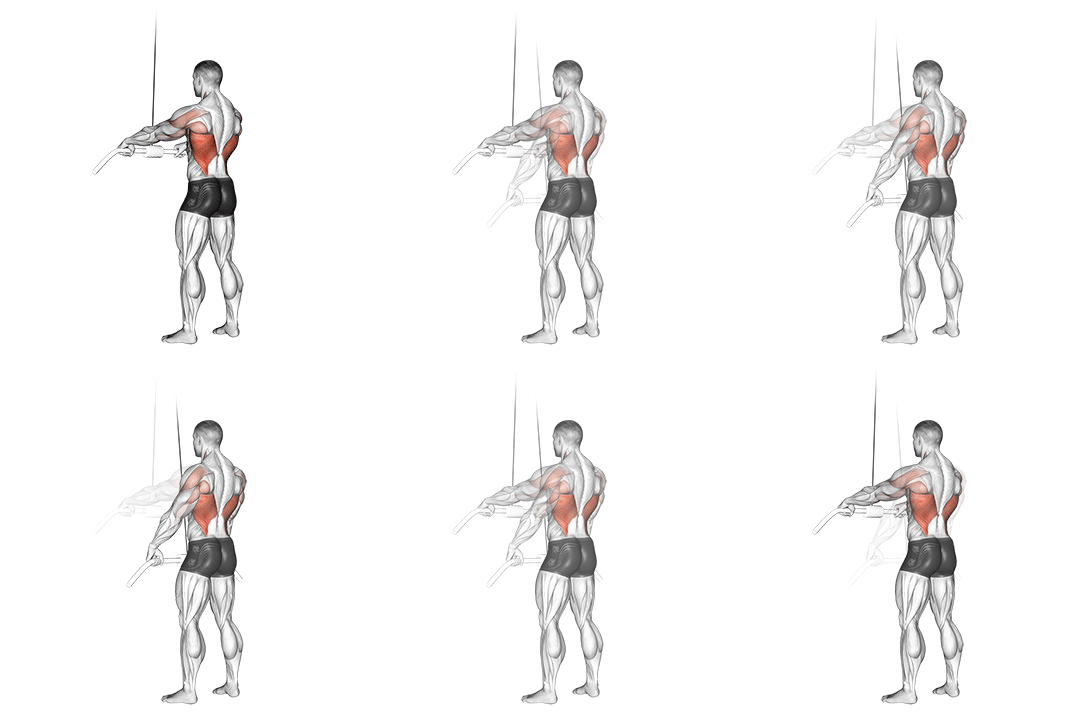
10. Cable Straight Arm Pulldown
70% match- Lats
- Cable
- Beginner
- Isolation
How to perform this exercise
- Attach a straight bar to the high pulley of a cable machine.
- Stand facing the machine with your feet shoulder-width apart.
- Grasp the bar with an overhand grip, keeping your arms straight and your palms facing down.
- Engage your lats and pull the bar down towards your thighs, keeping your arms straight throughout the movement.
- Pause for a moment at the bottom, then slowly return the bar to the starting position.
- Repeat for the desired number of repetitions.
Sets and reps: 3 sets of 10 to 15 reps.
Why this matches
- Primary muscle: lats, not traps
- Equipment: a cable, not free weights
- Body position: standing, the same as the Barbell Shrug
Why You Might Need a Barbell Shrug Alternative
You might substitute barbell shrugs because of equipment limits, wrist or grip pain, lower-back loading, or to target traps with different force vectors. Dumbbell shrugs (85% match) lower spinal shear and allow unilateral correction; trap-bar shrugs (83% match) change loading through the hips and reduce torso flexion; cable and Smith-machine shrugs (76% match each) provide constant tension and controlled range; farmer’s carry (71% match) builds isometric trap strength and scapular stability. Technique cue: always brace your core, keep a neutral cervical spine, and drive scapula elevation rather than extending the neck to prioritize upper-trapezius activation while protecting adjacent joints.
How to Choose the Right Barbell Shrug Substitute
Select a substitute based on loading, range of motion, and spine tolerance. If you need heavy axial load without lumbar shear, choose a trap-bar shrug and cue a tall chest and soft knees; for continuous tension and peak contraction work, pick cable shrugs and pull shoulders straight up along the line of pull. Choose dumbbells when you want unilateral correction, keep wrists neutral and shrug evenly to balance left/right trap activation. For stability and carry capacity, use farmer’s carries and focus on maintaining elevated scapulae while walking. Prioritize progressive overload (weight, reps, or tempo) and pick the option that lets you maintain clean scapular mechanics.
Barbell Shrug FAQ
What muscles does Barbell Shrug work?
Barbell shrugs primarily load the upper trapezius, producing scapular elevation. They also recruit the levator scapulae and the cervical extensors minimally if you extend the neck; keep the neck neutral and drive the scapulae up to focus load on the traps.
Can I build muscle without doing Barbell Shrug?
Yes. Build trap muscle with progressive overload using dumbbell shrugs, cables, trap-bar variations, or heavy carries while maintaining strict scapular elevation and controlled eccentrics. Match intensity and frequency, and prioritize full peak contraction and slow descents to stimulate hypertrophy.
Find Alternatives for Any Exercise
Search the exercise database and filter the ranked substitutes by the equipment you own.
Similarity scores compare exercise metadata such as movement pattern, muscles, equipment and body position. They are not a safety rating or a check that you own the equipment. Learn about our methodology