

10 Best Dumbbell Incline Shrug Alternatives for Limited Equipment
Use standing dumbbell shrugs, barbell shrugs, cable upright rows, Smith incline shrugs, or handstand scapular shrugs. Emphasize full scapular elevation and controlled eccentric: keep arms straight, drive shoulders toward your ears, and pause 1–2 seconds at the top to maximize upper-trapezius activation.
Original Exercise: Dumbbell Incline Shrug
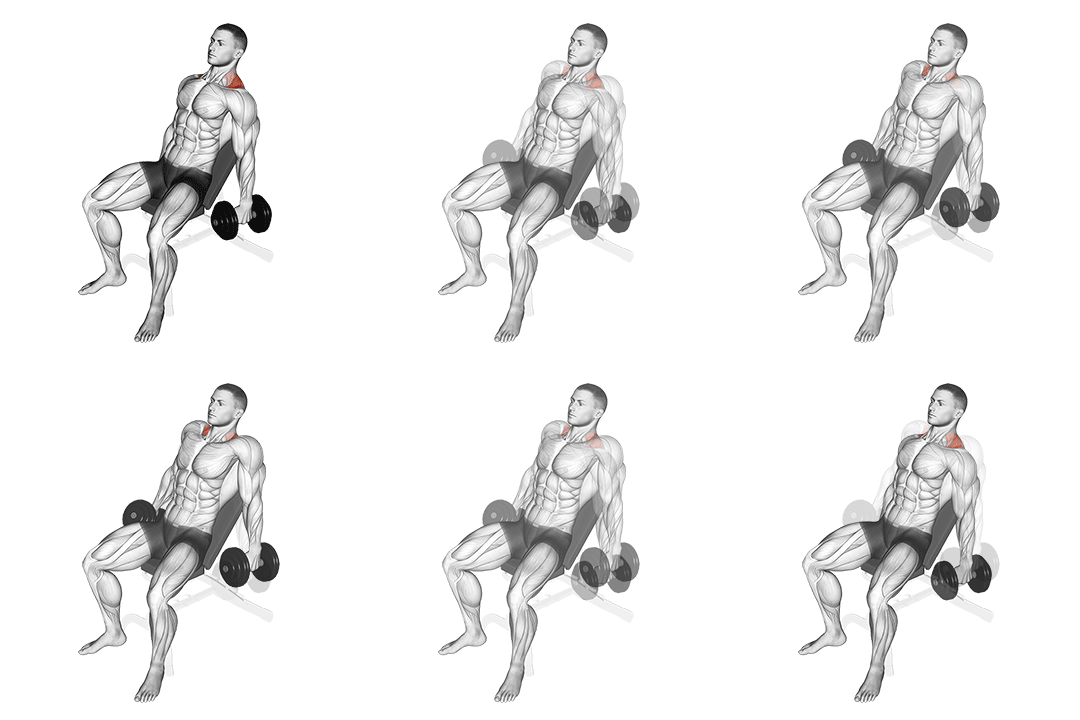
How to Perform Dumbbell Incline Shrug
- Set an incline bench to a 45-degree angle and sit on it with a dumbbell in each hand.
- Place your feet flat on the ground and let your arms hang straight down with your palms facing your body.
- Keeping your arms straight, shrug your shoulders up towards your ears as high as possible.
- Hold the contraction for a moment, then slowly lower your shoulders back down to the starting position.
- Repeat for the desired number of repetitions.
Ranked Dumbbell Incline Shrug Alternatives
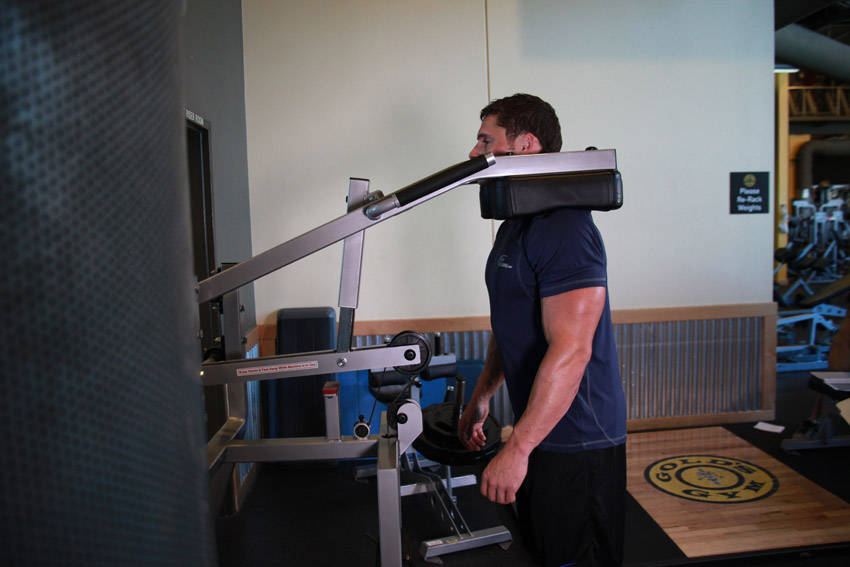
1. Calf-Machine Shoulder Shrug
70.3% MatchHow to perform this exercise
- Position yourself on the calf machine so that the shoulder pads are above your shoulders. Your torso should be straight with the arms extended normally by your side. This will be your starting position.
- Raise your shoulders up towards your ears as you exhale and hold the contraction for a full second.
- Slowly return to the starting position as you inhale.
- Repeat for the recommended amount of repetitions.
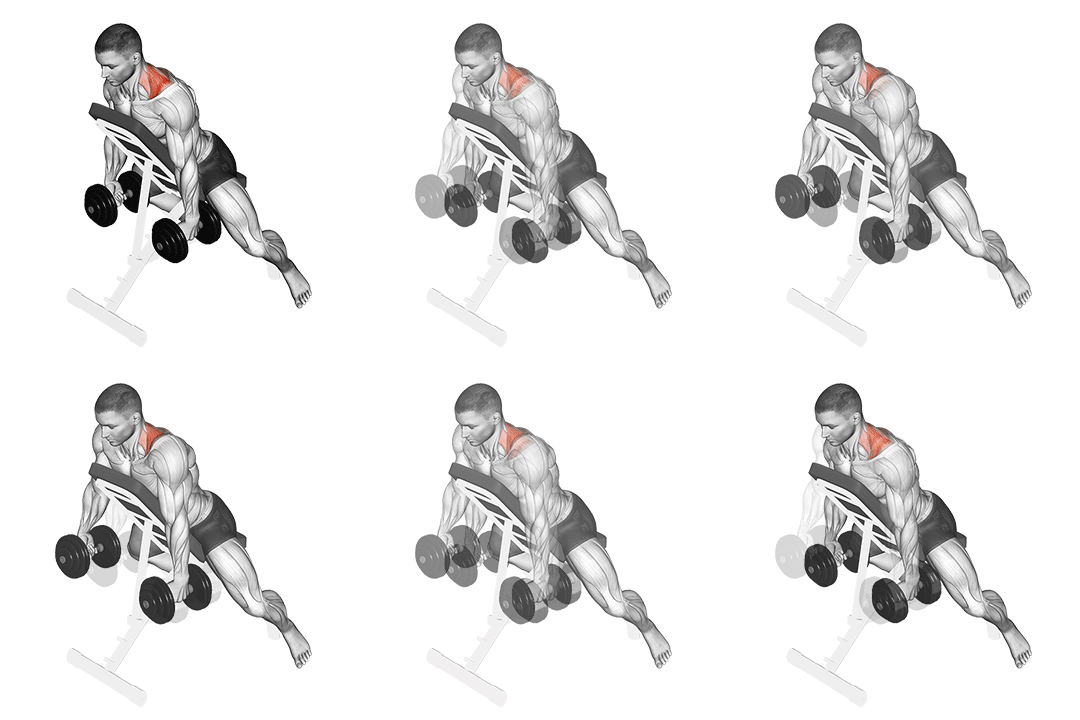
2. Dumbbell Decline Shrug
66.4% MatchHow to perform this exercise
- Set up a decline bench at a 45-degree angle.
- Lie face down on the bench with your chest and stomach resting against it.
- Hold a dumbbell in each hand with your arms fully extended towards the floor.
- Keeping your arms straight, raise your shoulders towards your ears as high as possible.
- Hold the contraction for a moment, then slowly lower the dumbbells back to the starting position.
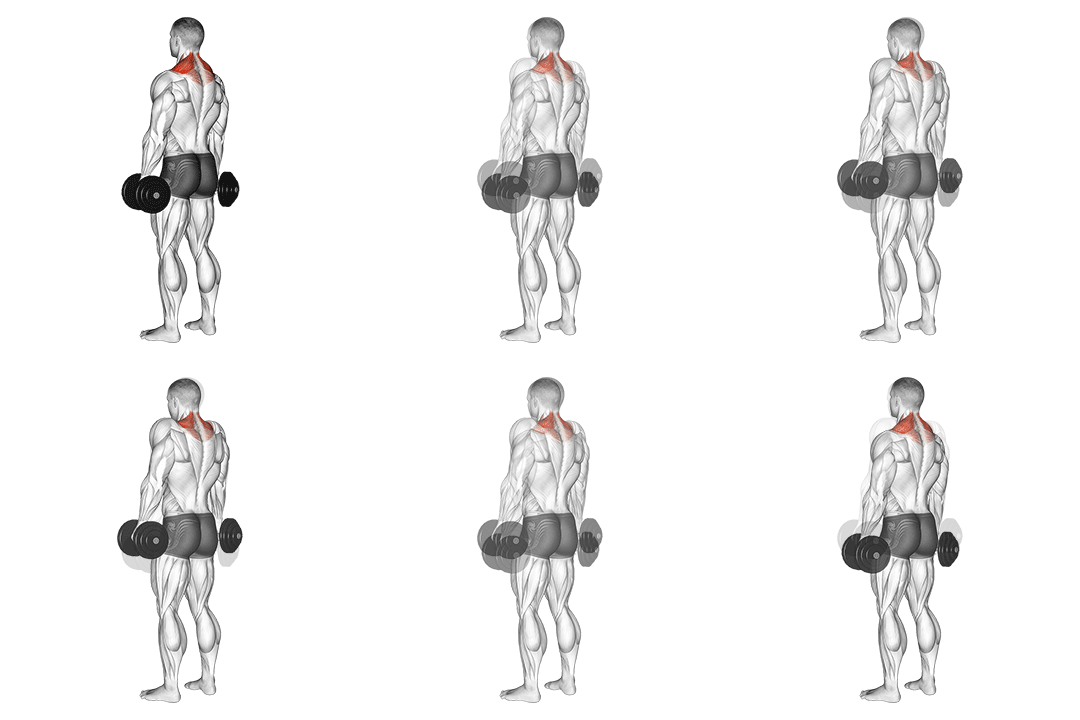
3. Dumbbell Shrug
66.4% MatchHow to perform this exercise
- Stand with your feet shoulder-width apart and hold a dumbbell in each hand with your palms facing your body.
- Keep your arms straight and let the dumbbells hang by your sides.
- Raise your shoulders as high as possible, as if you are trying to touch your ears with your shoulders.
- Hold the contraction for a second, then slowly lower your shoulders back down to the starting position.
- Repeat for the desired number of repetitions.
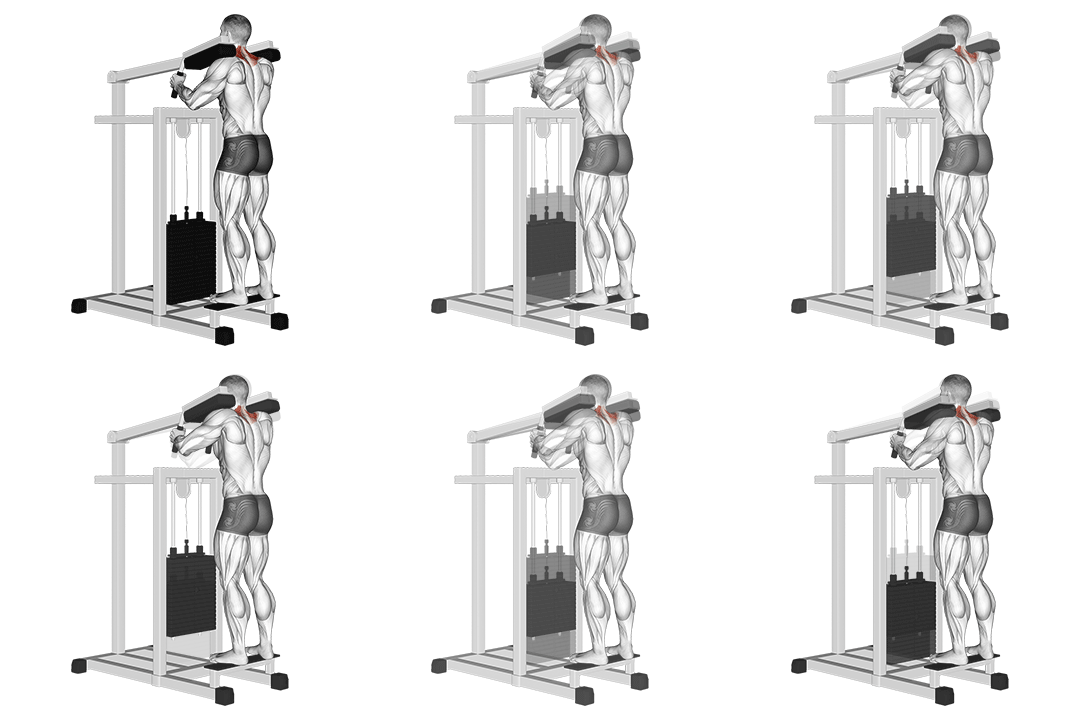
4. Lever Gripless Shrug V. 2
63% MatchHow to perform this exercise
- Adjust the seat height and position yourself on the machine with your back against the pad.
- Grasp the handles or bars with an overhand grip, keeping your arms straight.
- Keeping your back straight, lift your shoulders up towards your ears as high as possible.
- Hold the contraction for a moment, then slowly lower your shoulders back down to the starting position.
- Repeat for the desired number of repetitions.
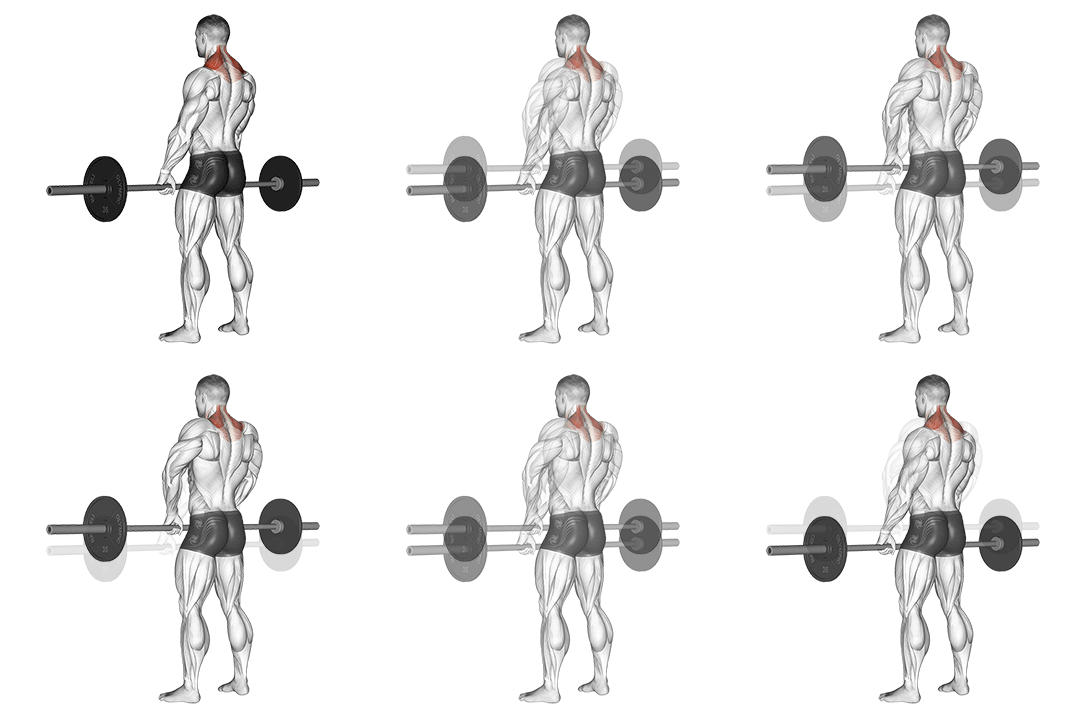
5. Barbell Shrug
62.4% MatchHow to perform this exercise
- Stand with your feet shoulder-width apart and hold a barbell in front of you with an overhand grip.
- Keep your arms straight and your back straight throughout the exercise.
- Lift your shoulders up towards your ears as high as possible, squeezing your traps at the top.
- Hold for a moment, then slowly lower your shoulders back down to the starting position.
- Repeat for the desired number of repetitions.
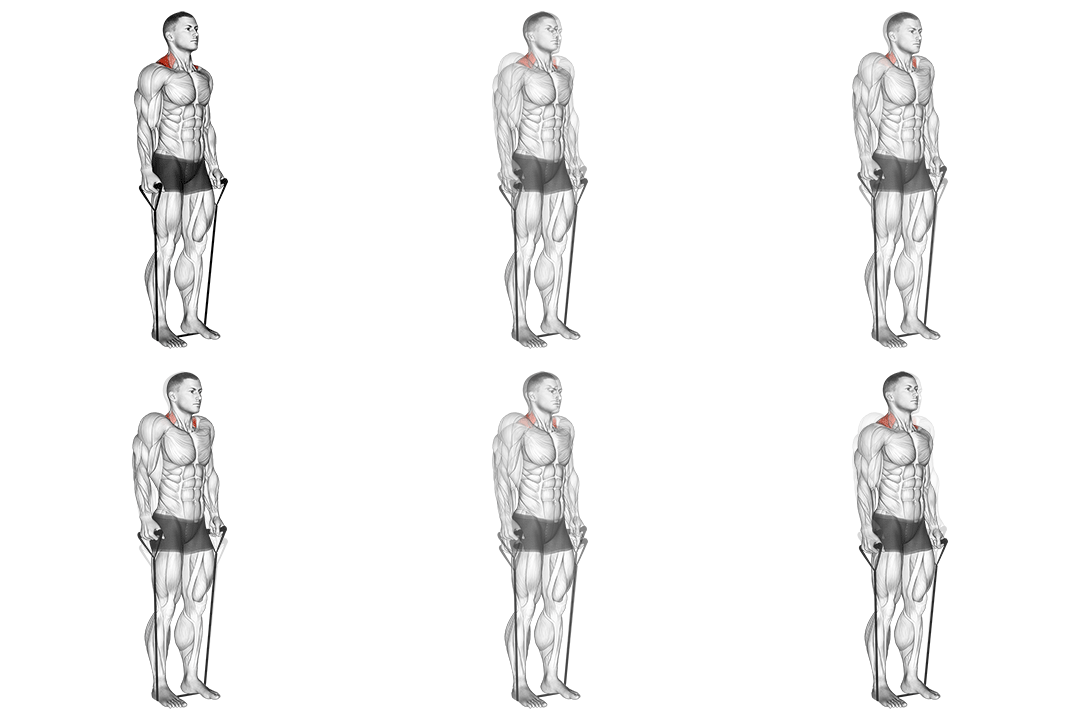
6. Band Shrug
61.4% MatchHow to perform this exercise
- Stand with your feet shoulder-width apart and place the band under your feet, holding the ends with your hands.
- Keep your arms straight and relaxed, and let the band hang in front of your thighs.
- Engage your traps by shrugging your shoulders upward, lifting the band as high as possible.
- Hold the contraction for a moment, then slowly lower your shoulders back down to the starting position.
- Repeat for the desired number of repetitions.
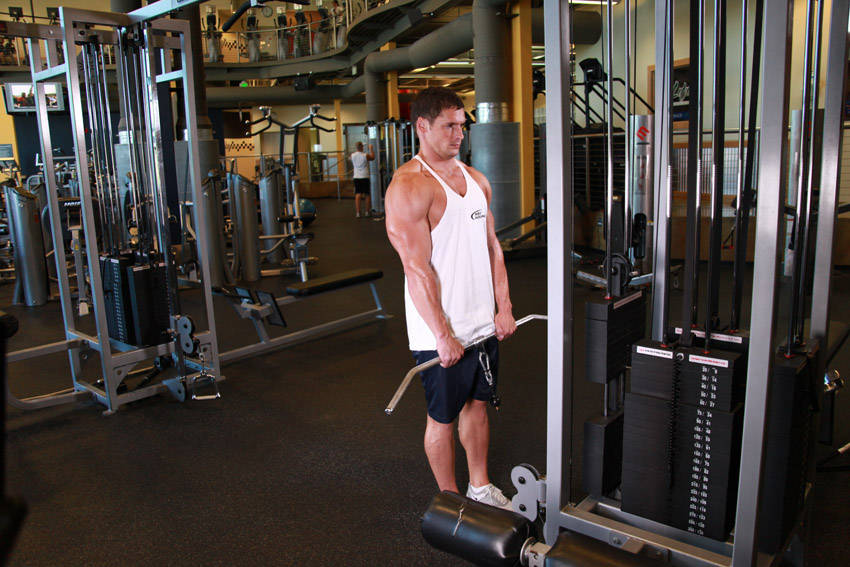
7. Cable Shrugs
59% MatchHow to perform this exercise
- Grasp a cable bar attachment that is attached to a low pulley with a shoulder width or slightly wider overhand (palms facing down) grip.
- Stand erect close to the pulley with your arms extended in front of you holding the bar. This will be your starting position.
- Lift the bar by elevating the shoulders as high as possible as you exhale. Hold the contraction at the top for a second. Tip: The arms should remain extended at all times. Refrain from using the biceps to help lift the bar. Only the shoulders should be moving up and down.
- Lower the bar back to the original position.
- Repeat for the recommended amount of repetitions.
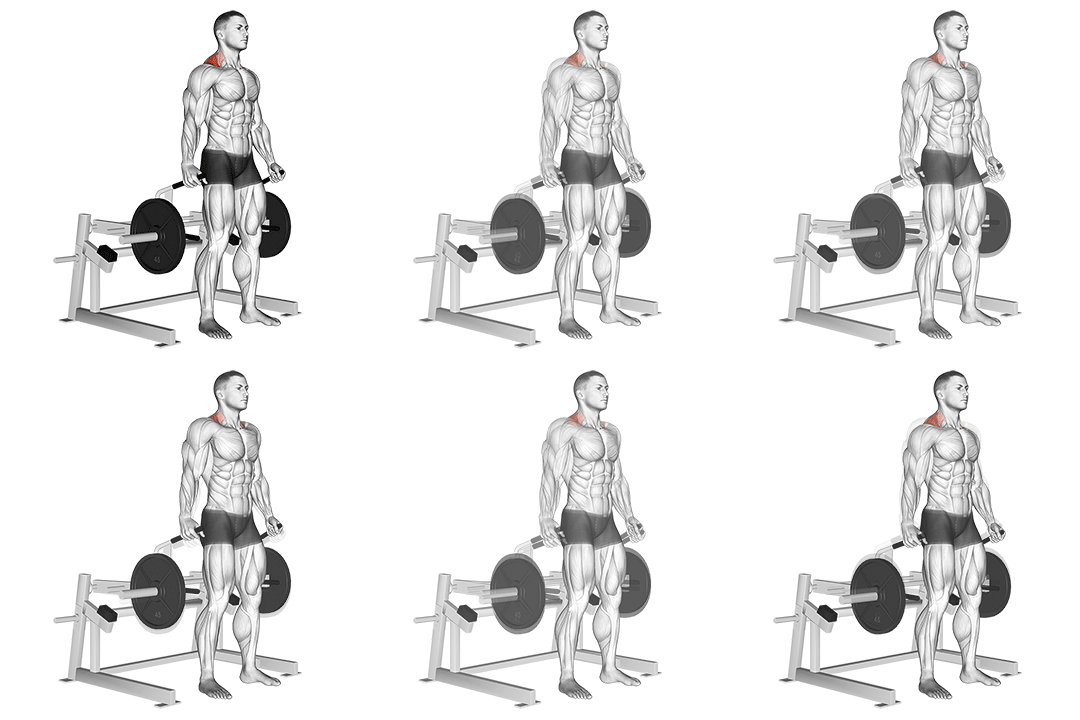
8. Lever Shrug
58.4% MatchHow to perform this exercise
- Adjust the seat height and position yourself on the leverage machine with your back against the pad.
- Grasp the handles with an overhand grip and keep your arms straight.
- Keeping your back straight, lift your shoulders up towards your ears as high as possible.
- Hold the contraction for a moment, then slowly lower your shoulders back down to the starting position.
- Repeat for the desired number of repetitions.
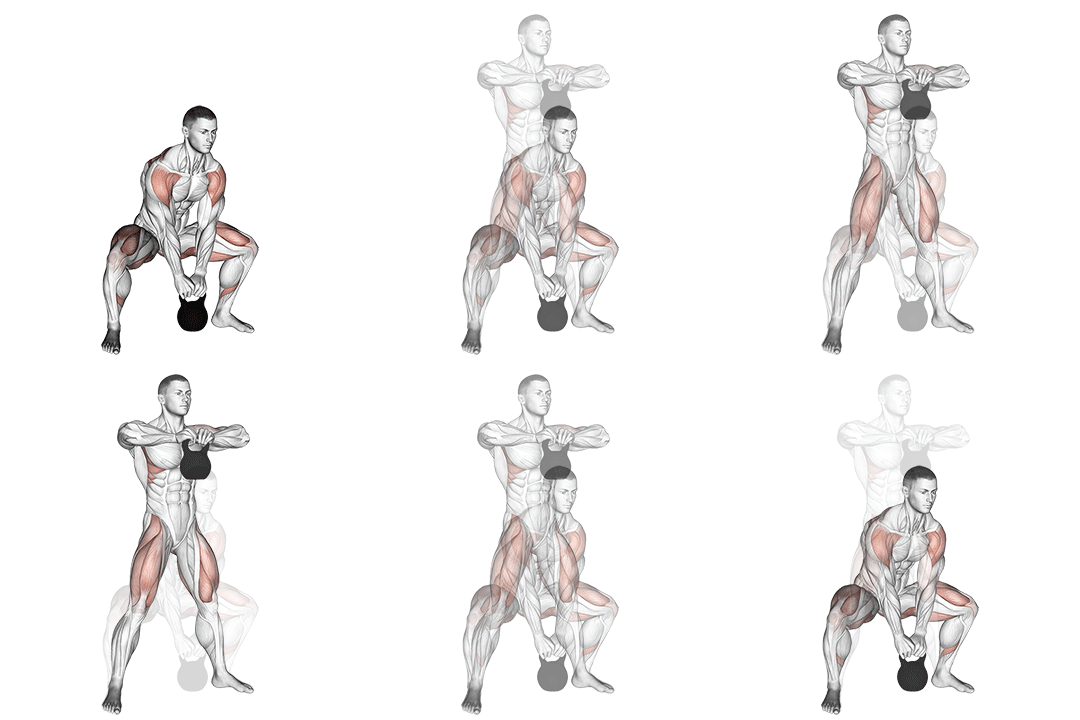
9. Kettlebell Sumo High Pull
56.7% MatchHow to perform this exercise
- Stand with your feet wider than shoulder-width apart, toes pointing outwards.
- Hold a kettlebell with both hands in front of your body, arms extended downwards.
- Bend your knees and lower your hips into a squat position, keeping your back straight.
- Drive through your heels and explosively extend your hips and knees, pulling the kettlebell up towards your chin.
- As you pull the kettlebell up, keep your elbows high and wide, and squeeze your shoulder blades together.
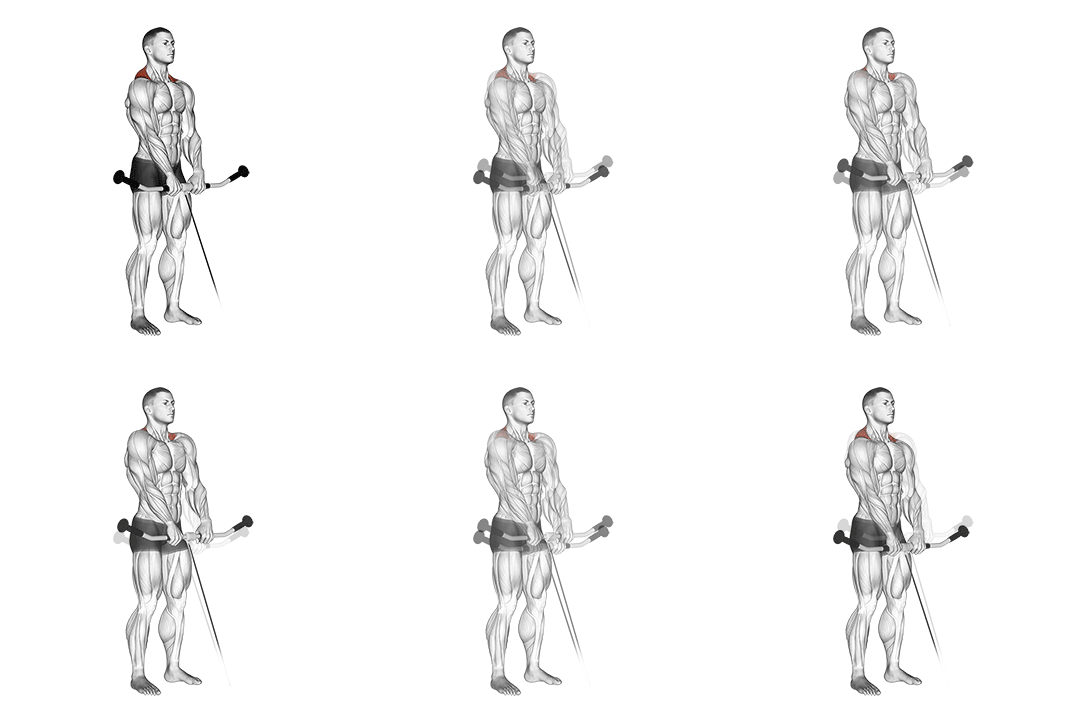
10. Cable Shrug
53.2% MatchHow to perform this exercise
- Stand facing the cable machine with your feet shoulder-width apart.
- Grasp the cable handles with an overhand grip and let your arms hang down in front of you.
- Keeping your arms straight, shrug your shoulders up towards your ears.
- Hold the contraction for a moment, then slowly lower your shoulders back down to the starting position.
- Repeat for the desired number of repetitions.
Why You Might Need a Dumbbell Incline Shrug Alternative
You might substitute the Dumbbell Incline Shrug because of bench availability, wrist or neck pain, or a need for heavier loading. The incline position changes scapular mechanics and the traps' length-tension relationship; some lifters feel cervical extension or discomfort when lying on an incline. Alternatives let you keep vertical scapular elevation while adjusting load, range of motion, or torso angle. For example, barbell shrugs let you load heavier with a neutral spine, set feet hip-width, keep arms straight, and retract the scapula before each rep to bias the upper traps and reduce neck strain.
How to Choose the Right Substitute
Match the substitute to the movement pattern and your training constraint. If you need raw load for hypertrophy, pick barbell shrugs and focus on full contraction and slow eccentrics; cue: pull the shoulder girdle straight up without bending the elbows. If you lack a bench but need a controlled range, use cable upright rows to maintain constant tension, stand tall, keep a neutral head, and drive scapular elevation. If neck pain limits you, choose movements that minimize cervical extension and prioritize scapular motion and time under tension.
Frequently Asked Questions
What muscles does Dumbbell Incline Shrug work?
The Dumbbell Incline Shrug primarily targets the upper trapezius, producing scapular elevation under load. It also recruits the levator scapulae and stabilizing fibers of the middle trapezius. Cue: keep arms straight and lift the shoulder girdle toward the ears to emphasize trap activation.
What is the best bodyweight alternative to Dumbbell Incline Shrug?
The best bodyweight substitute is the handstand scapular shrug. Perform with straight arms against a wall or in a pike position: depress and then elevate the scapula while keeping the elbows locked to isolate the upper traps. Use small, controlled reps and focus on squeeze at the top for maximum activation.
Can I build muscle without doing Dumbbell Incline Shrug?
Yes. You can build upper-trap mass with alternative lifts, barbell shrugs, cable upright rows, Smith incline shrugs, or weighted neck shrugs, so long as you apply progressive overload and control the eccentric. Cue: prioritize full scapular elevation, hold the peak contraction briefly, and increase load or volume methodically.
More Exercise Alternatives
Find Alternatives for Any Exercise
Use the exercise substitution finder to compare ranked alternatives for your available equipment and training preference.
Try the Exercise Substitution Finder →