

10 Best Dumbbell Lying Femoral Alternatives for At-Home Training
If you can't perform the Dumbbell Lying Femoral, use movements that replicate knee flexion or load the posterior chain: prone/lying machine hamstring curl, stability-ball hamstring curl, single-leg Romanian deadlift, Nordic hamstring, or glute-ham raise. Cue: hinge from the hips, control a 3–4s eccentric, and keep posterior chain tension through full range.
Original Exercise: Dumbbell Lying Femoral
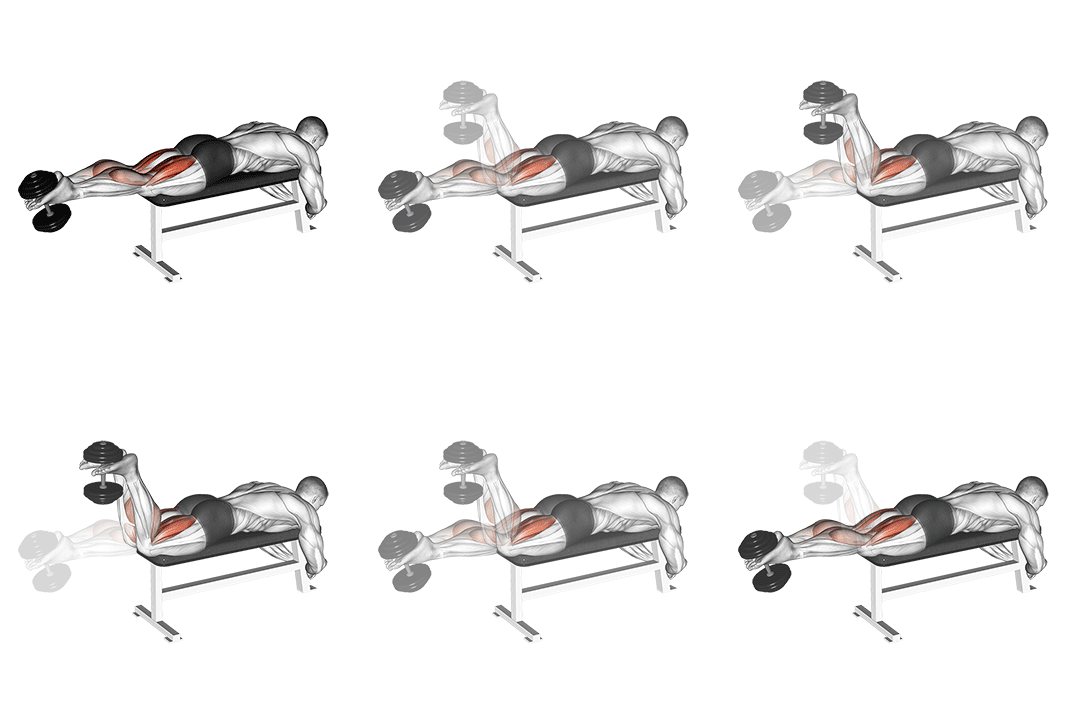
How to Perform Dumbbell Lying Femoral
- Lie flat on your back with your legs extended and a dumbbell resting on your lower abdomen.
- Bend your knees and bring the dumbbell towards your glutes, keeping your feet flat on the ground.
- Pause for a moment at the top, then slowly lower the dumbbell back to the starting position.
- Repeat for the desired number of repetitions.
Ranked Dumbbell Lying Femoral Alternatives
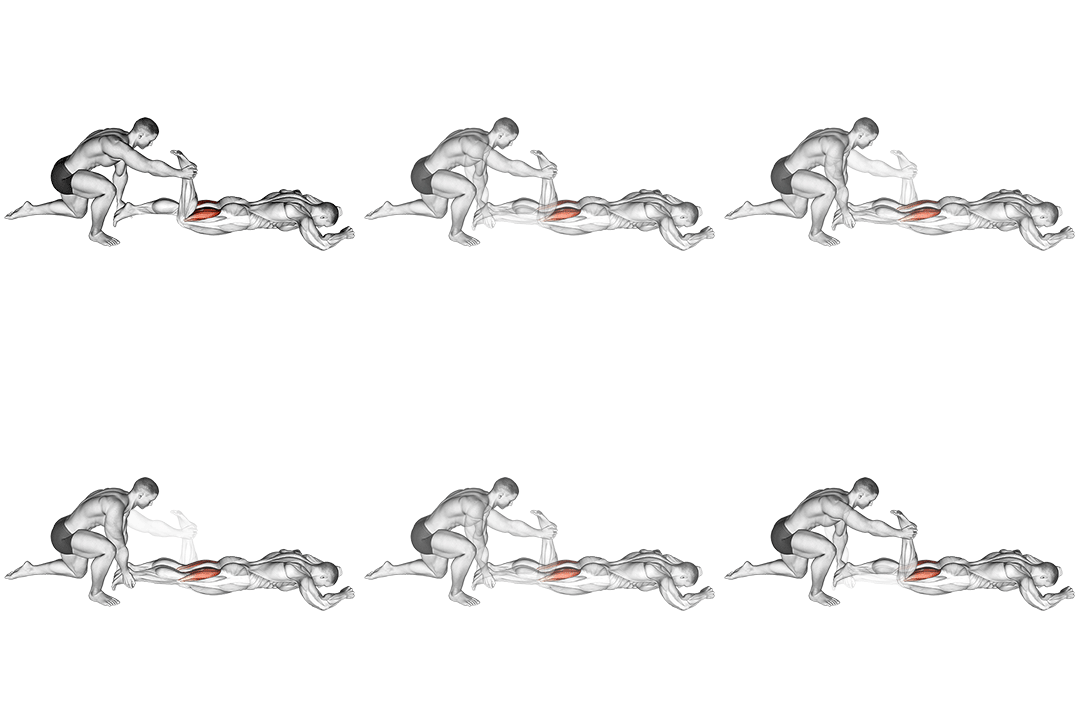
1. Assisted Prone Hamstring
89.2% MatchHow to perform this exercise
- Lie face down on a mat or bench with your legs fully extended.
- Have a partner or use a resistance band to secure your ankles.
- Engage your hamstrings and lift your legs towards your glutes, keeping your knees straight.
- Pause for a moment at the top, then slowly lower your legs back down to the starting position.
- Repeat for the desired number of repetitions.
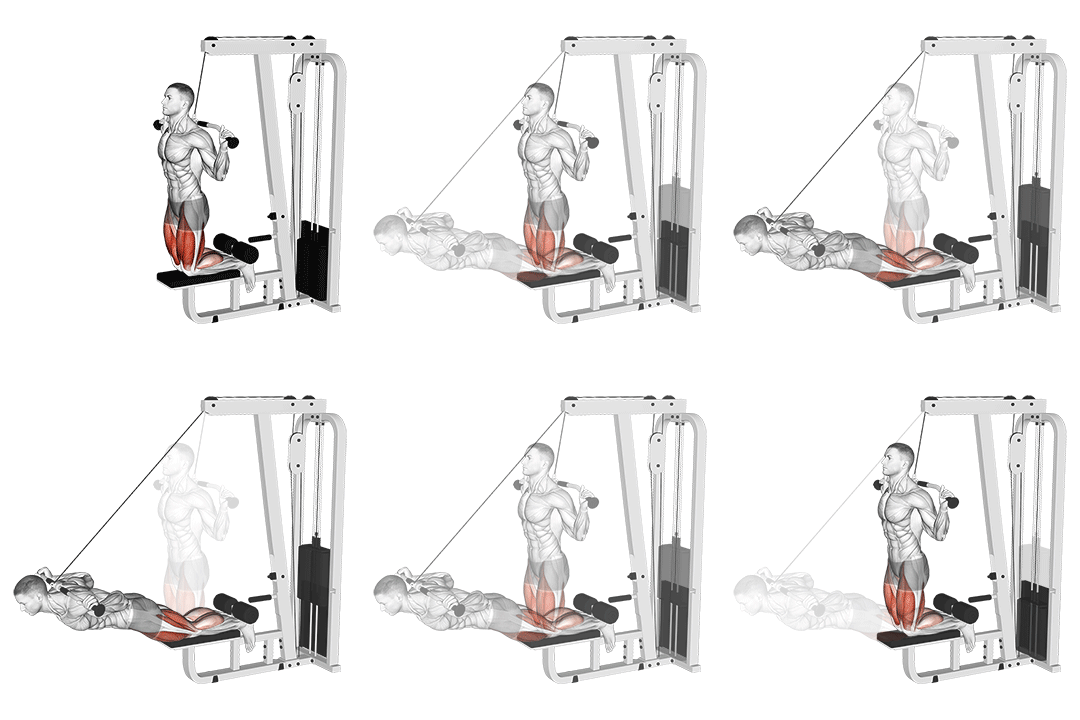
2. Cable Assisted Inverse Leg Curl
86% MatchHow to perform this exercise
- Adjust the cable machine so that the ankle attachment is at the lowest setting.
- Lie face down on the bench with your legs straight and the ankle attachment secured to your ankles.
- Hold onto the handles of the bench for stability.
- Keeping your upper body stationary, exhale and curl your legs up towards your glutes by flexing your knees.
- Pause for a moment at the top of the movement, squeezing your hamstrings.
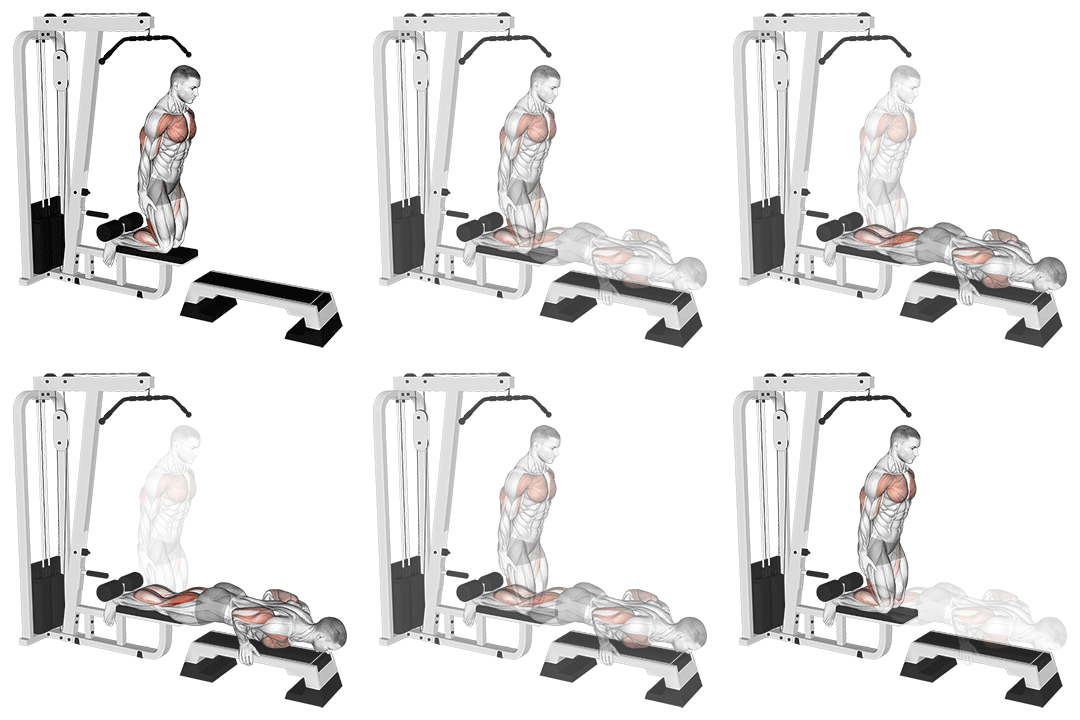
3. Inverse Leg Curl (on Pull-up Cable Machine)
85.4% MatchHow to perform this exercise
- Adjust the cable machine so that the ankle straps are at the lowest setting.
- Lie face down on the bench with your legs extended and the ankle straps attached to your feet.
- Hold onto the handles of the bench for stability.
- Bend your knees and curl your legs towards your glutes, squeezing your hamstrings.
- Pause for a moment at the top of the movement, then slowly lower your legs back to the starting position.
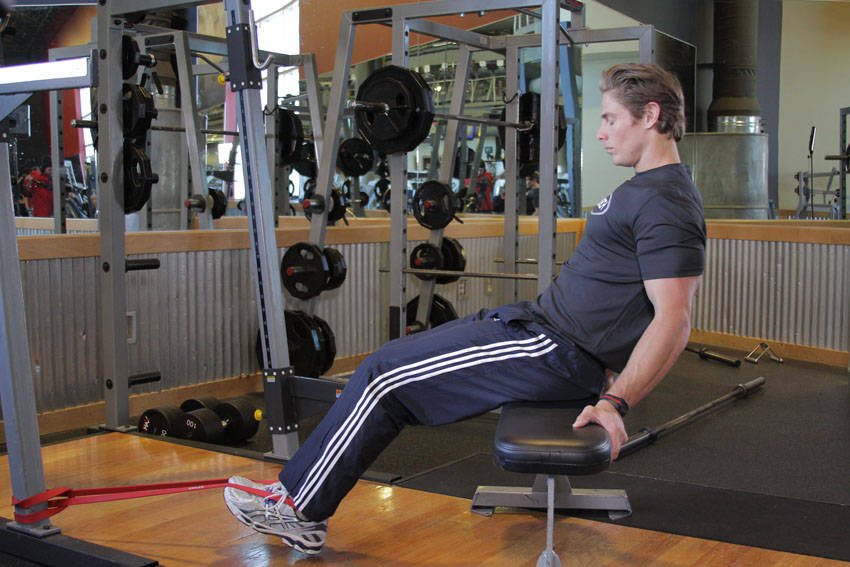
4. Seated Band Hamstring Curl
82% MatchHow to perform this exercise
- Secure a band close to the ground and place a bench a couple feet away from it.
- Seat yourself on the bench and secure the band behind your ankles, beginning with your legs straight. This will be your starting position.
- Flex the knees, bringing your feet towards the bench. You may need to lean back slightly to keep your feet from striking the floor.
- Pause at the completion of the movement, and then slowly return to the starting position.
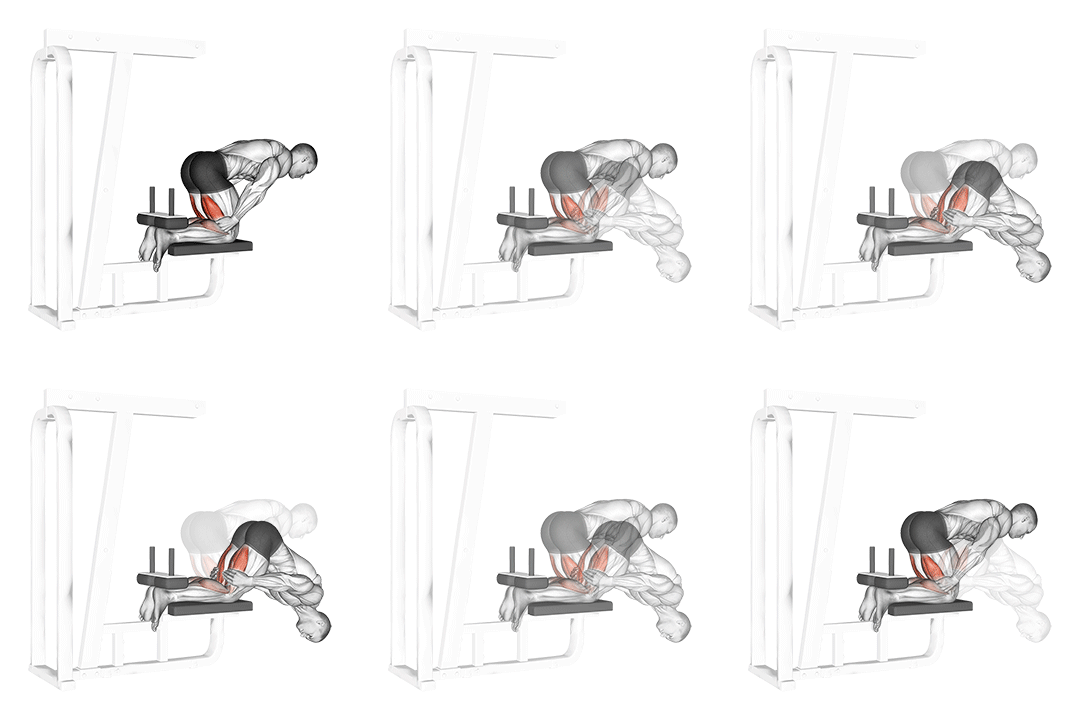
5. Inverse Leg Curl (bench Support)
79.9% MatchHow to perform this exercise
- Lie face down on a bench with your hips at the edge and your legs extended straight behind you.
- Hold onto the bench for support.
- Keeping your upper body still, bend your knees and curl your legs towards your glutes.
- Pause for a moment at the top, then slowly extend your legs back to the starting position.
- Repeat for the desired number of repetitions.
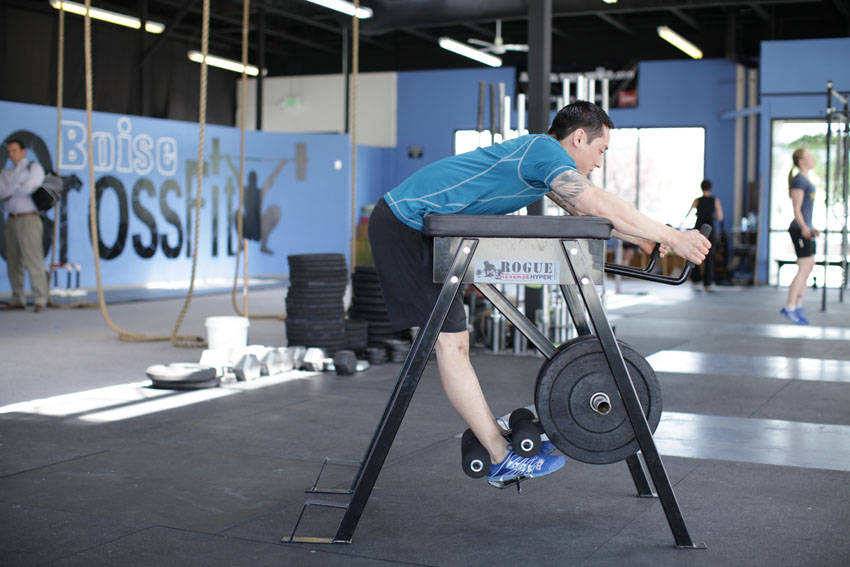
6. Reverse Hyperextension
79.7% MatchHow to perform this exercise
- Place your feet between the pads after loading an appropriate weight. Lay on the top pad, allowing your hips to hang off the back, while grasping the handles to hold your position.
- To begin the movement, flex the hips, pulling the legs forward.
- Reverse the motion by extending the hips, kicking the leg back. It is very important not to over-extend the hip on this movement, stopping short of your full range of motion.
- Return by again flexing the hip, pulling the carriage forward as far as you can.
- Repeat for the desired number of repetitions.
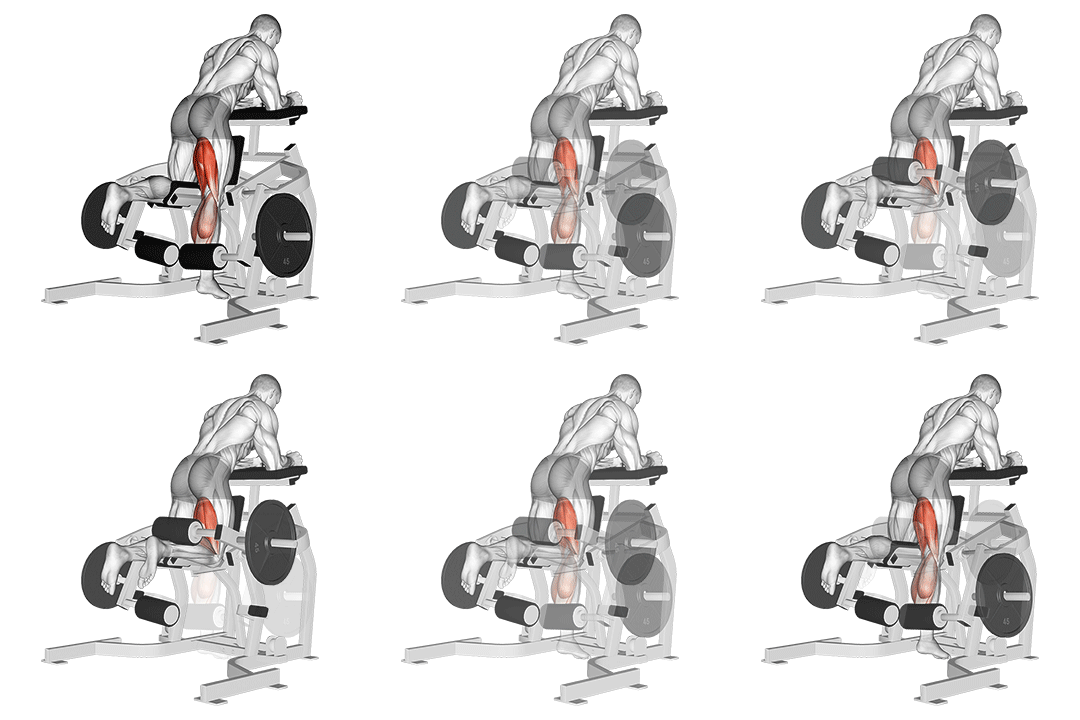
7. Lever Kneeling Leg Curl
78% MatchHow to perform this exercise
- Adjust the machine to fit your body and select the desired weight.
- Kneel on the machine facing downwards, with your knees resting on the pad and your feet secured under the footpads.
- Grasp the handles or the sides of the machine for stability.
- Keeping your upper body stationary, exhale and curl your legs up towards your glutes by flexing your knees.
- Pause for a moment at the top of the movement, squeezing your hamstrings.
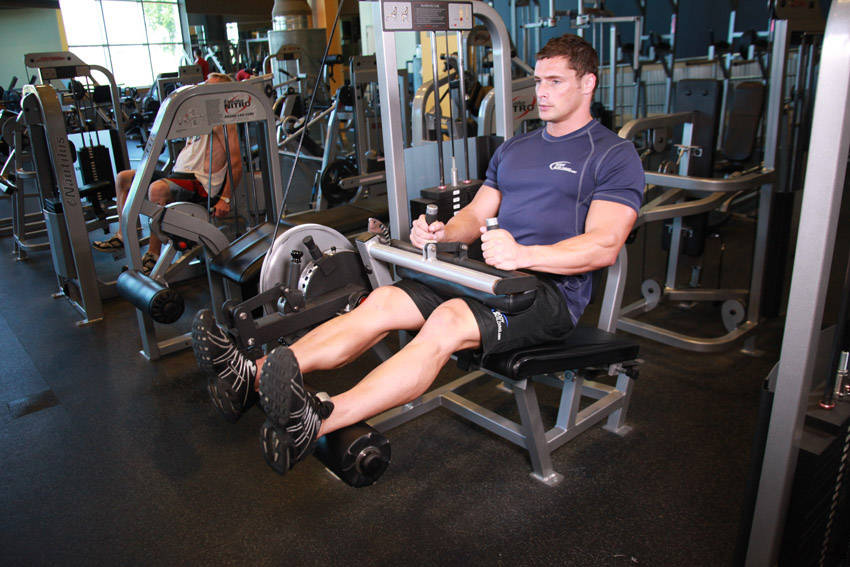
8. Seated Leg Curl
76.7% MatchHow to perform this exercise
- Adjust the machine lever to fit your height and sit on the machine with your back against the back support pad.
- Place the back of lower leg on top of padded lever (just a few inches under the calves) and secure the lap pad against your thighs, just above the knees. Then grasp the side handles on the machine as you point your toes straight (or you can also use any of the other two stances) and ensure that the legs are fully straight right in front of you. This will be your starting position.
- As you exhale, pull the machine lever as far as possible to the back of your thighs by flexing at the knees. Keep your torso stationary at all times. Hold the contracted position for a second.
- Slowly return to the starting position as you breathe in.
- Repeat for the recommended amount of repetitions.
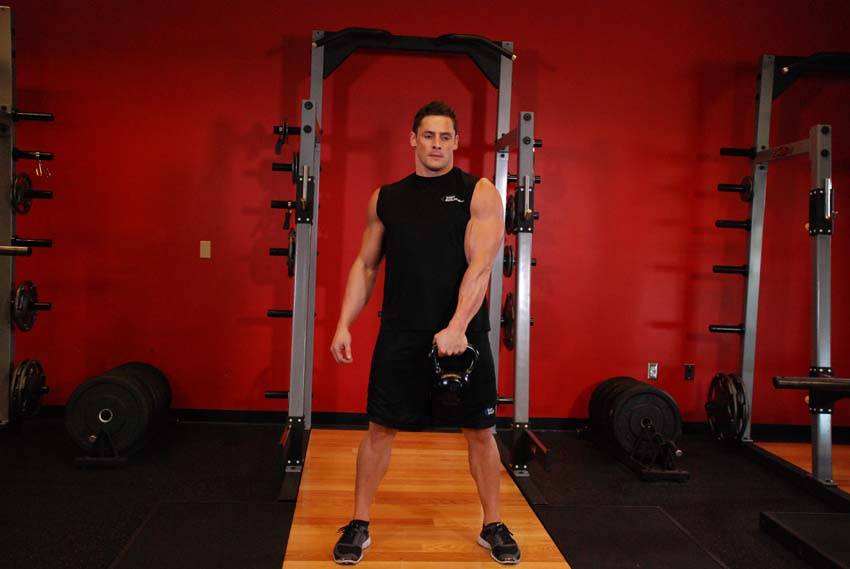
9. One-Arm Kettlebell Swings
75.2% Match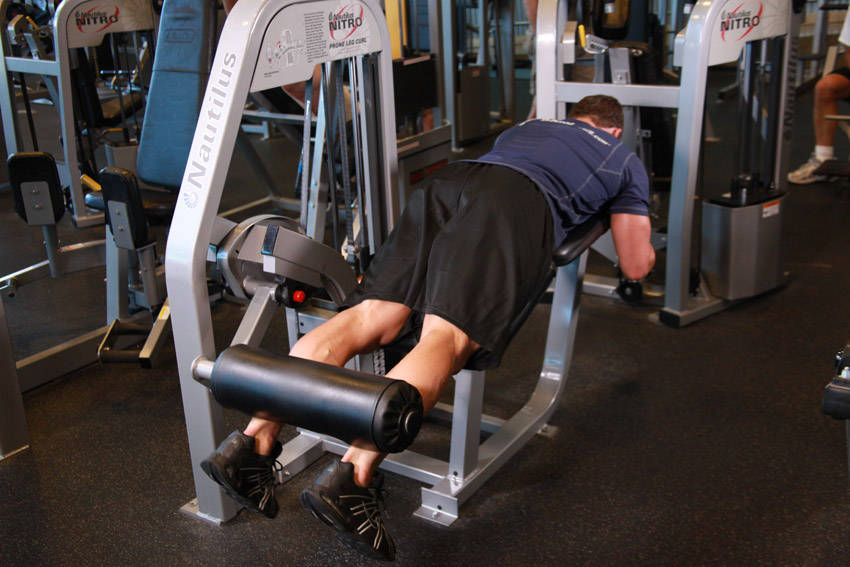
10. Lying Leg Curls
75.2% MatchHow to perform this exercise
- Adjust the machine lever to fit your height and lie face down on the leg curl machine with the pad of the lever on the back of your legs (just a few inches under the calves). Tip: Preferably use a leg curl machine that is angled as opposed to flat since an angled position is more favorable for hamstrings recruitment.
- Keeping the torso flat on the bench, ensure your legs are fully stretched and grab the side handles of the machine. Position your toes straight (or you can also use any of the other two stances described on the foot positioning section). This will be your starting position.
- As you exhale, curl your legs up as far as possible without lifting the upper legs from the pad. Once you hit the fully contracted position, hold it for a second.
- As you inhale, bring the legs back to the initial position. Repeat for the recommended amount of repetitions.
Why You Might Need a Dumbbell Lying Femoral Alternative
You may swap the Dumbbell Lying Femoral for reasons such as lack of a bench, wrist/shoulder pain when handling the weight, knee sensitivity to prone joint angles, or a need to shift emphasis from distal to proximal hamstrings. Biomechanically, the lying femoral isolates knee flexion, stressing the distal hamstrings and gastrocnemius. Hip-hinge substitutes (RDLs, single-leg RDLs) increase proximal hamstring and glute activation by lengthening the muscle under tension. For rehab or hypertrophy, pick alternatives that let you control range, tempo, and load; for example, use a slow 3–4s eccentric on a stability-ball curl to increase time under tension while protecting the knee.
How to Choose the Right Substitute
Decide based on available equipment, whether you need knee-flexion isolation or hip-extension emphasis, and your training goal. If you need strict knee flexion without hip drive, choose a prone or seated hamstring curl machine and brace the pelvis to prevent lumbar extension. If you want posterior chain length-tension and load capacity, pick Romanian deadlifts or single-leg RDLs: push hips back, keep a soft knee and neutral spine to maximize proximal hamstring activation. For limited equipment, use Nordic lowers for high-eccentric recruitment; anchor the feet and lower with a 3–5s eccentric to drive hamstring adaptation.
Frequently Asked Questions
What muscles does Dumbbell Lying Femoral work?
The exercise primarily targets the hamstrings as knee flexors, especially the biceps femoris and semitendinosus. It also recruits the gastrocnemius as a secondary knee flexor; hip extension contribution is minimal when performed strictly as a prone knee curl.
What is the best bodyweight alternative to Dumbbell Lying Femoral?
The Nordic hamstring curl is the top bodyweight substitute because it produces high eccentric hamstring activation. Cue: anchor your heels, keep a straight line from head to hips, and lower slowly for 3–5 seconds to maximize eccentric loading.
Can I build muscle without doing Dumbbell Lying Femoral?
Yes. You can achieve hamstring hypertrophy with hip-hinge movements (Romanian deadlifts, single-leg RDLs) and high-tension knee-flexion variants (stability-ball curls, machine curls). Apply progressive overload, control eccentric tempo, and ensure full range of motion to stimulate growth.
More Exercise Alternatives
Find Alternatives for Any Exercise
Use the exercise substitution finder to compare ranked alternatives for your available equipment and training preference.
Try the Exercise Substitution Finder →