

10 Best Band Good Morning (Pull Through) Alternatives for Home or Gym
The Band Good Morning (Pull Through) is done standing with a band. Ranked closest by our scoring: the Band Good Morning, the Band Straight Leg Deadlift and Cable Deadlifts.
Updated Ranked by our 12-factor similarity model How it works
Original Exercise: Band Good Morning (Pull Through)
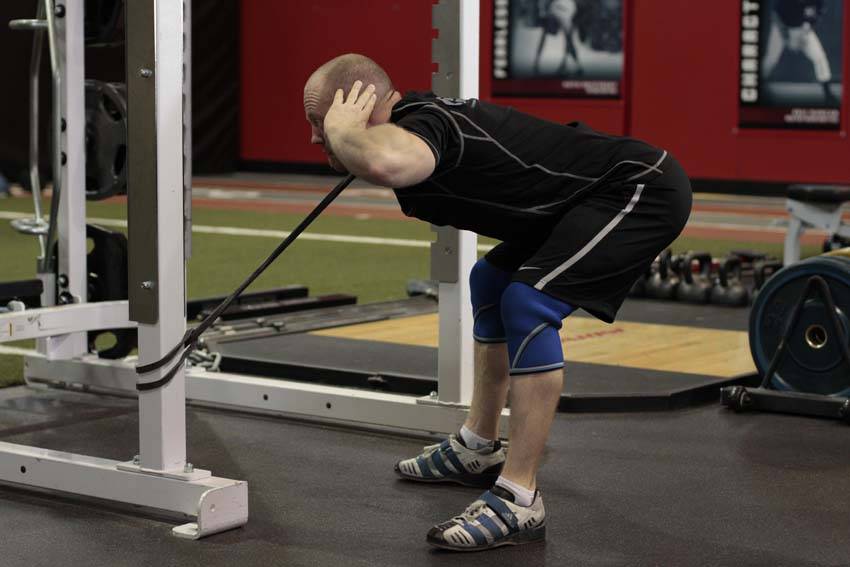
- Primary muscle
- Hamstrings
- Equipment
- Band
- Difficulty
- Intermediate
- Type
- Compound
Secondary muscles: Glutes, Lower Back
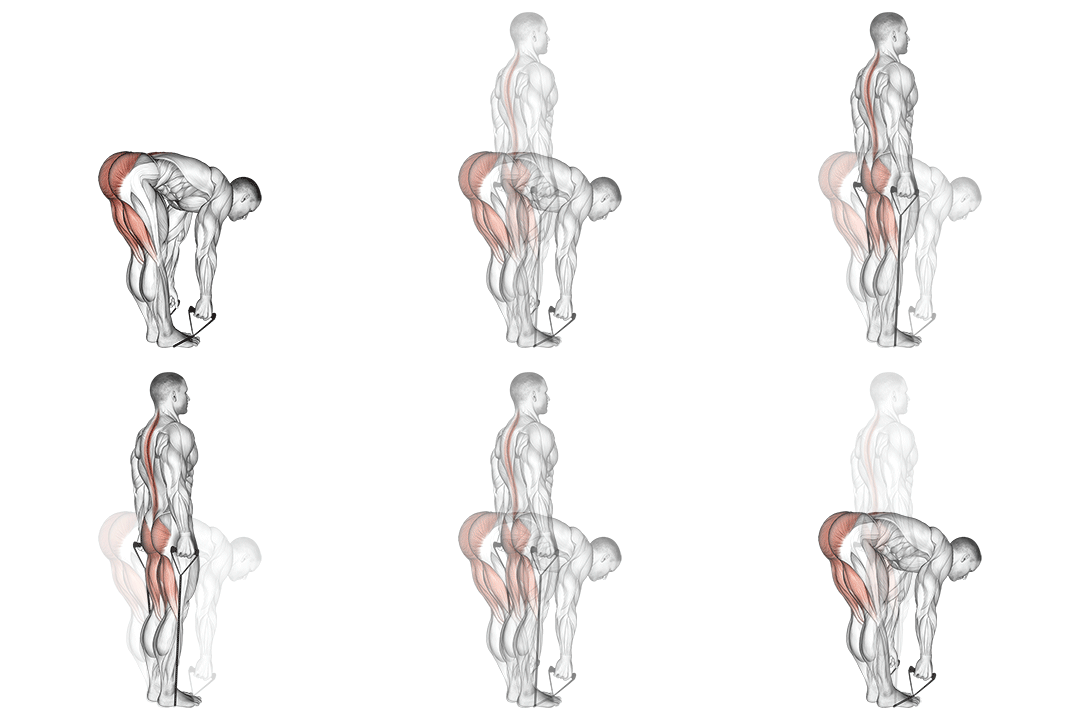
How to perform Band Good Morning (Pull Through)
- Loop the band around a post. Standing a little ways away, loop the opposite end around the neck. Your hands can help hold the band in position.
- Begin by bending at the hips, getting your butt back as far as possible. Keep your back flat and bend forward to about 90 degrees. Your knees should be only slightly bent.
- Return to the starting position be driving through with the hips to come back to a standing position.
Ranked Band Good Morning (Pull Through) Alternatives
10 substitutes, ranked by how closely each one matches the Band Good Morning (Pull Through) on movement pattern, muscles worked, equipment and body position. The higher the score, the less you change. Open "How to perform this exercise" on a card for the steps; every card title links to that exercise's own alternatives page.
Best match 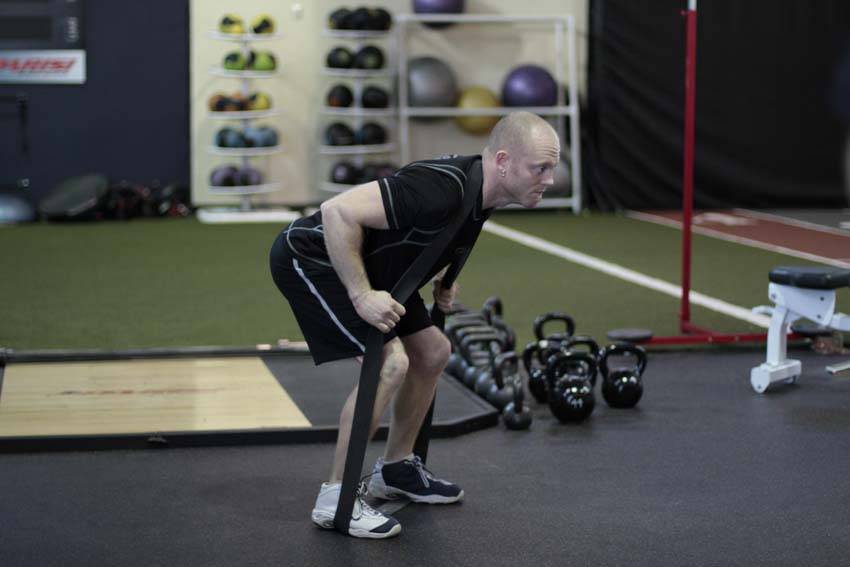
1. Band Good Morning
85% match- Hamstrings
- Band
- Intermediate
- Compound
It uses the same equipment and still works the hamstrings.
How to perform this exercise
- Using a 41 inch band, stand on one end, spreading your feet a small amount. Bend at the hips to loop the end of the band behind your neck. This will be your starting position.
- Keeping your legs straight, extend through the hips to come to a near vertical position.
- Ensure that you do not round your back as you go down back to the starting position.
Sets and reps: 3 or 4 sets of 6 to 10 reps.
Why this matches
- Primary muscle: hamstrings, the same as the Band Good Morning (Pull Through)
- Equipment: a band, the same as the Band Good Morning (Pull Through)
- Body position: standing, the same as the Band Good Morning (Pull Through)
2. Band Pull Through
84% match- Glutes
- Band
- Intermediate
- Compound
A looser match: it uses the same equipment, but it works the glutes rather than the hamstrings.
How to perform this exercise
- Attach a resistance band to a sturdy anchor point at ground level.
- Stand facing away from the anchor point with your feet shoulder-width apart.
- Step forward to create tension in the band, keeping your knees slightly bent.
- Hinge at the hips and push your glutes back, maintaining a slight bend in your knees.
- Lower your torso until it is parallel to the ground, feeling a stretch in your hamstrings.
- Drive your hips forward and squeeze your glutes to return to the starting position.
- Repeat for the desired number of repetitions.
Sets and reps: 3 to 5 sets of 5 to 8 reps.
Why this matches
- Movement: pull-through hinge, the same as the Band Good Morning (Pull Through)
- Primary muscle: glutes, not hamstrings
- Equipment: a band, the same as the Band Good Morning (Pull Through)
- Body position: standing, the same as the Band Good Morning (Pull Through)
3. Band Straight Leg Deadlift
81% match- Hamstrings
- Band
- Intermediate
- Compound
How to perform this exercise
- Stand with your feet shoulder-width apart and place the band around your feet.
- Hold the band with both hands, palms facing your body, and keep your arms straight.
- Engage your core and maintain a slight bend in your knees.
- Slowly hinge forward at your hips, keeping your back straight and chest lifted.
- Lower the band towards the ground while keeping your legs straight.
- Pause for a moment at the bottom, then squeeze your glutes and hamstrings to return to the starting position.
- Repeat for the desired number of repetitions.
Sets and reps: 3 or 4 sets of 6 to 10 reps.
Why this matches
- Primary muscle: hamstrings, the same as the Band Good Morning (Pull Through)
- Equipment: a band, the same as the Band Good Morning (Pull Through)
- Body position: standing, the same as the Band Good Morning (Pull Through)
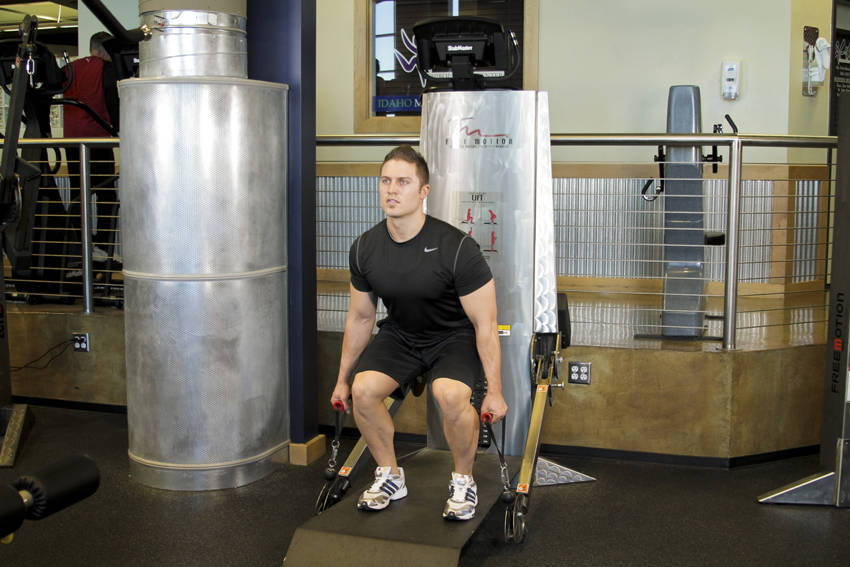
4. Cable Deadlifts
79% match- Hamstrings
- Cable
- Intermediate
- Compound
A good swap when you have a cable machine to work with, and it still works the hamstrings.
How to perform this exercise
- Move the cables to the bottom of the towers and select an appropriate weight. Stand directly in between the uprights.
- To begin, squat down be flexing your hips and knees until you can reach the handles.
- After grasping them, begin your ascent. Driving through your heels extend your hips and knees keeping your hands hanging at your side. Keep your head and chest up throughout the movement.
- After reaching a full standing position, Return to the starting position and repeat.
Sets and reps: 3 or 4 sets of 6 to 10 reps.
Why this matches
- Primary muscle: hamstrings, the same as the Band Good Morning (Pull Through)
- Equipment: a cable, not a band
- Body position: standing, the same as the Band Good Morning (Pull Through)
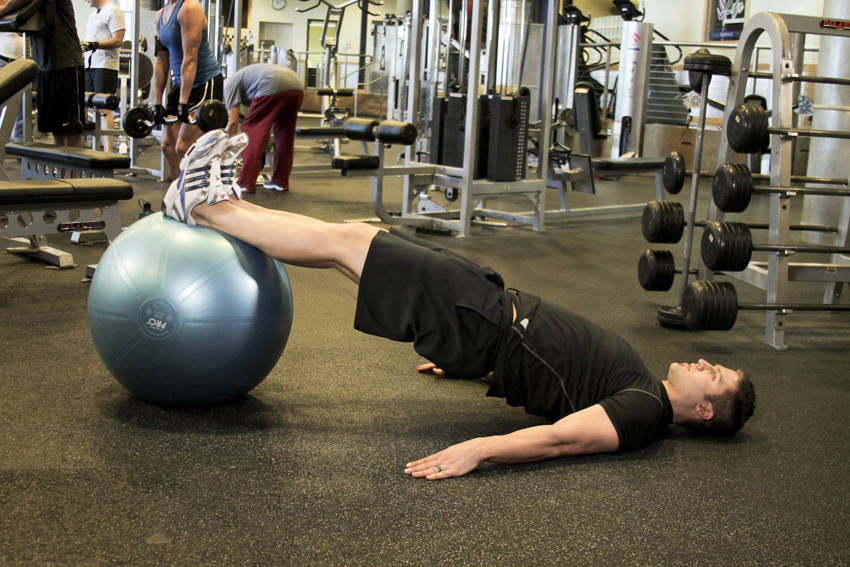
5. Ball Leg Curl
79% match- Hamstrings
- Stability-ball
- Intermediate
- Compound
A good swap when you have a stability ball to work with, and it still works the hamstrings.
How to perform this exercise
- Begin on the floor laying on your back with your feet on top of the ball.
- Position the ball so that when your legs are extended your ankles are on top of the ball. This will be your starting position.
- Raise your hips off of the ground, keeping your weight on the shoulder blades and your feet.
- Flex the knees, pulling the ball as close to you as you can, contracting the hamstrings.
- After a brief pause, return to the starting position.
Sets and reps: 3 or 4 sets of 6 to 10 reps.
Why this matches
- Primary muscle: hamstrings, the same as the Band Good Morning (Pull Through)
- Equipment: a suspension trainer, not a band
- Body position: lying on your back, not standing
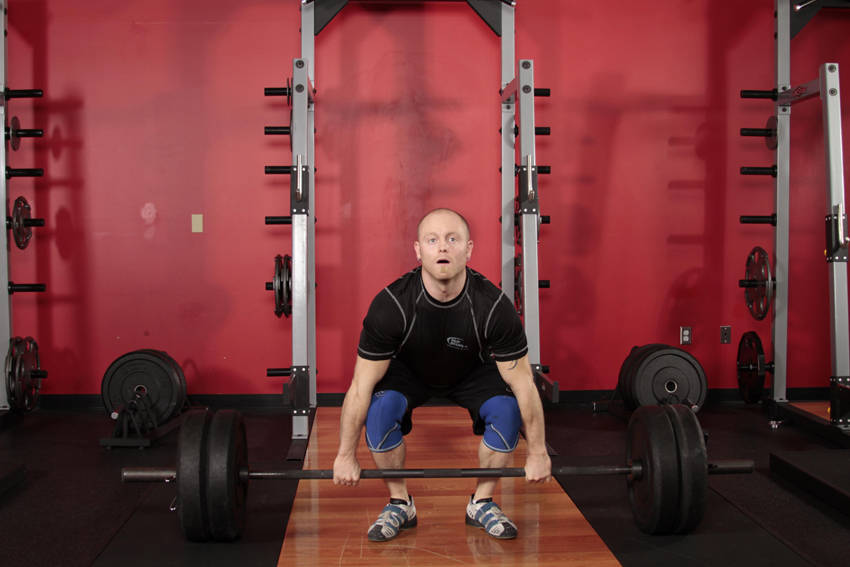
6. Clean Deadlift
75% match- Hamstrings
- Barbell
- Intermediate
- Compound
A good swap when you have a barbell to work with, and it still works the hamstrings.
How to perform this exercise
- Begin standing with a barbell close to your shins. Your feet should be directly under your hips with your feet turned out slightly. Grip the bar with a double overhand grip or hook grip, about shoulder width apart. Squat down to the bar. Your spine should be in full extension, with a back angle that places your shoulders in front of the bar and your back as vertical as possible.
- Begin by driving through the floor through the front of your heels. As the bar travels upward, maintain a constant back angle. Flare your knees out to the side to help keep them out of the bar's path.
- After the bar crosses the knees, complete the lift by driving the hips into the bar until your hips and knees are extended.
Sets and reps: 3 or 4 sets of 6 to 10 reps.
Why this matches
- Primary muscle: hamstrings, the same as the Band Good Morning (Pull Through)
- Equipment: free weights, not a band
- Body position: standing, the same as the Band Good Morning (Pull Through)
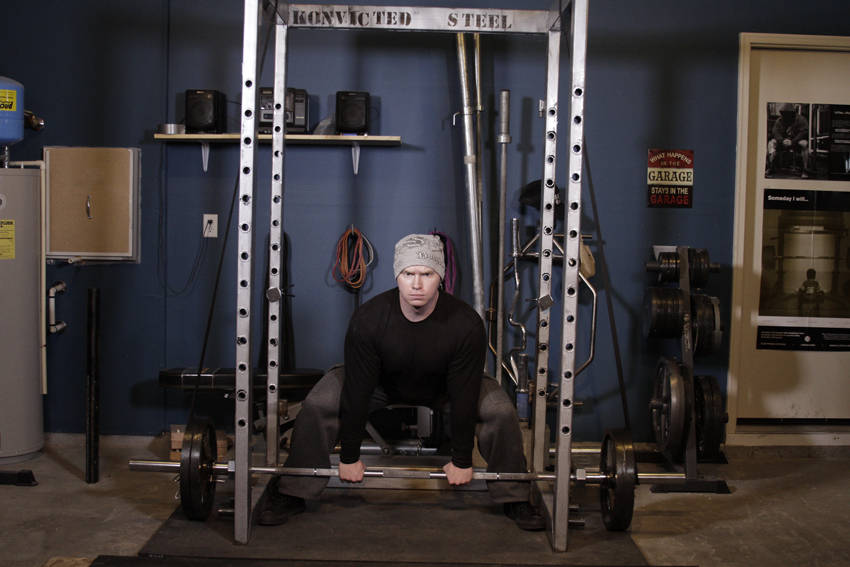
7. Reverse Band Sumo Deadlift
75% match- Hamstrings
- Barbell
- Advanced
- Compound
How to perform this exercise
- Begin with a bar loaded on the floor inside of a power rack. Attach bands to the top of the rack, using either pegs or the frame itself. Attach the other end to the barbell.
- Approach the bar so that the bar intersects the middle of the feet. The feet should be set very wide, near the collars. Bend at the hips to grip the bar. The arms should be directly below the shoulders, inside the legs, and you can use a pronated grip, a mixed grip, or hook grip. Relax the shoulders, which in effect lengthens your arms.
- Take a breath, and then lower your hips, looking forward with your head with your chest up. Drive through the floor, spreading your feet apart, with your weight on the back half of your feet. Extend through the hips and knees.
- As the bar passes through the knees, lean back and drive the hips into the bar, pulling your shoulder blades together.
- Return the weight to the ground by bending at the hips and controlling the weight on the way down.
Sets and reps: 3 to 5 sets of 5 to 8 reps.
Why this matches
- Primary muscle: hamstrings, the same as the Band Good Morning (Pull Through)
- Equipment: free weights, not a band
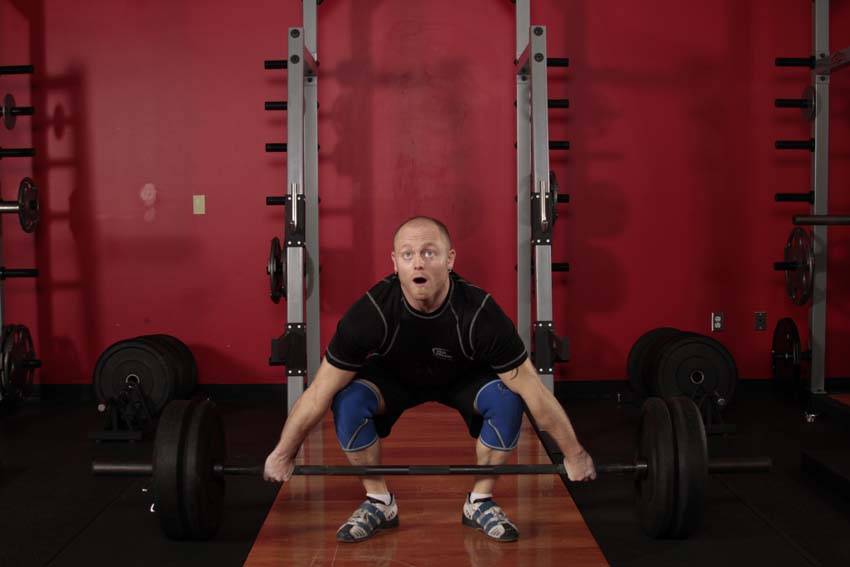
8. Snatch Deadlift
75% match- Hamstrings
- Barbell
- Advanced
- Compound
How to perform this exercise
- The snatch deadlift strengthens the first pull of the snatch. Begin with a wide snatch grip with the barbell placed on the platform. The feet should be directly under the hips, with the feet turned out. Squat down to the bar, keeping the back in absolute extension with the head facing forward.
- Initiate the movement by driving through the heels, raising the hips. The back angle should remain the same until the bar passes the knees.
- At that point, drive your hips through the bar as you lay back. Return the bar to the platform by reversing the motion.
Sets and reps: 3 to 5 sets of 5 to 8 reps.
Why this matches
- Primary muscle: hamstrings, the same as the Band Good Morning (Pull Through)
- Equipment: free weights, not a band
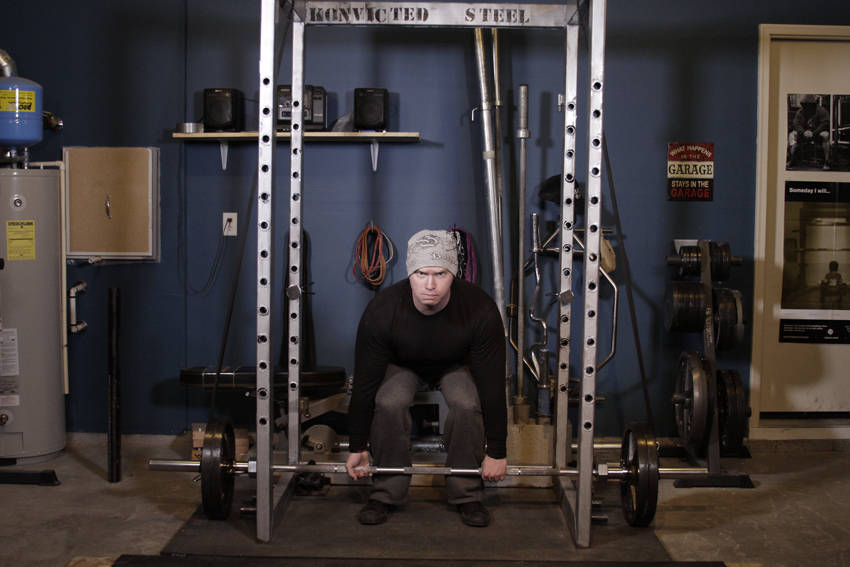
9. Reverse Band Deadlift
75% match- Hamstrings
- Barbell
- Advanced
- Compound
How to perform this exercise
- Set the bar up in a power rack. Attach bands to the top of the rack, using either bands pegs or the frame itself. Attach the other end of the bands to the bar.
- Approach the bar so that it is centered over your feet. You feet should be about hip width apart. Bend at the hip to grip the bar at shoulder width, allowing your shoulder blades to protract. Typically, you would use an overhand grip or an over/under grip on heavier sets.
- With your feet, and your grip set, take a big breath and then lower your hips and bend the knees until your shins contact the bar. Look forward with your head, keep your chest up and your back arched, and begin driving through the heels to move the weight upward.
- After the bar passes the knees, aggressively pull the bar back, pulling your shoulder blades together as you drive your hips forward into the bar.
- Lower the bar by bending at the hips and guiding it to the floor.
Sets and reps: 3 to 5 sets of 5 to 8 reps.
Why this matches
- Primary muscle: hamstrings, the same as the Band Good Morning (Pull Through)
- Equipment: free weights, not a band
- Body position: standing, the same as the Band Good Morning (Pull Through)
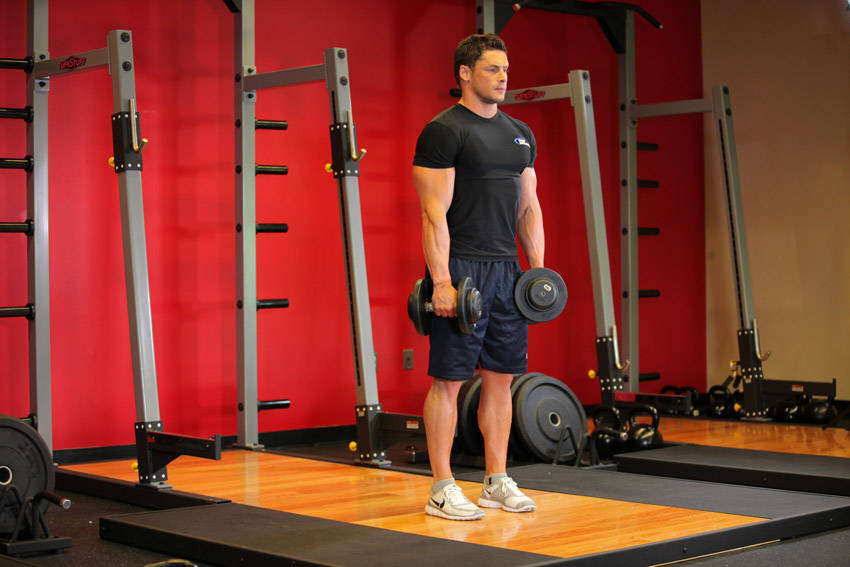
10. Stiff-legged Dumbbell Deadlift
75% match- Hamstrings
- Dumbbell
- Intermediate
- Compound
How to perform this exercise
- Grasp a couple of dumbbells holding them by your side at arm's length.
- Stand with your torso straight and your legs spaced using a shoulder width or narrower stance. The knees should be slightly bent. This is your starting position.
- Keeping the knees stationary, lower the dumbbells to over the top of your feet by bending at the waist while keeping your back straight. Keep moving forward as if you were going to pick something from the floor until you feel a stretch on the hamstrings. Exhale as you perform this movement
- Start bringing your torso up straight again by extending your hips and waist until you are back at the starting position. Inhale as you perform this movement.
- Repeat for the recommended amount of repetitions.
Sets and reps: 3 or 4 sets of 6 to 10 reps.
Why this matches
- Primary muscle: hamstrings, the same as the Band Good Morning (Pull Through)
- Equipment: free weights, not a band
- Body position: standing, the same as the Band Good Morning (Pull Through)
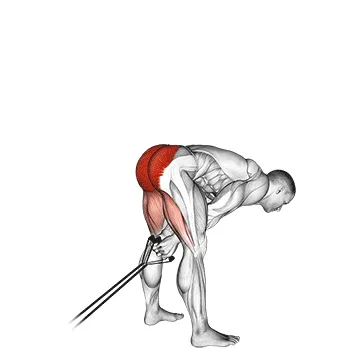
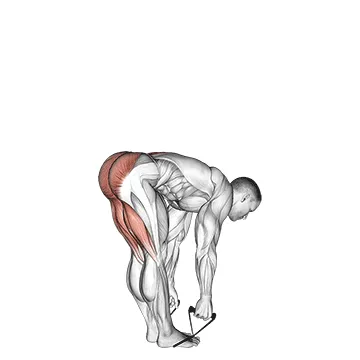
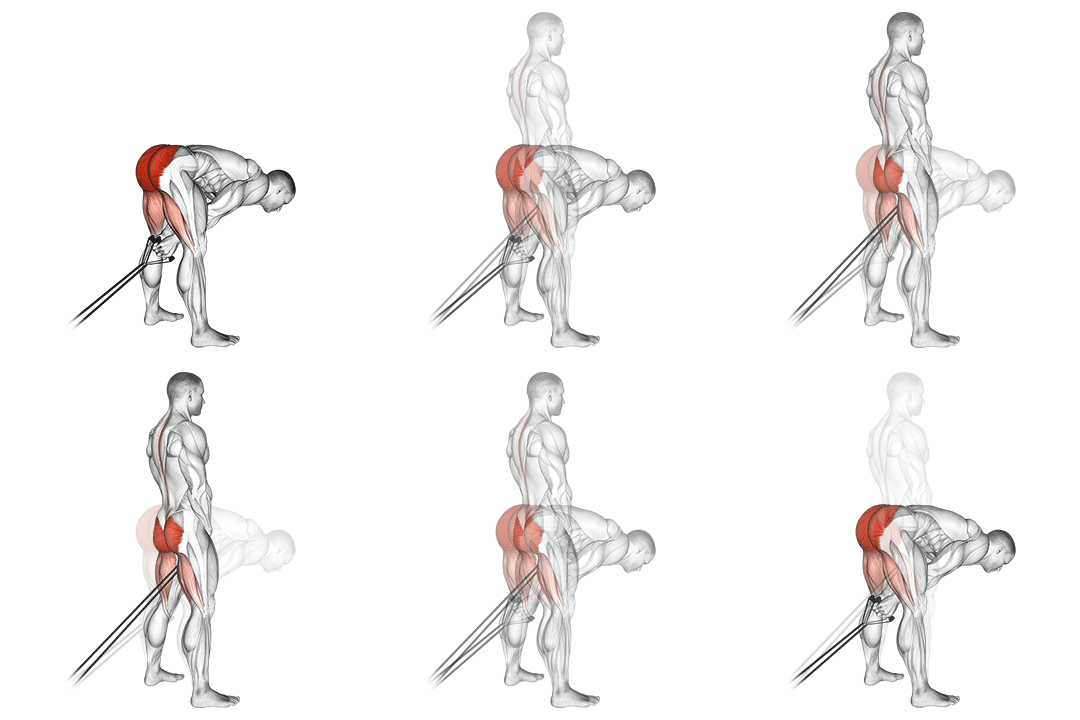
Band Good Morning (Pull Through) FAQ
What muscles does Band Good Morning (pull Through) work?
The Band Good Morning (pull Through) primarily targets the hamstrings and glutes via the hip-hinge, with significant erector spinae and core stabilization demand. The hamstrings work eccentrically as you hinge and concentrically to extend the hip, while the glutes drive lockout.
Find Alternatives for Any Exercise
Search the exercise database and filter the ranked substitutes by the equipment you own.
Similarity scores compare exercise metadata such as movement pattern, muscles, equipment and body position. They are not a safety rating or a check that you own the equipment. Learn about our methodology