

10 Best Lying Bent Leg Groin Alternatives for Home Workouts
Use standing cable adduction, side-lying adductor raises, Copenhagen holds, seated machine adduction, or banded standing adduction instead. Maintain a neutral pelvis, slight knee bend, and slow concentric adductor squeeze to maximize medial thigh activation. Cue: initiate each rep from the groin, not the foot, and avoid hip rotation to isolate the adductors.
Original Exercise: Lying Bent Leg Groin
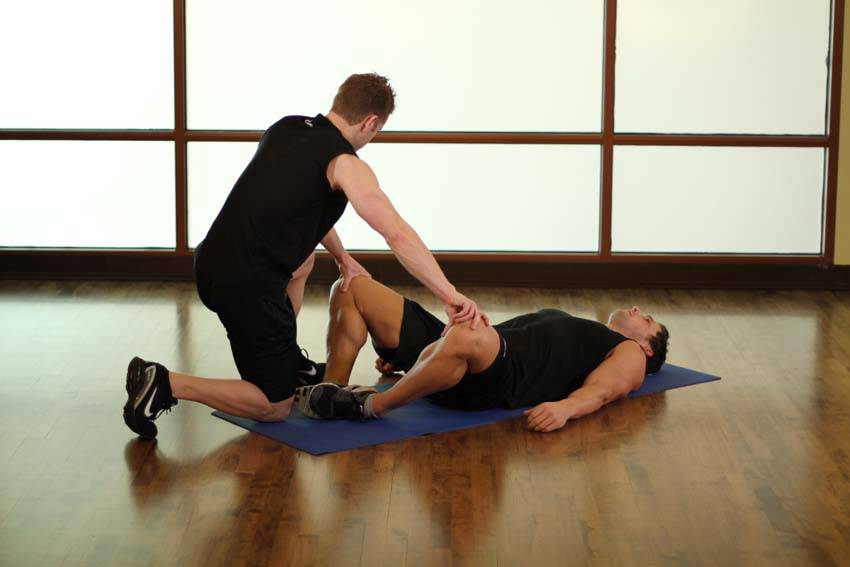
How to Perform Lying Bent Leg Groin
- Lie on your back with your knees bent and the soles of the feet pressed together. Have your partner hold your knees. This will be your starting position.
- Attempt to squeeze your knees together, while your partner prevents any movement from occurring.
- After 10-20 seconds, relax your muscles as your partner gently pushes your knees towards the floor. Be sure to inform your helper when the stretch is adequate to prevent injury or overstretching.
Pro Tips
- Category: Stretching
- Force: Static
Ranked Lying Bent Leg Groin Alternatives
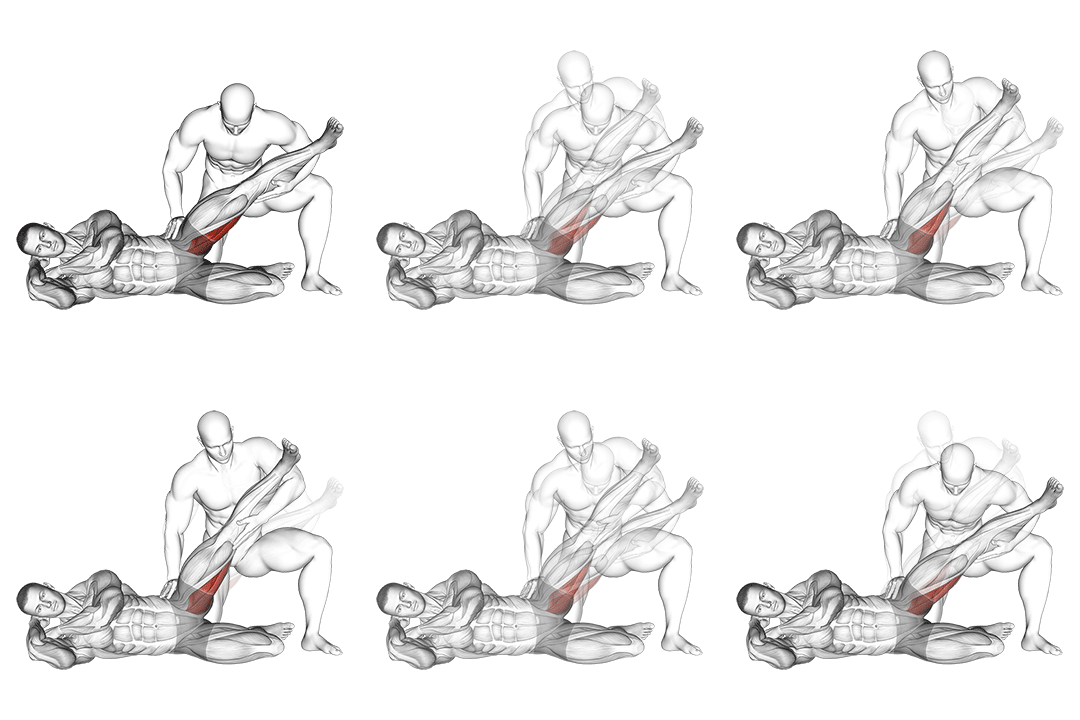
1. Assisted Side Lying Adductor Stretch
92.2% MatchHow to perform this exercise
- Lie on your side with your legs straight and stacked on top of each other.
- Bend your bottom leg slightly for stability.
- Place your top foot on a stable surface, such as a bench or step.
- Keeping your top leg straight, slowly lower it towards the ground, feeling a stretch in your inner thigh.
- Hold the stretch for 20-30 seconds.
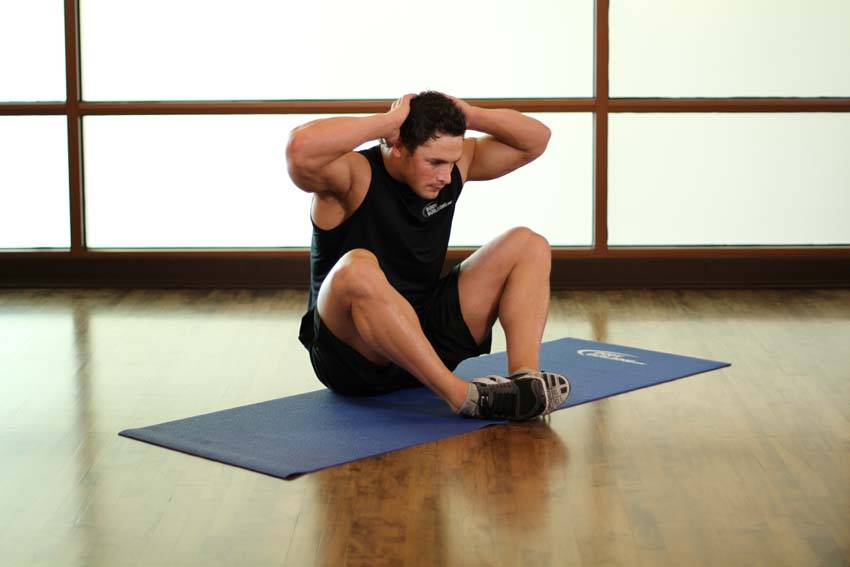
2. Groin And Back Stretch
92% MatchHow to perform this exercise
- Sit on the floor with your knees bent and feet together.
- Interlock your fingers behind your head. This will be your starting position.
- Curl downwards, bringing your elbows to the inside of your thighs. After a brief pause, return to the starting position with your head up and your back straight. Repeat for 10-20 repetitions.
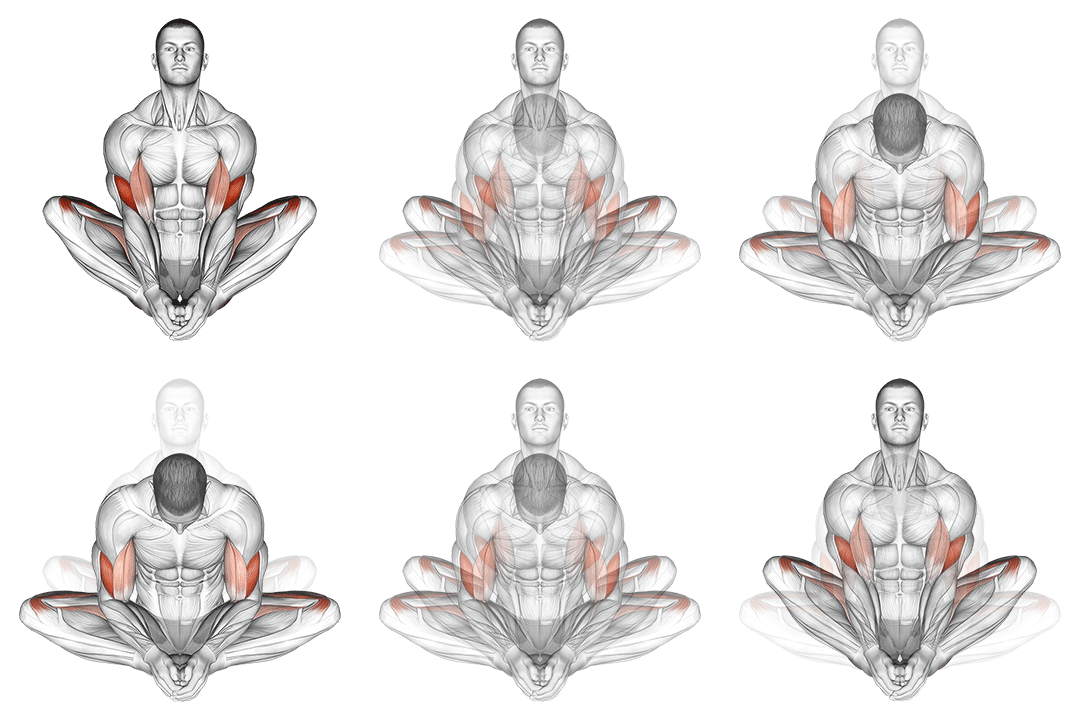
3. Butterfly Yoga Pose
86.7% MatchHow to perform this exercise
- Sit on the floor with your legs extended in front of you.
- Bend your knees and bring the soles of your feet together, allowing your knees to fall out to the sides.
- Hold onto your ankles or feet with your hands.
- Sit up tall and lengthen your spine.
- Gently press your knees down towards the floor, feeling a stretch in your inner thighs.
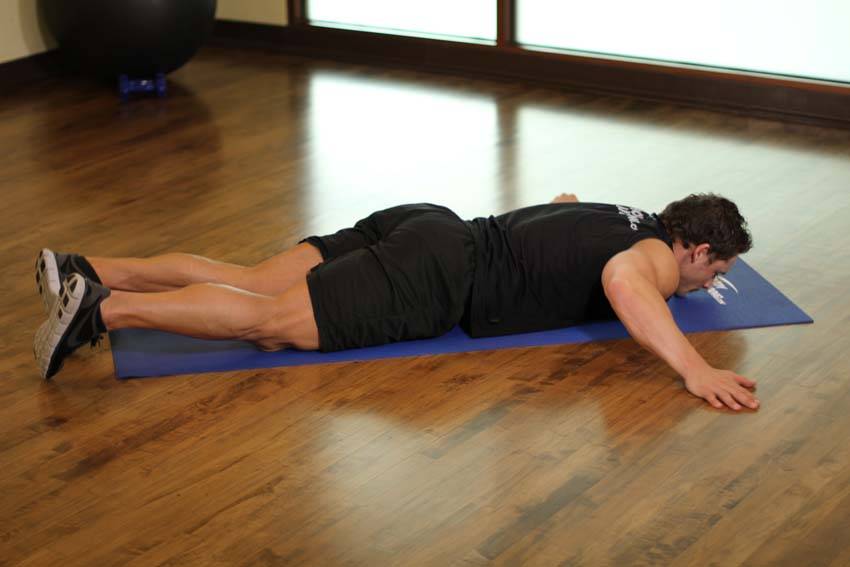
4. Iron Crosses (stretch)
81% MatchHow to perform this exercise
- Lie face down on the floor, with your arms extended out to your side, palms pressed to the floor. This will be your starting position.
- To begin, flex one knee and bring that leg across the back of your body, attempting to touch it to the ground near the opposite hand.
- Promptly return the leg to the starting postion, and quickly repeat with the other leg. Continue alternating for 10-20 repetitions.
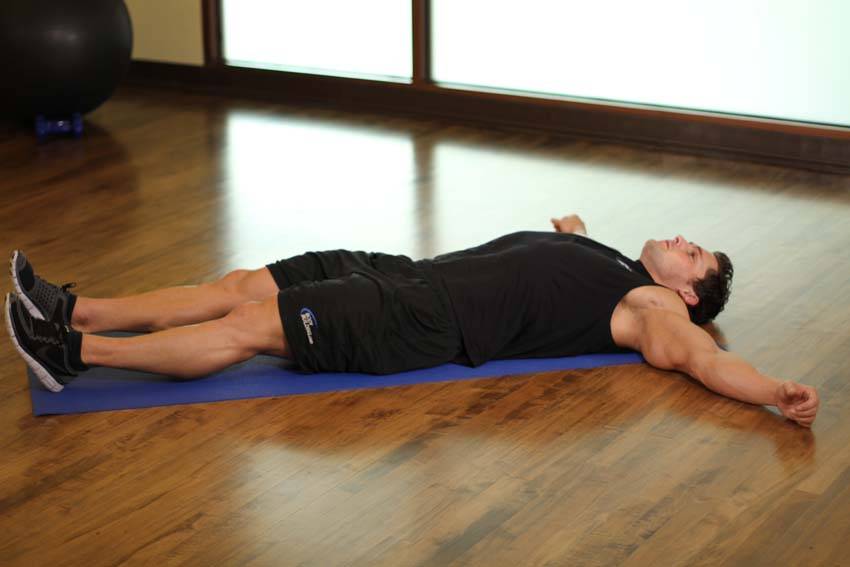
5. Side Lying Groin Stretch
81% MatchHow to perform this exercise
- Start off by lying on your right side and bend your right knee in front of you to stabilize the torso.
- Rest your head on your right hand or shoulder. Lift your left leg upward and hold it by the back of the knee (easier) or the foot (harder).
- Pull your left knee in toward your left shoulder and simultaneously press your foot or knee down to the floor. To intensify this stretch, straighten your left leg. Switch sides.
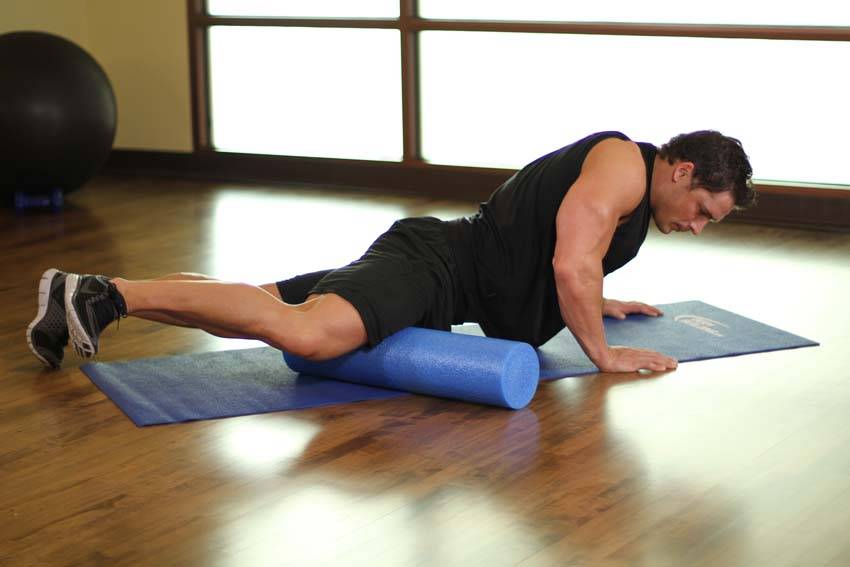
6. Adductor
80.2% MatchHow to perform this exercise
- Lie face down with one leg on a foam roll.
- Rotate the leg so that the foam roll contacts against your inner thigh. Shift as much weight onto the foam roll as can be tolerated.
- While trying to relax the muscles if the inner thigh, roll over the foam between your hip and knee, holding points of tension for 10-30 seconds. Repeat with the other leg.
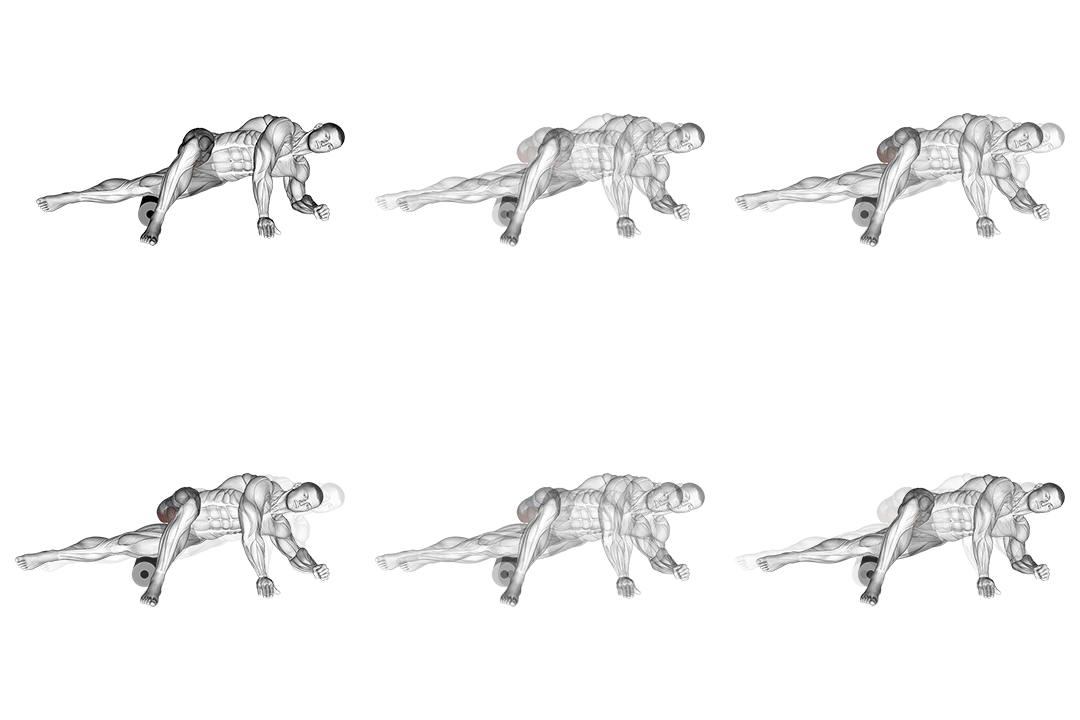
7. Roller Hip Lat Stretch
77.2% MatchHow to perform this exercise
- Start by kneeling on the ground with the roller positioned under your hips.
- Place your hands on the roller for support.
- Slowly roll the roller forward, extending your hips and stretching your glutes.
- Hold the stretch for a few seconds, then roll back to the starting position.
- Repeat for the desired number of repetitions.
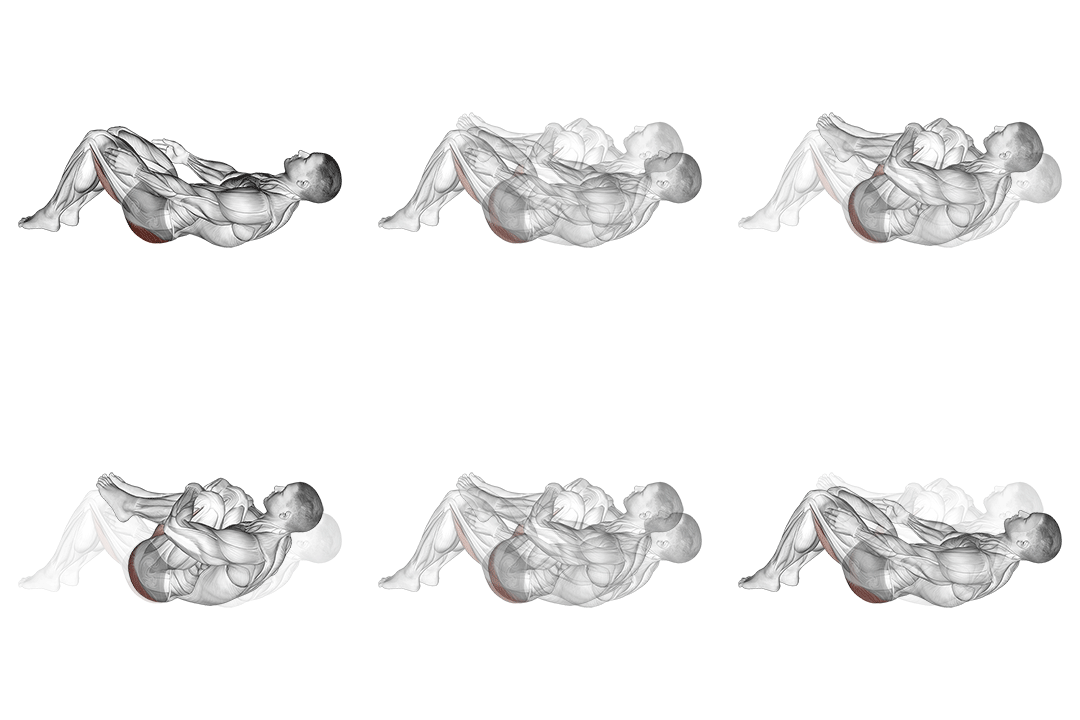
8. Hug Keens To Chest
76% MatchHow to perform this exercise
- Start by standing with your feet shoulder-width apart.
- Bend your knees and lower your body down into a squat position.
- As you squat down, bring your knees up towards your chest and hug them with your arms.
- Hold this position for a moment, then slowly return to the starting position.
- Repeat for the desired number of repetitions.
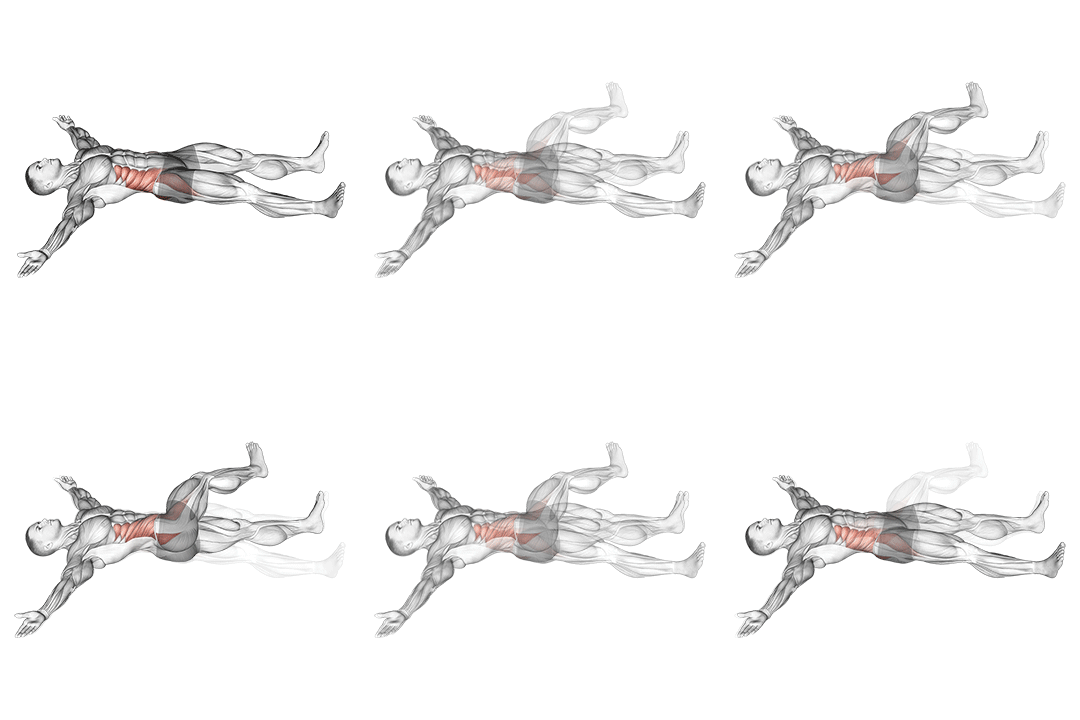
9. Iron Cross Stretch
76% MatchHow to perform this exercise
- Lie flat on your back with your arms extended out to the sides.
- Raise your legs up towards the ceiling, keeping them straight.
- Slowly lower your legs to one side, aiming to touch the floor with your feet.
- Hold the stretch for a few seconds, then return your legs to the starting position.
- Repeat the stretch on the other side.
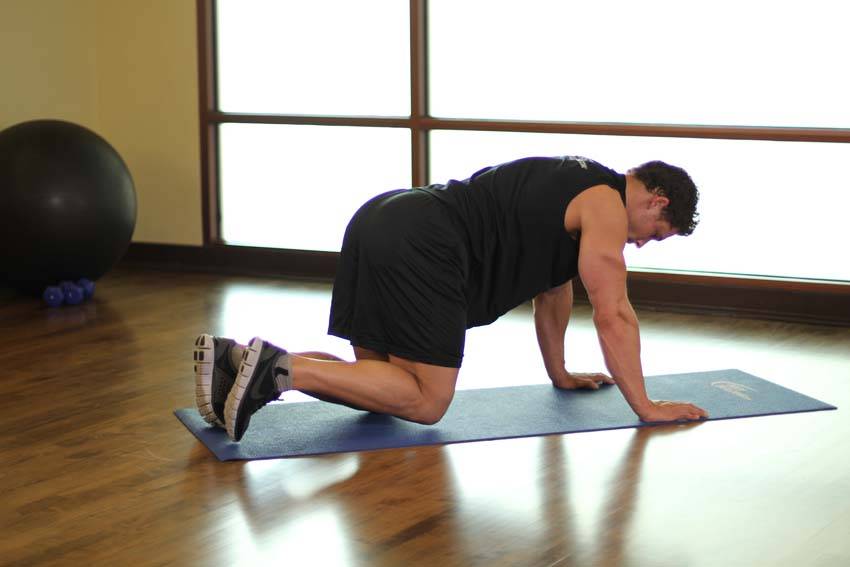
10. Looking At Ceiling
76% MatchHow to perform this exercise
- Kneel on the floor, holding your heels with both hands.
- Lift your buttocks up and forward while bringing your head back to look up at the ceiling, to give an arch in your back.
Why You Might Need a Lying Bent Leg Groin Alternative
You replace lying bent leg groin because of groin pain, limited hip ROM, lack of specialized equipment, or the need for progression. Standing and unilateral options increase adduction torque via a longer femur moment arm, while isometrics like the Copenhagen reduce shear and build eccentric control for rehab. For technique, slow the eccentric for 2–3 seconds and cue a deliberate medial knee drive to recruit adductor longus, magnus, and gracilis. Choosing a variation also lets you manipulate lever length (flex the knee to reduce load) and train frontal-plane stability through different ranges of motion.
How to Choose the Right Substitute
Assess load tolerance, available equipment, and whether you need rehab or hypertrophy. If you lack equipment, pick Copenhagen holds or banded adduction; if you need progressive loading, use cable or seated machine adduction to increment weight. Consider biomechanics: long lever standing moves increase adduction torque and demand pelvic stabilization; short-lever supine or bent-knee versions reduce moment arm and are easier on the pubic symphysis. Technique cue: shorten the lever (flex the knee) to decrease load, and emphasize a controlled eccentric and a full adduction squeeze to maximize medial thigh activation and muscle remodeling.
Frequently Asked Questions
What muscles does Lying Bent Leg Groin work?
The exercise primarily targets the adductor group, adductor longus, brevis, magnus, and gracilis, while the pectineus and pelvic stabilizers assist. Keep a neutral pelvis and drive the femur medially to emphasize the adductors over hip flexors.
What is the best bodyweight alternative to Lying Bent Leg Groin?
The Copenhagen adductor hold is the top bodyweight option: support on your forearm with the top leg squeezing down onto the bottom leg. Cue a straight plank line and a forceful medial squeeze to generate high adductor activation and eccentric control.
Can I build muscle without doing Lying Bent Leg Groin?
Yes. Use progressive overload with cable adduction, seated machine adduction, heavy banded standing adduction, or Copenhagen progressions to create sufficient tension. Emphasize full ROM, 2–3 second eccentrics, and pelvic stability to stimulate hypertrophy in the adductors.
More Exercise Alternatives
Find Alternatives for Any Exercise
Use the exercise substitution finder to compare ranked alternatives for your available equipment and training preference.
Try the Exercise Substitution Finder →