

10 Best Adductor/groin Alternatives for Limited Equipment
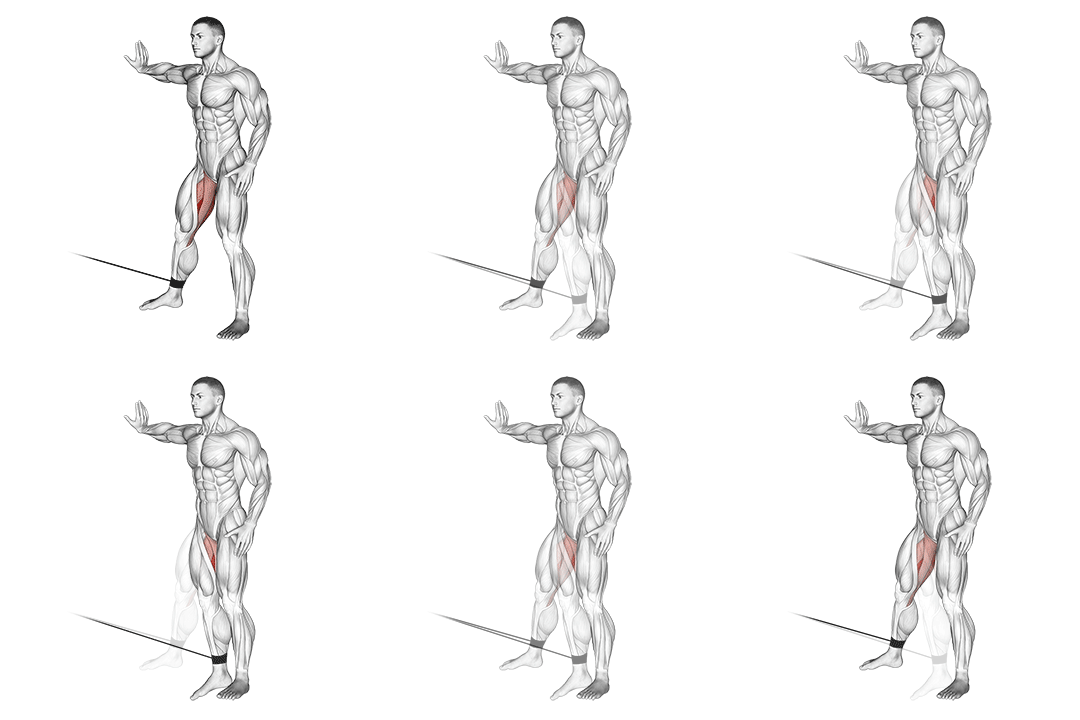
The Adductor/groin is done standing with a band. Ranked closest by our scoring: the Cable Hip Adduction, Side Leg Raises and the Lever Seated Hip Adduction.
Updated Ranked by our 12-factor similarity model How it works
Original Exercise: Adductor/groin
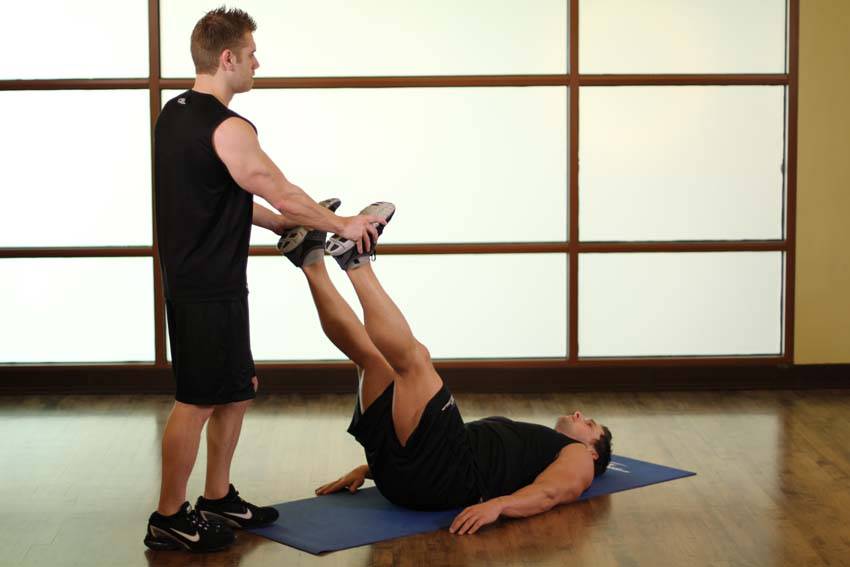
- Primary muscle
- Adductors
- Equipment
- Band
- Difficulty
- Beginner
- Type
- Isolation
How to perform Adductor/groin
- Lie on your back with your feet raised towards the ceiling.
- Have your partner hold your feet or ankles. Abduct your legs as far as you can. This will be your starting position.
- Attempt to squeeze your legs together for 10 or more seconds, while your partner prevents you from doing so.
- Now, relax the muscles in your legs as your partner pushes your feet apart, stretching as far as is comfortable for you. Be sure to let your partner know when the stretch is adequate to prevent overstretching or injury.
Ranked Adductor/groin Alternatives
10 substitutes, ranked by how closely each one matches the Adductor/groin on movement pattern, muscles worked, equipment and body position. The higher the score, the less you change. Open "How to perform this exercise" on a card for the steps; every card title links to that exercise's own alternatives page.
Best match 1. Cable Hip Adduction
83% match- Adductors
- Cable
- Beginner
- Isolation
A good swap when you have a cable machine to work with, and it still works the adductors.
How to perform this exercise
- Attach the ankle cuff to your ankle and stand facing the cable machine.
- Position yourself far enough away from the machine so that there is tension on the cable.
- Place your hands on the machine for support.
- Keeping your leg straight, slowly move your leg across your body towards the midline.
- Pause for a moment at the end of the movement, then slowly return to the starting position.
- Repeat for the desired number of repetitions.
Sets and reps: 3 sets of 10 to 15 reps on each side.
Why this matches
- Primary muscle: adductors, the same as the Adductor/groin
- Equipment: a cable, not a band
- Body position: standing, the same as the Adductor/groin
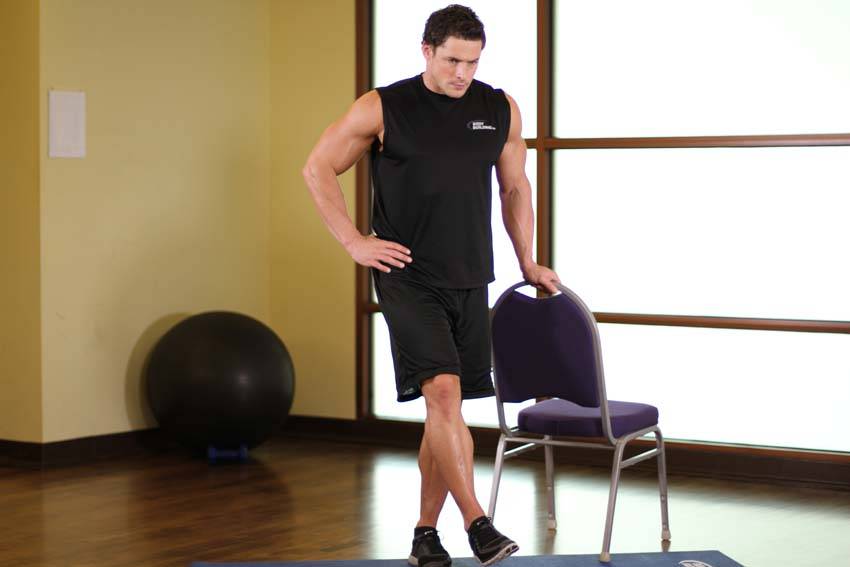
2. Side Leg Raises
82% match- Adductors
- Bodyweight
- Beginner
- Isolation
Use this when you have nothing to train with, because it works the adductors with bodyweight alone.
How to perform this exercise
- Stand next to a chair, which you may hold onto as a support. Stand on one leg. This will be your starting position.
- Keeping your leg straight, raise it as far out to the side as possible, and swing it back down, allowing it to cross the opposite leg.
- Repeat this swinging motion 5-10 times, increasing the range of motion as you do so.
Sets and reps: 3 sets of 8 to 12 reps on each side, and add reps before you add load.
Why this matches
- Primary muscle: adductors, the same as the Adductor/groin
- Equipment: bodyweight only, not a band
- Body position: standing, the same as the Adductor/groin
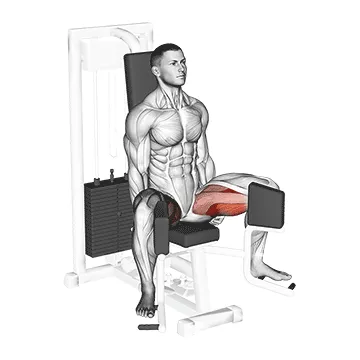
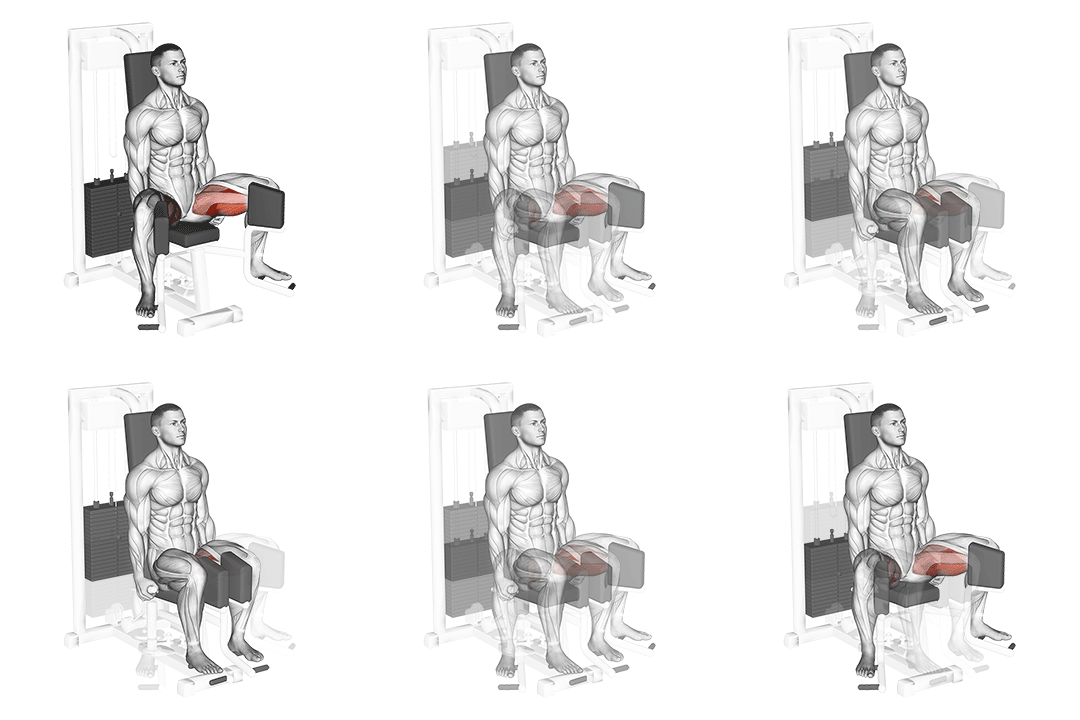
3. Lever Seated Hip Adduction
70% match- Adductors
- Lever
- Beginner
- Isolation
A good swap when you have a lever machine to work with, and it still works the adductors.
How to perform this exercise
- Adjust the seat height and position yourself on the machine with your back against the backrest.
- Place your feet on the footrests and grasp the handles for stability.
- Engage your adductor muscles and slowly bring your legs together, squeezing your inner thighs.
- Pause for a moment at the peak contraction, then slowly return to the starting position.
- Repeat for the desired number of repetitions.
Sets and reps: 3 sets of 10 to 15 reps.
Why this matches
- Primary muscle: adductors, the same as the Adductor/groin
- Equipment: a machine, not a band
- Body position: seated, not standing
- Balance: easier to stay steady on than the Adductor/groin
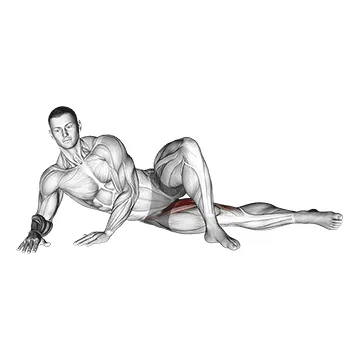
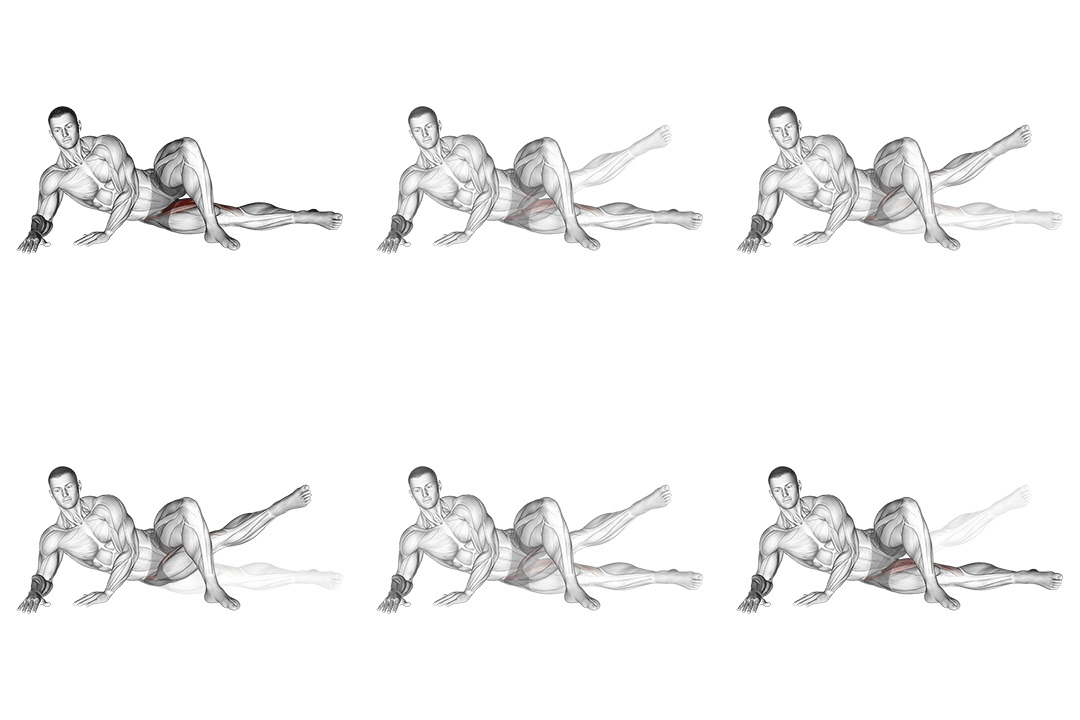
4. Side Lying Hip Adduction
70% match- Adductors
- Bodyweight
- Beginner
- Isolation
How to perform this exercise
- Lie on your side with your legs straight and stacked on top of each other.
- Place your bottom arm under your head for support.
- Engage your adductors and lift your top leg as high as possible without rotating your hips or leaning backward.
- Pause for a moment at the top, then slowly lower your leg back down to the starting position.
- Repeat for the desired number of repetitions, then switch sides.
Sets and reps: 3 sets of 8 to 12 reps on each side, and add reps before you add load.
Why this matches
- Primary muscle: adductors, the same as the Adductor/groin
- Equipment: bodyweight only, not a band
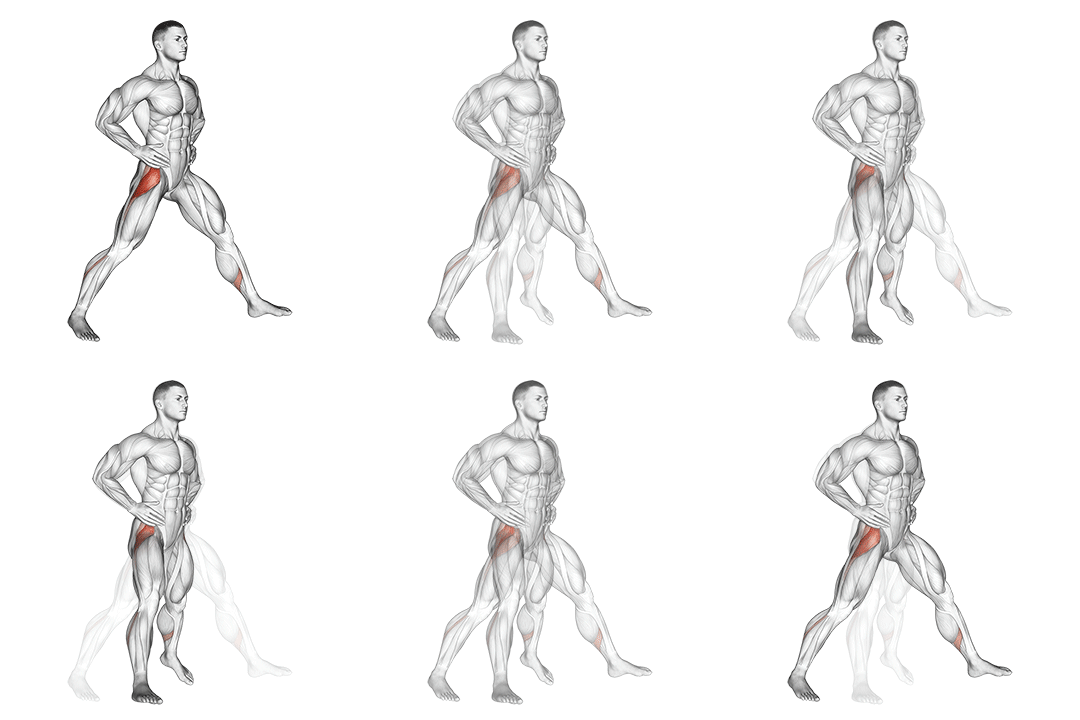
5. Monster Walk
66% match- Glutes
- Bodyweight
- Intermediate
- Compound
A looser match: it works the glutes rather than the adductors.
How to perform this exercise
- Place a resistance band around your ankles.
- Stand with your feet shoulder-width apart and slightly bend your knees.
- Take a step to the side with your right foot, maintaining tension on the resistance band.
- Follow with your left foot, stepping to the side to return to the starting position.
- Repeat for the desired number of repetitions, then switch sides.
Sets and reps: 3 or 4 sets of 6 to 10 reps on each side.
Why this matches
- Primary muscle: glutes, not adductors
- Equipment: bodyweight only, not a band
- Body position: standing, the same as the Adductor/groin
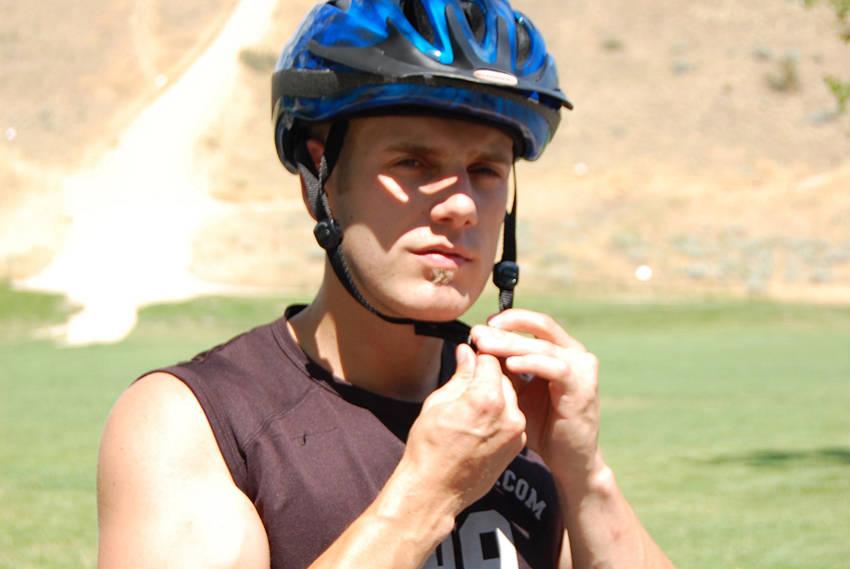
6. Skating
64% match- Quads
- Other
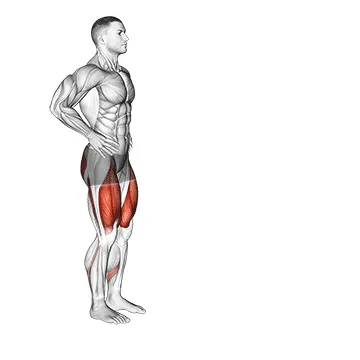
- Intermediate
- Compound
A looser match: it works the quads rather than the adductors.
How to perform this exercise
- Roller skating is a fun activity which can be effective in improving cardiorespiratory fitness and muscular endurance. It requires relatively good balance and coordination. It is necessary to learn the basics of skating including turning and stopping and to wear protective gear to avoid possible injury.
- You can skate at a comfortable pace for 30 minutes straight. If you want a cardio challenge, do interval skating, speed skate two minutes of every five minutes, using the remaining three minutes to recover. A 150 lb person will typically burn about 175 calories in 30 minutes skating at a comfortable pace, similar to brisk walking.
Sets and reps: 3 or 4 sets of 6 to 10 reps on each side.
Why this matches
- Primary muscle: quads, not adductors
- Equipment: bodyweight only, not a band
- Body position: standing, the same as the Adductor/groin
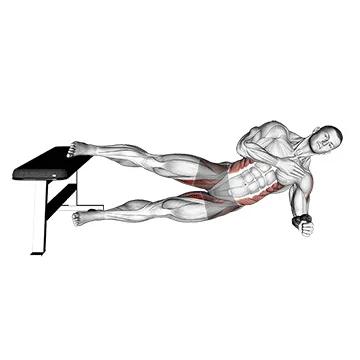
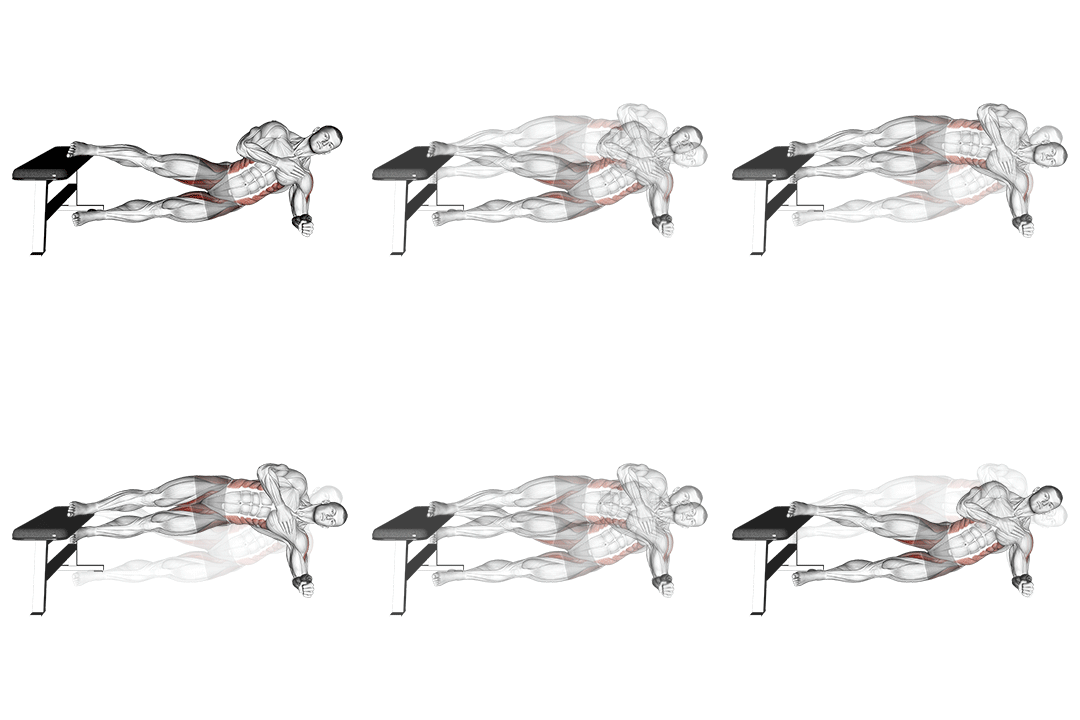
7. Side Plank Hip Adduction
63% match- Adductors
- Bodyweight
- Intermediate
- Compound
How to perform this exercise
- Start by lying on your side with your legs extended and stacked on top of each other.
- Prop yourself up on your forearm, keeping your elbow directly below your shoulder.
- Engage your core and lift your hips off the ground, creating a straight line from your head to your feet.
- While maintaining the side plank position, lift your top leg towards the ceiling, keeping it straight.
- Slowly lower your leg back down to the starting position.
- Repeat for the desired number of repetitions, then switch sides.
Sets and reps: 3 or 4 sets of 6 to 10 reps on each side.
Why this matches
- Primary muscle: adductors, the same as the Adductor/groin
- Equipment: bodyweight only, not a band
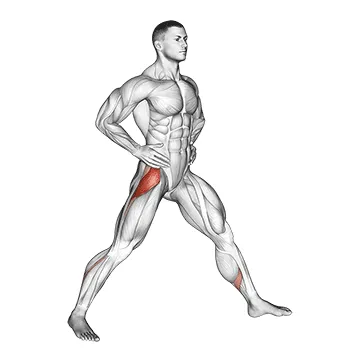
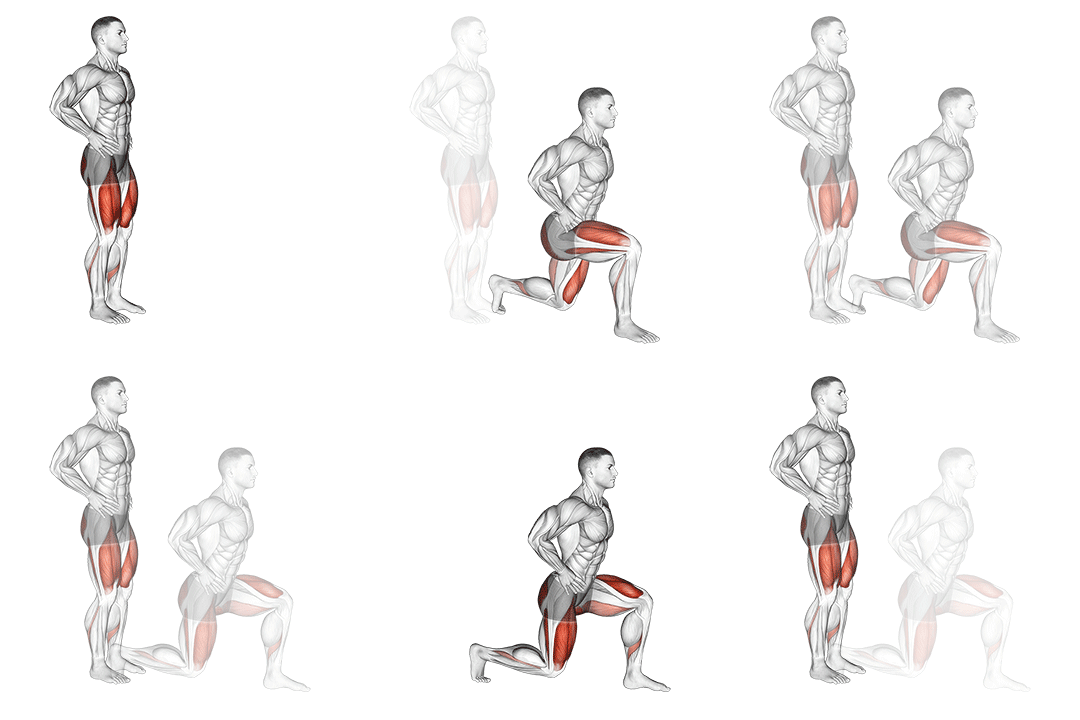
8. Forward Lunge
59% match- Glutes
- Bodyweight
- Beginner
- Compound
How to perform this exercise
- Stand with your feet hip-width apart and hands on your hips.
- Take a big step forward with your right foot, lowering your body into a lunge position.
- Bend your right knee to about 90 degrees, keeping your knee aligned with your ankle.
- Push off with your right foot and return to the starting position.
- Repeat with your left leg, alternating sides for the desired number of repetitions.
Sets and reps: 3 sets of 8 to 12 reps on each side, and add reps before you add load.
Why this matches
- Primary muscle: glutes, not adductors
- Equipment: bodyweight only, not a band
- Body position: standing, the same as the Adductor/groin
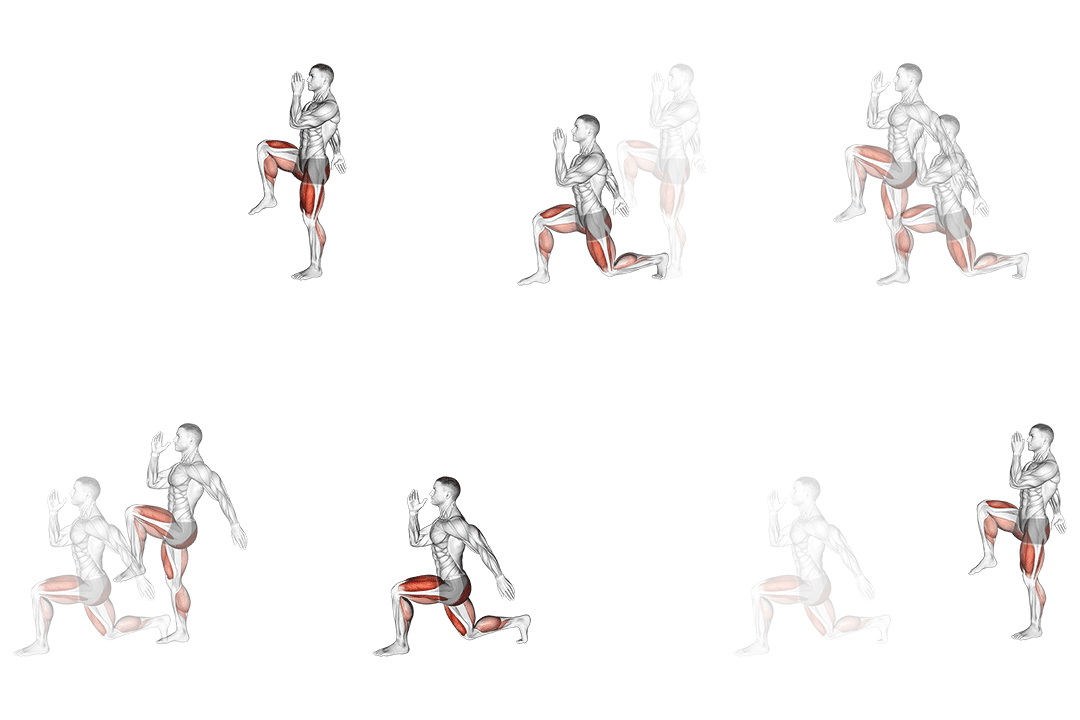
9. Walking High Knees Lunge
59% match- Cardio
- Bodyweight
- Beginner
- Compound
How to perform this exercise
- Stand with your feet hip-width apart.
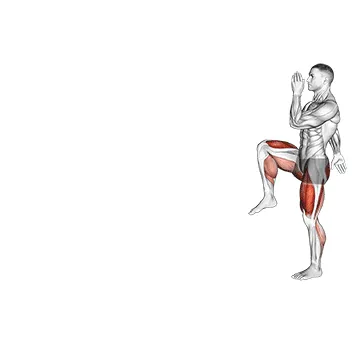
- Lift your right knee up towards your chest as high as you can while balancing on your left leg.
- Step forward with your right foot and lower your body into a lunge position, bending both knees to a 90-degree angle.
- Push off with your right foot and bring your left knee up towards your chest.
- Step forward with your left foot and lower your body into a lunge position.
- Continue alternating legs and lunging forward, keeping your core engaged and maintaining a steady pace.
- Repeat for the desired number of repetitions.
Sets and reps: 3 sets of 8 to 12 reps on each side, and add reps before you add load.
Why this matches
- Primary muscle: your heart and lungs, not adductors
- Equipment: bodyweight only, not a band
- Body position: standing, the same as the Adductor/groin
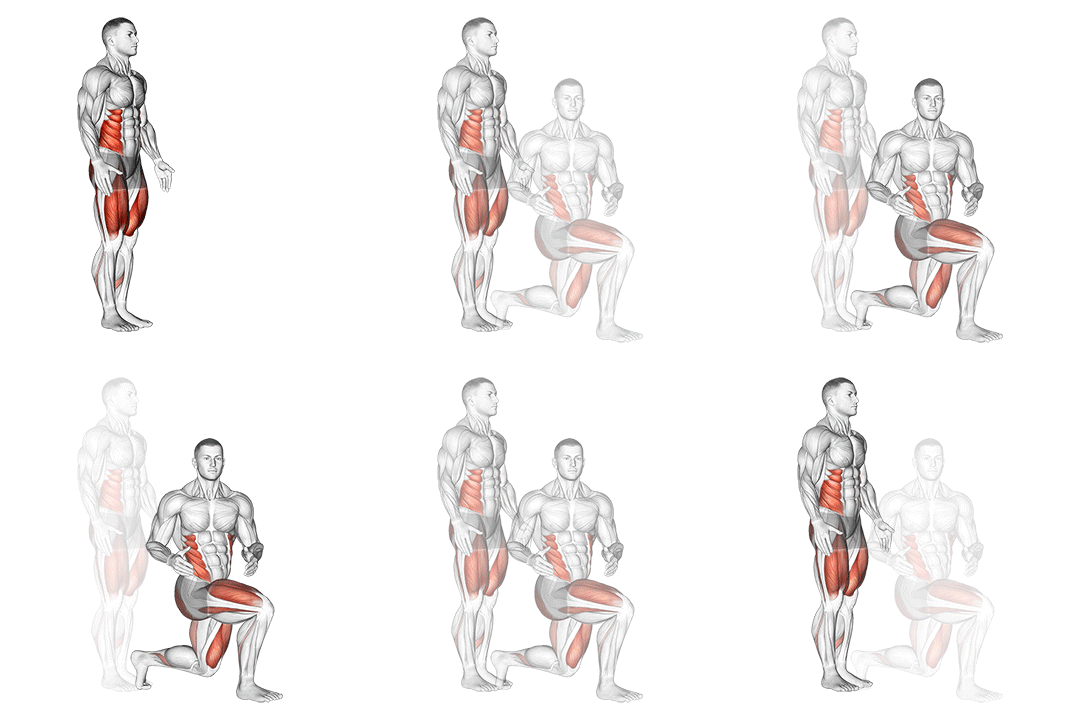
10. Lunge With Twist
59% match- Abs
- Bodyweight
- Intermediate
- Compound
How to perform this exercise
- Start by standing with your feet shoulder-width apart.
- Take a step forward with your right foot, lowering your body into a lunge position.
- As you lunge, twist your torso to the right, bringing your left elbow towards your right knee.
- Pause for a moment, then return to the starting position.
- Repeat on the other side, stepping forward with your left foot and twisting your torso to the left.
- Continue alternating sides for the desired number of repetitions.
Sets and reps: 3 or 4 sets of 6 to 10 reps on each side.
Why this matches
- Primary muscle: abs, not adductors
- Equipment: bodyweight only, not a band
- Body position: standing, the same as the Adductor/groin
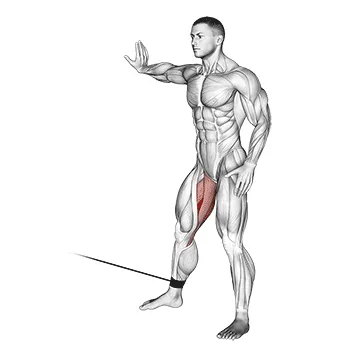
Why You Might Need an Adductor/groin Alternative
You may substitute Adductor/groin because of groin pain, band unavailability, post-op restrictions, or the need for greater functional carryover. Alternatives let you change force vector, eccentric demand, and pelvic load to match rehab or performance goals. For example, the Copenhagen adduction increases eccentric control of the adductor longus and magnus; cue a slow 3-5 second descent with hips level to emphasize eccentric lengthening. Side-lying raises reduce axial load while still isolating the adductors; keep the top knee extended and dorsiflex the foot to bias adductor magnus activation.
How to Choose the Right Adductor/groin Substitute
Select a substitute based on pain, desired loading pattern, and available equipment. For pain or early rehab, pick isometric squeezes or side-lying adductor raises to limit hip joint shear, press a soft ball between knees and hold 8-12 seconds while keeping the pelvis neutral. For strength or sport transfer, pick Copenhagen or wide-stance squats to add eccentric and multi-joint demand; when doing the Copenhagen, support the non-working leg on a bench and lower under control to 3 seconds to maximize adductor recruitment. Always monitor hip internal rotation and knee tracking during progressions.
Adductor/groin FAQ
What is the best bodyweight alternative to Adductor/groin?
The Copenhagen adduction is the top bodyweight alternative because it produces high adductor activation and strong eccentric demand. Set your top leg on a bench, support your body laterally, and lower slowly for a 3-5 second eccentric while keeping hips square to the floor.
Find Alternatives for Any Exercise
Search the exercise database and filter the ranked substitutes by the equipment you own.
Similarity scores compare exercise metadata such as movement pattern, muscles, equipment and body position. They are not a safety rating or a check that you own the equipment. Learn about our methodology