

5 Alternatives to Resistance Band Hip Thrusts On Knees (female)
If you can’t perform Resistance Band Hip Thrusts on your knees, use movements that preserve hip extension and glute tension. Effective swaps include banded glute bridges, single‑leg glute bridges, cable pull‑throughs, frog pumps, and quadruped hip extensions. Cue: drive hips up, lock the pelvis, and squeeze the glutes hard at the top.
Original Exercise: Resistance Band Hip Thrusts On Knees
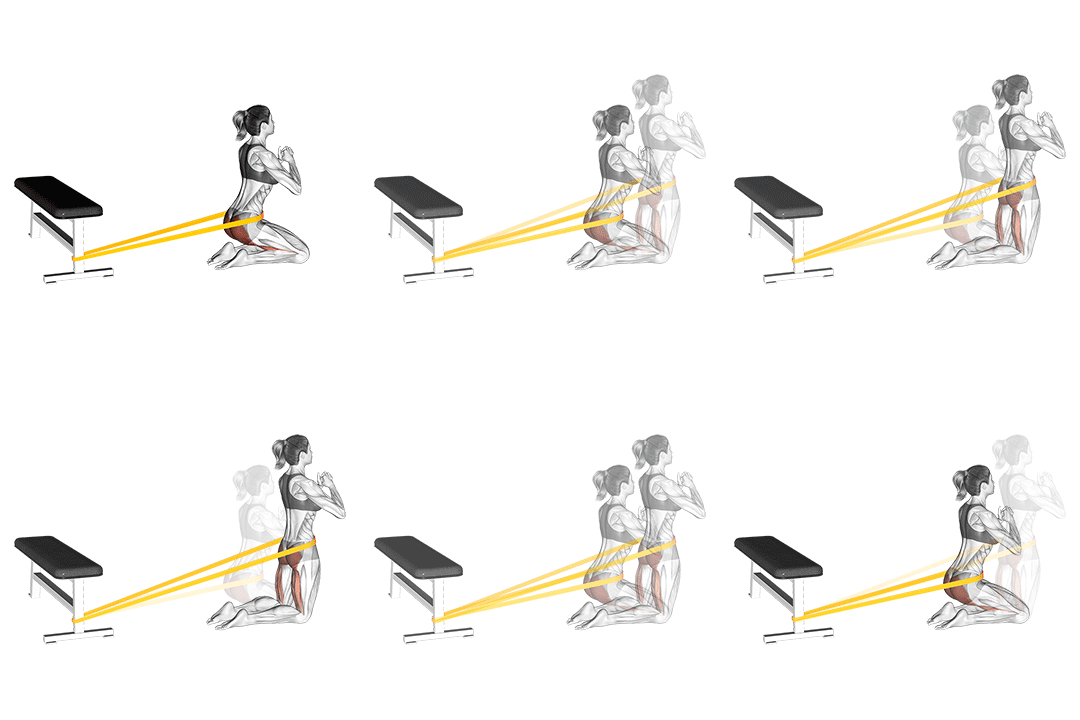
How to Perform Resistance Band Hip Thrusts On Knees
- Start by kneeling on the ground with your knees hip-width apart and your feet flexed.
- Wrap the resistance band around your thighs, just above your knees.
- Place your hands on your hips or extend them out in front of you for balance.
- Engage your glutes and core muscles.
- Push your hips forward and squeeze your glutes as you lift your knees off the ground, extending your hips until your thighs are parallel to the ground.
- Hold the position for a moment, then slowly lower your knees back down to the starting position.
- Repeat for the desired number of repetitions.
Ranked Resistance Band Hip Thrusts On Knees Alternatives
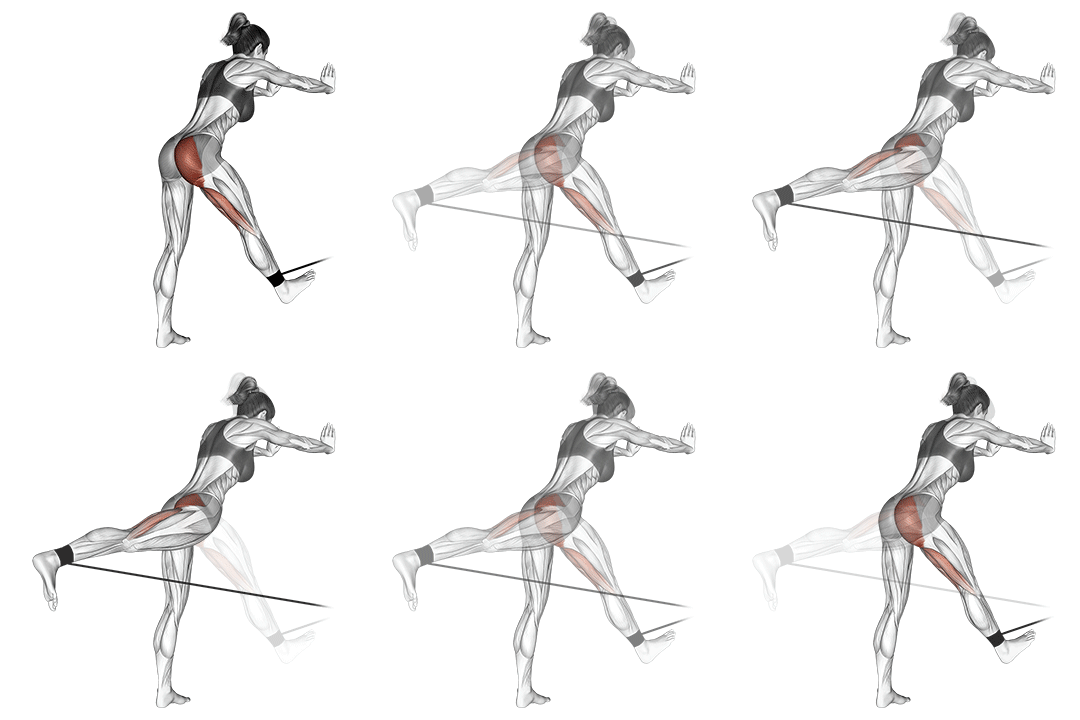
1. Band Bent-over Hip Extension
83.1% MatchHow to perform this exercise
- Attach the band to a sturdy anchor point at ankle height.
- Stand facing away from the anchor point with your feet shoulder-width apart.
- Step back to create tension in the band, keeping your knees slightly bent.
- Hinge at the hips and lean forward, maintaining a neutral spine.
- Extend your right leg straight back, squeezing your glutes at the top.
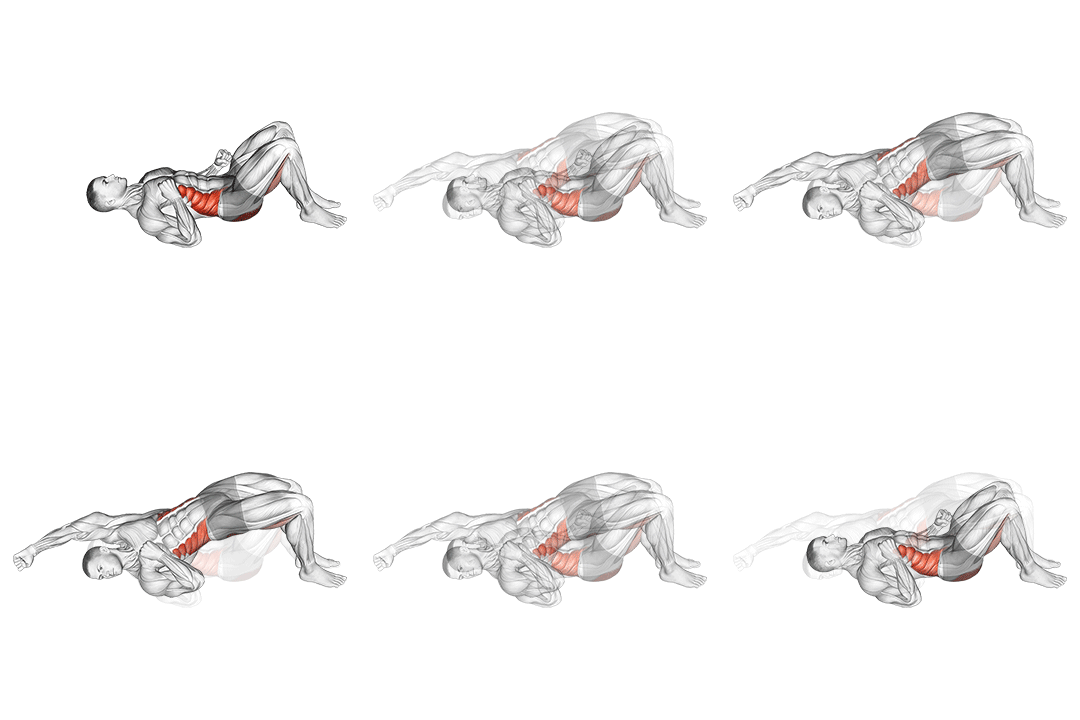
2. Twist Hip Lift
81.2% MatchHow to perform this exercise
- Lie on your back with your knees bent and feet flat on the ground.
- Place your hands by your sides for support.
- Engage your glutes and lift your hips off the ground, forming a straight line from your knees to your shoulders.
- While keeping your hips lifted, twist your lower body to the right side, bringing your knees towards the ground.
- Return to the starting position and repeat the twist to the left side.
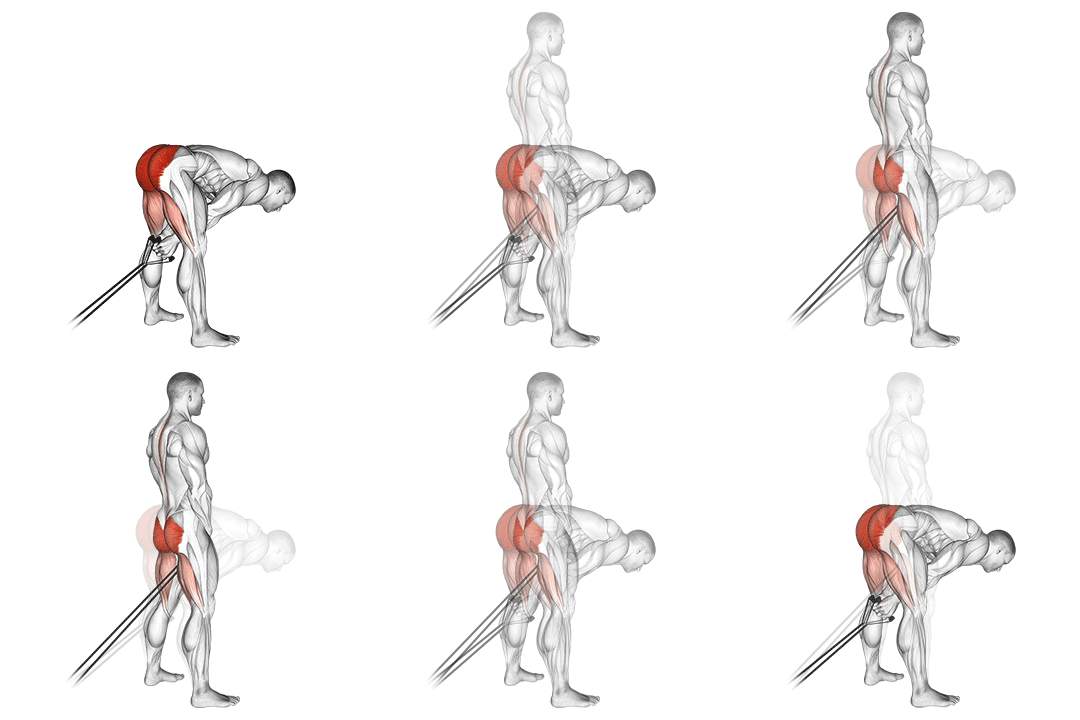
3. Band Pull Through
81.1% MatchHow to perform this exercise
- Attach a resistance band to a sturdy anchor point at ground level.
- Stand facing away from the anchor point with your feet shoulder-width apart.
- Step forward to create tension in the band, keeping your knees slightly bent.
- Hinge at the hips and push your glutes back, maintaining a slight bend in your knees.
- Lower your torso until it is parallel to the ground, feeling a stretch in your hamstrings.
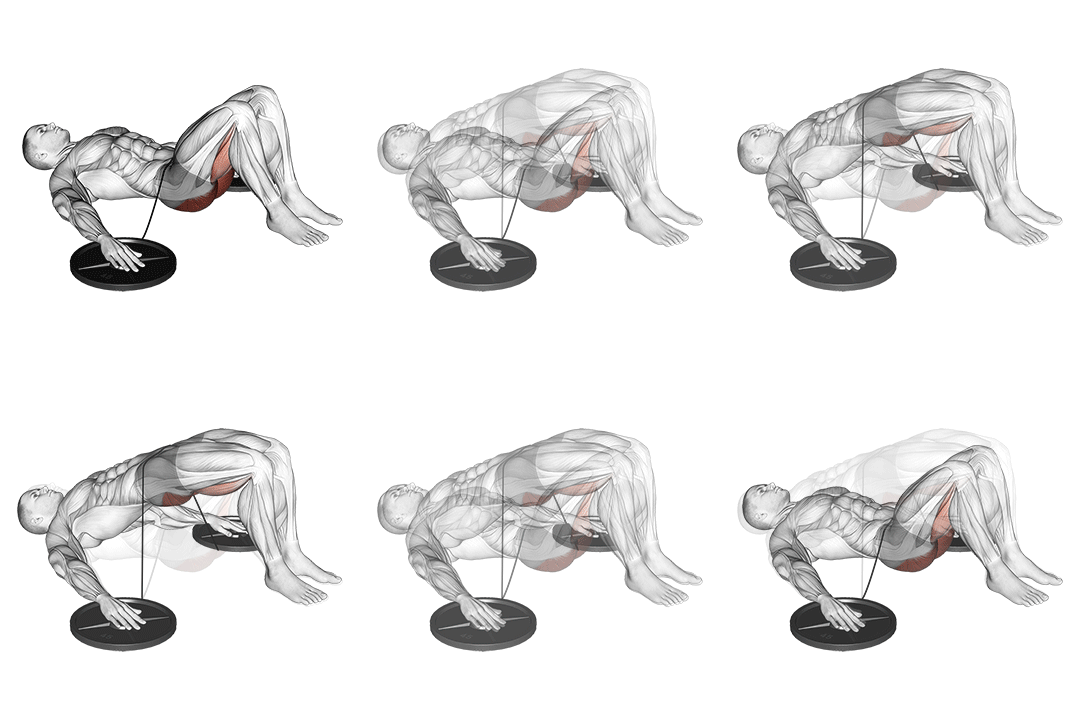
4. Band Hip Lift
80.4% MatchHow to perform this exercise
- Lie on your back with your knees bent and feet flat on the ground.
- Place a resistance band just above your knees.
- Engage your glutes and core muscles.
- Press your heels into the ground and lift your hips off the floor, squeezing your glutes at the top.
- Pause for a moment at the top, then slowly lower your hips back down to the starting position.
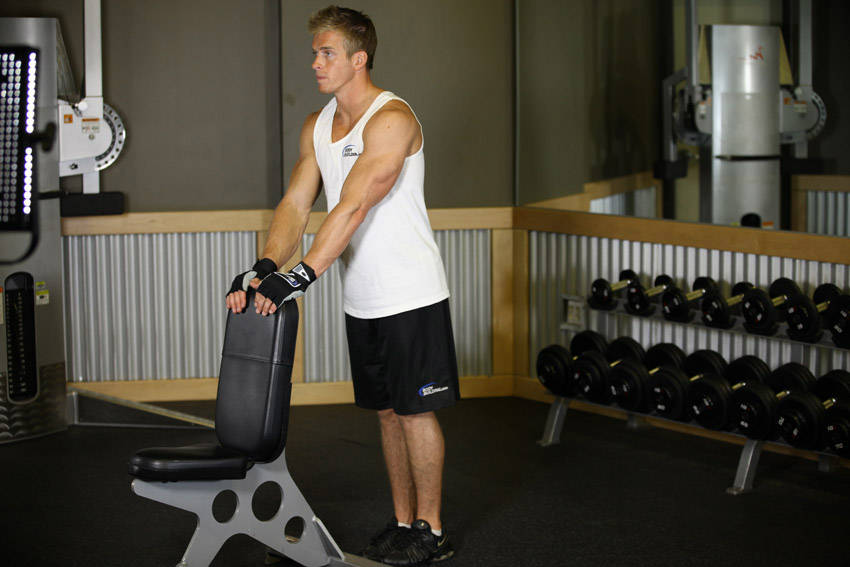
5. Leg Lift
78.4% MatchHow to perform this exercise
- While standing up straight with both feet next to each other at around shoulder width, grab a sturdy surface such as the sides of a squat rack or the top of a chair to brace yourself and keep balance.
- With or without an ankle weight, lift one leg behind you as if performing a leg curl but standing up while keeping the other leg straight. Breathe out as you perform this movement.
- Slowly bring the raised leg back to the floor as you breathe in.
- Repeat for the recommended amount of repetitions.
- Repeat the movement with the opposite leg.
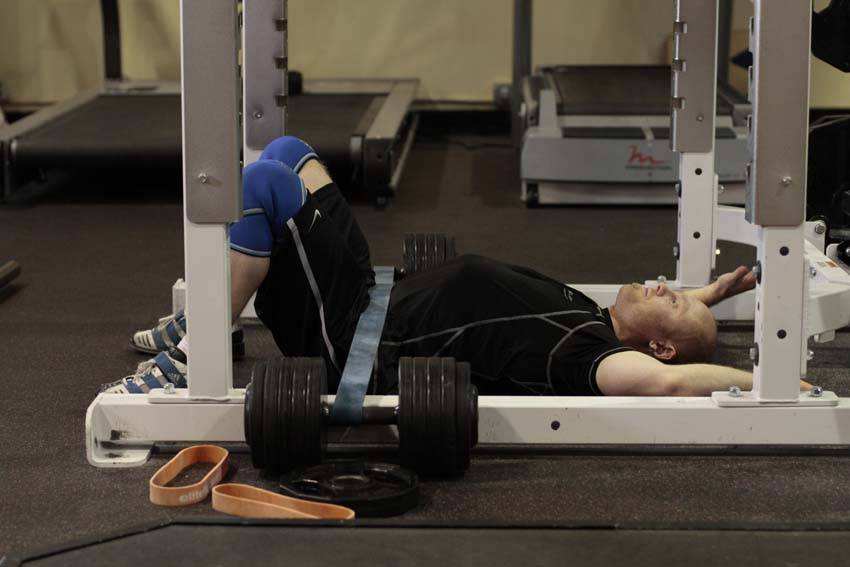
6. Hip Lift With Band
75.7% MatchHow to perform this exercise
- After choosing a suitable band, lay down in the middle of the rack, after securing the band on either side of you. If your rack doesn't have pegs, the band can be secured using heavy dumbbells or similar objects, just ensure they won't move.
- Adjust your position so that the band is directly over your hips. Bend your knees and place your feet flat on the floor. Your hands can be on the floor or holding the band in position.
- Keeping your shoulders on the ground, drive through your heels to raise your hips, pushing into the band as high as you can.
- Pause at the top of the motion, and return to the starting position.
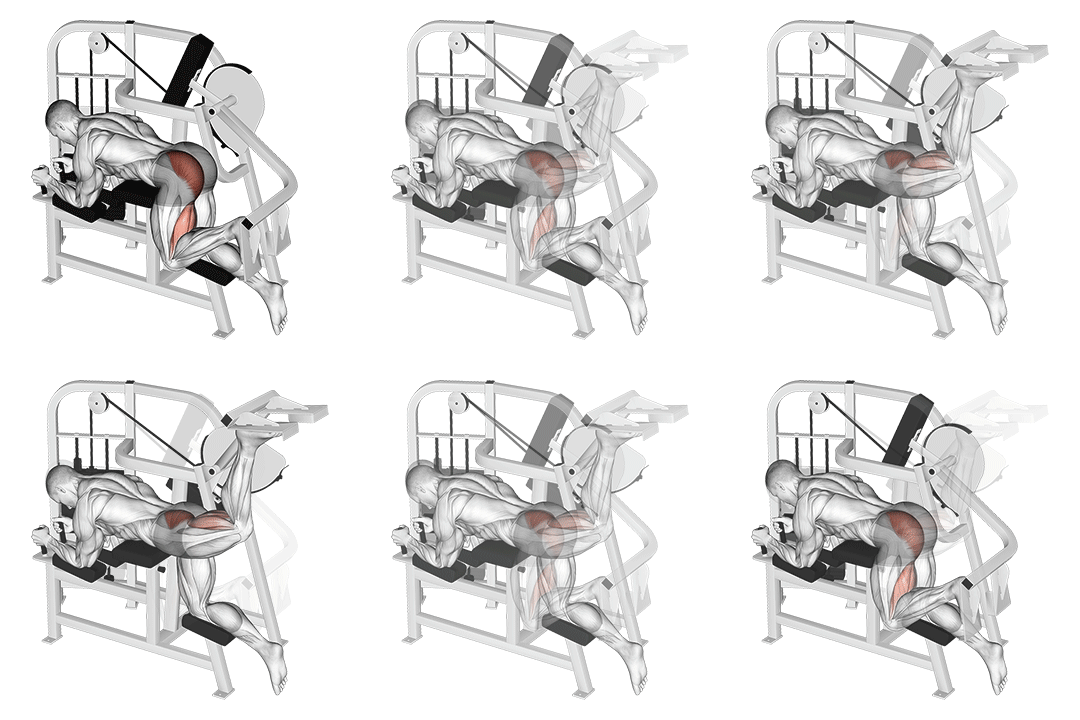
7. Lever Hip Extension V. 2
74.9% MatchHow to perform this exercise
- Adjust the machine to fit your body and sit on it with your back against the backrest.
- Place your feet on the footrests and grip the handles for stability.
- Engage your glutes and hamstrings, then push against the footrests to extend your hips and raise your legs backward.
- Pause for a moment at the top, then slowly lower your legs back to the starting position.
- Repeat for the desired number of repetitions.
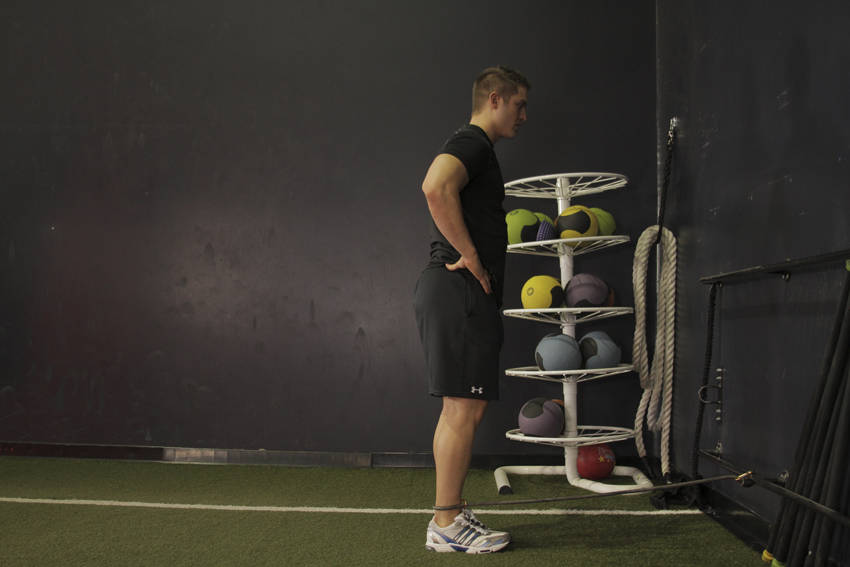
8. Hip Extension With Bands
74.7% MatchHow to perform this exercise
- Secure one end of the band to the lower portion of a post and attach the other to one ankle.
- Facing the attachment point of the band, hold on to the column to stabilize yourself.
- Keeping your head and your chest up, move the resisted leg back as far as you can while keeping the knee straight.
- Return the leg to the starting position.
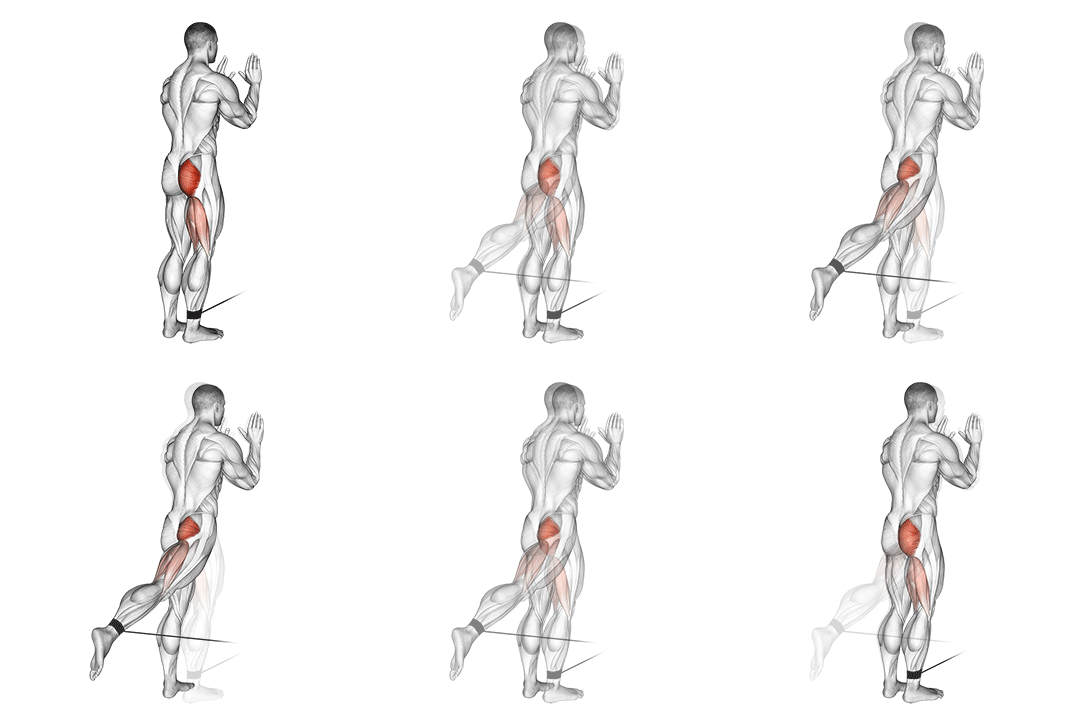
9. Cable Standing Hip Extension
73.1% MatchHow to perform this exercise
- Attach a cable to a low pulley and stand facing away from the machine.
- Place the cable around your ankle and stand with your feet shoulder-width apart.
- Keep your core engaged and your back straight throughout the exercise.
- Slowly extend your leg straight back, squeezing your glutes at the top of the movement.
- Pause for a moment, then return to the starting position.
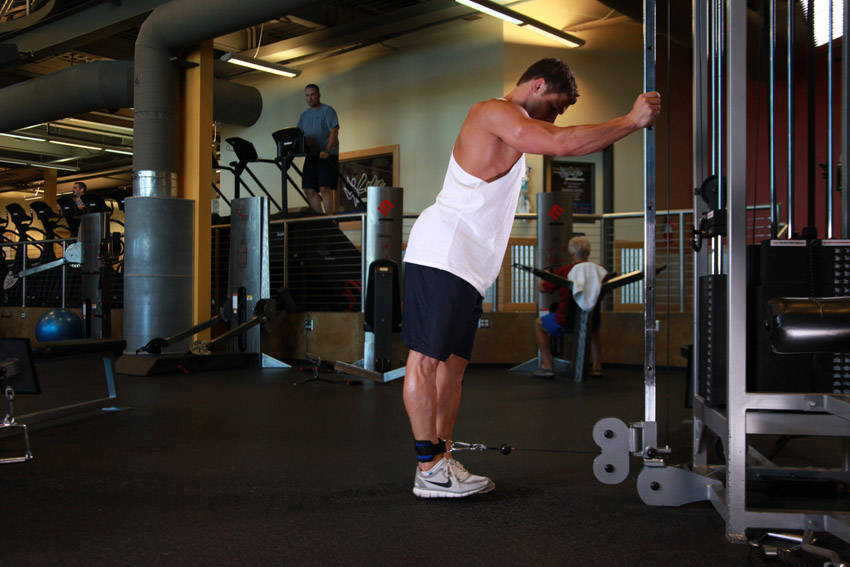
10. One-Legged Cable Kickback
72.9% MatchHow to perform this exercise
- Hook a leather ankle cuff to a low cable pulley and then attach the cuff to your ankle.
- Face the weight stack from a distance of about two feet, grasping the steel frame for support.
- While keeping your knees and hips bent slightly and your abs tight, contract your glutes to slowly "kick" the working leg back in a semicircular arc as high as it will comfortably go as you breathe out. Tip: At full extension, squeeze your glutes for a second in order to achieve a peak contraction.
- Now slowly bring your working leg forward, resisting the pull of the cable until you reach the starting position.
- Repeat for the recommended amount of repetitions.
Why You Might Need a Resistance Band Hip Thrusts On Knees Alternative
You might substitute this exercise for several reasons: knee pain while kneeling, pregnancy or mobility limits, lack of a suitable band, or the need for heavier progressive loading. Some users need unilateral work to correct asymmetry, while others want more hamstring or lumbar involvement. Choose alternatives that recreate hip extension torque and posterior chain activation; for example, a banded glute bridge maintains horizontal hip extension and isolates the gluteus maximus, while single‑leg work adds demand on stabilizing muscles like the gluteus medius. Technique cue: keep a neutral spine and initiate movement by pushing through the heels to emphasize glute recruitment.
How to Choose the Right Substitute
Match the substitute to your goal: pick isolation options (banded glute bridges, frog pumps) when you want maximal glute contraction, or choose compound lifts (Romanian deadlifts, cable pull‑throughs) to add overall posterior chain load. Consider lever length and range of motion, longer lever (single‑leg RDL) increases hamstring involvement and requires more balance. For rehabilitation or lower load, use shorter lever variations and lighter bands. Technique cue: monitor hip travel and avoid lumbar hyperextension; feel force through hip extension rather than lumbar extension to keep glute activation high.
Frequently Asked Questions
What muscles does Resistance Band Hip Thrusts On Knees (female) work?
The exercise primarily targets the gluteus maximus through hip extension and posterior pelvic tilt. It also engages the gluteus medius for stabilization, the hamstrings as synergists, and the core to control pelvic position, cue: squeeze the glutes at full hip extension to maximize recruitment.
What is the best bodyweight alternative to Resistance Band Hip Thrusts On Knees (female)?
A single‑leg glute bridge is the top bodyweight alternative because it preserves hip extension while adding unilateral load for balance and hypertrophy. Technique cue: drive the heel into the floor, keep hips level, and hold a 1–2 second peak contraction to boost glute activation.
Can I build muscle without doing Resistance Band Hip Thrusts On Knees (female)?
Yes. You can stimulate glute hypertrophy with progressive overload via alternatives like single‑leg RDLs, barbell hip thrusts, cable pull‑throughs, or tempo‑controlled frog pumps. Use heavier load, increased time under tension (3‑second eccentrics), or more frequent sets to maintain progressive glute loading.
More Exercise Alternatives
Find Alternatives for Any Exercise
Use the exercise substitution finder to compare ranked alternatives for your available equipment and training preference.
Try the Exercise Substitution Finder →