

10 Best Seated Barbell Military Press Alternatives for Shoulder Strength
If you can’t use the seated barbell military press, choose vertical-press alternatives that reproduce deltoid and triceps loading. Try seated dumbbell presses, standing barbell presses, landmine presses, Arnold presses, or Pike push-ups. Cue: brace your core, keep the scapula depressed and slightly retracted, and press through the elbows to target the delts.
Original Exercise: Seated Barbell Military Press
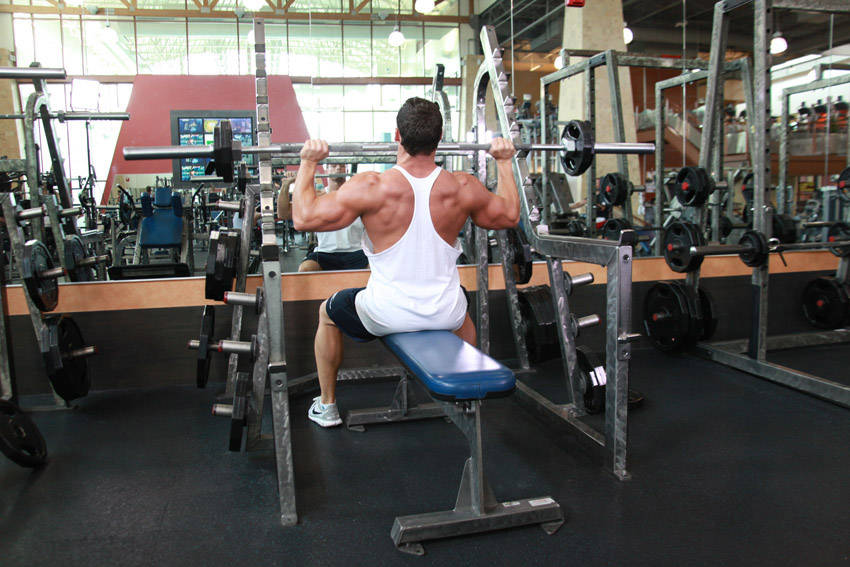
How to Perform Seated Barbell Military Press
- Sit on a Military Press Bench with a bar behind your head and either have a spotter give you the bar (better on the rotator cuff this way) or pick it up yourself carefully with a pronated grip (palms facing forward). Tip: Your grip should be wider than shoulder width and it should create a 90-degree angle between the forearm and the upper arm as the barbell goes down.
- Once you pick up the barbell with the correct grip length, lift the bar up over your head by locking your arms. Hold at about shoulder level and slightly in front of your head. This is your starting position.
- Lower the bar down to the collarbone slowly as you inhale.
- Lift the bar back up to the starting position as you exhale.
- Repeat for the recommended amount of repetitions.
Pro Tips
- Category: Strength
- Force: Push
- Movement type: Compound
Ranked Seated Barbell Military Press Alternatives
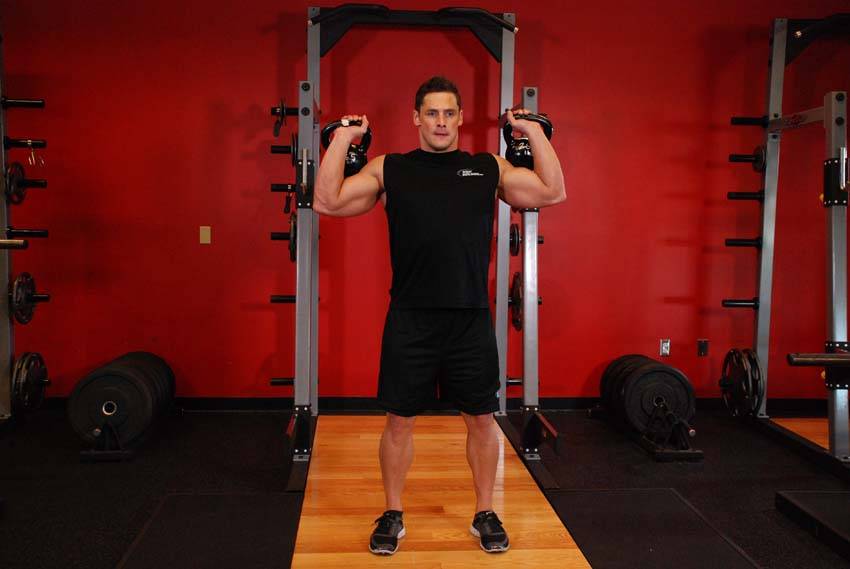
1. Two-Arm Kettlebell Military Press
85.9% MatchHow to perform this exercise
- Clean two kettlebells to your shoulders. Clean the kettlebells to your shoulders by extending through the legs and hips as you swing the kettlebells towards your shoulders. Rotate your wrists as you do so, so that the palms face forward.
- Press the kettlebells up and out. As the kettlebells pass your head, lean into the weights so that the kettlebells are racked behind your head. Make sure to contract your lats, butt, and stomach for added stability.
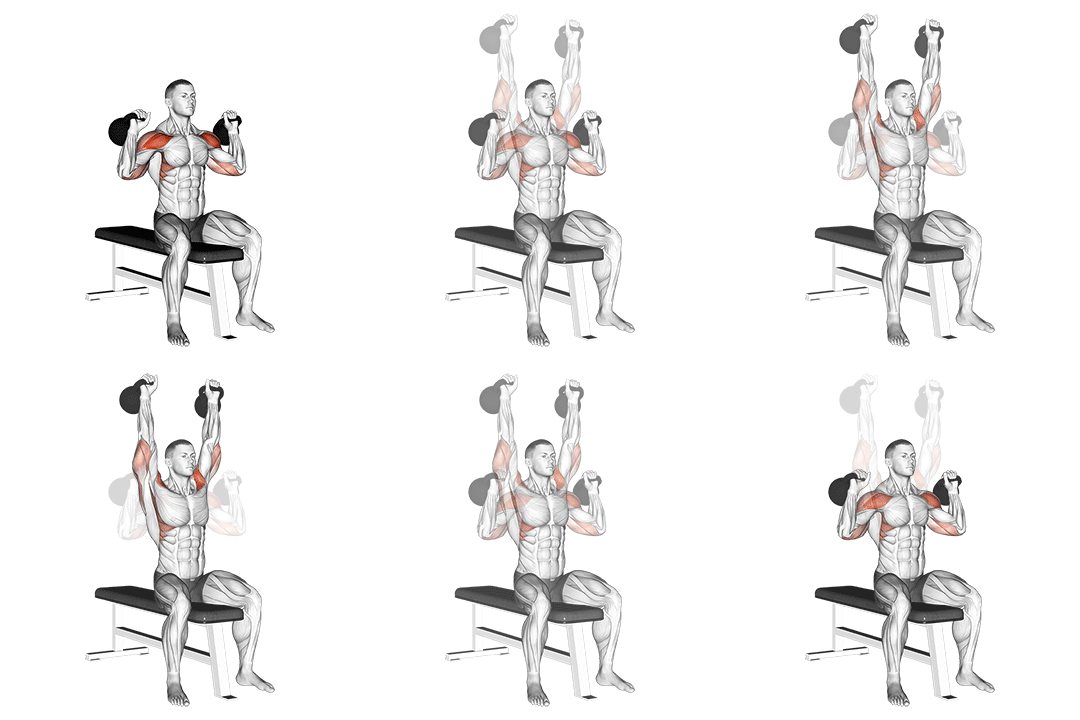
2. Kettlebell Seated Two Arm Military Press
81% MatchHow to perform this exercise
- Sit on a bench with your back straight and feet flat on the ground.
- Hold a kettlebell in each hand at shoulder level with your palms facing forward.
- Press the kettlebells overhead by extending your arms fully.
- Pause for a moment at the top, then slowly lower the kettlebells back to shoulder level.
- Repeat for the desired number of repetitions.
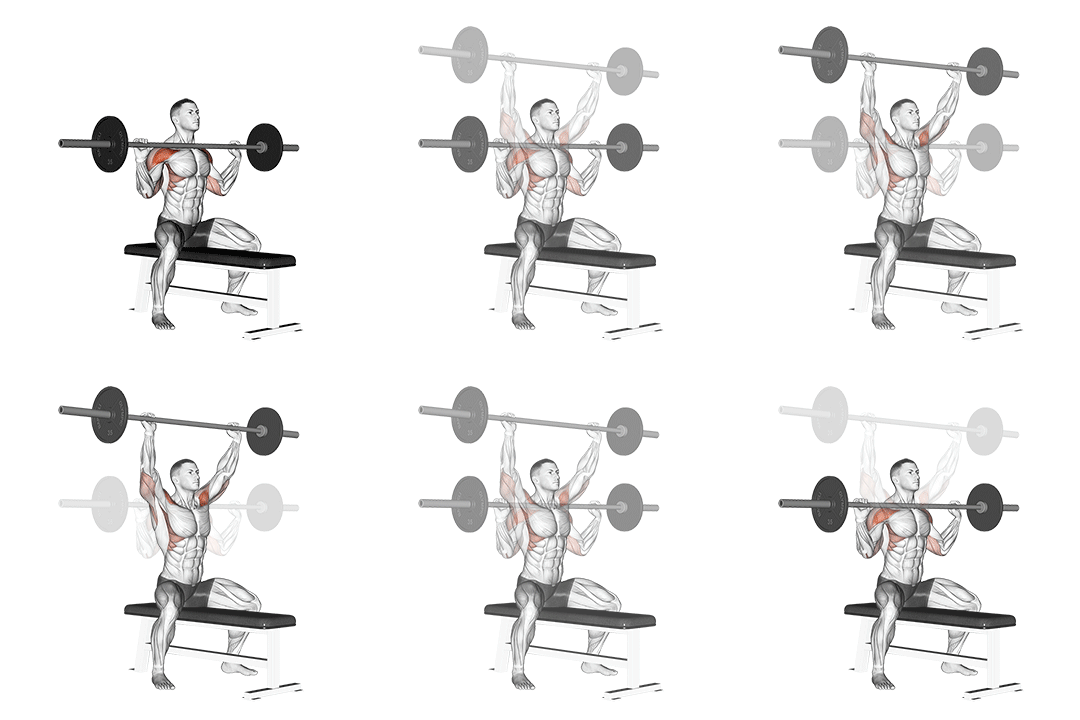
3. Barbell Seated Overhead Press
80% MatchHow to perform this exercise
- Sit on a bench with your back straight and feet flat on the ground.
- Hold the barbell with an overhand grip, slightly wider than shoulder-width apart.
- Lift the barbell off the rack and bring it to shoulder level, with your elbows bent and palms facing forward.
- Press the barbell overhead by extending your arms fully.
- Pause for a moment at the top, then slowly lower the barbell back to shoulder level.
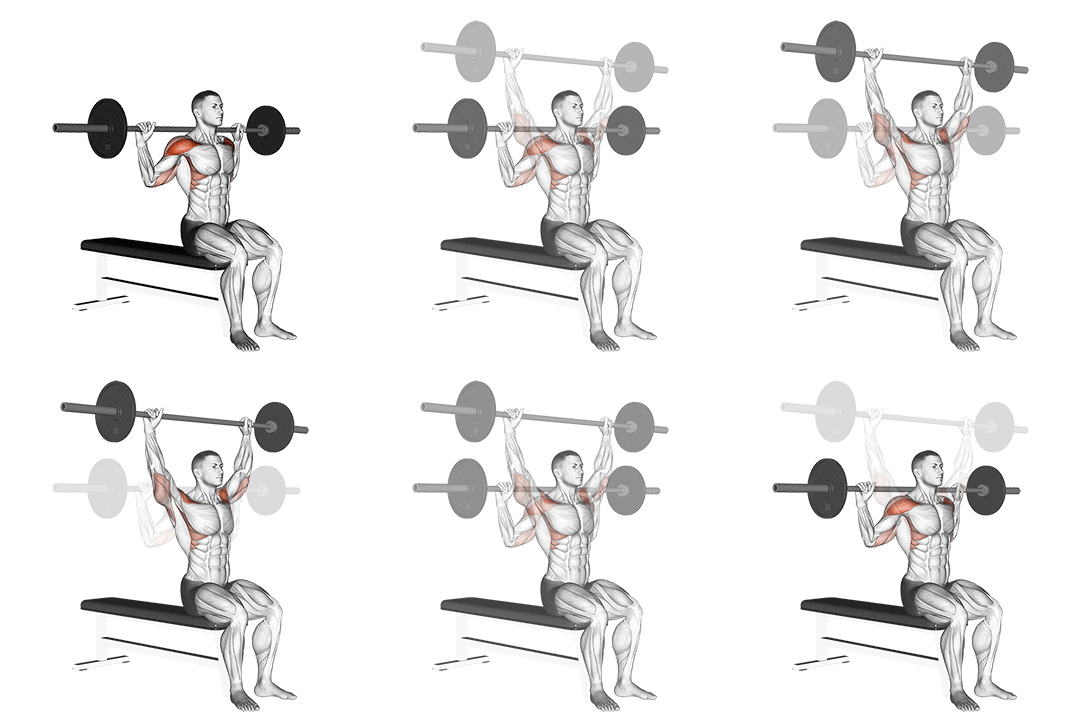
4. Barbell Seated Behind Head Military Press
79.4% MatchHow to perform this exercise
- Sit on a bench with your back straight and feet flat on the ground.
- Hold the barbell with an overhand grip, slightly wider than shoulder-width apart.
- Lift the barbell off the rack and bring it down to shoulder level, behind your head.
- Press the barbell upward until your arms are fully extended.
- Lower the barbell back down to the starting position.
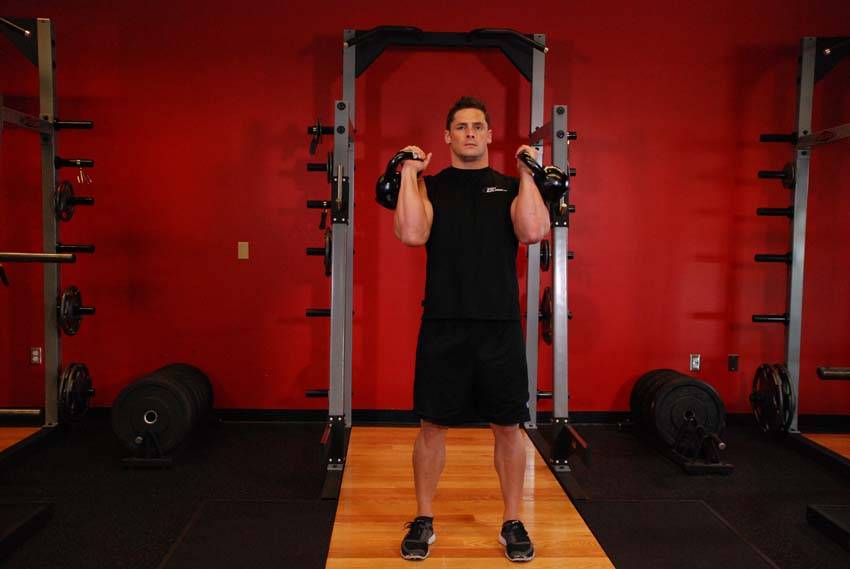
5. Alternating Kettlebell Press
78.1% MatchHow to perform this exercise
- Clean two kettlebells to your shoulders. Clean the kettlebells to your shoulders by extending through the legs and hips as you pull the kettlebells towards your shoulders. Rotate your wrists as you do so.
- Press one directly overhead by extending through the elbow, turning it so the palm faces forward while holding the other kettlebell stationary .
- Lower the pressed kettlebell to the starting position and immediately press with your other arm.
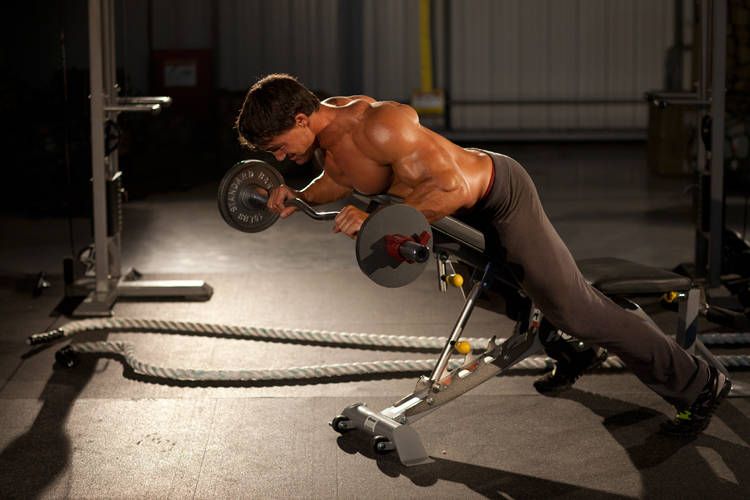
6. Anti-Gravity Press
74.9% MatchHow to perform this exercise
- Place a bar on the ground behind the head of an incline bench.
- Lay on the bench face down. With a pronated grip, pick the barbell up from the floor. Flex the elbows, performing a reverse curl to bring the bar near your chest. This will be your starting position.
- To begin, press the barbell out in front of your head by extending your elbows. Keep your arms parallel to the ground throughout the movement.
- Return to the starting position and repeat to complete the set.
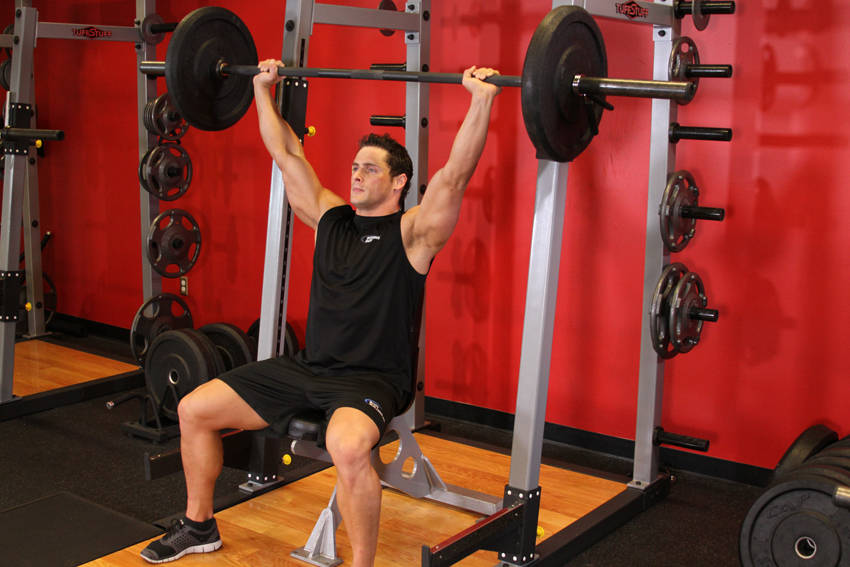
7. Barbell Shoulder Press
74.9% MatchHow to perform this exercise
- Sit on a bench with back support in a squat rack. Position a barbell at a height that is just above your head. Grab the barbell with a pronated grip (palms facing forward).
- Once you pick up the barbell with the correct grip width, lift the bar up over your head by locking your arms. Hold at about shoulder level and slightly in front of your head. This is your starting position.
- Lower the bar down to the shoulders slowly as you inhale.
- Lift the bar back up to the starting position as you exhale.
- Repeat for the recommended amount of repetitions.
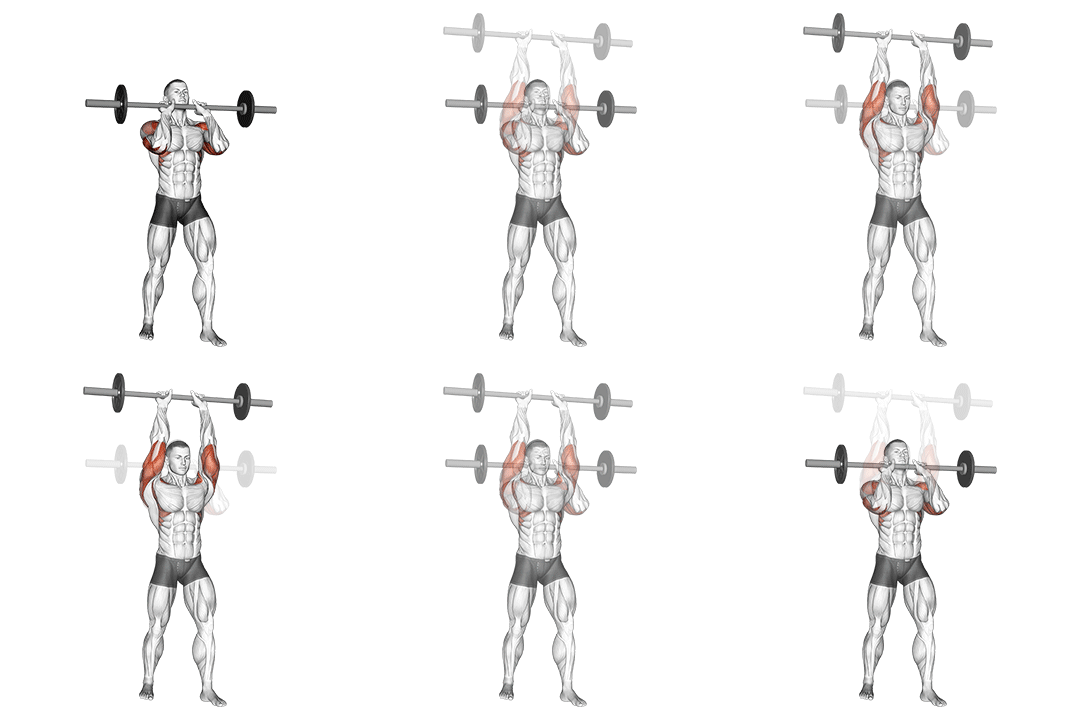
8. Barbell Standing Close Grip Military Press
74.9% MatchHow to perform this exercise
- Stand with your feet shoulder-width apart and hold the barbell with an overhand grip, hands slightly closer than shoulder-width apart.
- Lift the barbell to shoulder height, keeping your elbows close to your body.
- Press the barbell overhead, extending your arms fully.
- Lower the barbell back to shoulder height.
- Repeat for the desired number of repetitions.
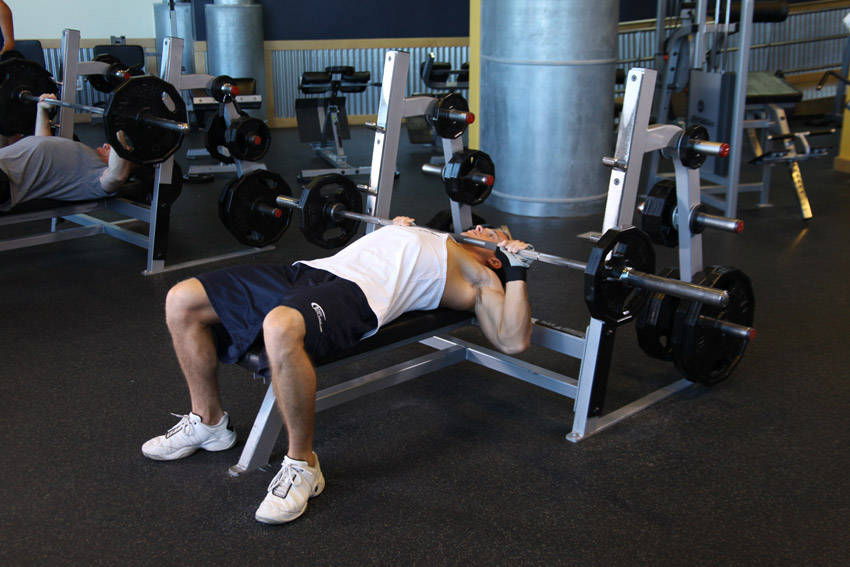
9. Neck Press
74.9% MatchHow to perform this exercise
- Lie back on a flat bench. Using a medium-width grip (a grip that creates a 90-degree angle in the middle of the movement between the forearms and the upper arms), lift the bar from the rack and hold it straight over your neck with your arms locked. This will be your starting position.
- As you breathe in, come down slowly until you feel the bar on your neck.
- After a second pause, bring the bar back to the starting position as you breathe out and push the bar using your chest muscles. Lock your arms and squeeze your chest in the contracted position, hold for a second and then start coming down slowly again. Tip: It should take at least twice as long to go down than to come up).
- Repeat the movement for the prescribed amount of repetitions.
- When you are done, place the bar back in the rack.
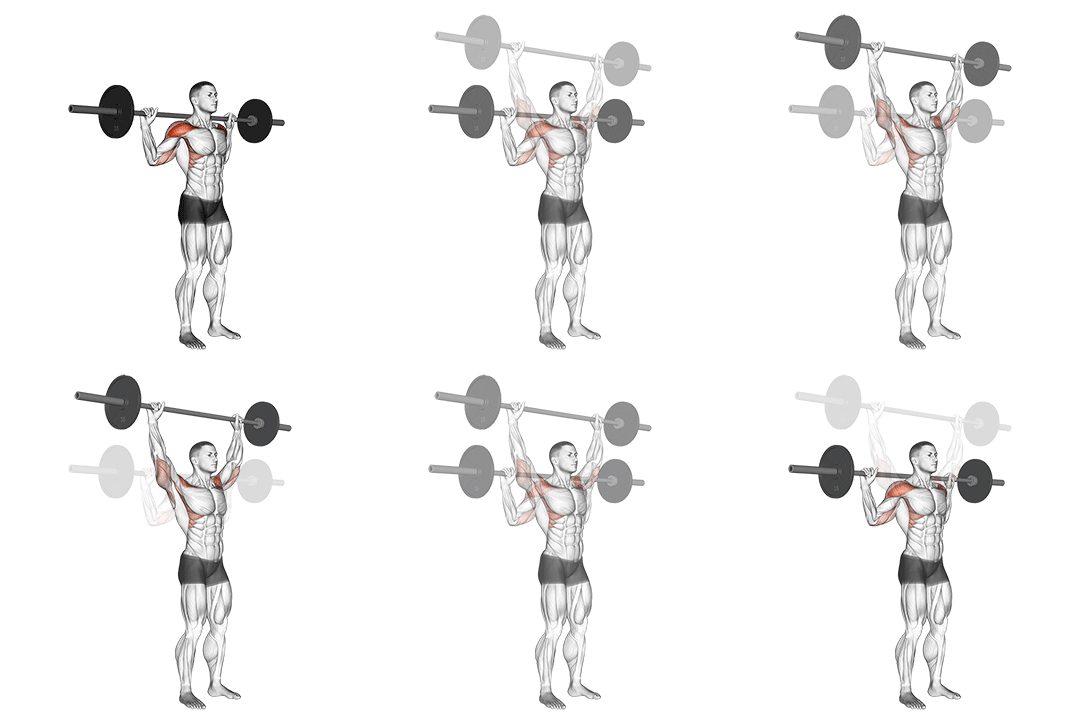
10. Standing Behind Neck Press
74.9% MatchHow to perform this exercise
- Stand with your feet shoulder-width apart and hold the barbell behind your neck with an overhand grip.
- Keep your back straight and core engaged.
- Press the barbell overhead by extending your arms, fully extending your elbows.
- Pause for a moment at the top, then slowly lower the barbell back down to the starting position.
- Repeat for the desired number of repetitions.
Why You Might Need a Seated Barbell Military Press Alternative
You may substitute the seated barbell military press due to shoulder pain, limited equipment, or a need for unilateral work. Impingement risk often rises with fixed-bar external rotation and high anterior deltoid loads; switching to neutral-grip dumbbells or landmine angles reduces supraspinatus compression. Rehab or mobility limits can favor machines or partial ROM presses that lower torque on the glenohumeral joint. For performance, unilateral variants correct imbalances and require more scapular control, improving tonic activation of the medial deltoid and rotator cuff stabilizers. Use technique cues like a neutral wrist and controlled eccentric to preserve joint health.
How to Choose the Right Substitute
Select a substitute based on equipment, shoulder mechanics, and training goals. If you lack a barbell, pick seated or standing dumbbell presses to retain bilateral pressing mechanics; cue a neutral grip to reduce internal rotation torque. For shoulder pain, choose landmine or machine presses that limit horizontal abduction and decrease impingement risk. Want core carryover? Use the standing press or push press to involve the thoracic stabilizers and hips. Prioritize exercises that allow progressive overload while maintaining scapular upward rotation and full elbow extension on the concentric.
Frequently Asked Questions
What muscles does Seated Barbell Military Press work?
The seated barbell military press primarily targets the anterior and medial deltoids, with secondary loading of the upper trapezius, triceps brachii, and rotator cuff stabilizers. Maintain scapular upward rotation and press through the elbows to maximize deltoid activation and limit trapezius dominance.
What is the best bodyweight alternative to Seated Barbell Military Press?
A Pike push-up (progressing to elevated-feet Pike or handstand push-up) is the best bodyweight substitute because it recreates vertical pressing mechanics. Cue: keep hips high, drive the crown of your head toward your hands, and control the eccentric to emphasize the deltoids and triceps.
Can I build muscle without doing Seated Barbell Military Press?
Yes. You can hypertrophy your delts using dumbbell shoulder presses, Arnold presses, landmine presses, and progressive-loaded bodyweight presses. Focus on full range of motion, controlled eccentrics, and progressive overload while cueing proper scapular control to maintain target deltoid activation.
More Exercise Alternatives
Find Alternatives for Any Exercise
Use the exercise substitution finder to compare ranked alternatives for your available equipment and training preference.
Try the Exercise Substitution Finder →