

10 Best Kneeling Arm Drill Alternatives for Shoulder Isolation
The Kneeling Arm Drill is done kneeling. Ranked closest by our scoring: Kettlebell Pirate Ships, the Alternating Cable Shoulder Press and the Alternating Kettlebell Press. Three harder versions, the Handstand Push-up, the Handstand and Handstand Push-ups, are listed below as progressions rather than swaps.
Updated Ranked by our 12-factor similarity model How it works
Original Exercise: Kneeling Arm Drill
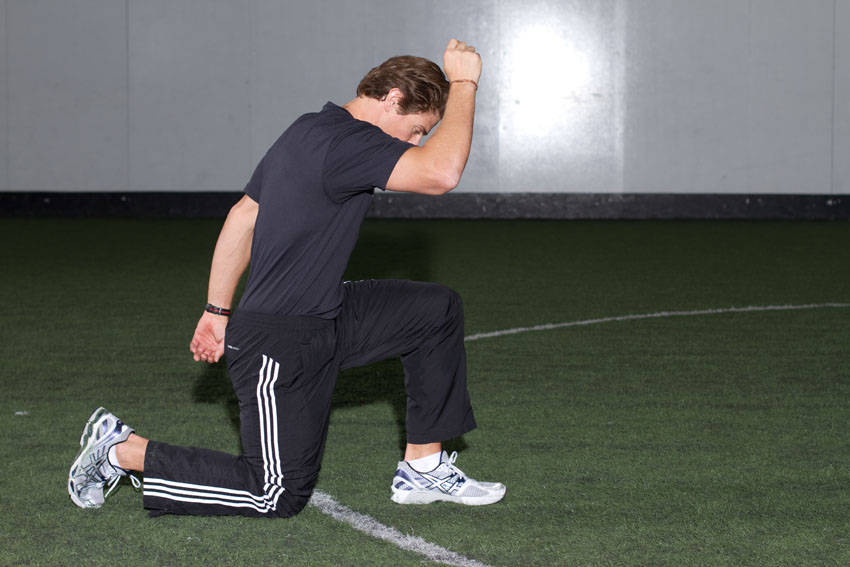
- Primary muscle
- Shoulders
- Equipment
- Bodyweight
- Difficulty
- Beginner
- Type
- Isolation
Secondary muscles: Abdominals
How to perform Kneeling Arm Drill
- This drill helps increase arm efficiency during the run. Begin kneeling, left foot in front, right knee down. Apply pressure through the front heel to keep your glutes and hamstrings activated.
- Begin by blocking the arms in long, pendulum like swings. Close the arm angle, blocking with the arms as you would when jogging, progressing to a run and finally a sprint.
- As soon as your hands pass the hip, accelerate them forward during the sprinting motion to move them as quickly as possible.
- Switch knees and repeat.
Ranked Kneeling Arm Drill Alternatives
10 substitutes, ranked by how closely each one matches the Kneeling Arm Drill on movement pattern, muscles worked, equipment and body position. The higher the score, the less you change. Open "How to perform this exercise" on a card for the steps; every card title links to that exercise's own alternatives page. Harder versions are tagged as progressions and kept out of the top spot even when they score higher.
Best match 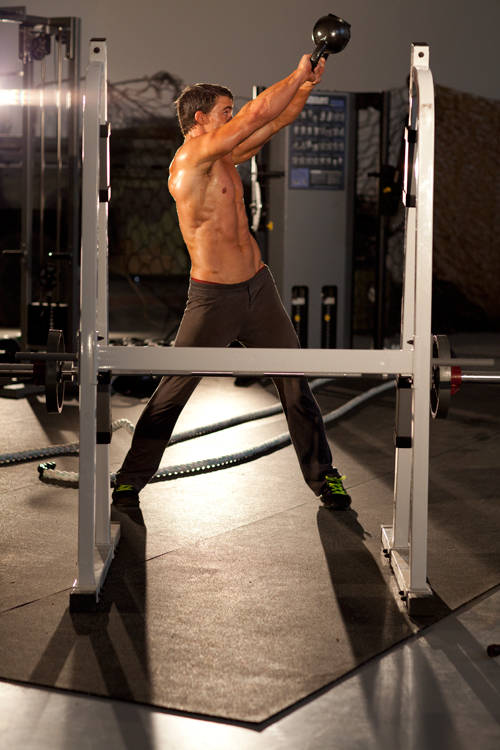
1. Kettlebell Pirate Ships
64% match- Shoulders
- Kettlebell
- Intermediate
- Compound
A good swap when you have a kettlebell to work with, and it still works the shoulders.
How to perform this exercise
- With a wide stance, hold a kettlebell with both hands. Allow it to hang at waist level with your arms extended. This will be your starting position.
- Initiate the movement by turning to one side, swinging the kettlebell to head height. Briefly pause at the top of the motion.
- Allow the bell to drop as you rotate to the opposite side, again raising the kettlebell to head height.
- Repeat for the desired amount of repetitions.
Sets and reps: 3 or 4 sets of 6 to 10 reps on each side.
Why this matches
- Primary muscle: shoulders, the same as the Kneeling Arm Drill
- Equipment: free weights, not bodyweight only
- Body position: standing, not kneeling
- Balance: harder to stay steady on than the Kneeling Arm Drill
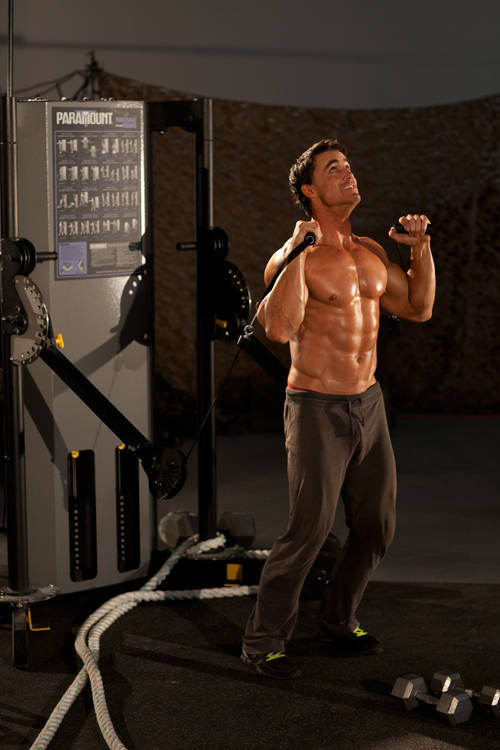
2. Alternating Cable Shoulder Press
60% match- Shoulders
- Cable
- Intermediate
- Compound
A good swap when you have a cable machine to work with, and it still works the shoulders.
How to perform this exercise
- Move the cables to the bottom of the tower and select an appropriate weight.
- Grasp the cables and hold them at shoulder height, palms facing forward. This will be your starting position.
- Keeping your head and chest up, extend through the elbow to press one side directly over head.
- After pausing at the top, return to the starting position and repeat on the opposite side.
Sets and reps: 3 or 4 sets of 6 to 10 reps on each side.
Why this matches
- Primary muscle: shoulders, the same as the Kneeling Arm Drill
- Equipment: a cable, not bodyweight only
- Body position: standing, not kneeling
- Balance: easier to stay steady on than the Kneeling Arm Drill
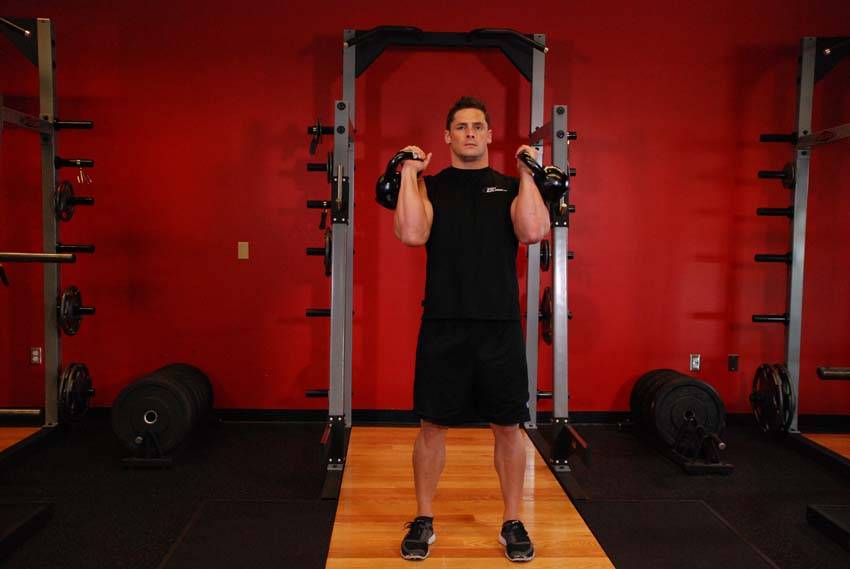
3. Alternating Kettlebell Press
60% match- Shoulders
- Kettlebell
- Intermediate
- Compound
How to perform this exercise
- Clean two kettlebells to your shoulders. Clean the kettlebells to your shoulders by extending through the legs and hips as you pull the kettlebells towards your shoulders. Rotate your wrists as you do so.
- Press one directly overhead by extending through the elbow, turning it so the palm faces forward while holding the other kettlebell stationary .
- Lower the pressed kettlebell to the starting position and immediately press with your other arm.
Sets and reps: 3 or 4 sets of 6 to 10 reps on each side.
Why this matches
- Primary muscle: shoulders, the same as the Kneeling Arm Drill
- Equipment: free weights, not bodyweight only
- Body position: standing, not kneeling
Progression
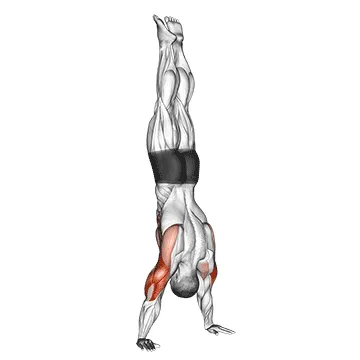
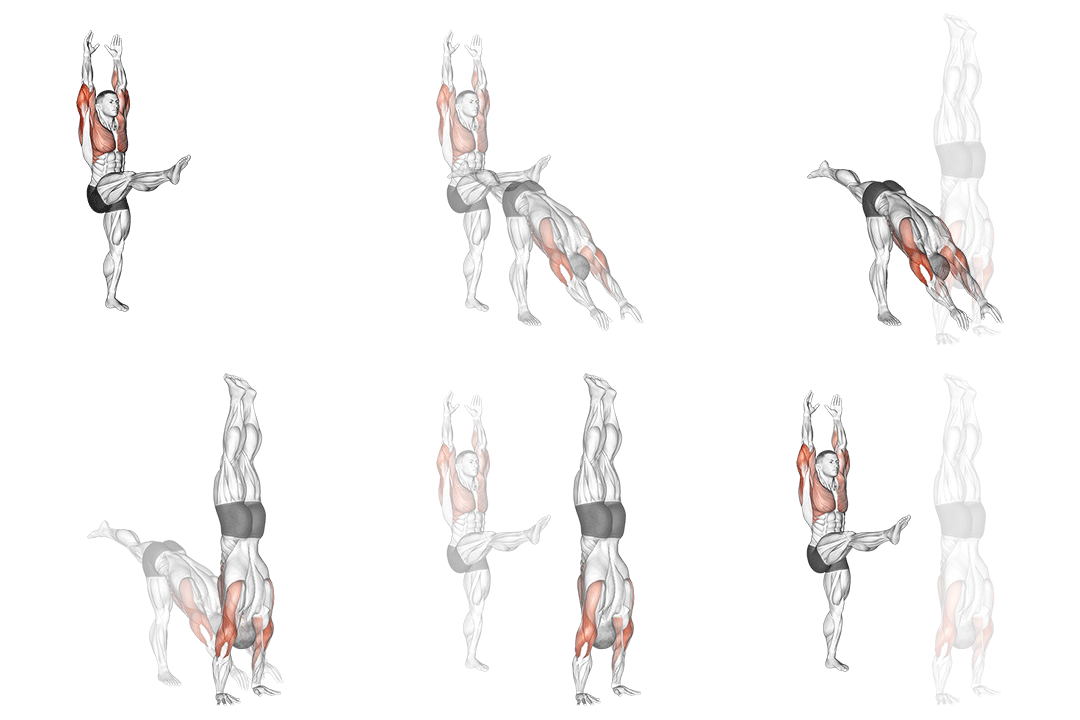
4. Handstand Push-up
59% match- Delts
- Bodyweight
- Advanced
- Compound
A looser match: it uses the same equipment, but it works the delts rather than the shoulders.
How to perform this exercise
- Find a wall and face away from it, standing a few feet away.
- Place your hands on the ground shoulder-width apart and kick your feet up against the wall, coming into a handstand position.
- Bend your elbows and lower your head towards the ground, keeping your body in a straight line.
- Push through your hands and extend your arms to return to the starting position.
- Repeat for the desired number of repetitions.
Sets and reps: 3 or 4 sets of 6 to 10 reps.
Why this matches
- Primary muscle: delts, not shoulders
- Equipment: bodyweight only, the same as the Kneeling Arm Drill
- Body position: inverted, not kneeling
- Balance: harder to stay steady on than the Kneeling Arm Drill
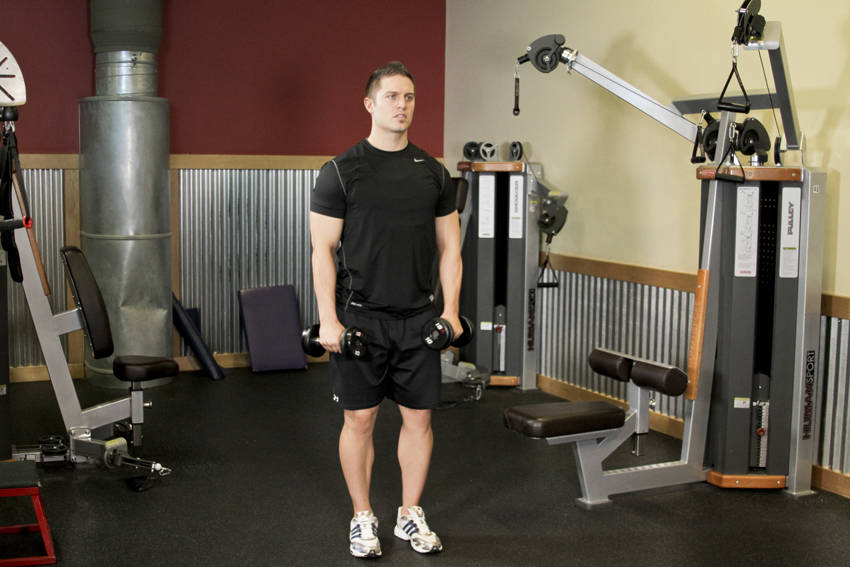
5. Alternating Deltoid Raise
58% match- Shoulders
- Dumbbell
- Intermediate
- Isolation
A good swap when you have dumbbells to work with, and it still works the shoulders.
How to perform this exercise
- In a standing position, hold a pair of dumbbells at your side.
- Keeping your elbows slightly bent, raise the weights directly in front of you to shoulder height, avoiding any swinging or cheating.
- Return the weights to your side.
- On the next repetition, raise the weights laterally, raising them out to your side to about shoulder height.
- Return the weights to the starting position and continue alternating to the front and side.
Sets and reps: 3 sets of 10 to 15 reps on each side.
Why this matches
- Primary muscle: shoulders, the same as the Kneeling Arm Drill
- Equipment: free weights, not bodyweight only
- Body position: standing, not kneeling
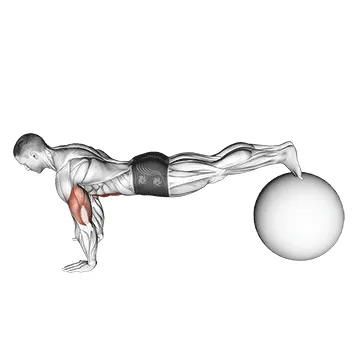
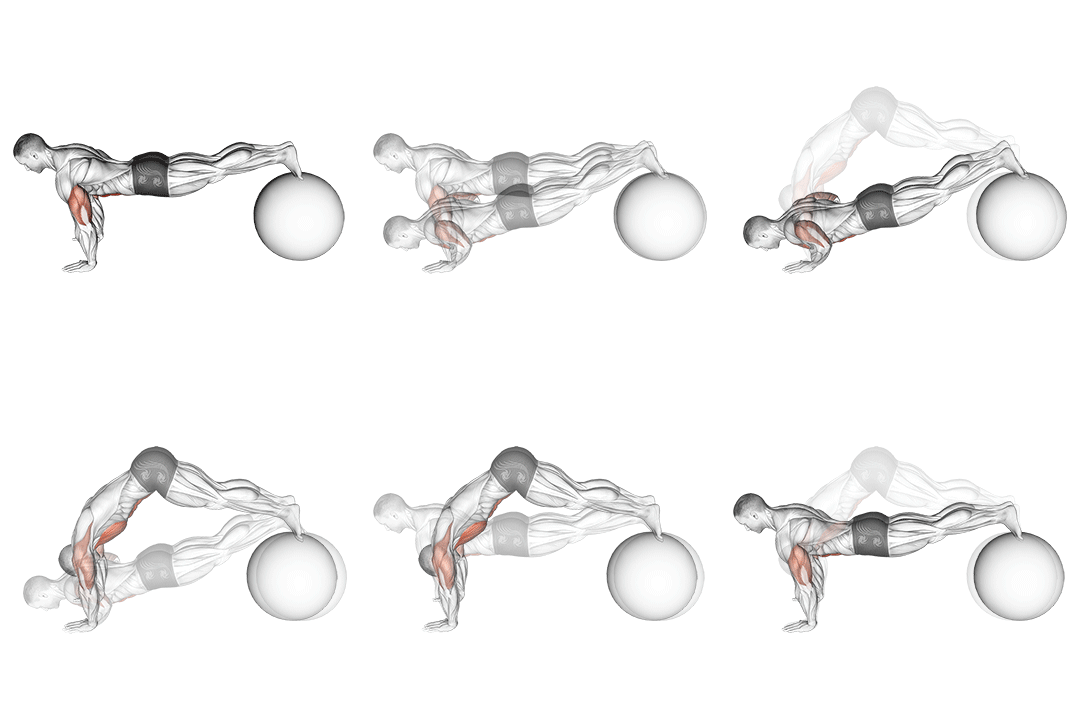
6. Exercise Ball Pike Push Up
57% match- Pectorals
- Stability-ball
- Advanced
- Compound
A looser match: it works the pectorals rather than the shoulders.
How to perform this exercise
- Start in a push-up position with your hands on the floor and your shins resting on the stability ball.
- Engage your core and lift your hips up towards the ceiling, rolling the ball towards your hands.
- Keep your legs straight and your body in a pike position, forming an inverted V shape.
- Bend your elbows and lower your upper body towards the floor, keeping your head in line with your hands.
- Push through your hands and extend your arms to return to the starting position.
- Repeat for the desired number of repetitions.
Sets and reps: 3 or 4 sets of 6 to 10 reps.
Why this matches
- Primary muscle: pectorals, not shoulders
- Equipment: bodyweight only, the same as the Kneeling Arm Drill
- Body position: inverted, not kneeling
- Balance: harder to stay steady on than the Kneeling Arm Drill
Progression
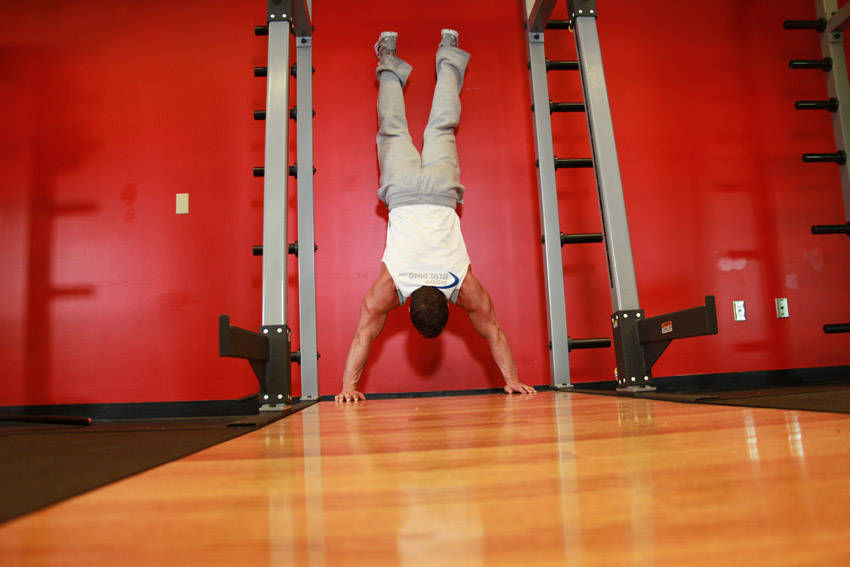
7. Handstand
56% match- Triceps
- Bodyweight
- Intermediate
- Compound
A looser match: it uses the same equipment, but it works the triceps rather than the shoulders.
How to perform this exercise
- Find an open space with enough room to perform a handstand.
- Place your hands on the ground shoulder-width apart, fingers pointing forward.
- Kick your legs up towards the wall, using your core and shoulders to maintain balance.
- Once in a handstand position, engage your triceps to support your body weight.
- Hold the handstand for as long as you can maintain balance.
- To come down, slowly lower your legs back to the ground.
- Repeat for the desired number of repetitions.
Sets and reps: Hold for 20 to 30 seconds, 3 sets.
Why this matches
- Primary muscle: triceps, not shoulders
- Equipment: bodyweight only, the same as the Kneeling Arm Drill
- Body position: inverted, not kneeling
- Balance: harder to stay steady on than the Kneeling Arm Drill
Progression
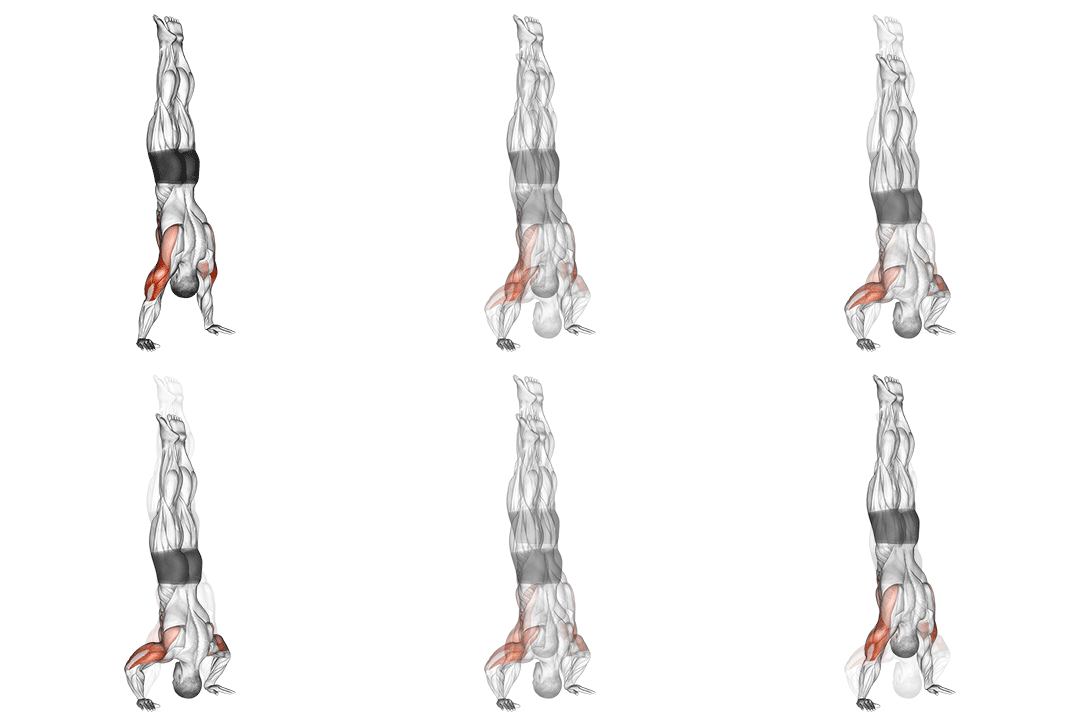
8. Handstand Push-ups
55% match- Delts
- Bodyweight
- Advanced
- Compound
How to perform this exercise
- With your back to the wall bend at the waist and place both hands on the floor at shoulder width.
- Kick yourself up against the wall with your arms straight. Your body should be upside down with the arms and legs fully extended. Keep your whole body as straight as possible. Tip: If doing this for the first time, have a spotter help you. Also, make sure that you keep facing the wall with your head, rather than looking down.
- Slowly lower yourself to the ground as you inhale until your head almost touches the floor. Tip: It is of utmost importance that you come down slow in order to avoid head injury.
- Push yourself back up slowly as you exhale until your elbows are nearly locked.
- Repeat for the recommended amount of repetitions.
Sets and reps: 3 or 4 sets of 6 to 10 reps.
Why this matches
- Primary muscle: delts, not shoulders
- Equipment: bodyweight only, the same as the Kneeling Arm Drill
- Body position: inverted, not kneeling
- Balance: harder to stay steady on than the Kneeling Arm Drill
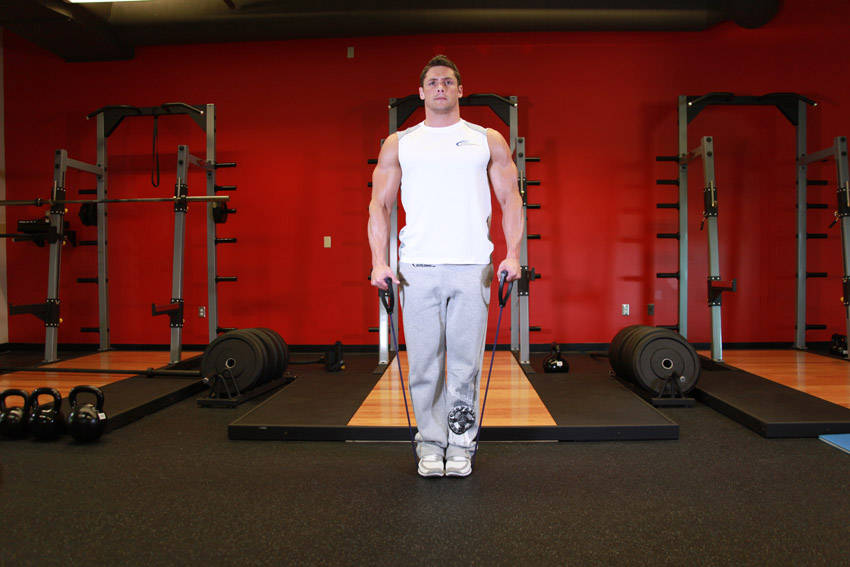
9. Lateral Raise - With Bands
53% match- Shoulders
- Band
- Intermediate
- Isolation
How to perform this exercise
- To begin, stand on an exercise band so that tension begins at arm's length. Grasp the handles using a pronated (palms facing your thighs) grip that is slightly less than shoulder width. The handles should be resting on the sides of your thighs. Your arms should be extended with a slight bend at the elbows and your back should be straight. This will be your starting position.
- Use your side shoulders to lift the handles to the sides as you exhale. Continue to lift the handles until they are slightly above parallel. Tip: As you lift the handles, slightly tilt the hand as if you were pouring water and keep your arms extended. Also, keep your torso stationary and pause for a second at the top of the movement.
- Lower the handles back down slowly to the starting position. Inhale as you perform this portion of the movement.
- Repeat for the recommended amount of repetitions.
Sets and reps: 3 sets of 10 to 15 reps.
Why this matches
- Primary muscle: shoulders, the same as the Kneeling Arm Drill
- Equipment: a band, not bodyweight only
- Body position: standing, not kneeling
- Balance: easier to stay steady on than the Kneeling Arm Drill
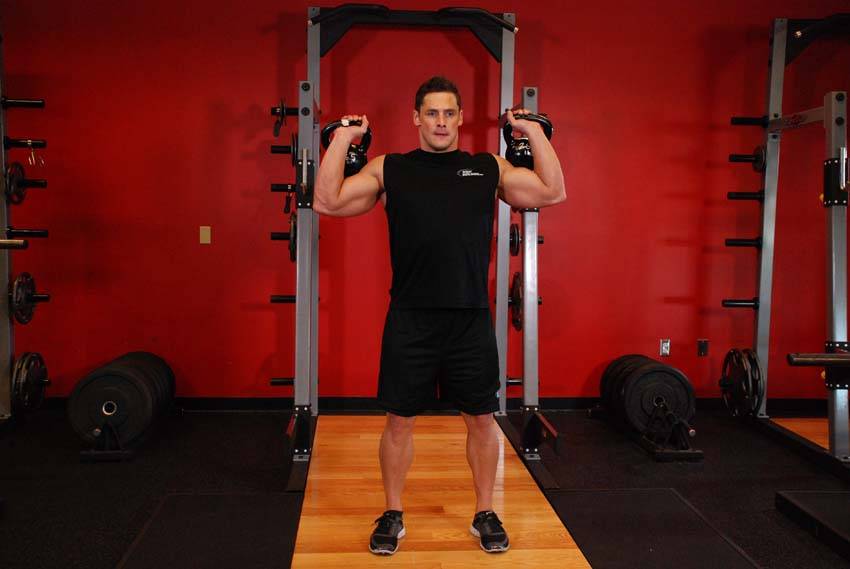
- Shoulders
- Kettlebell
- Intermediate
- Compound
How to perform this exercise
- Clean two kettlebells to your shoulders. Clean the kettlebells to your shoulders by extending through the legs and hips as you swing the kettlebells towards your shoulders. Rotate your wrists as you do so, so that the palms face forward.
- Press the kettlebells up and out. As the kettlebells pass your head, lean into the weights so that the kettlebells are racked behind your head. Make sure to contract your lats, butt, and stomach for added stability.
Sets and reps: 3 or 4 sets of 6 to 10 reps.
Why this matches
- Primary muscle: shoulders, the same as the Kneeling Arm Drill
- Equipment: free weights, not bodyweight only
- Body position: standing, not kneeling
How to Choose the Right Kneeling Arm Drill Substitute
Select a substitute by matching movement plane, muscle emphasis, and joint load to your goal. Check if you need anterior, medial, or posterior deltoid bias and choose exercises that replicate that vector; use standing lateral raises for medial deltoid work and prone Y/Ts for posterior deltoid. Assess scapular control, if you cannot depress and retract the scapula, regress to band-assisted scapular pulls with a 2-second hold. Monitor range of motion and torque across the shoulder: reduce lever arm or use bands to lower peak moments until stability improves.
Kneeling Arm Drill FAQ
What is the best bodyweight alternative to Kneeling Arm Drill?
Prone Y raises are the best pure bodyweight substitute because they isolate the posterior deltoid and lower trapezius without compressing the spine. Cue thumbs-up and squeeze the scapulae together at the top to maximize posterior deltoid firing and scapular posterior tilt.
Can I build muscle without doing Kneeling Arm Drill?
Yes. You can build shoulder muscle using progressive overload with bands, dumbbells, or bodyweight progressions that preserve tension and full range of motion. Focus on controlled tempo, increase volume or resistance, and use cues like keeping the ribcage braced to ensure the deltoids, not compensatory muscles, handle the load.
Find Alternatives for Any Exercise
Search the exercise database and filter the ranked substitutes by the equipment you own.
Similarity scores compare exercise metadata such as movement pattern, muscles, equipment and body position. They are not a safety rating or a check that you own the equipment. Learn about our methodology